
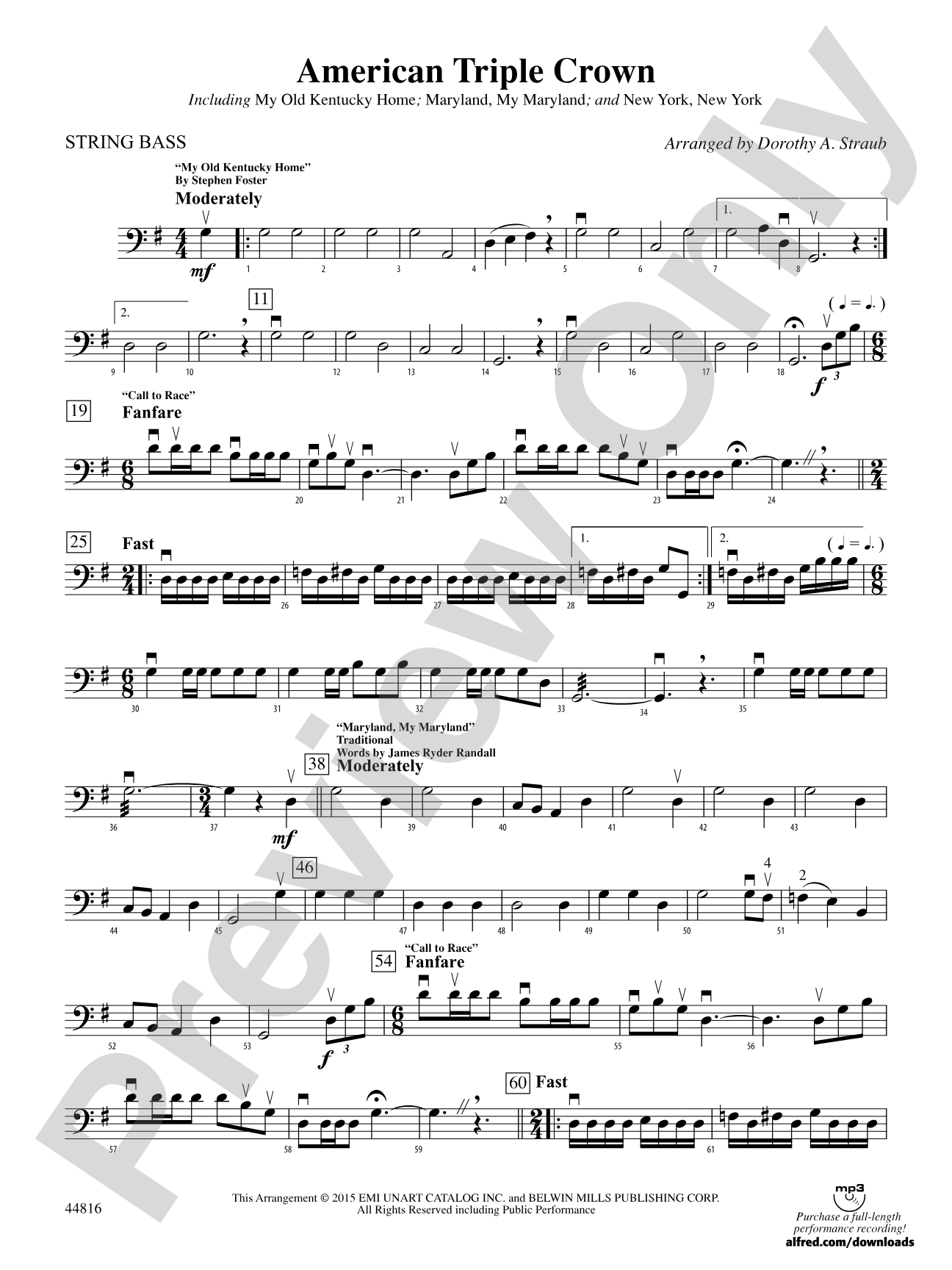

American Triple Crown: String Bass
Including: My Old Kentucky Home / Maryland, My Maryland / New York, New York
Arr. Dorothy A. Straub
Grade: 3
Item: 00-PC-0017333_SB
$5.99
Pickup currently not available
Description
This piece, arranged by Dorothy Straub, celebrates the excitement of a very short horse race. Using songs that are sung before each of the three races---songs of Kentucky, Maryland, and New York---the orchestra takes on the role of the winning horse, with the accelerando being the final "race to the finish line." Though timely now that the amazing horse, American Pharaoh, won the Triple Crown in June of 2015, this piece was written prior to that event to celebrate all the horses that compete. (6:30)


Don't just read it, hear it, play along with it, and watch your students grow with it. In MakeMusic Cloud, American Triple Crown: String Bass comes alive with professional accompaniment, adjustable tempo, and built-in practice tools that turn solo practice into real progress.
Open in the Player
Jump straight in and assign it today.
Start Your Free Trial
Open this title and explore the full library in minutes.
Sample Audio
1
Audio File
--:--
0:00
0:00
Sample Video
Additional Details
Series:
Pop Concert String Orchestra
Publisher:
Alfred Music
Page Count:
146
SKU:
00-PC-0017333_SB
More about this title
Why we love this
Straub's arrangement taps into a genuine moment of cultural excitement while grounding the piece in the actual musical traditions of three historic races. The structural brilliance lies in how she uses the accelerando not as a generic effect but as the dramatic arc of the race itself, making the orchestra's narrative role crystal clear to both players and audiences.
What to expect
The piece builds genuine momentum through its celebration of three distinct regional identities before transforming into pure kinetic energy. You feel the weight and determination of a champion horse charging toward the finish line, with the orchestra channeling that power through increasingly rapid pulse.
Who it's for
String orchestras in the intermediate range (Grade 3) who want to program something contemporary and thematically coherent without sacrificing musical substance. This works especially well for ensembles looking to engage audiences with recognizable American material and narrative structure.
How to get the most out of it
- Build the accelerando steadily across the final section. Mark your score with specific tempo markings at quarter-point intervals so the ensemble understands you're targeting a unified finish, not just playing faster.
- Balance the regional song material so the audience recognizes the melodic themes when they return. String sections tend to blend these melodies into the accompaniment; make sure soloists or first chairs project with confidence.
- Maintain rhythmic precision during tempo changes. Your lower strings should anchor the pulse while upper voices execute the acceleration, preventing the piece from feeling ragged as excitement builds.
- Cue the "race to the finish line" carefully. Younger ensembles benefit from clear hand signals that show both the tempo increase and the coordinated push to the final measures.
How to use it
This arrangement sits perfectly in a spring concert focused on American themes or contemporary takes on traditional material. Its narrative arc and accessible Grade 3 level make it ideal for programming alongside more classical string repertoire, offering audiences a moment of joyful recognition and excitement.
Skills your students will build
- Executing tempo acceleration with ensemble cohesion
- Balancing melody and accompaniment across string sections
- Coordinating rhythmic precision during structural transitions
- Identifying and projecting regional melodic themes