
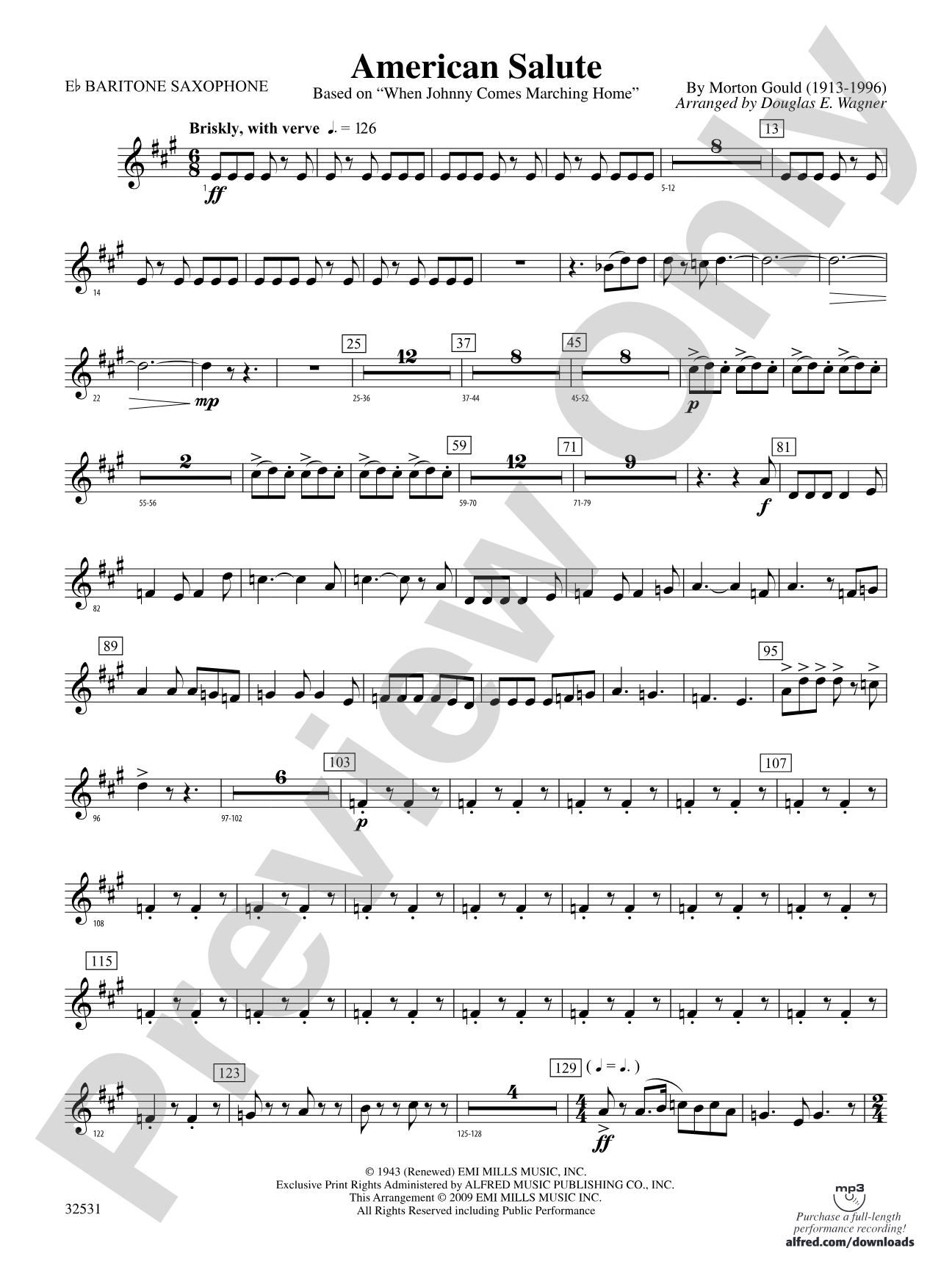

American Salute: E-flat Baritone Saxophone
Based on "When Johnny Comes Marching Home"
By Morton Gould / arr. Douglas E. Wagner
Grade: 3.5 (Medium Easy to Medium)
Item: 00-PC-0014402_BTX
$3.00
Pickup currently not available
Description
The monumental Morton Gould variations on "When Johnny Comes Marching Home" has been a staple in the orchestra and concert band literature for more than fifty years. An easily recognizable and energetic work, Douglas Wagner has retained the fervor and made this classic work available to a wider variety of concert bands by rescoring the bassoon trio into the clarinet section. Bravo! This title is available in MakeMusic Cloud.


Don't just read it, hear it, play along with it, and watch your students grow with it. In MakeMusic Cloud, American Salute: E-flat Baritone Saxophone comes alive with professional accompaniment, adjustable tempo, and built-in practice tools that turn solo practice into real progress.
Open in the Player
Jump straight in and assign it today.
Start Your Free Trial
Open this title and explore the full library in minutes.
Sample Audio
1
Audio File
--:--
0:00
0:00
Sample Video
No sample videos found.
Additional Details
Series:
Pop Concert Band
Publisher:
Alfred Music
Page Count:
228
SKU:
00-PC-0014402_BTX
More about this title
About the Composer: Morton Gould
Morton Gould (1913-1996) was an American composer and conductor whose gift for orchestration and populist sensibility made him one of the most performed American composers of the 20th century. His output ranged from symphonies and ballets to film scores and popular arrangements, but he remained committed to making concert music accessible to amateur and professional musicians alike. Gould's variations and arrangements of American themes became cornerstones of band and orchestra repertoire, celebrated for their technical brilliance and emotional directness.
Why we love this
Douglas Wagner's rescoring brings Gould's monumental work within reach of bands that would otherwise struggle with the original bassoon trio voicing. The arrangement preserves every ounce of Gould's invention while solving a real instrumentation problem, making this essential American masterwork programmatically viable for more ensembles without sacrificing musical integrity.
What to expect
Energy and brass fanfares collide with parade-ground swagger and introspection by turns. Gould's treatment moves from the familiar march theme into increasingly complex and colorful variations that shift the harmonic and emotional landscape while keeping the tune recognizable and the momentum unstoppable.
Who it's for
Concert bands at the intermediate level (grades 2-4 overall) who want to program a major American work without the instrumentation headaches of the original score. This arrangement works equally well for contest programs, summer concerts, and festivals where a recognizable, rousing patriotic standard will resonate with audiences.
How to get the most out of it
- Balance the clarinet section carefully through the trio section. The rescoring places the melody and harmony squarely on clarinets, so even intonation and blend across all four voices will define the passage's impact.
- Shape the famous march theme with forward momentum but allow room for the dynamic surprises. Gould's orchestration is precise about where the energy peaks and releases.
- Give the rhythm section clear cues at tempo transitions. The variations move through several distinct sections, and a secure foundation from percussion and low brass keeps ensemble cohesion.
- Bring out the countermelodies in the middle variations. They often sit in unexpected voices and add color when balanced just slightly above the primary line.
How to use it
Position this as a standout concert opener or closer. Its length (228 pages of score and parts) and moderate difficulty make it a centerpiece rather than a filler, perfect for summer pops programs, patriotic-themed concerts, or festival competitions where a confident, audience-friendly American classic will distinguish your ensemble.
Skills your students will build
- Sustaining intonation and blend in sustained clarinet chords across multiple registers
- Executing rhythmic precision in a work with consistent sixteenth-note passage work
- Responding to dynamic contrast and shape across multiple variations of a single theme
- Balancing individual lines within transparent orchestration where every voice is heard
- Maintaining ensemble security through extended solo passages and key changes