
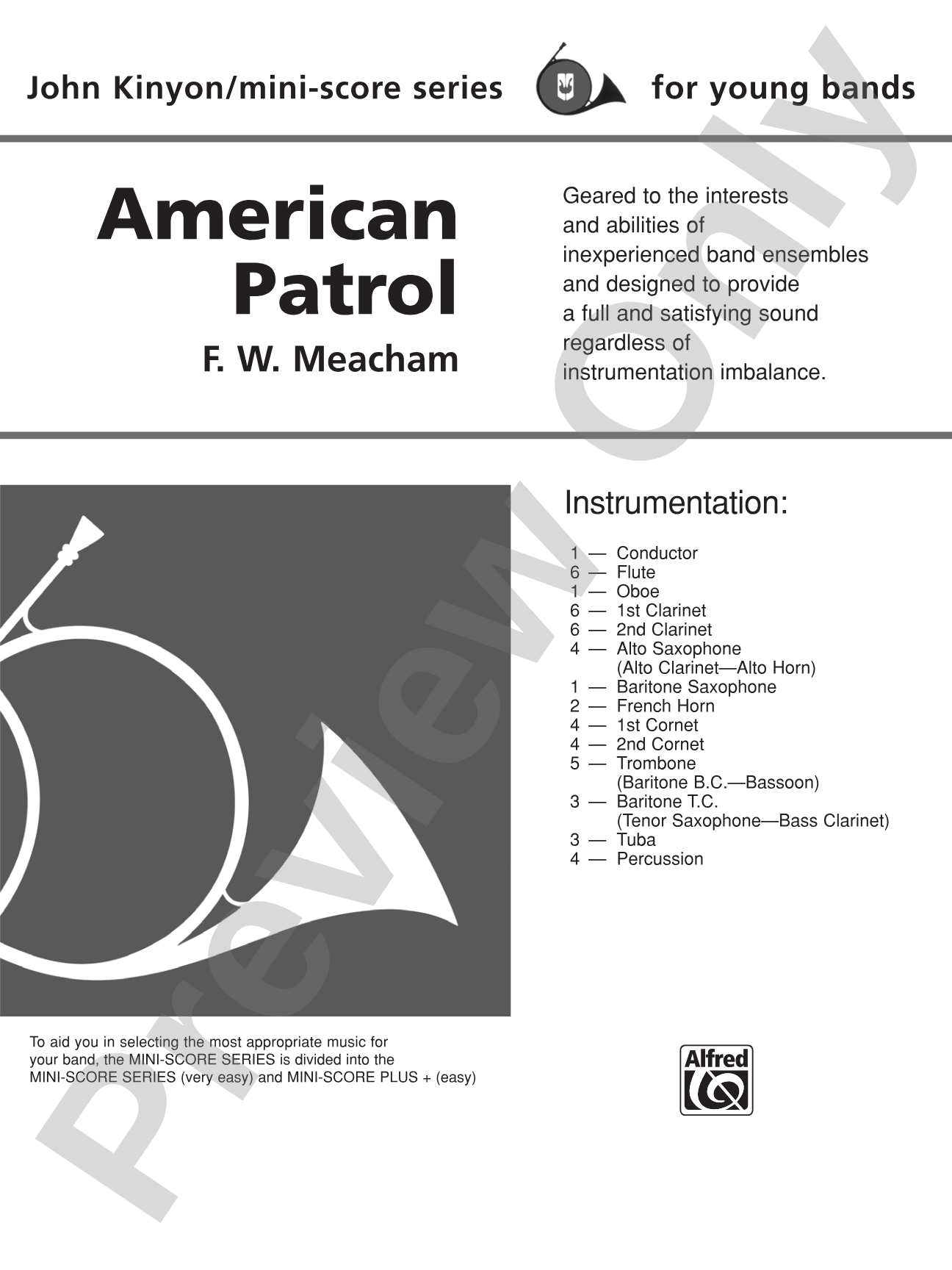
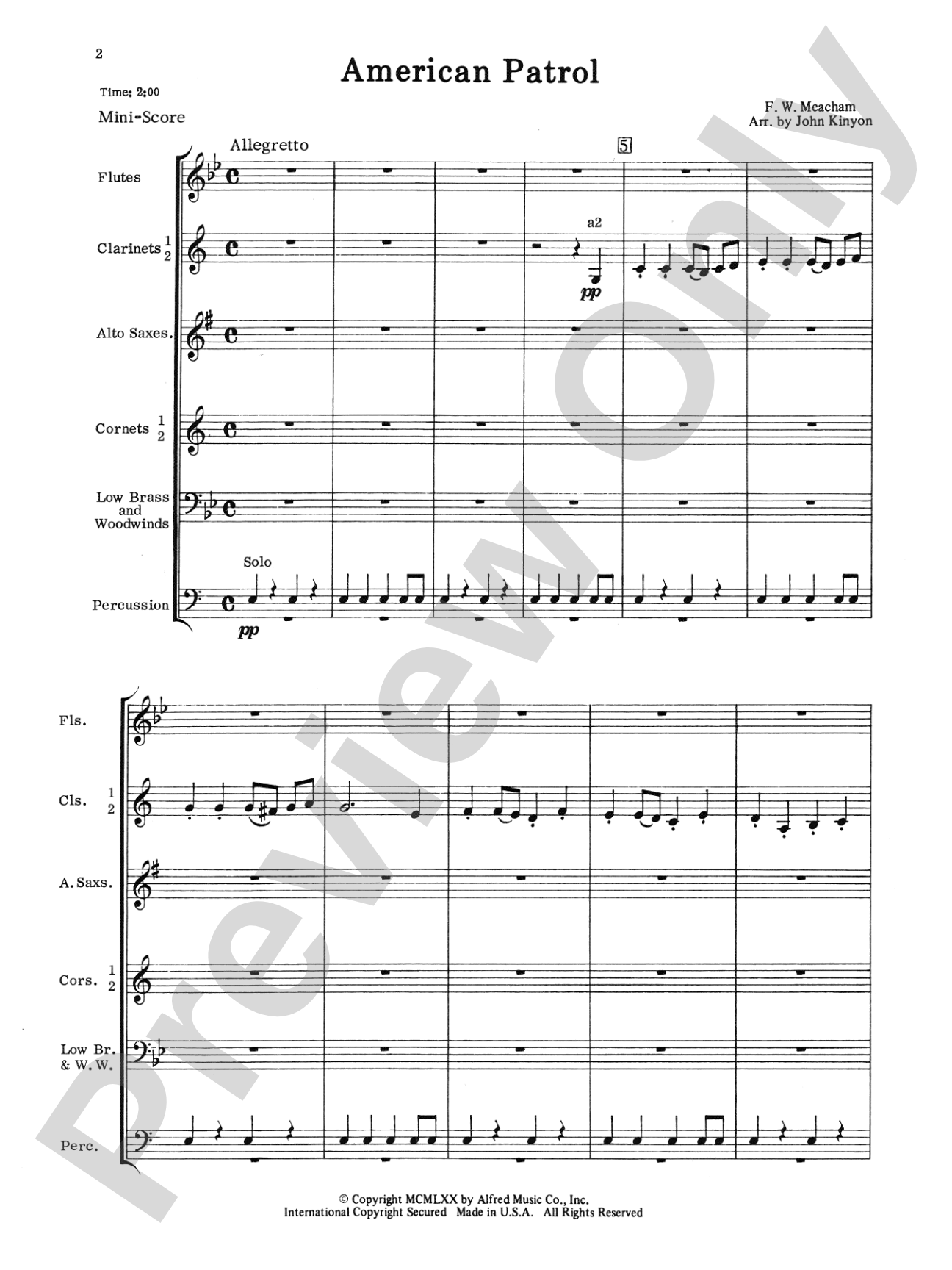
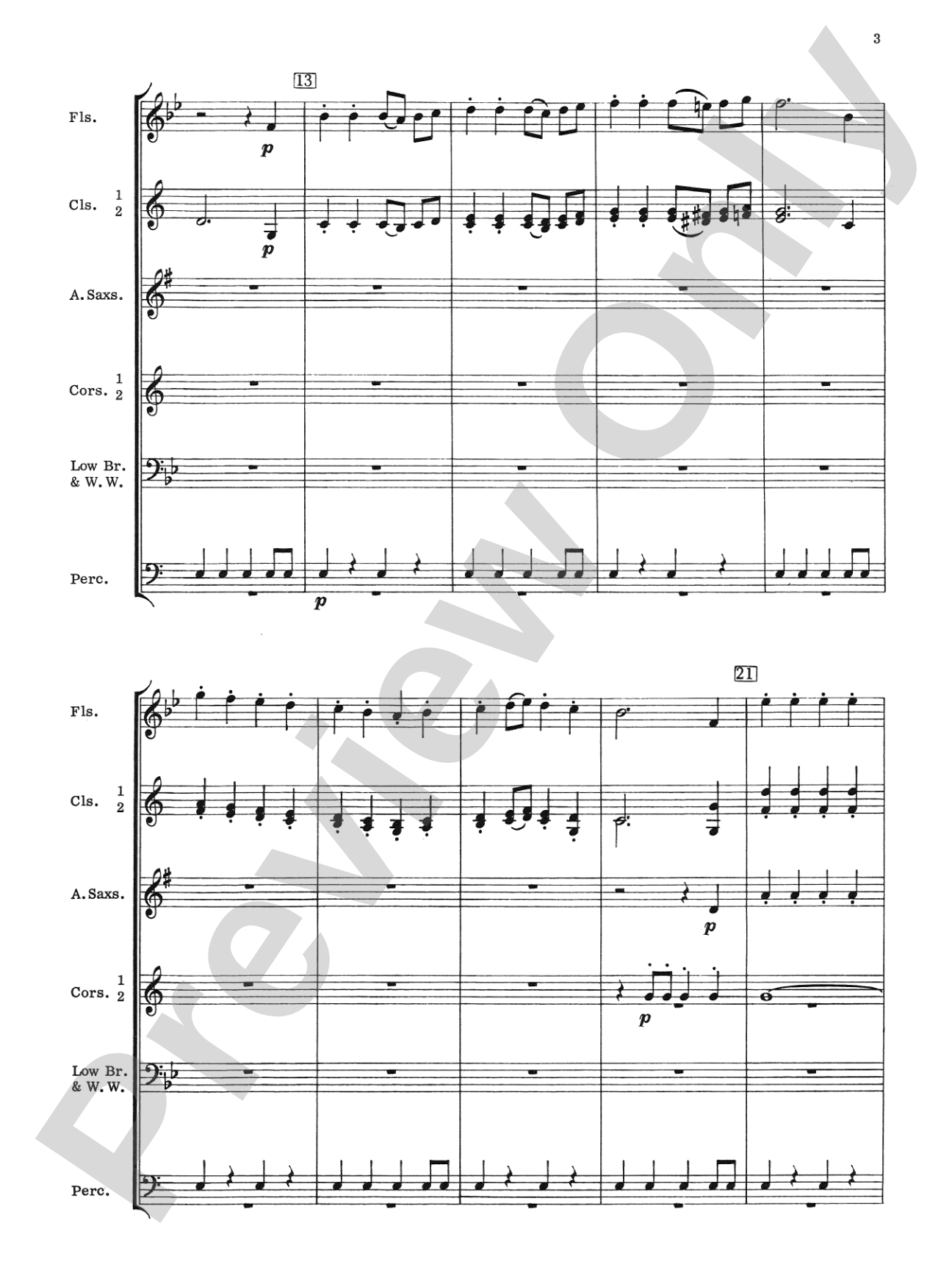
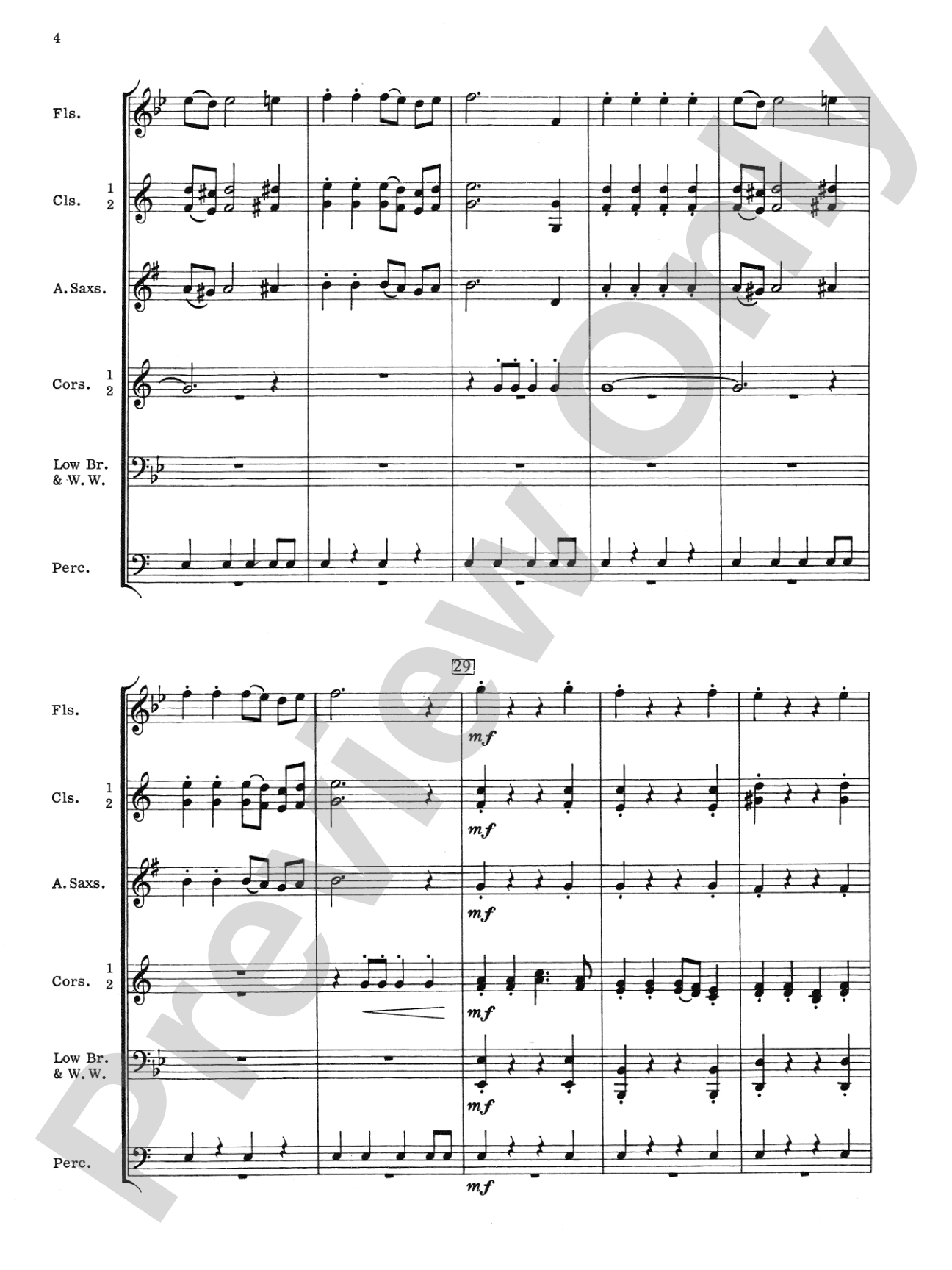
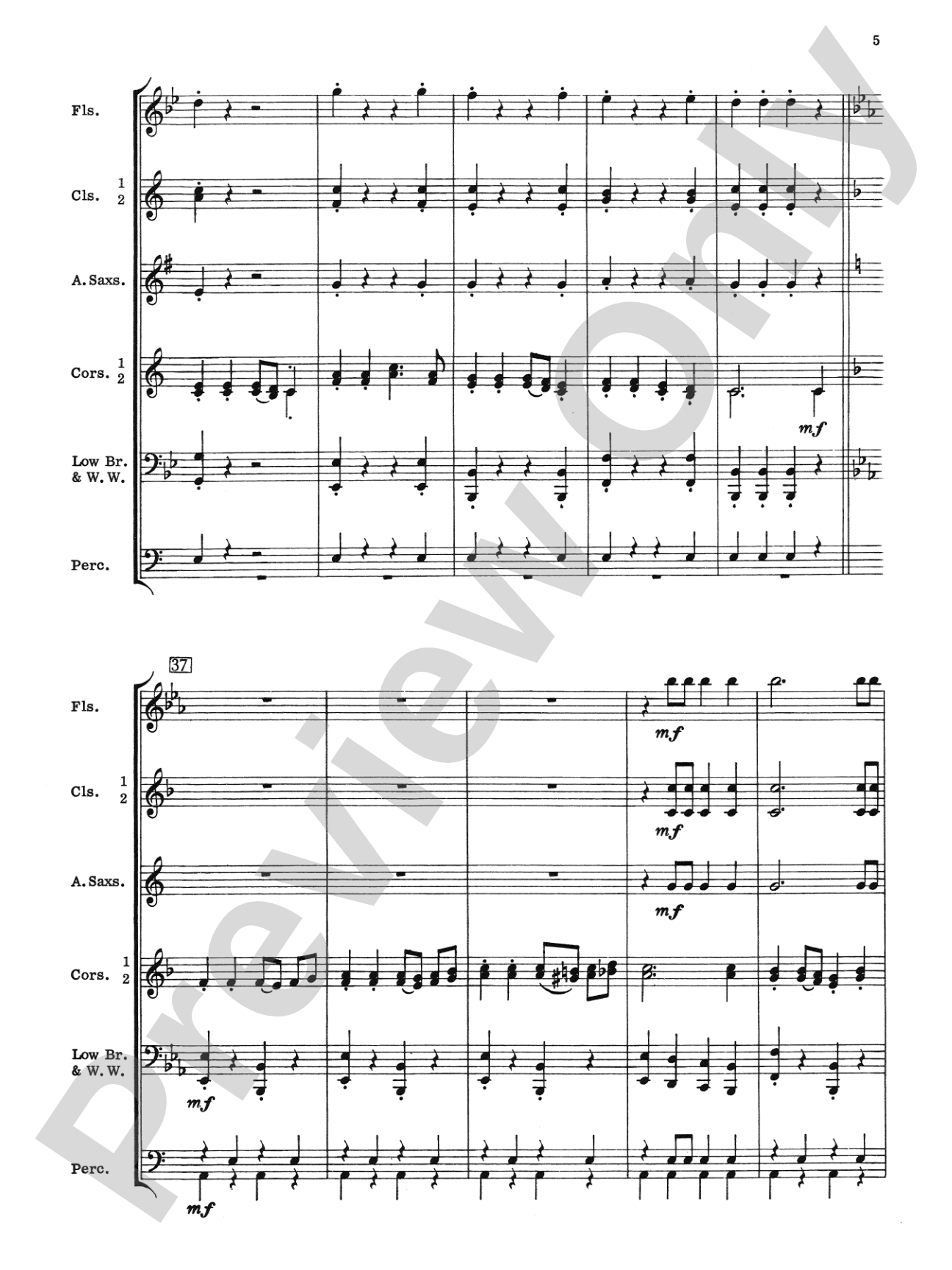
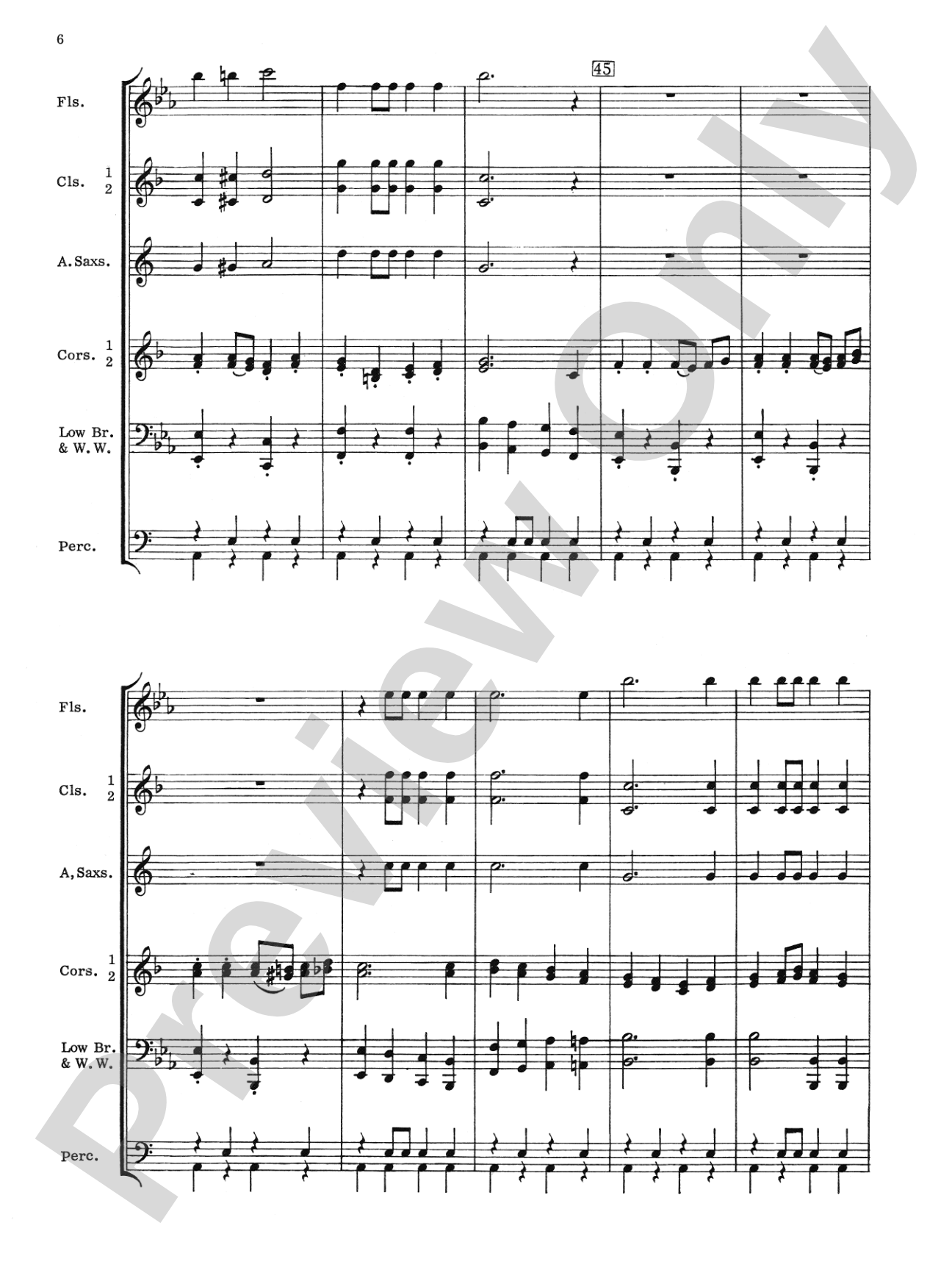
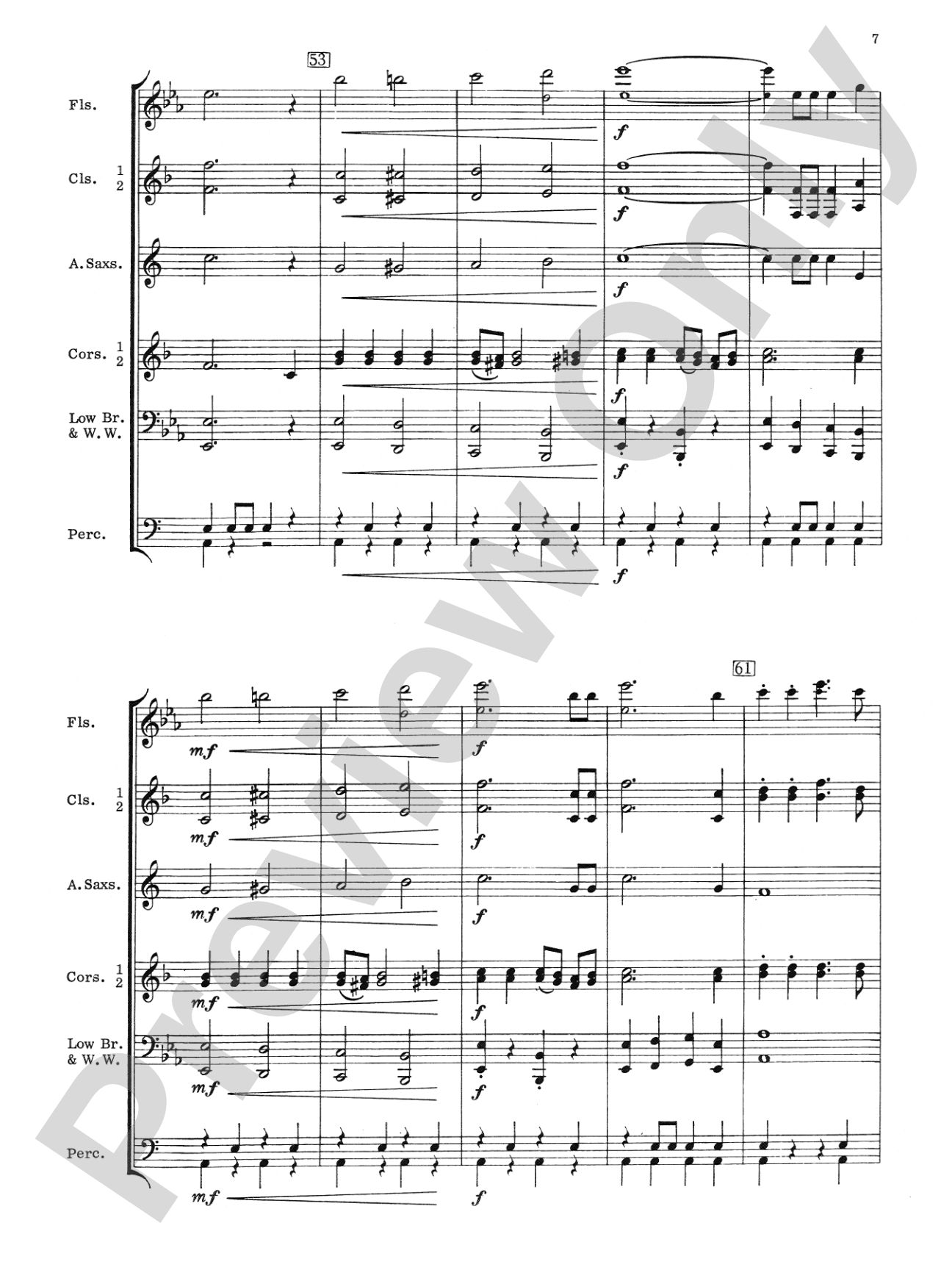
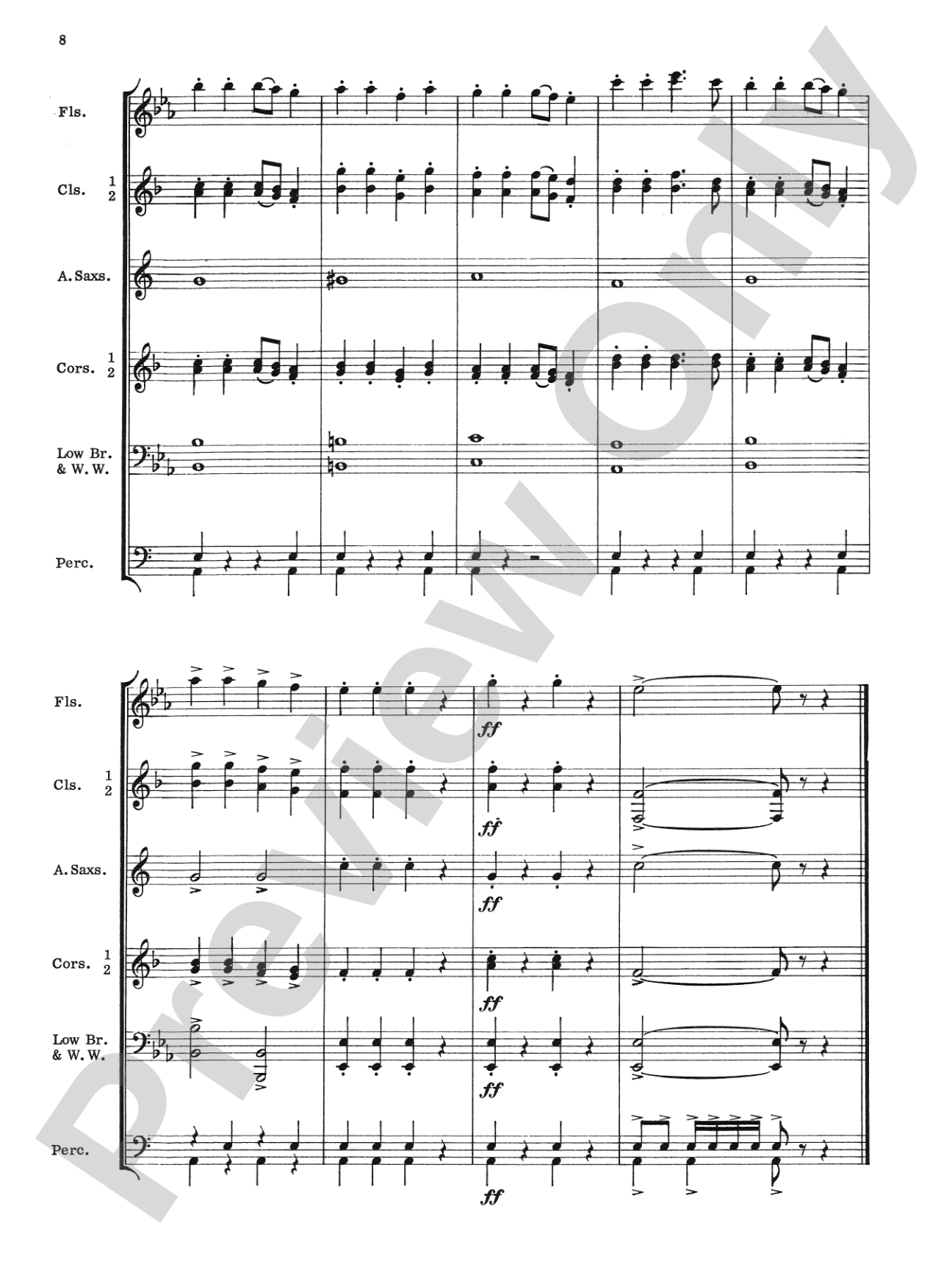

American Patrol: Concert Band Conductor Score & Parts
By Frank W. Meacham / arr. John Kinyon
Grade: 1 (Very Easy)
Item: 00-PK-0001970

$42.00
Pickup currently not available
Buy Extra Parts (Digital PDF Download)
| Product | Price | Quantity |
|---|---|---|
| American Patrol: Score | $6.00 | |
| American Patrol: Flute | $3.00 | |
| American Patrol: Oboe | $3.00 | |
| American Patrol: 1st B-flat Clarinet | $3.00 | |
| American Patrol: 2nd B-flat Clarinet | $3.00 | |
| American Patrol: E-flat Alto Saxophone | $3.00 | |
| American Patrol: E-flat Baritone Saxophone | $3.00 | |
| American Patrol: 1st F Horn | $3.00 | |
| American Patrol: 1st B-flat Cornet | $3.00 | |
| American Patrol: 2nd B-flat Cornet | $3.00 | |
| American Patrol: 1st Trombone | $3.00 | |
| American Patrol: Baritone T.C. | $3.00 | |
| American Patrol: Tuba | $3.00 | |
| American Patrol: 1st Percussion | $3.00 |
Parts Added to Cart!
Description


Don't just read it, hear it, play along with it, and watch your students grow with it. In MakeMusic Cloud, American Patrol: Concert Band Conductor Score & Parts comes alive with professional accompaniment, adjustable tempo, and built-in practice tools that turn solo practice into real progress.
Open in the Player
Jump straight in and assign it today.
Start Your Free Trial
Open this title and explore the full library in minutes.
Sample Audio
No sample audio found.
Sample Video
No sample videos found.
Additional Details
Series:
Mini Score Series
Publisher:
Alfred Music
Page Count:
49
SKU:
00-PK-0001970
More about this title
About the Composer: Frank W. Meacham
Frank W. Meacham (1856-1944) composed American Patrol in 1885, a piece that would become one of the most enduring patriotic marches in American concert band and military band repertoire. Originally written for piano, the work has been transcribed and arranged countless times, proving its melodic resilience and broad appeal across ensembles of all levels.
Why we love this
American Patrol sits at the sweet spot between instant recognition and genuine musicality. Your students will recognize the familiar melodies immediately, but Kinyon's Grade 1 arrangement respects the original's character without condescension, giving every section something rewarding to play. It's a piece that builds ensemble pride without requiring technical heroics.
What to expect
Bright, confident, and unmistakably American. The melody rides atop a sturdy harmonic foundation with a steady march pulse that invites audiences to feel the patriotic weight of the moment without sentimentality. There's both dignity and accessibility in every phrase.
Who it's for
Beginning and developing concert bands seeking a Grade 1 selection that commands genuine musical respect. Directors programming community events, patriotic concerts, or ceremonies need a piece their students can execute cleanly and feel proud of playing.
How to get the most out of it
- Shape the melodic phrases with clear breath points, especially when passing themes between sections. The familiarity of the tune can tempt players to rush; steady phrasing keeps it singing.
- Balance the upper voices carefully when harmonies thicken. This arrangement sits well for young bands, but careless doublings can muddy the patriotic clarity that makes the piece effective.
- Let the percussion anchor the march character without overwhelming the band. A crisp snare line and steady bass drum foundation support the melody without dominating it.
- Honor the original's simplicity. Resist the urge to add expressive excess; the tune carries its own weight.
How to use it
Program American Patrol as an opener for summer concerts, Independence Day celebrations, or any occasion calling for patriotic repertoire. It pairs well alongside other accessible Americana or lighter classical selections, anchoring a program with a piece the community already knows and loves.
Skills your students will build
- Sustaining phrases across full melodic lines with consistent tone and intonation
- Blending within sections and across the ensemble during harmonic passages
- Reading basic concert band scoring and understanding voice leading in upper and lower registers
- Executing steady march rhythm and maintaining ensemble pulse within a traditional march form
- Balancing melody and accompaniment roles across different instrumental families