
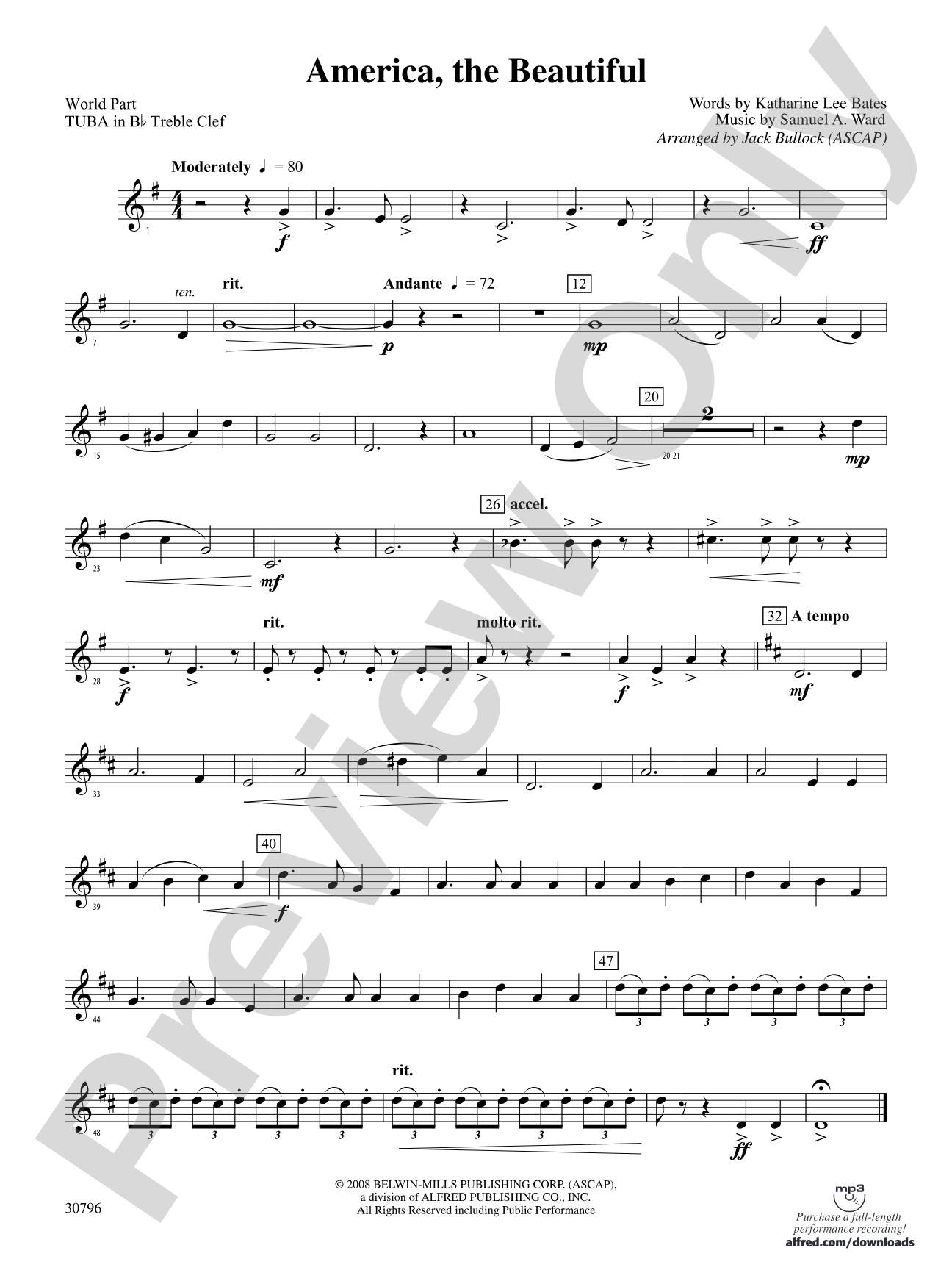

America, the Beautiful: (wp) B-flat Tuba T.C.
Words by Katharine Lee Bates, music by Samuel A. Ward / arr. Jack Bullock
Grade: 3 (Medium Easy)
Item: 00-PC-0001680_wpTBBTC
$3.00
Pickup currently not available
Description
A grand arrangement of this highly patriotic theme is sure to bring pride to your ensemble. The familiar verse can be used as a sing-along if desired. The craft of this particular arrangement is that endurance and range has been carefully considered ensuring a dramatic close to a program while not overwhelming any one section of your band. Full of emotion, a certain winner!


Don't just read it, hear it, play along with it, and watch your students grow with it. In MakeMusic Cloud, America, the Beautiful: (wp) B-flat Tuba T.C. comes alive with professional accompaniment, adjustable tempo, and built-in practice tools that turn solo practice into real progress.
Open in the Player
Jump straight in and assign it today.
Start Your Free Trial
Open this title and explore the full library in minutes.
Sample Audio
1
Audio File
--:--
0:00
0:00
Sample Video
No sample videos found.
Additional Details
Series:
Belwin Concert Band
Publisher:
Alfred Music
Page Count:
118
SKU:
00-PC-0001680_wpTBBTC
More about this title
About the Composer: Samuel A. Ward
Samuel A. Ward (1847-1903) composed the melody to "America, the Beautiful" in 1882, creating one of the most recognizable and emotionally resonant themes in American music. A New Jersey organist and composer, Ward wrote primarily sacred and secular vocal music, yet his single most enduring contribution came from this straightforward, singable melody that has become synonymous with national pride and patriotic observance.
Ward's gift for melody was his strength; "America, the Beautiful" succeeds precisely because the tune is memorable, dignified, and accessible to singers of all abilities. His understanding of vocal writing serves music educators well: the melody sits comfortably in a range that allows both trained and untrained voices to participate meaningfully.
Why we love this
Bullock's arrangement respects the melodic integrity of Ward's original while providing a concert-grade vehicle that works for Grade 3 bands without sacrificing emotional impact. The thoughtful voice leading keeps any single section from overextending, meaning your ensemble can deliver a powerful closing number without fatigue or technical desperation. Directors consistently report that this arrangement generates genuine audience connection because the tune is cherished, the arrangement honors it, and students feel the lift of playing music that matters.
What to expect
The familiar melody unfolds with natural dignity, built on harmony that feels both warm and spacious. As the arrangement progresses toward its close, layers accumulate and the band swells into something genuinely stirring, the kind of moment where audiences instinctively feel moved without the music ever becoming bombastic.
Who it's for
Concert band directors seeking a patriotic closer that resonates with both audience and ensemble without requiring soloists or extended instrumental pyrotechnics. This works equally well for school concert bands, community ensembles, and summer pops programs where the piece needs to carry emotional weight while remaining accessible to players at the early intermediate level.
How to get the most out of it
- Balance the melody carefully across the first reading; identify which voices carry the tune at each moment and ensure they have audible prominence without forcing tone.
- If you choose to add the sing-along verse, rehearse the band's accompaniment and the audience participation separately, then blend them in a full run-through so students hear and feel the added resonance.
- Shape the dramatic close by gradually building dynamic intensity through the final section, resisting the urge to jump to full volume all at once; let the swell feel earned.
- Address any rhythmic unison passages in the woodwinds and low brass with particular attention to articulation clarity, since the audience will hear these moments distinctly.
How to use it
Program this as a concert finale when you want to send the audience home with something affirming and memorable, particularly effective for patriotic holidays or community celebrations. The Grade 3 accessibility means you can prepare it within a reasonable rehearsal timeline while still having time to develop stylistic nuance, making it ideal for spring or summer concerts where scheduling is often condensed.
Skills your students will build
- Balancing multiple melodic lines while maintaining transparency
- Dynamic control and expressive shaping over an extended phrase
- Ensemble blend in homophonic textures
- Sustaining tone quality and intonation during crescendos
- Responding to conducted cues for unified articulation and phrasing