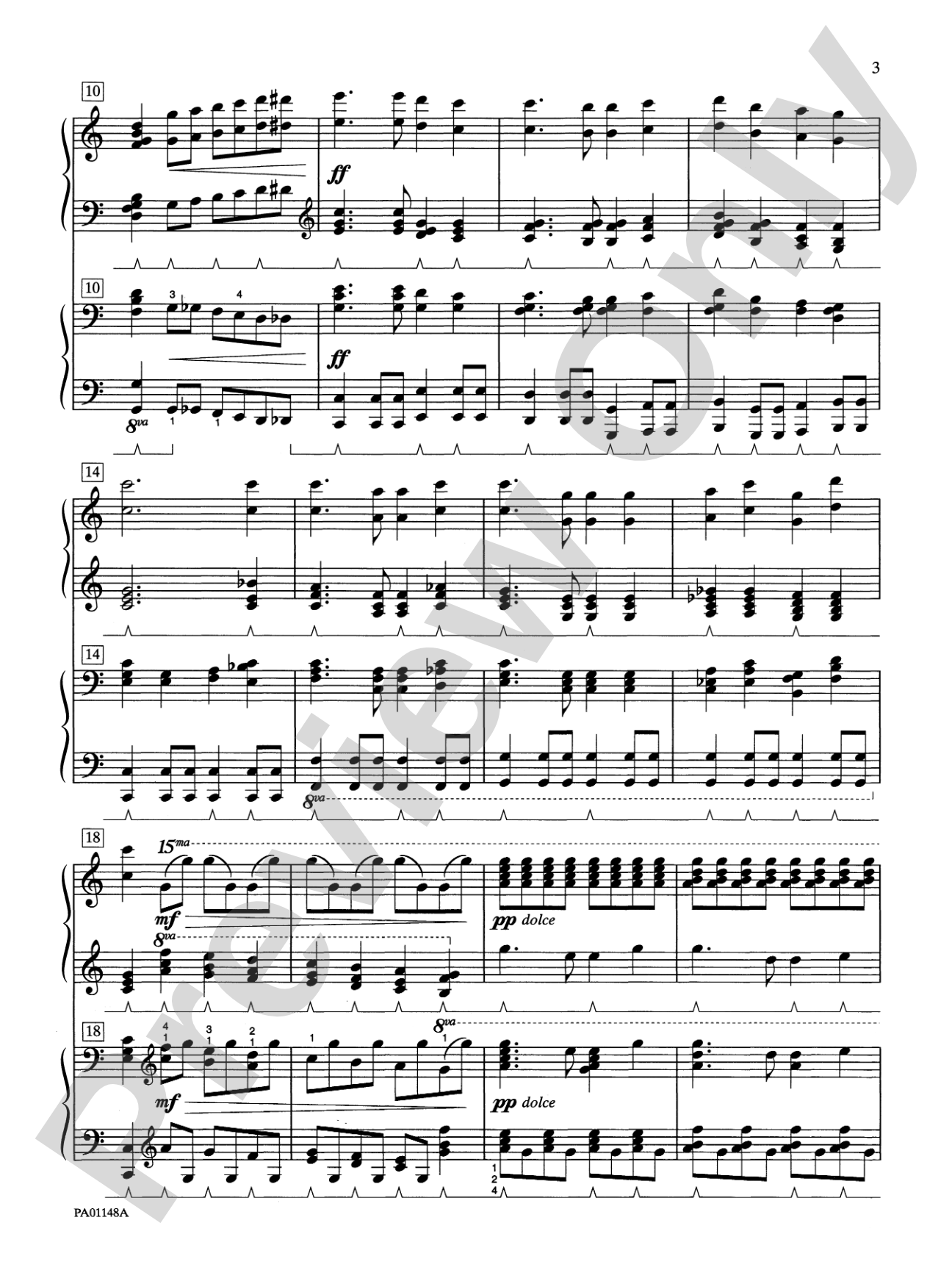
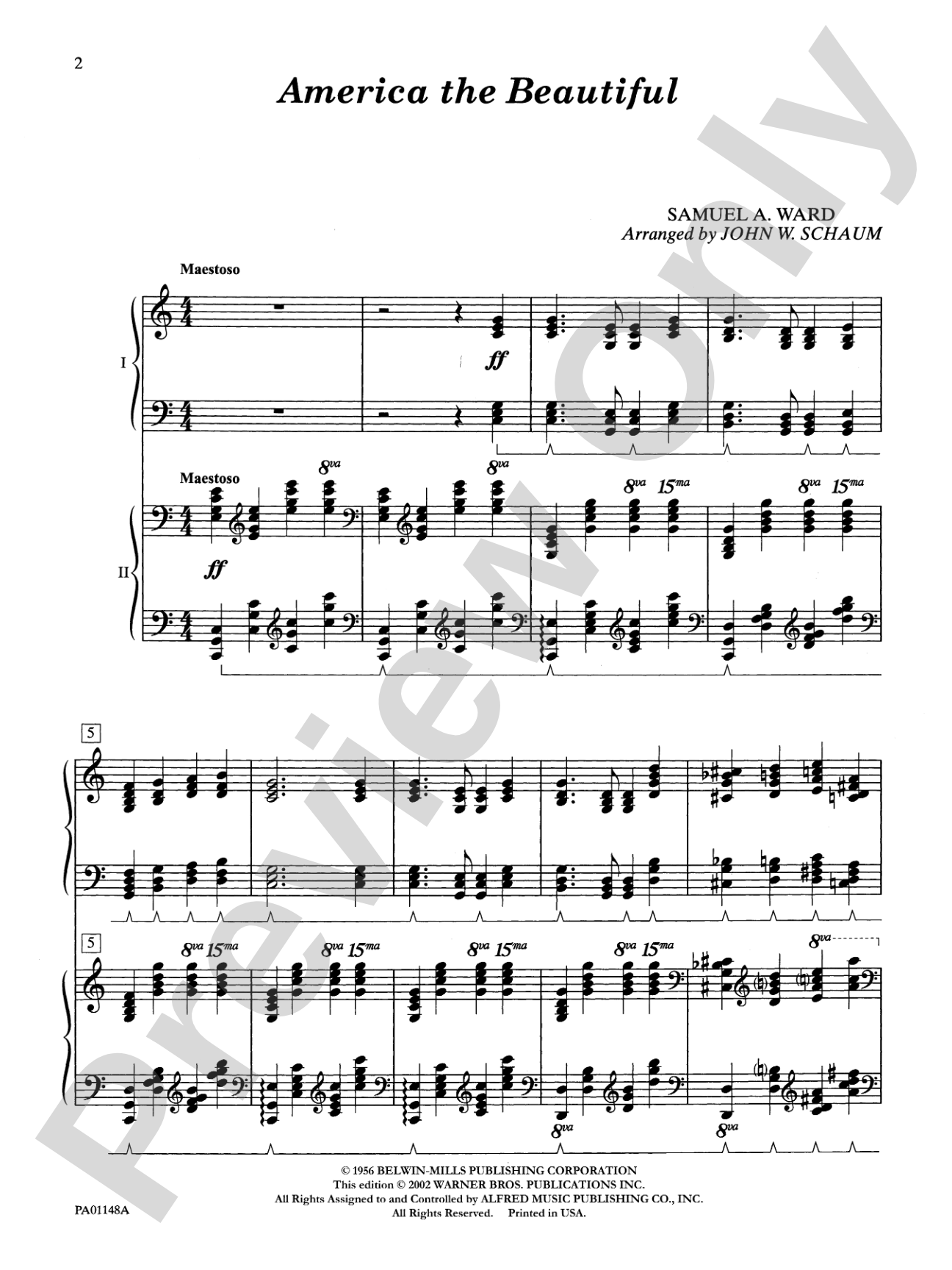
America the Beautiful - Piano Duo (2 Pianos, 4 Hands) Sheet Music Preview

America the Beautiful - Piano Duo (2 Pianos, 4 Hands): Piano Duets & Four Hands

By Samuel A. Ward / arr. John W. Schaum

Level: Late Intermediate

Item: 00-PB-0000824

Digital Download
$6.99
Description
This dazzling two-piano arrangement by John W. Schaum is rhythmically vigorous, and with its brilliant conclusion would serve well as a dramatic ending to any piano program. Parts of equal difficulty require good octave technique. A Federation Festivals 2024-2028 selection.

America the Beautiful - Piano Duo (2 Pianos, 4 Hands): Piano Duets & Four Hands isn't in MakeMusic Cloud just yet...but it could be. Let us know you'd like to see it, and you'll help shape what comes next. In the meantime, start a free trial and dive into thousands of interactive titles your students can play along with today.

Sample Audio
No sample audio found.
Sample Video
Additional Details
Publisher: Alfred Music
Page Count: 16
SKU: 00-PB-0000824

More about this title

About the Composer: Samuel A. Ward

Samuel A. Ward (1847-1903) composed "America the Beautiful" in 1882, setting the melody to Katharine Lee Bates's patriotic poem. Though Ward trained as an organist and composed numerous hymns and sacred works, this single melody became his most enduring contribution to American music. The song's broad, singable contour and emotional directness have made it a staple of American civic life for over a century.

Ward spent much of his career as a church musician and music educator, roles that shaped his gift for writing melodies accessible to amateur singers while retaining genuine artistry. His understanding of what makes a tune memorable and movable across different voicings and arrangements served the song well as it spread into countless instrumental versions.

Why we love this

Schaum's two-piano treatment transforms a familiar melody into a vehicle for genuine ensemble work at the late-intermediate level. The arrangement demands equal technical contribution from both players, particularly in octave work, so neither part feels like accompaniment; this shared responsibility makes the piece rewarding for partnerships where both musicians want a real challenge. The dramatic conclusion gives pianists a chance to finish a program with architectural impact rather than gentle reflection.

What to expect

The arrangement glows with the confidence of its familiar melody while the two-piano texture gives it architectural breadth. The writing feels energetic and purposeful rather than nostalgic; Schaum's rhythmic vigor keeps the patriotic sentiment from veering into sentimentality. By the finish, the piece builds to something genuinely ceremonial, leaving audiences with a sense of arrival.

Who it's for

Intermediate piano students ready to experience true duo playing, where technical demands and musical responsibilities fall equally on both players. Piano teachers looking to program a patriotic selection for recitals, festivals, or competitions will find this ideal for pairs comfortable with octave technique and rhythmic precision.

How to get the most out of it

  • Coordinate octave passages between pianos by rehearsing separately first, then bringing the parts together slowly to lock the alignment. Slight rhythmic unevenness in octaves reads immediately at this level, so precision here pays off.
  • Balance the melodic and harmonic roles as the arrangement unfolds. Identify moments where one piano carries the tune and the other provides textural support, then voice accordingly rather than treating all sections as equal weight.
  • Shape the brilliant conclusion with dynamic control. The description signals excitement, but sustain musical intention through the climax instead of allowing tension to collapse into raw volume.

How to use it

Close a recital or festival performance with this piece when you want to send the audience out with memorable impact and a clear musical statement. It works equally well in a program celebrating American music or patriotic occasions, and its federation selection status makes it a reliable choice for students preparing for festival adjudication.

Skills your students will build

  • Octave technique and precision across two pianos
  • Ensemble listening and synchronized rhythm between independent players
  • Balance and voice-leading in a two-instrument arrangement
  • Musicality within a familiar melody, avoiding automatic or overly sentimental interpretation

You May Also Like