
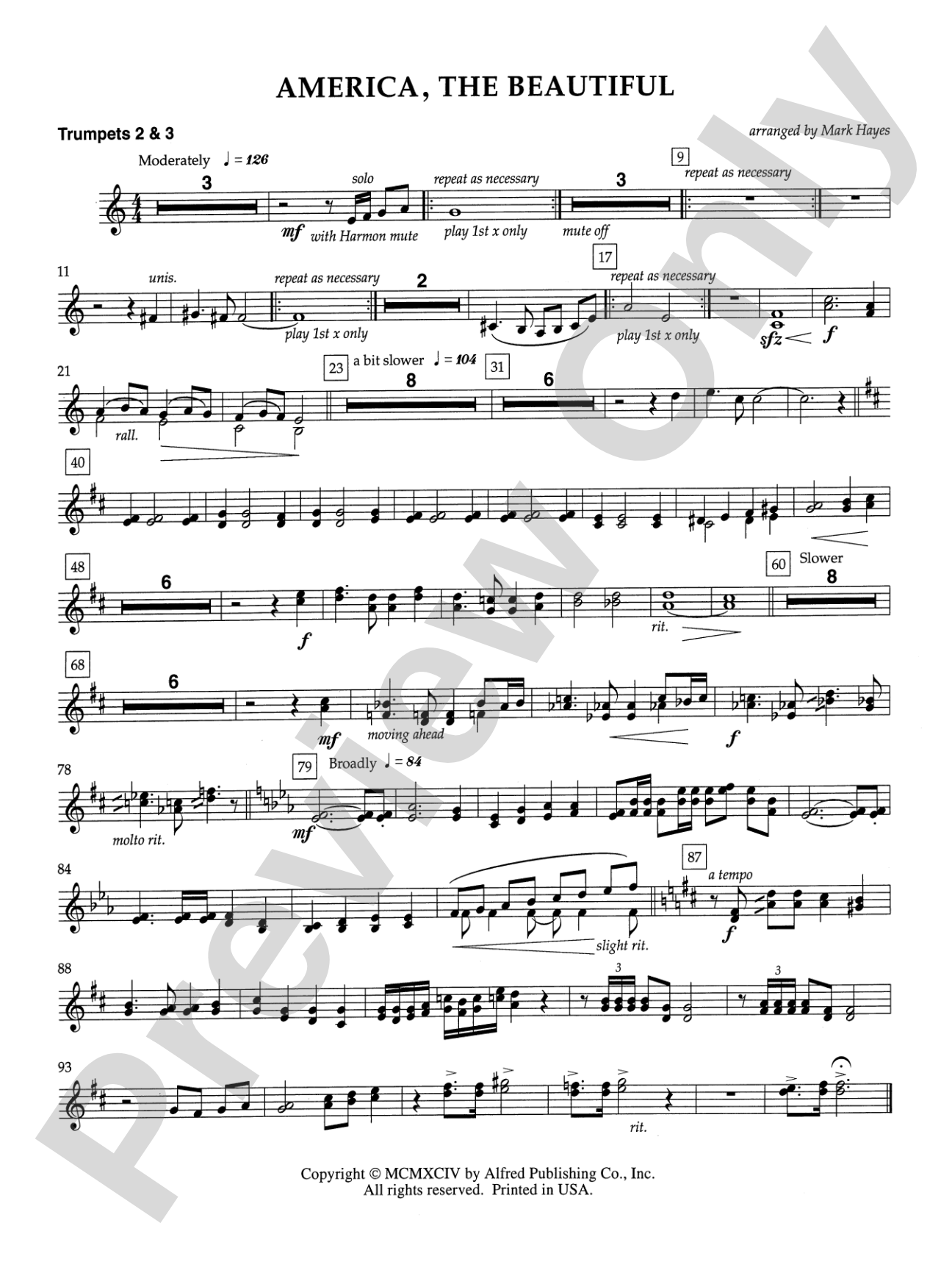

America, the Beautiful: 2nd B-flat Trumpet: Choral SoundPax
Words by Katherine Lee Bates, music by Samuel A. Ward / arr. Mark Hayes
Item: 00-PC-0001920_T2
$3.00
Pickup currently not available
Description
We think this is the finest arrangement we've heard of the patriotic work that many believe should be our national anthem. Mark Hayes' arrangement uses fresh, new harmonies and is thoroughly inspirational. Optional narration includes writings by Jefferson, Lincoln, and Martin Luther King. Vocals are not difficult for a piece of this order. Consider for use at festivals. InstruPax includes: director's score, 3 trumpets, 2 trombones, 2 French horns [opt. baritone], percussion.


Don't just read it, hear it, play along with it, and watch your students grow with it. In MakeMusic Cloud, America, the Beautiful: 2nd B-flat Trumpet: Choral SoundPax comes alive with professional accompaniment, adjustable tempo, and built-in practice tools that turn solo practice into real progress.
Open in the Player
Jump straight in and assign it today.
Start Your Free Trial
Open this title and explore the full library in minutes.
Sample Audio
1
Audio File
--:--
0:00
0:00
Sample Video
No sample videos found.
Additional Details
Series:
Alfred Choral Designs
Publisher:
Alfred Music
Page Count:
22
SKU:
00-PC-0001920_T2
Instrumentation:
3 trumpets, 2 trombones, 2 French horns [opt. baritone], percussion, score
More about this title
About the Composer: Samuel A. Ward
Samuel A. Ward (1847-1903) composed "America, the Beautiful" in 1882, setting Katharine Lee Bates' poem to music that has resonated across generations of Americans. Ward was a prolific composer and organist whose gift for melody created one of the most enduring patriotic songs in the American canon, a piece many consider worthy of replacing the current national anthem.
Ward's training in music theory and composition, combined with his work as a church musician, gave him the ability to craft melodies that balance accessibility with emotional depth. His setting of Bates' text demonstrates his skill at matching musical phrase to poetic content, creating a work that singers and audiences alike find profoundly moving.
Why we love this
Mark Hayes understands how to honor a beloved melody while refreshing it for contemporary ensembles. His harmonies feel natural rather than imposed, and the addition of optional narration gives directors a powerful tool for storytelling without overshadowing the choir's work. This arrangement sits at that sweet spot where the piece feels special and newly discovered, yet the vocal lines remain singable for groups of varying experience.
What to expect
There's a sense of quiet pride running through Hayes' setting, built on harmonic progressions that feel both familiar and unexpected. The piece invites singers to invest emotionally in the text while giving them thoughtful musical material that rewards careful attention to phrasing and blend.
Who it's for
This arrangement serves choirs of intermediate ability who want to perform a patriotic work with substance and originality. Directors programming concerts for summer festivals, Independence Day celebrations, or community events will find the combination of meaningful text and fresh harmonies appeals to both singers and audiences.
How to get the most out of it
- Balance the brass carefully during the opening instrumental statement. The horns and trombones should support rather than overpower the incoming vocal line.
- If you use the optional narration, rehearse the transition from spoken text into singing so the mood shifts feel intentional and the choir enters with confidence.
- Let the harmonies breathe in the middle sections. Hayes' new voicings will land best if your singers have space to hear the chord colors they're creating.
- Consider your tempo choice as a conductor's first interpretive decision. The piece works at several tempi; find the one that lets both words and music feel natural for your ensemble.
How to use it
This works beautifully as a centerpiece for a patriotic program or as a powerful closer for a summer pops concert. The optional narration makes it adaptable for different contexts; you can program it as a choral showcase or as part of a larger presentation that includes instrumental selections and spoken reflection.
Skills your students will build
- Singing in four-part harmony with contemporary chromatic voice leading
- Balancing blend when chords contain intervals outside traditional triadic structures
- Interpreting narration cues and managing transitions from spoken word to sung text
- Responding to conductor's choices about tempo and phrasing in a patriotic context
- Building vocal stamina across a 22-page work with dynamic range