
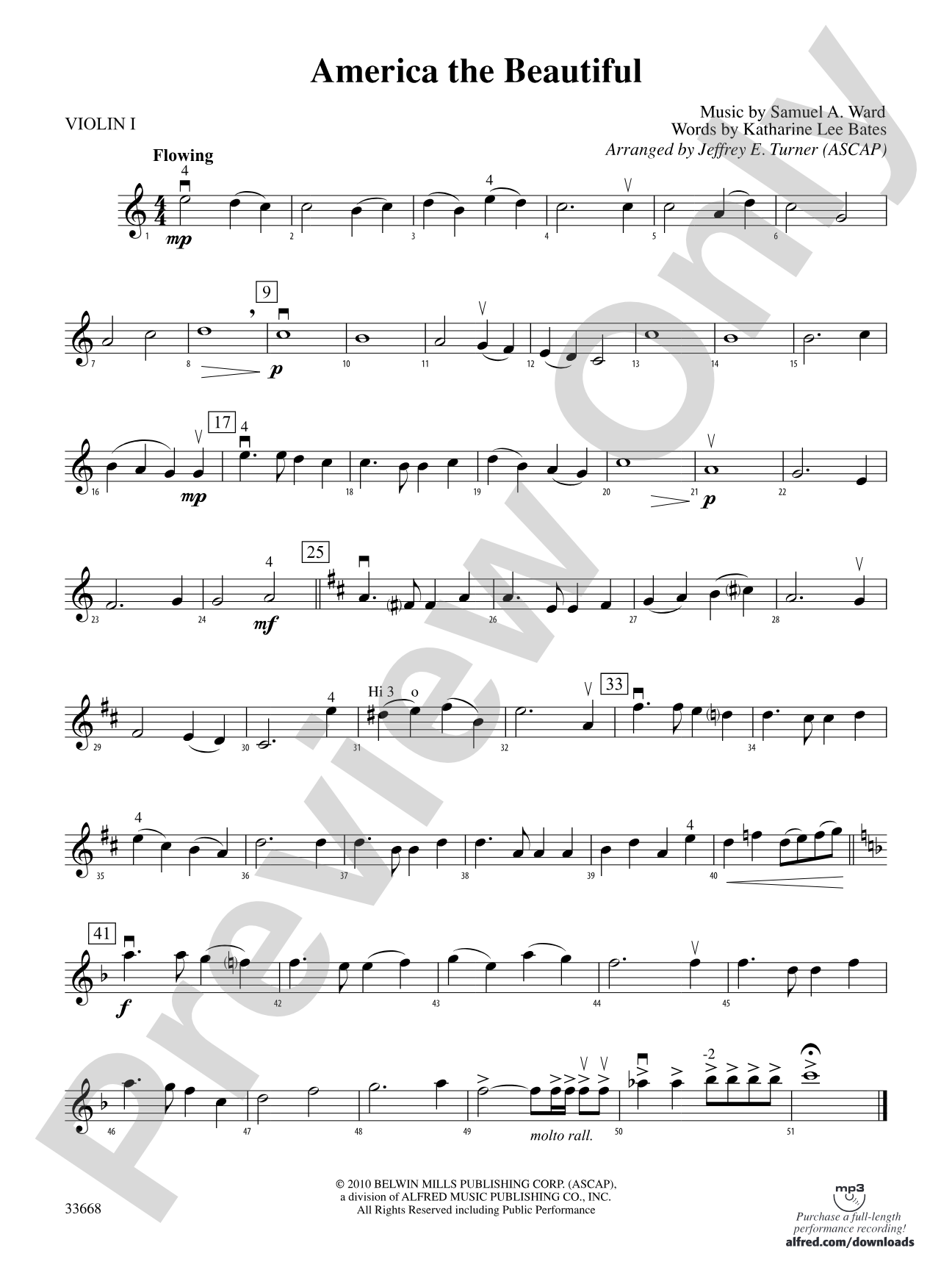

America the Beautiful: 1st Violin
Music by Samuel A. Ward, lyrics by Katharine Lee Bates / arr. Jeffrey E. Turner
Grade: 3
Item: 00-PC-0014461_VN1
$5.99
Pickup currently not available
Description
This stirring arrangement of America's other national anthem, from its poignant first verse to the glorious final bars, encompasses the breadth and majesty of this great nation. Using rich harmonies, the melody is passed between sections, making this the perfect vehicle to teach the importance of listening and blending with each other. This piece will be the perfect choice for those very special occasions!


Don't just read it, hear it, play along with it, and watch your students grow with it. In MakeMusic Cloud, America the Beautiful: 1st Violin comes alive with professional accompaniment, adjustable tempo, and built-in practice tools that turn solo practice into real progress.
Open in the Player
Jump straight in and assign it today.
Start Your Free Trial
Open this title and explore the full library in minutes.
Sample Audio
1
Audio File
--:--
0:00
0:00
Sample Video
Additional Details
Series:
Belwin Intermediate String Orchestra
Publisher:
Alfred Music
Page Count:
74
SKU:
00-PC-0014461_VN1
More about this title
About the Composer: Samuel A. Ward
Samuel A. Ward (1847-1903) composed the melody to "America the Beautiful" in 1882, creating one of the most enduring patriotic songs in American music. Though Ward spent much of his life as a church organist and music director in Newark, New Jersey, his single contribution to the national repertoire has secured his legacy as a composer of profound melodic gift. The tune's singability and emotional directness have made it a staple of American musical life for over a century.
Ward's melody stands apart from other patriotic compositions for its lyrical quality and genuine accessibility. Rather than relying on bombast, the tune builds its power through memorable phrases that sit naturally in the voice and remain in the listener's memory long after performance.
Why we love this
Turner's arrangement honors Ward's melody by giving it room to breathe while using the full color palette of the string section. The way the tune migrates between sections transforms a familiar melody into a teaching opportunity about voice independence and ensemble listening, making this more than just a patriotic piece but a genuine rehearsal tool for building sectional awareness.
What to expect
The piece unfolds with quiet dignity in its opening, allowing Ward's memorable melody to establish itself without fanfare. As it progresses, the harmonies deepen and the arrangement opens to reveal the full breadth of the tune, building toward a radiant conclusion that affirms the sweep and optimism of its text.
Who it's for
String orchestra directors seeking repertoire that serves both concert programming and pedagogical goals will find this arrangement ideal for intermediate ensembles. Players at Grade 3 level benefit from the clearly written parts while tackling the musical challenge of seamless sectional handoffs and sensitive blending.
How to get the most out of it
- Balance the melody line carefully as it passes between sections; the section carrying the tune should sing out clearly while accompanying sections support with transparent harmonies.
- Shape the first verse with restraint and warmth, allowing the harmonic richness to emerge without rushing the pacing.
- Build momentum gradually through the final section, resisting the urge to accelerate; let the crescendo come from dynamic and harmonic intensity rather than tempo.
- Use vibrato conservatively in earlier statements of the melody, saving fuller expression for the glorious final bars where the entire orchestra supports the tune.
How to use it
This works beautifully as a concert opener or closing selection for patriotic or civic occasions, particularly Fourth of July celebrations or Veterans Day programs. Its accessibility and emotional directness make it equally suited to festival play, where its straightforward Grade 3 demands and immediate musical reward serve both adjudicators and audiences.
Skills your students will build
- Passing the melodic line between sections with clear communication and sustained phrasing
- Maintaining transparent accompaniment while supporting a featured section
- Listening across the ensemble for sectional balance and blend
- Shaping longer phrases with dynamic control rather than tempo changes
- Reading and responding to expressive markings that shape musical character