

America, the Beautiful: SATB Choral Octavo
Words by Katherine Lee Bates, music by Samuel A. Ward / arr. Mark Hayes
Item: 00-PO-0003116

$2.25
Minimum order quantity: 20 copies
Pickup currently not available
Related Items
America, the Beautiful: SAB Choral Octavo |
$2.25
|
View | |
America, the Beautiful: Choral SoundPax |
$20.00
|
View | |
America, the Beautiful: SATB Choral Octavo |
$2.25
|
View | |
America, the Beautiful: SAB Choral Octavo |
$2.25
|
View | |
America, the Beautiful: Choral Octavo SoundTrax CD |
$27.99
|
View | |
America, the Beautiful: Choral SoundPax |
$20.00
|
View |
Description
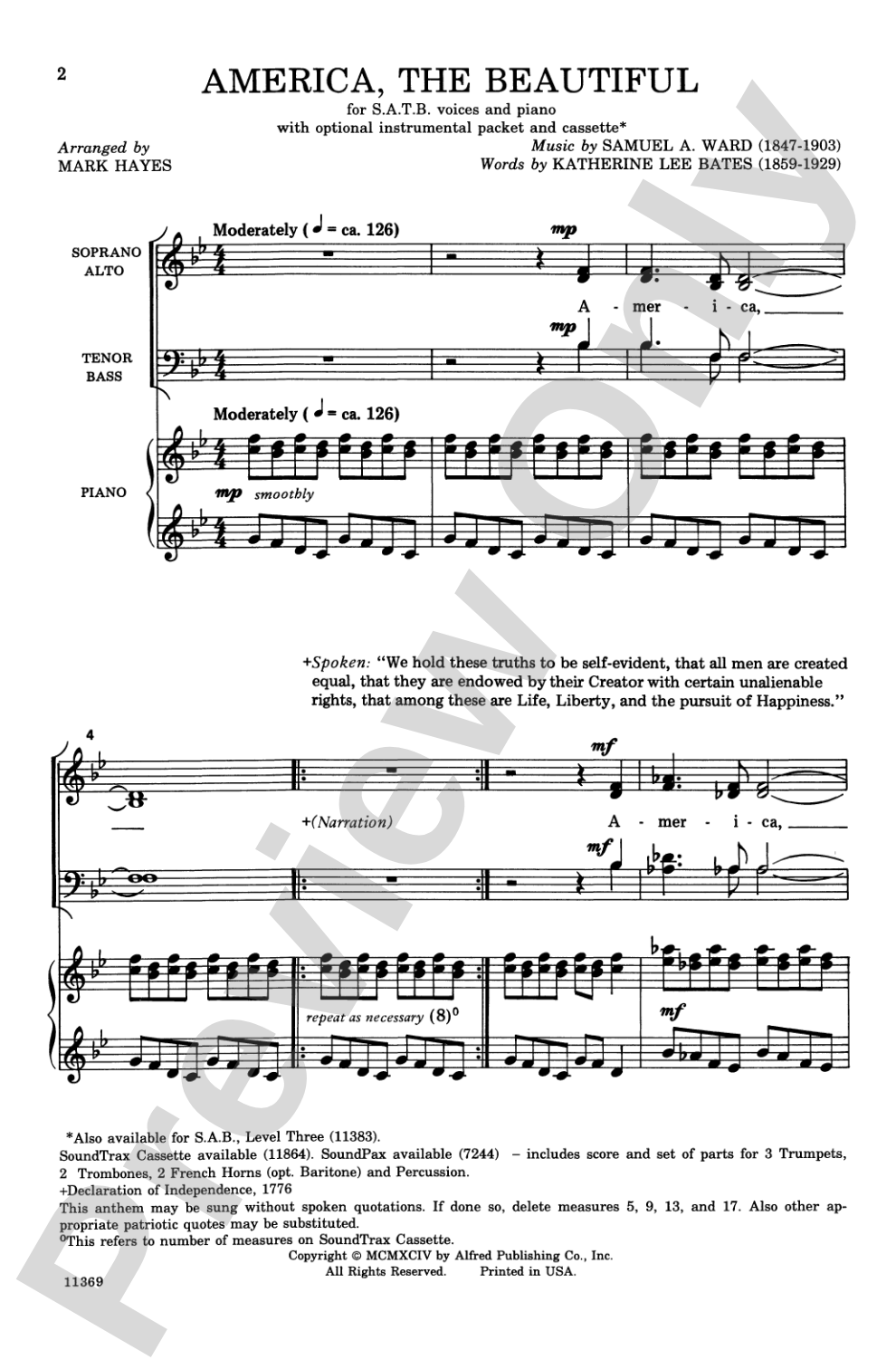
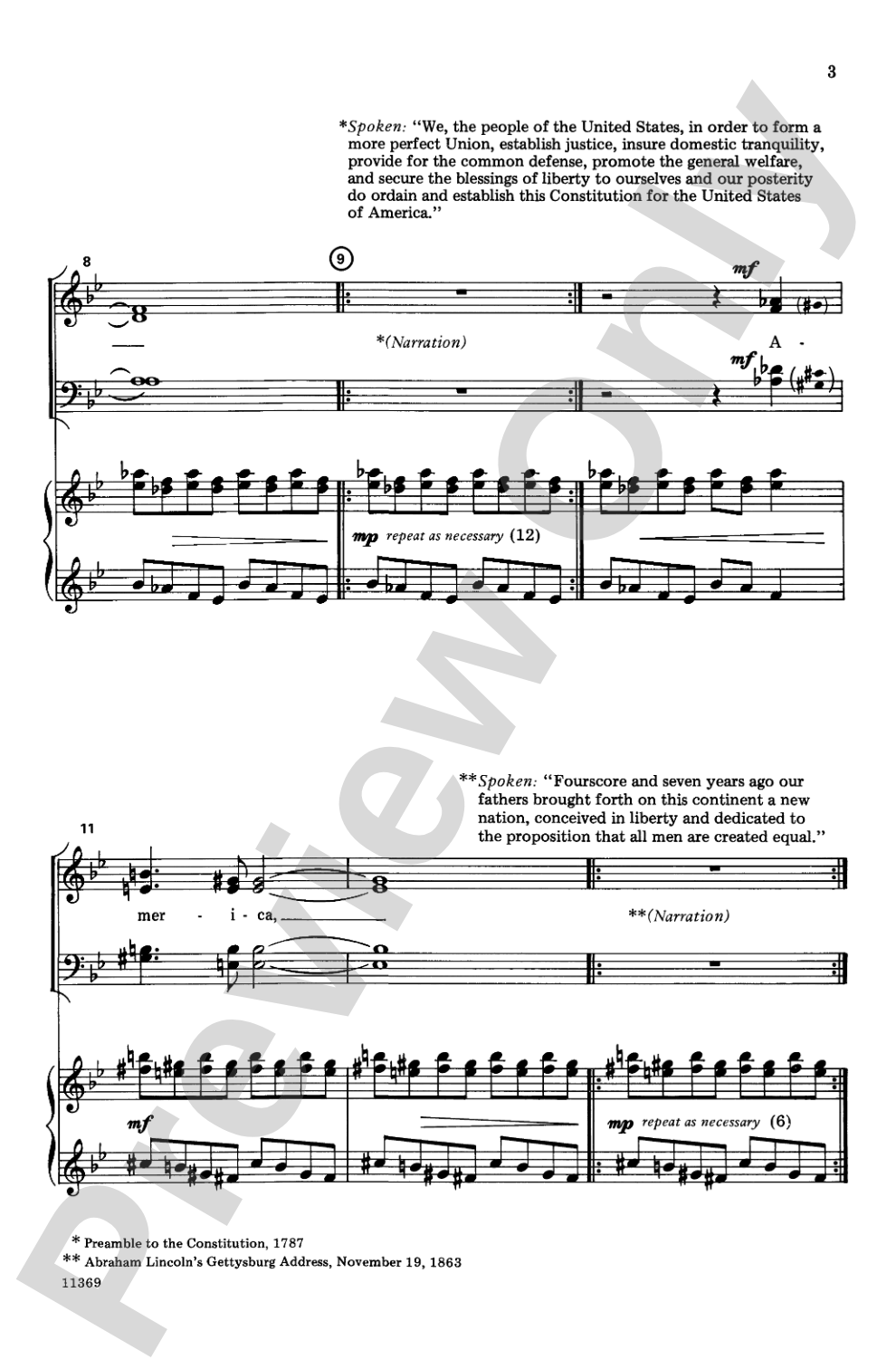
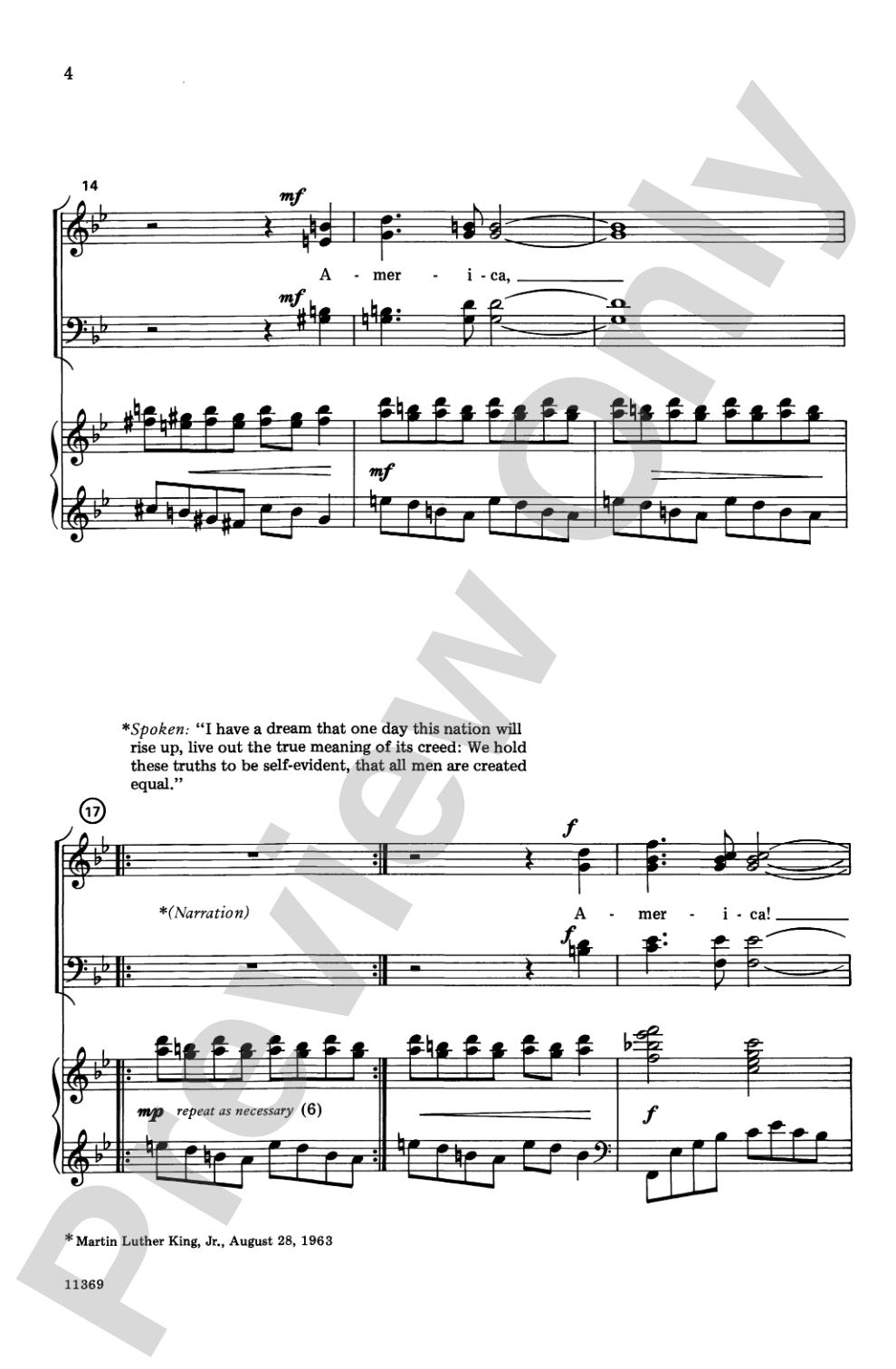
We think this is the finest arrangement we've heard of the patriotic work that many believe should be our national anthem. Mark Hayes' arrangement uses fresh, new harmonies and is thoroughly inspirational. Optional narration includes writings by Jefferson, Lincoln, and Martin Luther King. Vocals are not difficult for a piece of this order. Consider for use at festivals. InstruPax includes: director's score, 3 trumpets, 2 trombones, 2 French horns [opt. baritone], percussion.


Don't just read it, hear it, play along with it, and watch your students grow with it. In MakeMusic Cloud, America, the Beautiful: SATB Choral Octavo comes alive with professional accompaniment, adjustable tempo, and built-in practice tools that turn solo practice into real progress.
Open in the Player
Jump straight in and assign it today.
Start Your Free Trial
Open this title and explore the full library in minutes.
Sample Audio
1
Audio File
--:--
0:00
0:00
Sample Video
No sample videos found.
Additional Details
Series:
Alfred Choral Designs
Publisher:
Alfred Music
Page Count:
12
SKU:
00-PO-0003116
More about this title
About the Composer: Samuel A. Ward
Samuel A. Ward (1847-1903) composed "America, the Beautiful" in 1882, setting Katharine Lee Bates' 1893 poem to music that became one of the most recognizable melodies in American civic life. Ward, an organist and composer based in Newark, New Jersey, wrote primarily sacred and patriotic works that emphasized singability and emotional directness. His gift for crafting memorable, accessible melodies ensured that "America, the Beautiful" would outlast countless other compositions from his era and remain central to American musical identity.
Why we love this
Mark Hayes' arrangement respects Ward's original melody while introducing harmonic sophistication that keeps the piece fresh for singers and audiences who know it well. The optional orchestral parts and narration create genuine flexibility: you can perform this as a straightforward choral piece, expand it with instruments, or frame it with spoken text for a more reflective presentation. This is one of those arrangements that feels both reverent and contemporary, which makes it genuinely useful for 4th of July programs, patriotic services, or any concert that needs to acknowledge American identity with musical substance.
What to expect
Spacious and affirming. Hayes' harmonies are richer and more unexpected than you might anticipate, giving the familiar melody new emotional dimensions. The piece evokes reflection and pride without sentimentality, inviting singers and listeners to inhabit the words rather than simply perform them.
Who it's for
This octavo serves choirs at intermediate and advanced levels who want a patriotic staple that doesn't sound like a high school pep rally. Directors planning summer concerts, 4th of July programs, or festival performances will find a piece that's vocally manageable but musically and textually substantial enough for thoughtful musicians.
How to get the most out of it
- Balance the optional narration carefully with the choral sections. If you include Jefferson, Lincoln, and King excerpts, give them weight and silence; don't let them compete with or blur into the singing.
- The orchestral parts (brass and percussion) elevate the piece considerably, but if you're performing with choir alone, lean into the harmonic details Hayes provides to maintain the inspirational arc.
- Shape the phrase contours deliberately rather than singing through in one dynamic level. This melody has natural peaks and valleys; honor them to let the text land emotionally.
- Ensure solid vowel unification across all four voice parts, especially in the full SATB passages. Ward's melody is the star, but the harmonic blend will make or break the arrangement's effectiveness.
How to use it
Position this as a concert centerpiece or closing number rather than filler; the optional narration and orchestration create a natural focal point. It works exceptionally well in a patriotic or Americana-themed concert, or as a standalone feature performance at summer festivals. If your choir has instrumental accompaniment available, this is an excellent opportunity to feature those players alongside your singers.
Skills your students will build
- Balancing melody and harmony when the tune is extremely well-known
- Singing with emotional authenticity in patriotic and sacred contexts
- Coordinating with optional instrumental and spoken word elements
- Shaping phrase contours in slower, hymn-like tempos
- Blending SATB textures in contemporary harmonic settings