
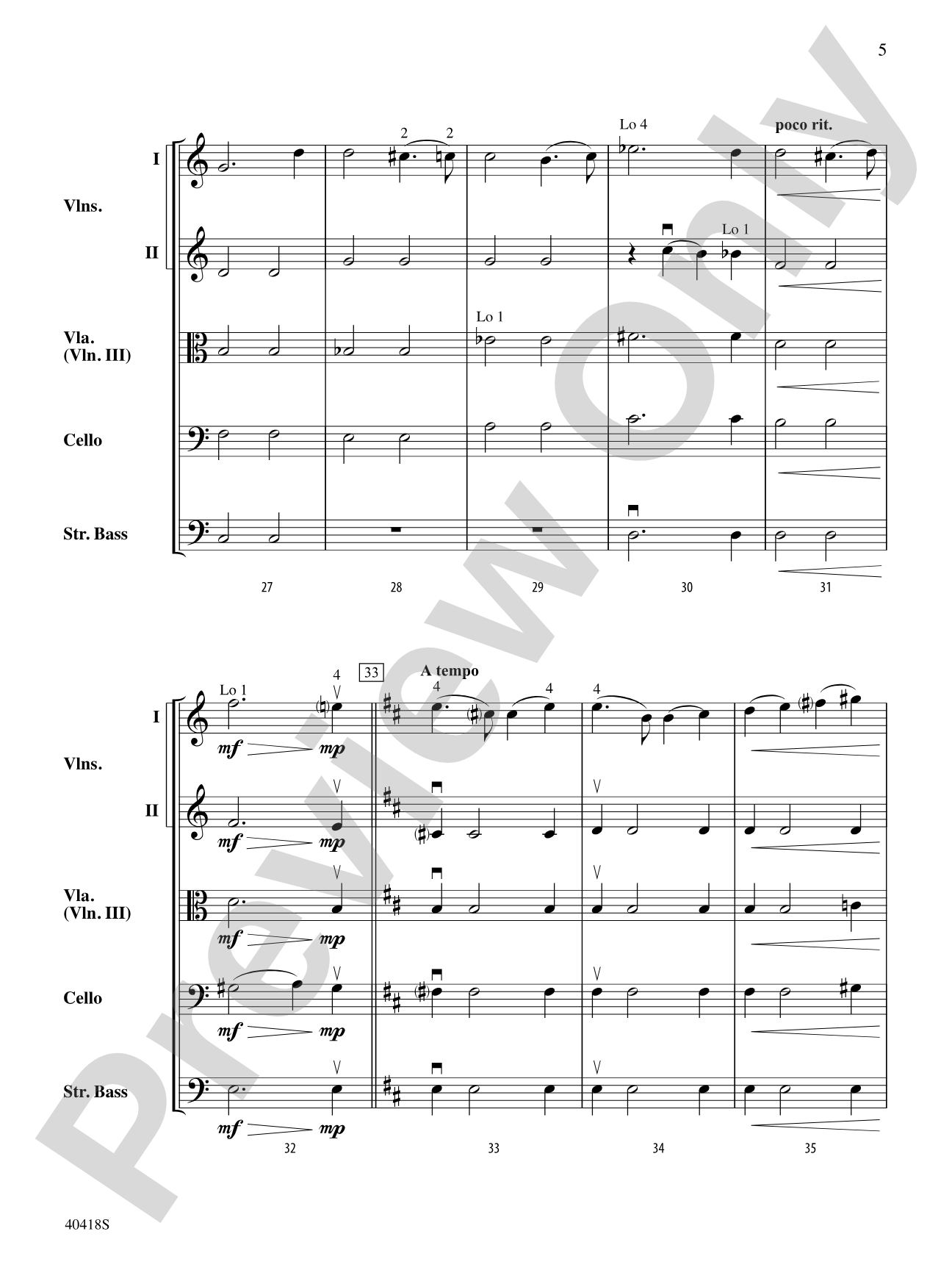
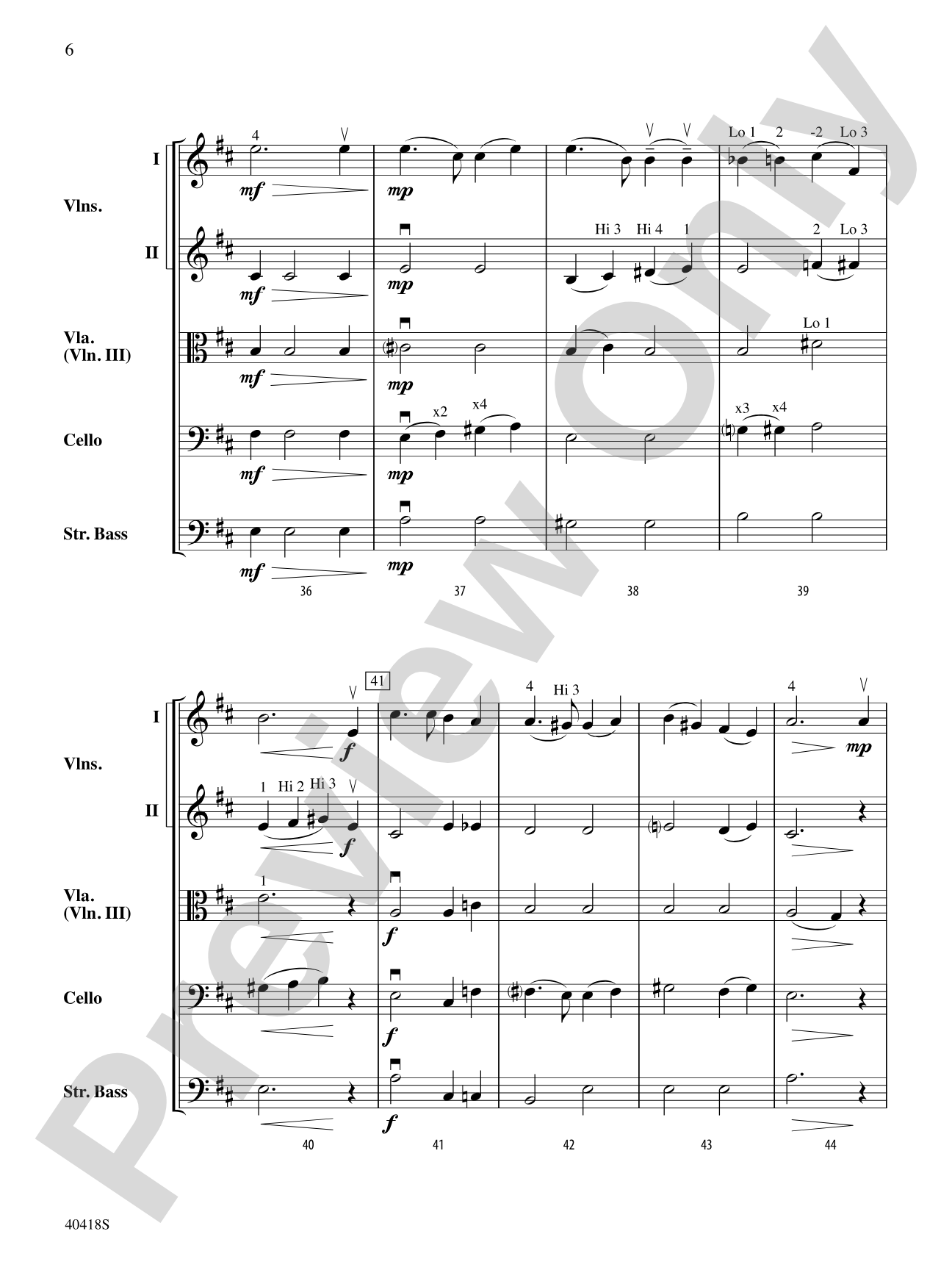
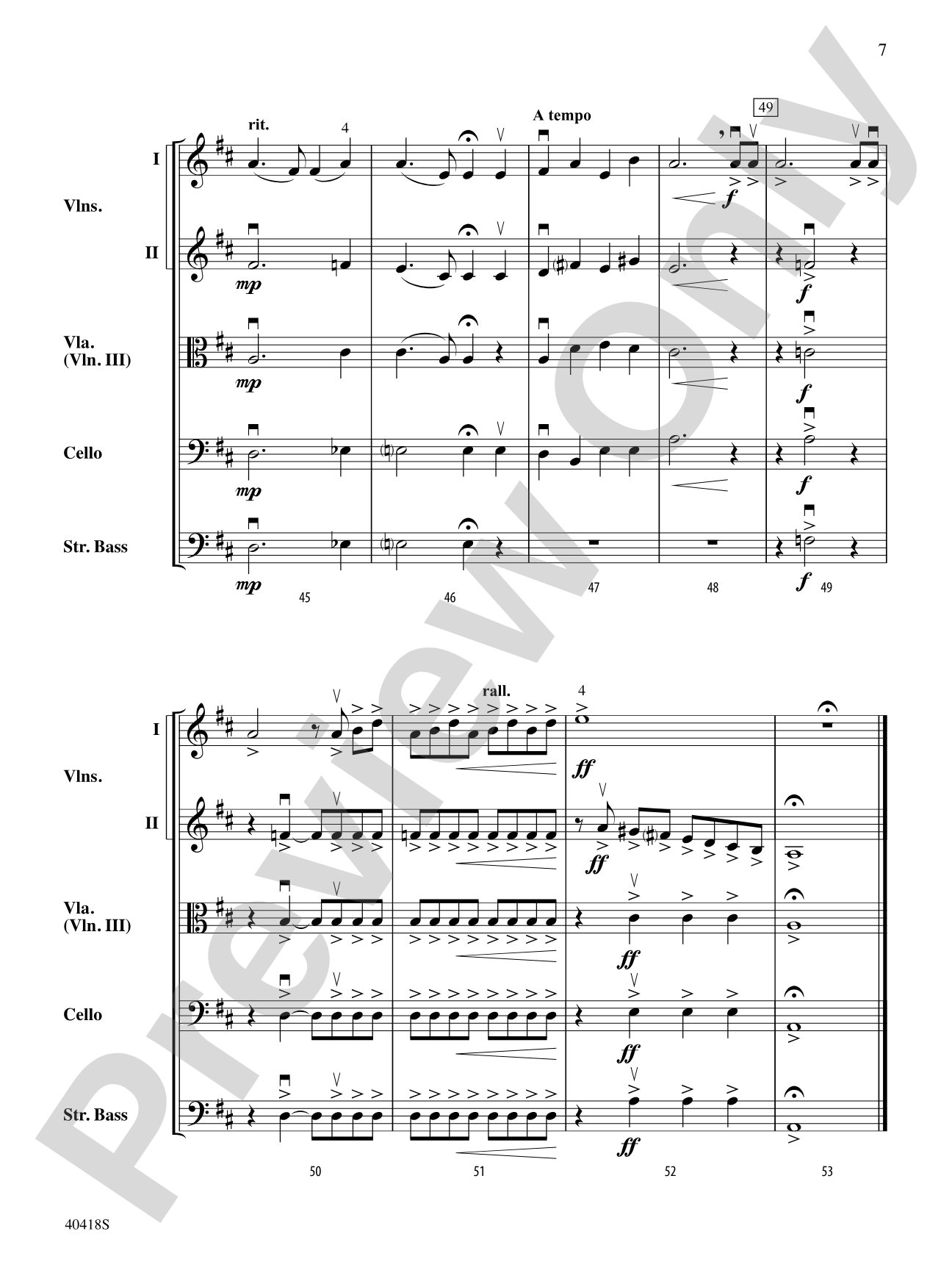


America, the Beautiful: String Orchestra Conductor Score & Parts
Words and music by Samuel Augustus Ward / arr. Carmen Dragon, adapted by Douglas E. Wagner
Grade: 2.5
Item: 00-PK-0005701

$51.00
Pickup currently not available
Buy Extra Parts (Digital PDF Download)
| Product | Price | Quantity |
|---|---|---|
| America, the Beautiful: Score | $10.00 | |
| America, the Beautiful: 1st Violin | $5.99 | |
| America, the Beautiful: 2nd Violin | $5.99 | |
| America, the Beautiful: 3rd Violin (Viola [TC]) | $5.99 | |
| America, the Beautiful: Viola | $5.99 | |
| America, the Beautiful: Cello | $5.99 | |
| America, the Beautiful: String Bass | $5.99 |
Parts Added to Cart!
Related Items
America, the Beautiful: Concert Band Conductor Score & Parts |
$62.00
|
View | |
America, the Beautiful: Concert Band Conductor Score & Parts |
$62.00
|
View | |
America, the Beautiful: Concert Band Conductor Score |
$10.00
|
View | |
America, the Beautiful: String Orchestra Conductor Score & Parts |
$45.00
|
View | |
America, the Beautiful: String Orchestra Conductor Score |
$9.00
|
View |
Description
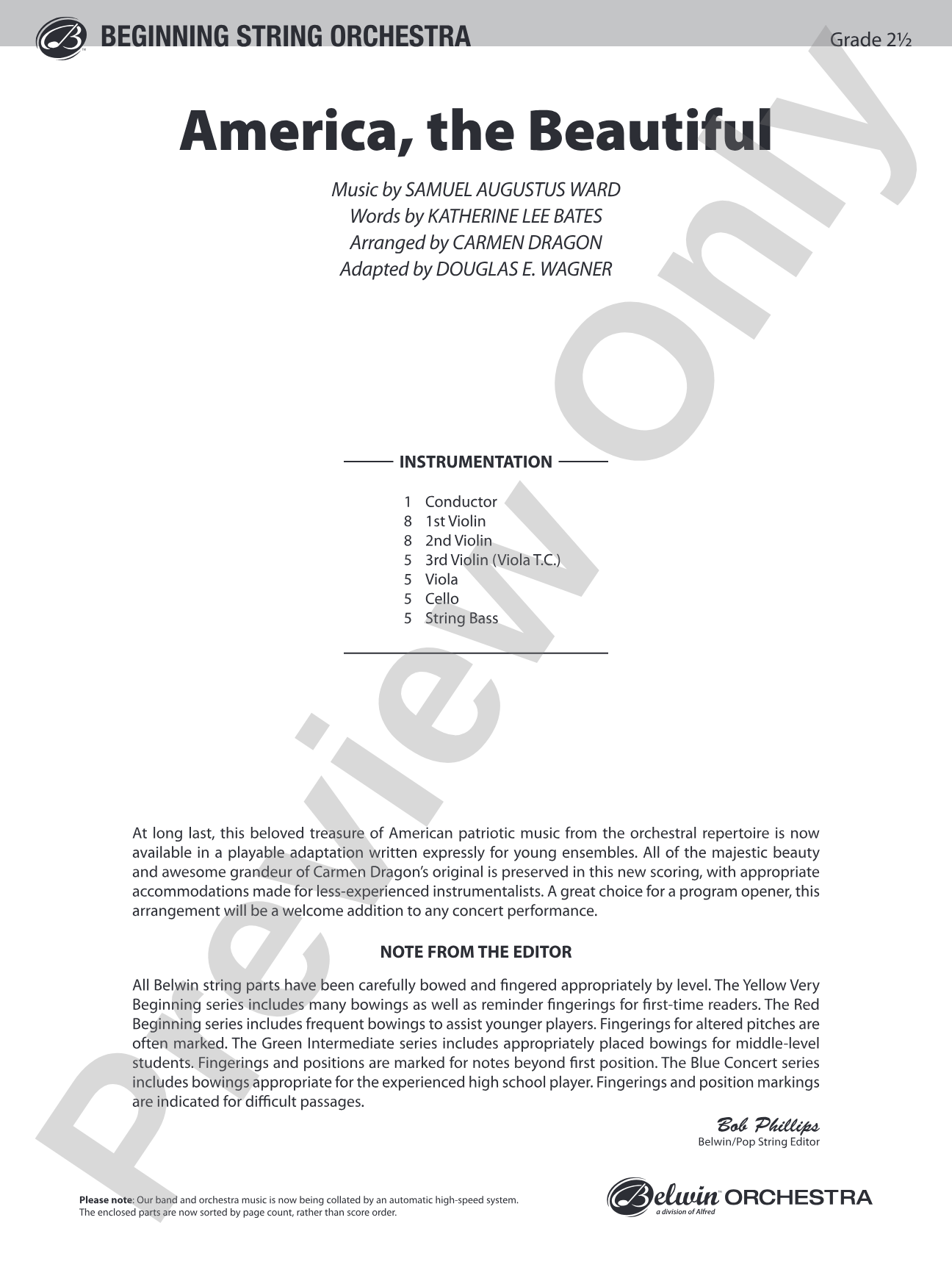
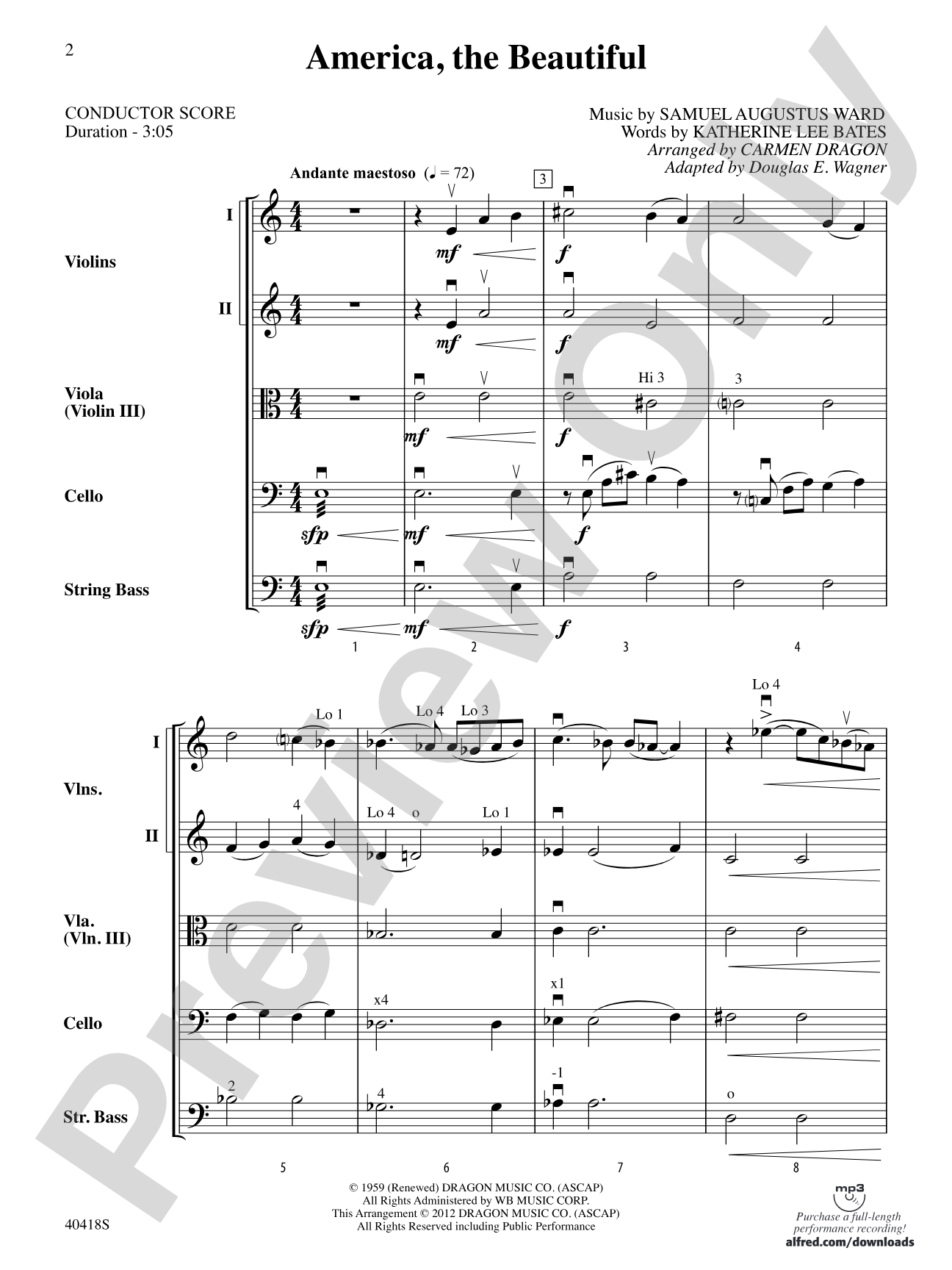
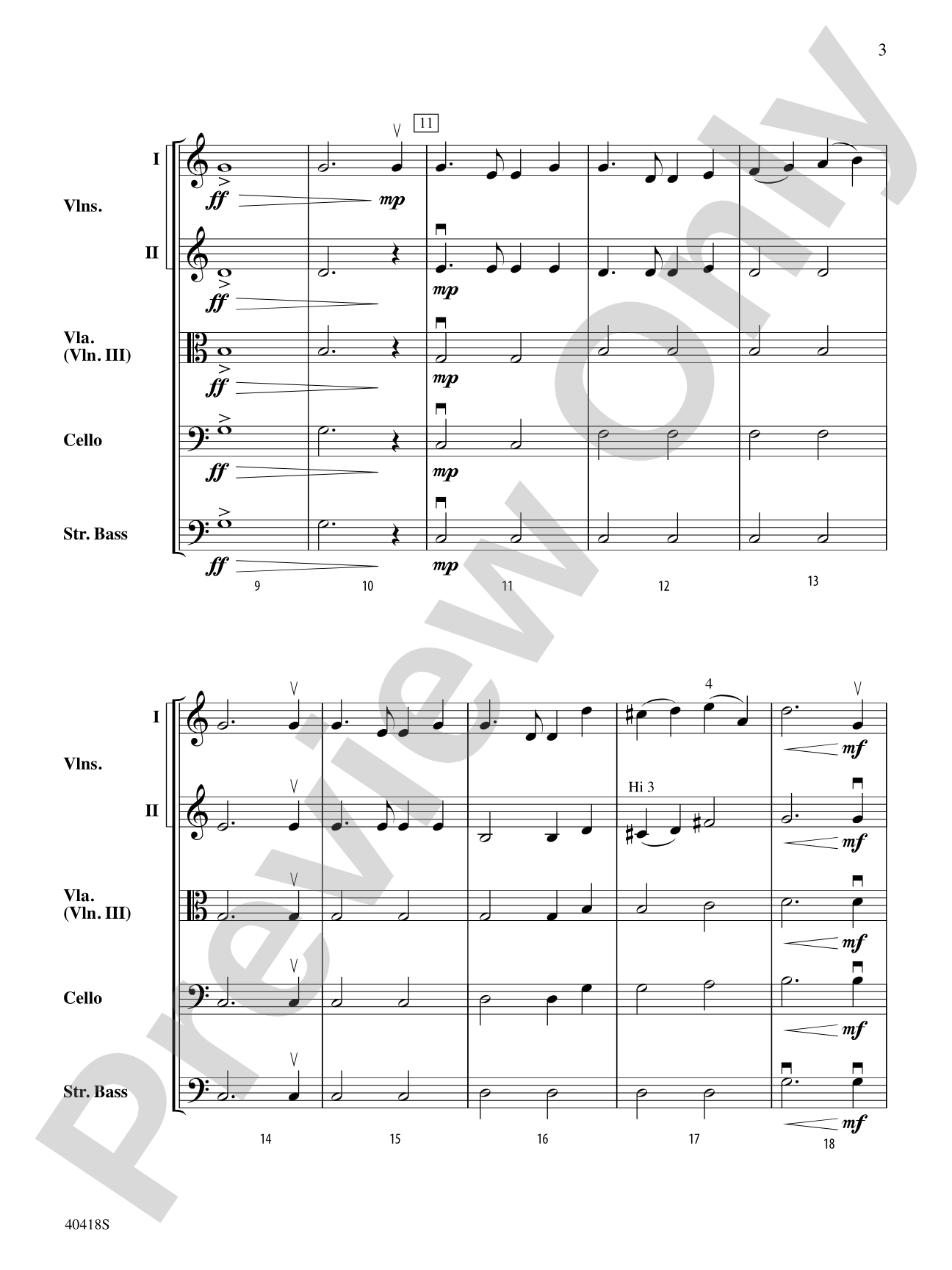
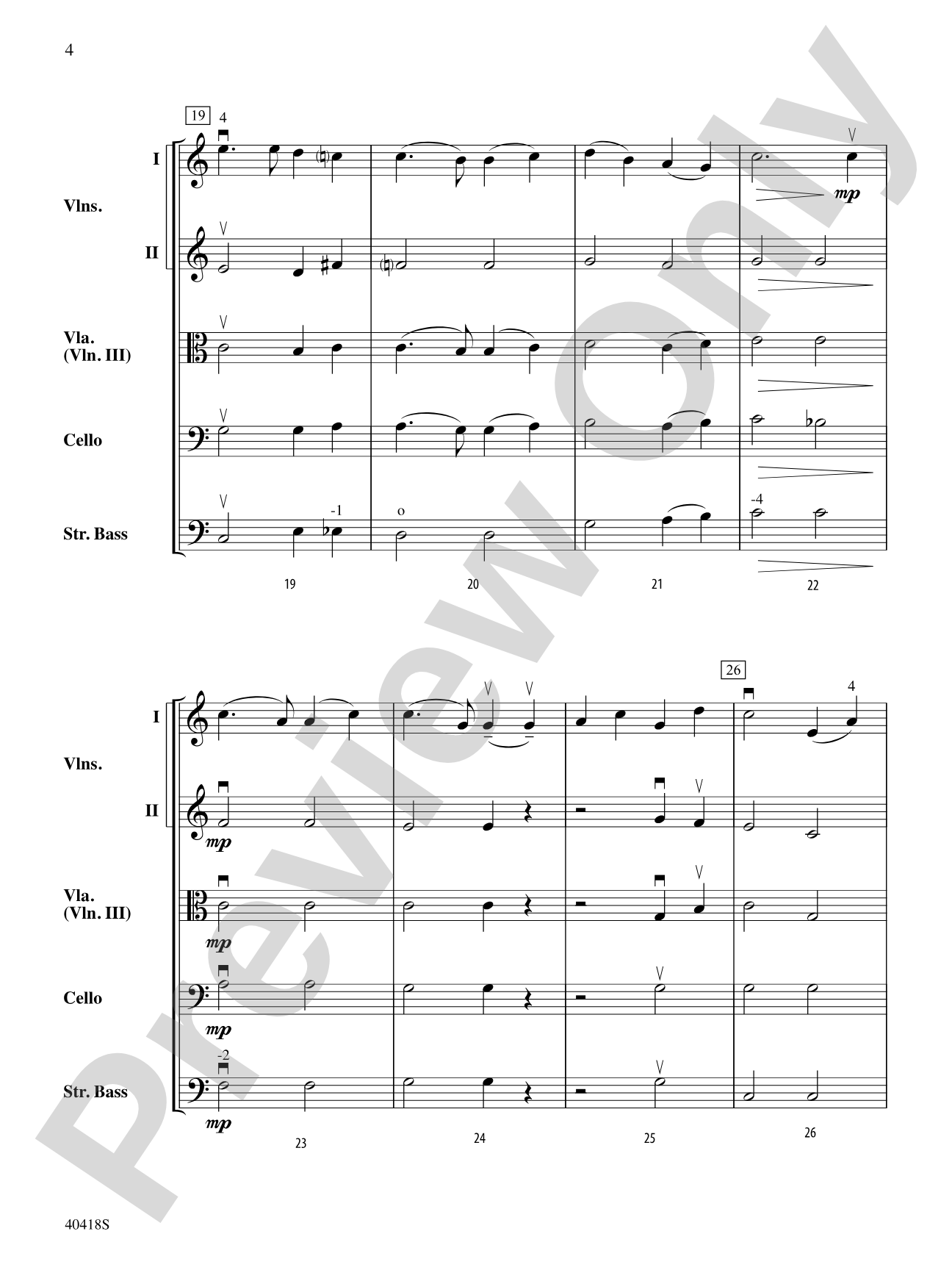
At long last, this beloved treasure of American patriotic music from the orchestral repertoire is now available in a playable adaptation written expressly for young ensembles. All of the majestic beauty and awesome grandeur of Carmen Dragon's original is preserved in this new scoring, with appropriate accommodations made for less-experienced instrumentalists. A great choice for a program opener, this arrangement will be a welcome addition to any concert performance. (3:05)
This title is available in MakeMusic Cloud.


This title is available in MakeMusic Cloud.
Don't just read it, hear it, play along with it, and watch your students grow with it. In MakeMusic Cloud, America, the Beautiful: String Orchestra Conductor Score & Parts comes alive with professional accompaniment, adjustable tempo, and built-in practice tools that turn solo practice into real progress.
Open in the Player
Jump straight in and assign it today.
Start Your Free Trial
Open this title and explore the full library in minutes.
Sample Audio
1
Audio File
--:--
0:00
0:00
Sample Video
No sample videos found.
Additional Details
Series:
Pop Beginning String Orchestra
Publisher:
Alfred Music
Page Count:
72
SKU:
00-PK-0005701
More about this title
About the Composer: Samuel Augustus Ward
Samuel Augustus Ward (1847, 1902) composed "America, the Beautiful" in 1882, setting Katharine Lee Bates's patriotic poem to music that would become one of the most recognizable melodies in American concert life. Ward's gift was for singable, memorable lines that could carry emotional weight without pretension; his hymn tune "Materna" became the backbone of a piece that spans from intimate reflection to sweeping grandeur. For music educators, Ward represents the tradition of accessible American songwriting that endures in school and community ensembles.
Why we love this
This arrangement captures the sweeping grandeur of the original without overwhelming young players. Wagner and Dragon have made smart choices about which voices carry the melody at each moment, ensuring that even Grade 2.5 ensembles can deliver a performance with real dignity and emotional weight. It's the kind of piece that audiences recognize instantly and that students remember playing for years.
What to expect
Stately and open-hearted, with the kind of melodic warmth that makes audiences sit up and listen. The arrangement unfolds with the spaciousness of amber waves and mountain vistas, giving young players room to breathe and the chance to make something genuinely moving.
Who it's for
String directors programming patriotic concerts, summer pops series, or fall festivals will find this accessible yet musically satisfying. Young orchestras at the Grade 2 to 3 level can execute this successfully and experience the reward of playing a recognized American masterwork. It works equally well in community ensembles, school orchestra programs, and youth orchestra contexts.
How to get the most out of it
- Shape the opening melody with gradual crescendos and releases rather than sudden dynamic shifts; let the phrase arc naturally across the strings.
- Balance the inner voices carefully so that harmonic support doesn't overshadow the tune; younger players often play at the same dynamic as the melody line.
- Maintain a steady tempo throughout; this piece lives in its breadth, not in rushing ahead.
- Rehearse the transition passages between verse sections so that the ensemble stays unified when the melody passes between different string sections.
How to use it
Open your patriotic concert or summer pops program with this; its immediate recognition and accessible difficulty make it an ideal audience engagement piece that sets a positive tone. It pairs beautifully with other Americana repertoire or as a centerpiece in a program celebrating American composers.
Skills your students will build
- Sustaining long melodic lines with consistent tone and intonation
- Balancing principal and secondary voices within a harmonic texture
- Responding to conductor phrasing and tempo changes in a longer-form arrangement
- Playing with the breadth and dignity appropriate to ceremonial music