
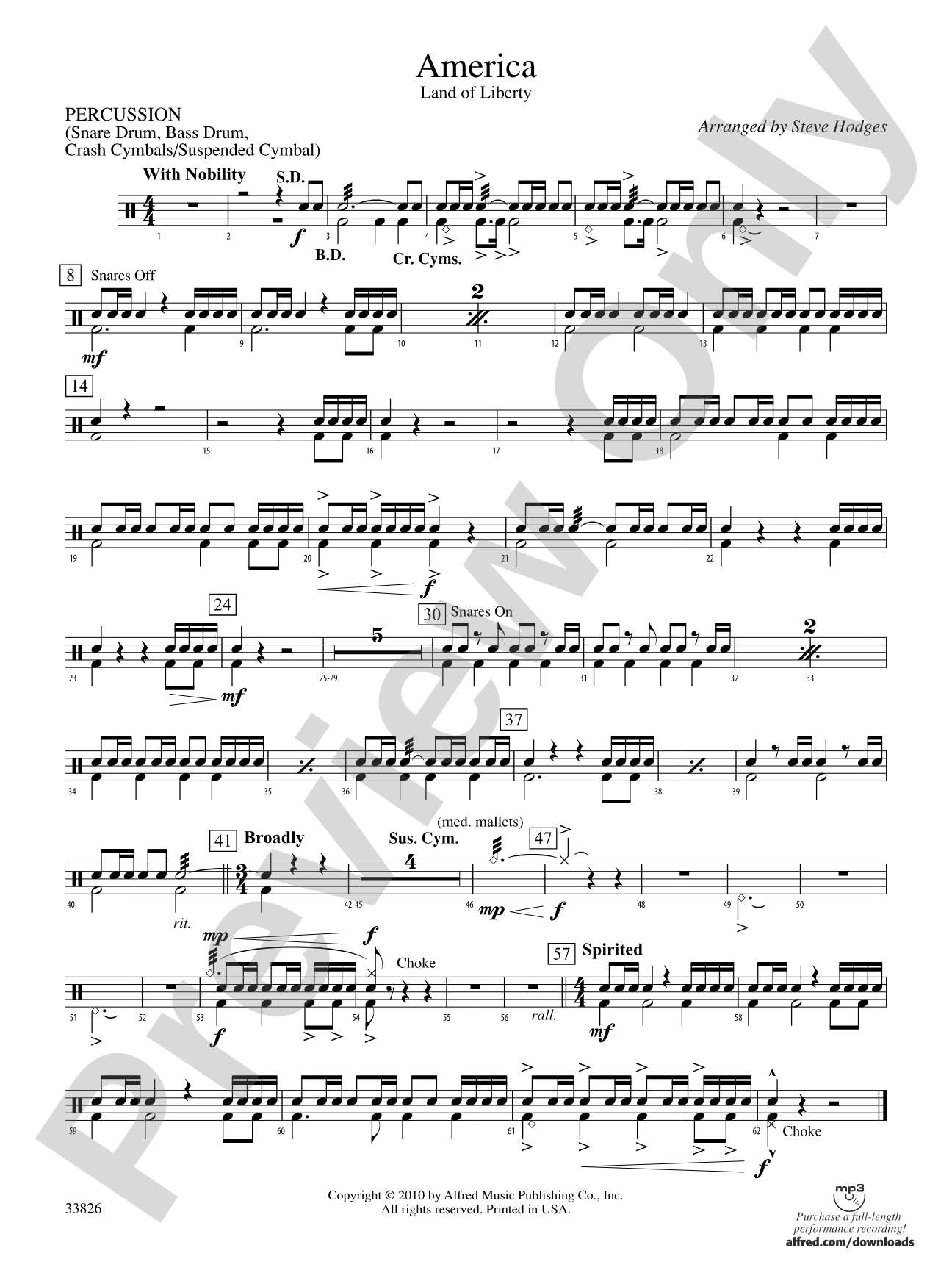

America - Land of Liberty: 1st Percussion
Arr. Steve Hodges
Grade: 1.5 (Easy)
Item: 00-PC-0014557_PC1
$3.00
Pickup currently not available
Description
Beginning with a strong introduction by the trumpets, this arrangement provides three effective settings of America. The first two settings are at a moderate march tempo in 4/4 time featuring the clarinets and trumpets, followed by a lush presentation by the low brass and woodwinds. A lively flute countermelody accompanies the first setting. The final presentation begins with a brass chorale in the traditional 3/4 meter that leads to a stirring conclusion featuring a flowing woodwind countermelody. A short rallentando leads to a spirited return of the original march countermelody that brings the piece to an exciting conclusion.


Don't just read it, hear it, play along with it, and watch your students grow with it. In MakeMusic Cloud, America - Land of Liberty: 1st Percussion comes alive with professional accompaniment, adjustable tempo, and built-in practice tools that turn solo practice into real progress.
Open in the Player
Jump straight in and assign it today.
Start Your Free Trial
Open this title and explore the full library in minutes.
Sample Audio
1
Audio File
--:--
0:00
0:00
Sample Video
No sample videos found.
Additional Details
Series:
Challenger Band Series
Publisher:
Alfred Music
Page Count:
120
SKU:
00-PC-0014557_PC1
More about this title
About the Arranger: Steve Hodges

Steve Hodges studied music education at Western Oregon University and Central Washington University, earning degrees that grounded his four-decade career directing concert and jazz bands, choirs, and chamber ensembles across public school levels. Since 1986, he has composed and arranged over 120 works for concert band, with commissions from honor bands and school districts across North America and programmed at festivals and state conventions nationwide. His music has also been featured on TBS and ESPN broadcasts, and he holds membership in ASCAP.
Now retired and based in The Dalles, Oregon, Hodges remains active in community music while watching his five children and ten grandchildren carry his compositions into their own school band programs. His catalog reflects both the practical demands of ensemble directors and the joy of writing music that spans multiple skill levels and concert contexts.
Why we love this
Hodges crafts three distinct presentations of the same patriotic melody, giving you genuine variety without demanding excessive rehearsal time for a Grade 1.5 piece. The progression from march settings to a brass chorale in 3/4 shows real compositional sophistication, and the layered scoring keeps all sections engaged without requiring advanced technique. You get a concert-opener that sounds larger and more sophisticated than its technical demands suggest.
What to expect
Energetic and stately by turns, moving from crisp march-time declarations to a moment of brass-supported reverence before sprinting toward a celebratory finish. The arrangement honors the melody's march heritage while introducing players to the expressive possibilities of shifting meters and textural layering. It feels purposeful and well-crafted, the kind of piece where young musicians recognize they're playing something that belongs on a concert stage.
Who it's for
Beginning bands with solid fundamentals who are ready to tackle multiple tempos and textures in a single piece. This works equally well for developing high school bands looking for patriotic repertoire that doesn't rely on technical heroics. The accessibility of Grade 1.5 makes it an excellent choice when you need a confident, audience-friendly selection.
How to get the most out of it
- Shape the trumpet introduction with clear articulation and forward energy; this sets the character for everything that follows and should feel bold, not tentative.
- Balance the flute countermelody in the first setting so it soars above rather than blends into the main theme; young flute players often need permission to let their line sing.
- Approach the brass chorale section with legit, song-like phrasing even though it's quick to teach; invite the brass to hear it as a hymn-like moment before the final push.
- The final return accelerates naturally toward the conclusion; resist the urge to rush the rallentando that precedes it, which makes that final sprint more impactful.
How to use it
Open a summer concert or patriotic program with this to establish energy and polish without demanding the rehearsal investment of more complex literature. Its three-movement design makes it suitable for a mid-program position as well, offering contrast to faster or slower pieces surrounding it. The 4th of July or Veterans Day concert context is obvious, but the craftsmanship makes it appropriate for any formal concert setting where you want to showcase developing ensemble sound.
Skills your students will build
- Playing sustained marchtime sections with consistent articulation and balance
- Shifting between 4/4 and 3/4 meters without losing ensemble security
- Supporting secondary melodies (flute countermelody, woodwind countermelody) while maintaining primary theme clarity
- Shaping dynamic changes and phrasing within each arrangement section
- Managing tempo transitions, including the final rallentando into accelerated conclusion