Amen (<i>The Haggadah 1981</i>) Sheet Music Preview

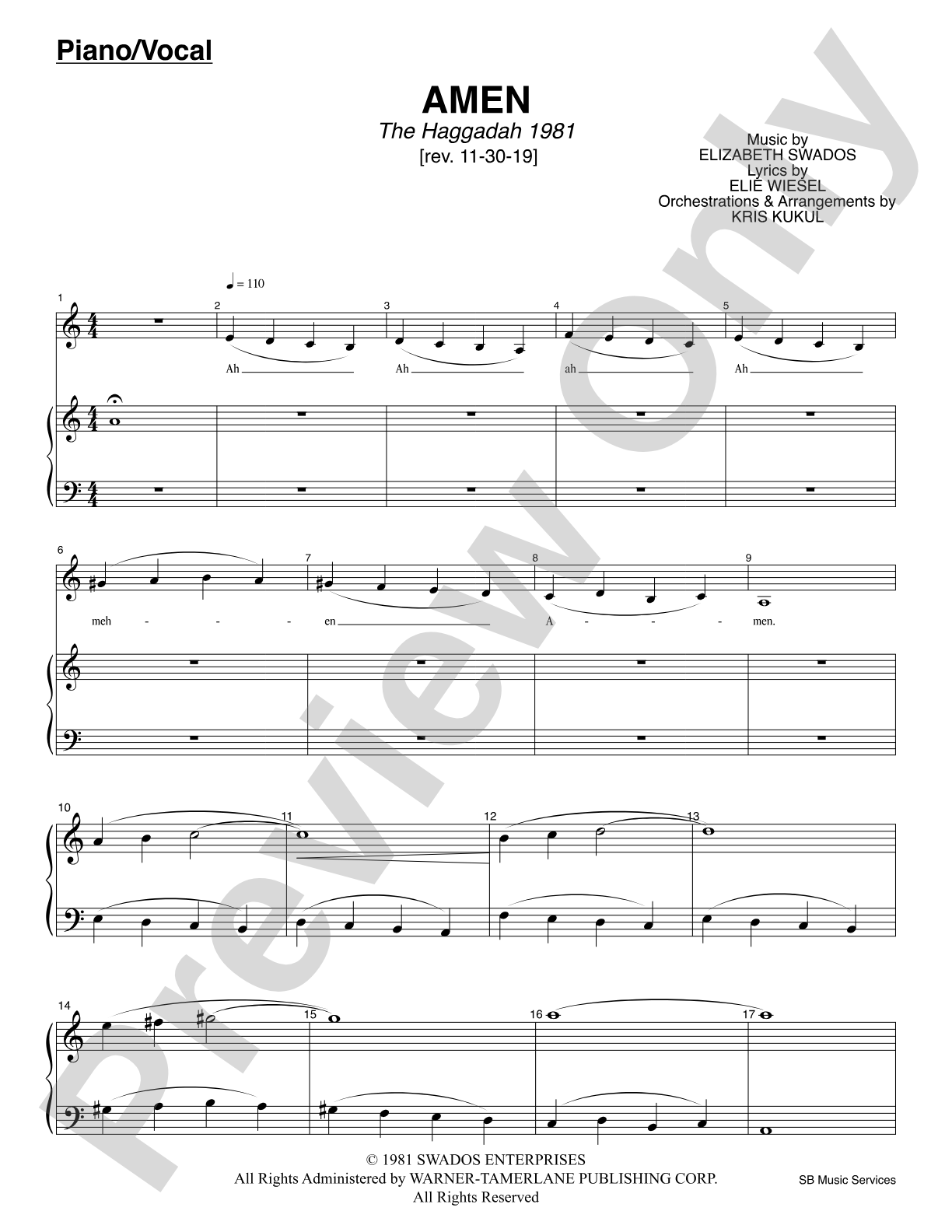
Amen (The Haggadah 1981): Piano/Vocal

Music by Elizabeth Swados / Lyrics by Elie Wiesel / Orchestrations & Arrangements by Kris Kukul

Item: 00-PS-0016355

Digital Download
$3.99

One moment…

Description
From The Liz Swados Project---a tribute album to the Tony-nominated artist Elizabeth Swados.

Amen (The Haggadah 1981): Piano/Vocal isn't in MakeMusic Cloud just yet...but it could be. Let us know you'd like to see it, and you'll help shape what comes next. In the meantime, start a free trial and dive into thousands of interactive titles your students can play along with today.

Sample Audio
No sample audio found.
Sample Video
Additional Details
SKU: 00-PS-0016355

More about this title

About the Composer: Elizabeth Swados

Elizabeth Swados was a Tony-nominated director, composer, and lyricist whose work bridged theater, music, and social activism. Her 1981 piece The Haggadah demonstrated her gift for setting spiritual and cultural texts to music that felt both contemporary and timeless, combining accessible melodies with sophisticated harmonic language.

Why we love this

Swados's gift for pairing vocal melody with meaningful text shines here. The piece sits comfortably for singers while offering pianists genuine musical substance, making it work equally well in a recital setting or as part of a thematic program exploring spirituality in contemporary music.

What to expect

Amen carries a contemplative, affirming quality. The melody unfolds with earnest simplicity while the piano underpinning provides harmonic depth, creating space for reflection without sentimentality. There's a quiet confidence in the piece, as if stating a truth that needs no embellishment.

Who it's for

This piece suits singers in community and church settings, as well as vocalists preparing recital programs centered on contemporary American songwriting or spirituality. It also works for student singers studying how composers approach liturgical or sacred texts outside traditional classical settings.

How to get the most out of it

  • Honor the text's spiritual weight by shaping phrases with intention rather than rushing through sections; the simplicity of the melody serves the message best when delivered with clarity and stillness.
  • Work closely with the pianist on dynamic support, particularly in passages where the voice sits low or where the piano carries the harmonic motion.
  • Explore how repetition functions in the arrangement; Swados often uses textual and melodic restatement to deepen meaning rather than advance drama, so commit fully to each iteration.

How to use it

Place this alongside other contemporary settings of sacred or spiritual texts to frame a program exploring faith and meaning in modern composition. It works particularly well as a concert opener or closer, given its grounded, affirming character.

Skills your students will build

  • Singing with textual clarity and emotional intent over a complex harmonic landscape
  • Balancing intimate vocal phrasing with piano accompaniment that carries substantial musical material
  • Interpreting repetition as a tool for deepening meaning rather than advancing narrative

You May Also Like