Amazonia: B-flat Tenor Saxophone Sheet Music Preview

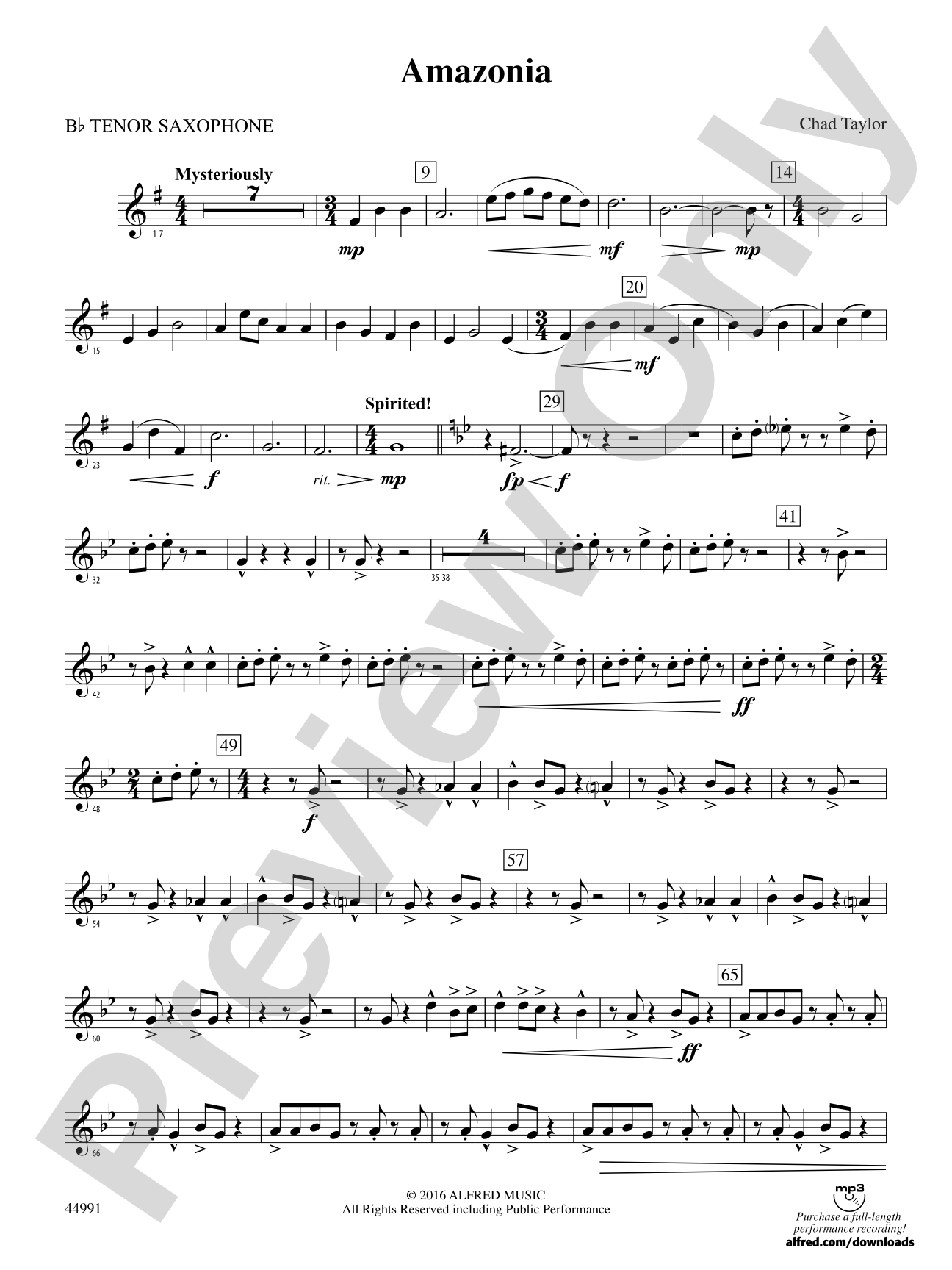
Amazonia: B-flat Tenor Saxophone

By Chad Taylor

Grade: 2.5 (Medium Easy)

Item: 00-PC-0017456_TX1

Digital Download
$3.00
Description
Take your audience on a voyage to the vast, unexplored areas of the Amazon Rainforest, where most of the world's isolated tribes dwell. Through the use of call-and-response, repetitive rhythmic grooves, and percussion instruments native to the region, this piece was written to celebrate the diverse and lively music culture that exists within the indigenous groups who call the Amazon Rainforest home. (4:40)

Don't just read it, hear it, play along with it, and watch your students grow with it. In MakeMusic Cloud, Amazonia: B-flat Tenor Saxophone comes alive with professional accompaniment, adjustable tempo, and built-in practice tools that turn solo practice into real progress.

Sample Audio
0:00
0:00
Sample Video
Additional Details
Series: Young Symphonic
Publisher: Alfred Music
Page Count: 268
SKU: 00-PC-0017456_TX1

More about this title

Why we love this

Chad Taylor captures the energy and texture of Amazonian music without resorting to exoticism. The call-and-response writing gives every section a voice, and the Grade 2.5 scoring proves you can create sophisticated cultural storytelling within realistic ensemble capabilities.

What to expect

The music pulses with motion and joy, built on hypnotic rhythmic layers that feel alive rather than mechanical. Indigenous call-and-response traditions meet modern concert band writing, creating passages where the whole ensemble becomes a single instrument breathing and responding together.

Who it's for

Concert bands at the intermediate level (Grade 2.5) who want to program repertoire with cultural substance and rhythmic vitality. This works equally well for concert performances and festival competitions.

How to get the most out of it

  • Lock the rhythmic grooves early in rehearsal. Mark the pulse in your score and have the band speak the repeating patterns aloud before adding instruments. This foundation makes everything else settle into place.
  • Balance the percussion colors carefully. Native percussion instruments should punctuate and color the band sound, not overpower it. Use dynamics and texture contrast to let those timbres breathe.
  • Shape the call-and-response phrases as genuine dialogue between sections. Each response should feel like an answer, not an echo. Rehearse the calls and responses separately first, then bring them together.
  • Work the piece's longest line (the 4 minute 40 second arc) in acts during rehearsal. Break the piece into logical sections, master each one, then run progressively longer stretches.

How to use it

This piece shines as a centerpiece in a thematic concert exploring world music traditions. Pair it with other pieces that celebrate cultural music, or program it as a contrast to classical European repertoire to show your audience the range of concert band literature.

Skills your students will build

  • Executing call-and-response patterns with rhythmic precision and phrasing
  • Sustaining and layering repeating rhythmic grooves across multiple parts
  • Balancing percussion colors within a concert band texture
  • Reading and performing syncopated rhythms native to South American music traditions

You May Also Like