Amazing Grace / Grace Greater Than Our Sin Sheet Music Preview

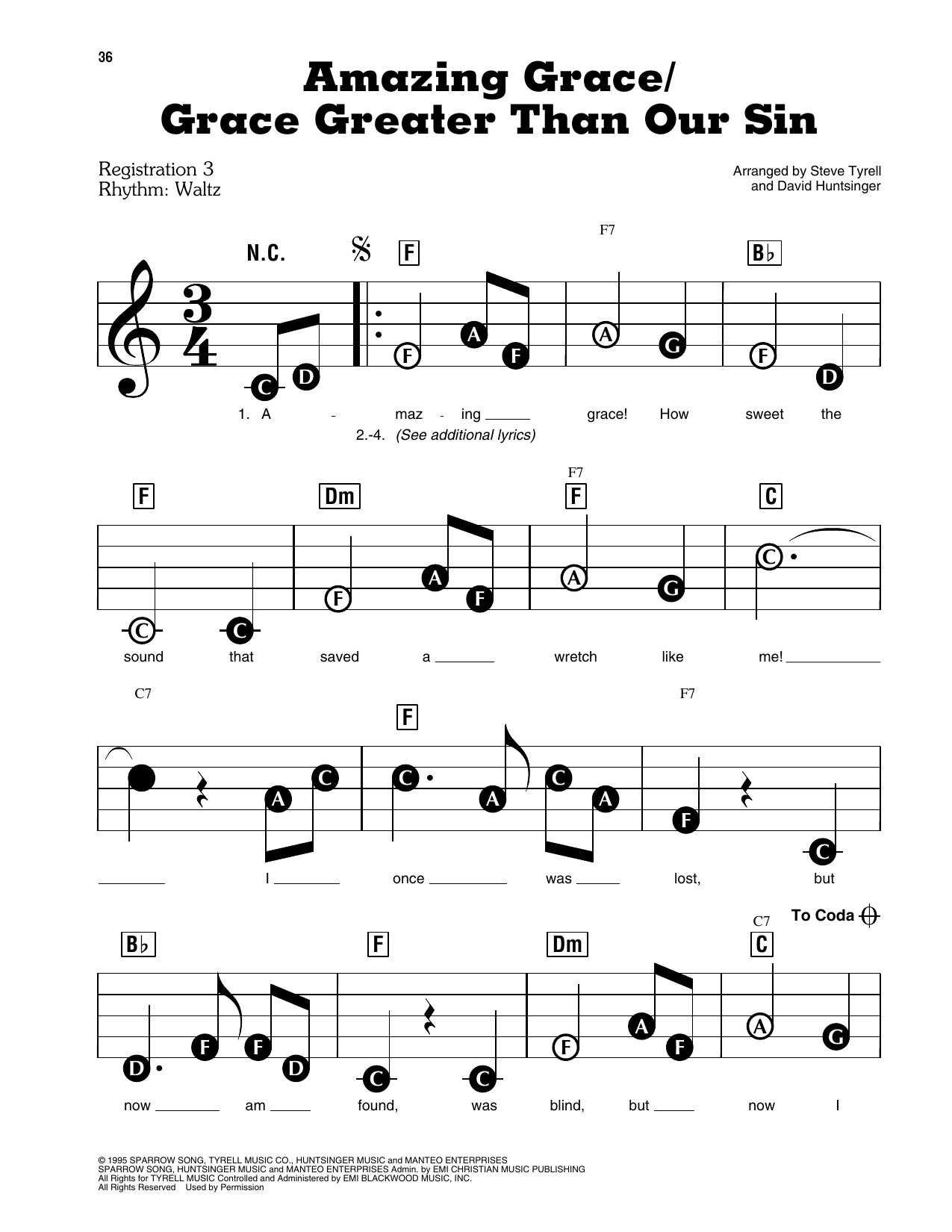
Amazing Grace / Grace Greater Than Our Sin: E-Z Play Today

As performed by Andy Griffith / Arranged by Steve Tyrell / Arranged by David Huntsinger

Item: 35-DS01909485

Digital Download
$4.99
Description

Amazing Grace / Grace Greater Than Our Sin: E-Z Play Today isn't in MakeMusic Cloud just yet...but it could be. Let us know you'd like to see it, and you'll help shape what comes next. In the meantime, start a free trial and dive into thousands of interactive titles your students can play along with today.

Sample Audio
No sample audio found.
Sample Video
Additional Details
Publisher: Hal Leonard
Page Count: 3
SKU: 35-DS01909485

More about this title

About the Artist: Andy Griffith

Andy Griffith (1926-2012) was an actor, comedian, and singer whose warm baritone voice became synonymous with American popular culture. Though best known for his television work, Griffith was a skilled musician who understood how to communicate emotional depth through simple, direct phrasing. His interpretations of hymns and folk material demonstrated an instinctive grasp of what makes a melody resonate with broad audiences.

Griffith's musical sensibility centered on clarity and authenticity. He never oversang or embellished beyond what the song required, an approach that served him well across decades of performance. For music educators, his recordings offer a masterclass in restraint and sincerity.

Why we love this

Pairing two beloved hymns in a single arrangement gives you remarkable flexibility for sacred programming without requiring multiple scores. The E-Z Play format keeps the realization accessible while the medley structure allows you to build emotional momentum across both melodies. Griffith's recordings provide a reference interpretation that emphasizes reverence over sentimentality, showing students how to honor these texts without melodrama.

What to expect

These two hymns sit comfortably in familiar harmonic territory, creating an atmosphere of quiet conviction. The arrangement respects the meditative quality of both melodies while allowing the piano to provide gentle support and structure. You're in the presence of something venerable yet immediate, music that asks for sincerity rather than display.

Who it's for

This works for pianists seeking authentic sacred material for worship services, school assemblies, or concert programs. Pianists at early intermediate levels will find the technical demands manageable while still engaging with two classic melodies that carry real musical weight.

How to get the most out of it

  • Balance the two melodies when moving between them. The transition works best when you treat the second hymn not as a new beginning but as a natural continuation of the emotional arc established by the first.
  • Establish a clear harmonic foundation in the left hand throughout. These hymns rely on stable, predictable progressions, so resist the urge to add flourishes that obscure the underlying chords.
  • Allow space for the text to breathe. If you're singing or accompanying a vocalist, remember that hymn singing is communal music. Accompany from underneath rather than trying to lead.
  • Shape phrases around the hymn text's natural accents and punctuation. This approach will make the arrangement feel less like a piano piece and more like music serving a spiritual purpose.

How to use it

Consider this for opening or closing a service of sacred music, or as a bridge between more complex choral works and congregational participation. It also serves well as a concert opener in schools emphasizing music with cultural and spiritual roots. Three pages makes it substantial enough to stand alone yet compact enough to fit into programming that requires multiple pieces.

Skills your students will build

  • Reading and interpreting hymn harmonies
  • Accompanying vocal melody with transparent left-hand voicings
  • Managing transitions between two related but distinct melodic sections
  • Sustaining consistent tempo and phrasing across a medley structure
  • Balancing accompaniment texture with accessibility

You May Also Like