
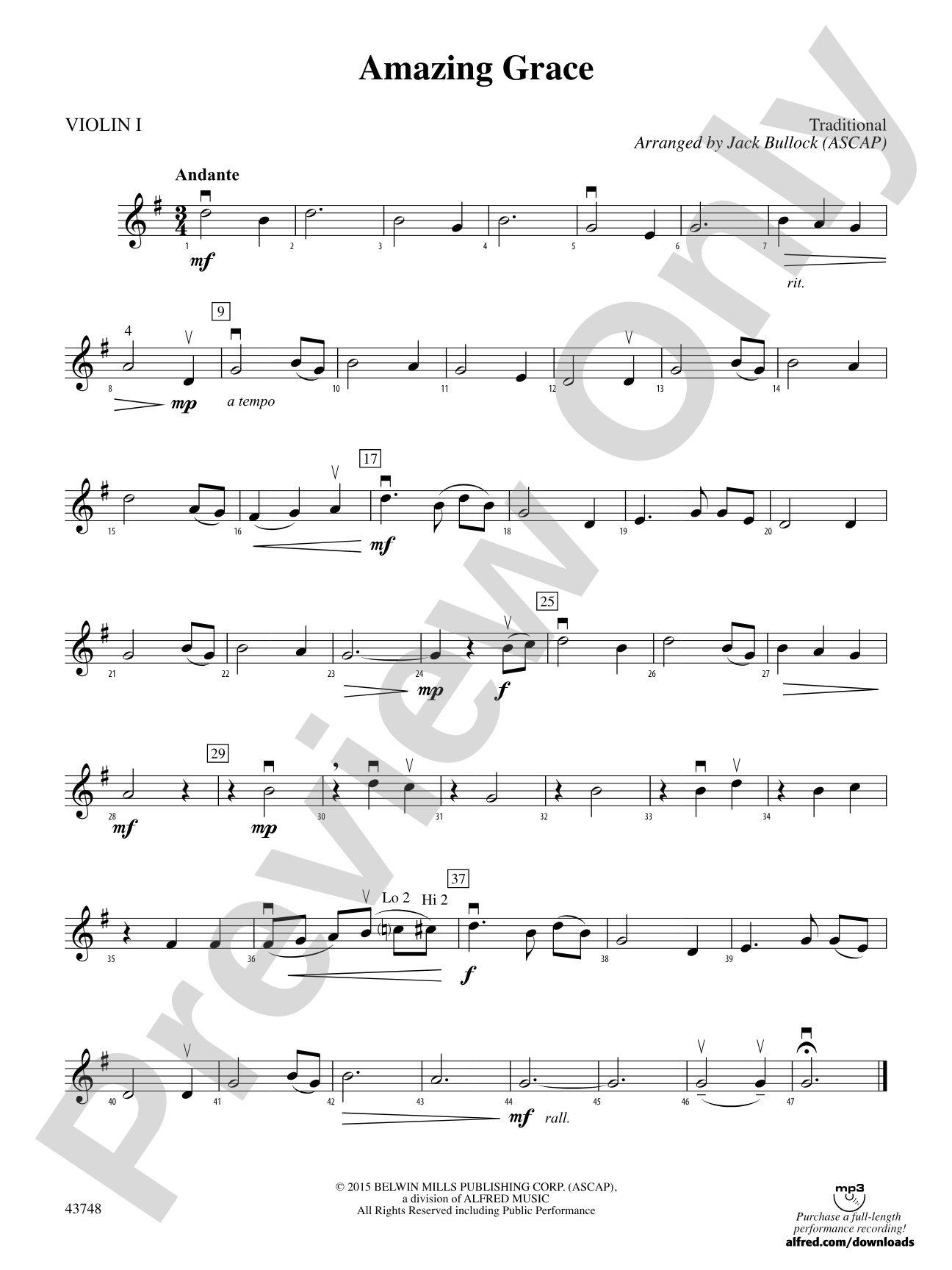

Amazing Grace: 1st Violin
Traditional / arr. Jack Bullock
Grade: 1
Item: 00-PC-0016853_VN1
$5.99
Pickup currently not available
Description
The striking melodies, the simple and meaningful words, and the many ways the music can be interpreted create an immortal song that touches us all. This beautiful setting allows for adjustment of the dynamics and the tempo to suit your ensemble. (2:00)


Don't just read it, hear it, play along with it, and watch your students grow with it. In MakeMusic Cloud, Amazing Grace: 1st Violin comes alive with professional accompaniment, adjustable tempo, and built-in practice tools that turn solo practice into real progress.
Open in the Player
Jump straight in and assign it today.
Start Your Free Trial
Open this title and explore the full library in minutes.
Sample Audio
1
Audio File
--:--
0:00
0:00
Sample Video
No sample videos found.
Additional Details
Series:
Belwin Beginning String Orchestra
Publisher:
Alfred Music
Page Count:
76
SKU:
00-PC-0016853_VN1
More about this title
About the Arranger: Jack Bullock

Jack Bullock brings decades of practical experience to his work as a composer and arranger. He holds degrees through the doctoral level in music education and spent 20 years teaching instrumental music in classrooms, including seven years at Ithaca College's School of Music where he served as assistant band director and later chaired the Music Education Department. His trumpet studies with accomplished performers like Harry Glantz and Craig McHenry informed his deep understanding of wind and string writing.
With over 600 published works spanning concert band, orchestra, jazz ensemble, and marching band, Bullock has established himself as a prolific voice in music education publishing. He co-authored the Belwin 21st Century Band Method and contributed arrangements to Music Expressions, Alfred Music's innovative school curriculum. His work has been recognized through inclusion in Marquis Who's Who, and he has conducted clinics and workshops across North America and internationally since joining ASCAP in 1980.
Why we love this
Bullock's arrangement preserves the hymn's spiritual weight while keeping the instrumental writing clear and accessible for beginning string ensembles. The conductor score gives you genuine control over pacing and dynamics, so you can shape the piece to match your ensemble's maturity and your program's emotional context. At Grade 1, it sits at the sweet spot where younger players experience genuine success with a universally recognized melody that matters.
What to expect
Dignified and contemplative without being heavy. The arrangement honors the hymn's spiritual simplicity while the straightforward string voicing allows the melody itself to shine, creating a performance that feels both accessible and genuinely moving for both players and listeners.
Who it's for
Beginning string orchestras and young musicians encountering this hymn for the first time. Grade 1 writing means no section should feel overwhelmed, making it ideal for middle school ensembles, community youth orchestras, or heterogeneous school groups with mixed string experience.
How to get the most out of it
- Shape the phrases with deliberate attention to the dynamics marked in the score. Because the arrangement is straightforward, small changes in volume become the primary tool for musical expression.
- Set a tempo that allows your ensemble to sustain the longer note values cleanly. A slower pace gives young string players time to maintain tone quality and encourages thoughtful playing.
- Balance the melodic line across your string sections rather than letting it sit entirely in the violins. This distributes the responsibility and creates a richer, more unified sound.
- Allow for slight breath-like pauses at phrase endings. Even in a string arrangement, these moments clarify the song's natural structure.
How to use it
Program this as a thoughtful opening to a concert, a bridge piece between energetic selections, or as part of a sacred music or holiday celebration. The two-minute length makes it a perfect anchor for programming without demanding extended rehearsal time from a developing ensemble.
Skills your students will build
- Sustaining long melodic lines with consistent tone and intonation
- Following dynamic markings and shaping phrases expressively
- Playing as a unified ensemble section across changing harmonic movement
- Connecting to meaningful repertoire and understanding hymn tradition in orchestral context