
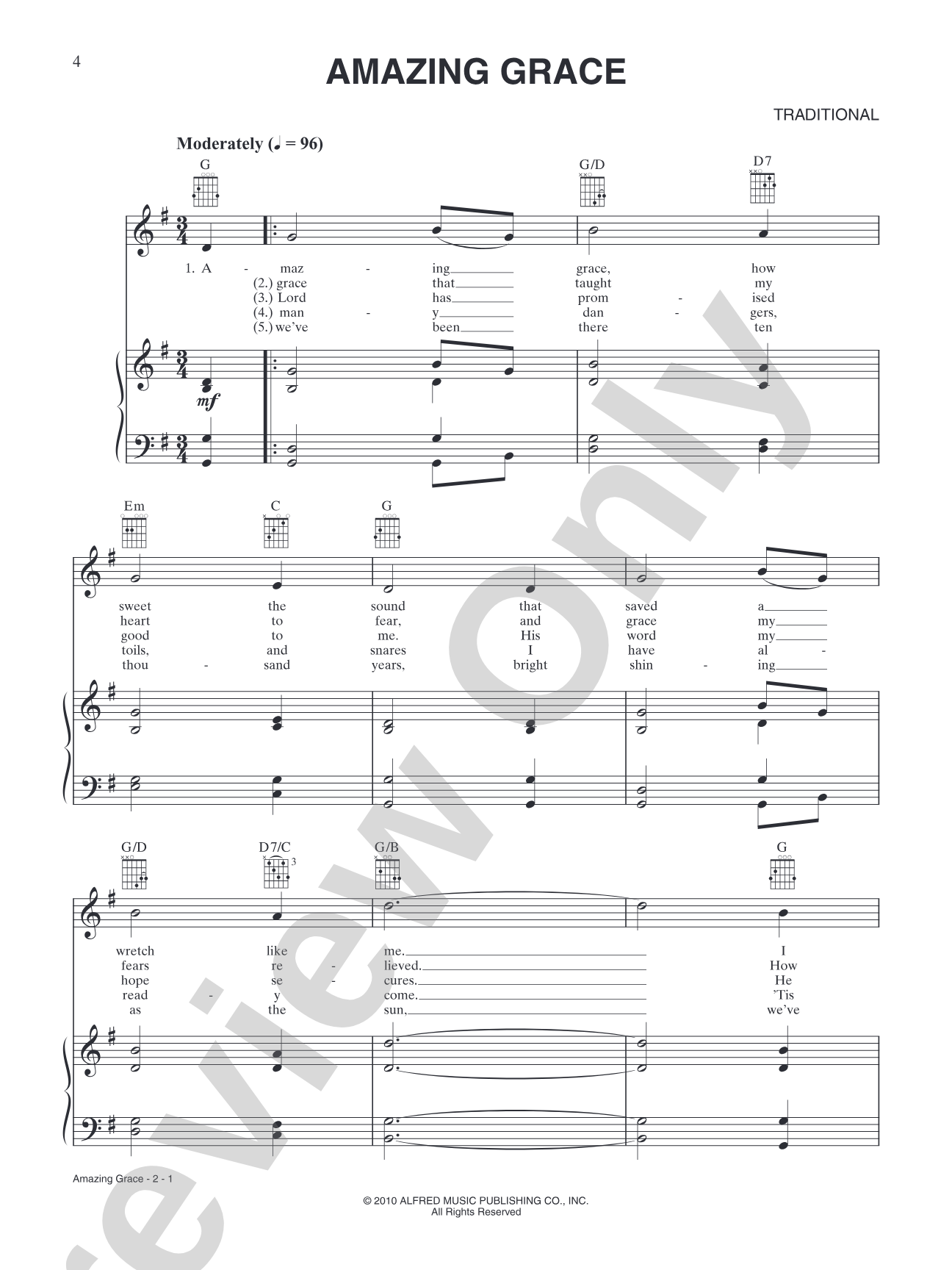

Amazing Grace: Piano/Vocal/Chords
Item: 00-XS-0000145
$4.99
Pickup currently not available
Related Items
Believe in Yourself: Piano/Vocal/Chords |
$4.99
|
View | |
Touch the Hem of His Garment: Piano/Vocal/Chords |
$4.99
|
View | |
Just a Closer Walk With Thee: Piano/Vocal/Chords |
$4.99
|
View | |
Softly and Tenderly: Piano/Vocal/Chords |
$4.99
|
View | |
Lift Every Voice and Sing: Piano/Vocal/Chords |
$4.99
|
View | |
The Greatest Love of All: Piano/Vocal/Chords |
$4.99
|
View | |
The Morning After (from "The Poseidon Adventure"): Piano/Vocal/Chords |
$4.99
|
View | |
Oh Happy Day: Piano/Vocal/Chords |
$4.99
|
View | |
Heart (from "Damn Yankees"): Piano/Vocal/Chords |
$4.99
|
View | |
I Can See Clearly Now: Piano/Vocal/Chords |
$4.99
|
View | |
Peace In The Valley: Piano/Vocal/Chords |
$4.99
|
View | |
Blessed: Piano/Vocal/Chords |
$5.99
|
View | |
When You're Smiling: Piano/Vocal/Chords |
$4.99
|
View | |
Hero: Piano/Vocal/Chords |
$5.99
|
View | |
In My Daughter's Eyes: Piano/Vocal/Chords |
$4.99
|
View |
Description
You Raise Me Up: Songs of Inspiration features dozens of songs that lift the spirit and provide a sense of optimism and hope to handle today's challenges. Arranged for piano/vocal, the songs range from country and pop to R&B and sacred hymns. Titles: Amazing Grace * Bridge Over Troubled Water * Everything Is Beautiful * From a Distance * Heal the World * (Your Love Keeps Lifting Me) Higher and Higher * I Can See Clearly Now * Lift Every Voice and Sing * The Morning After * Look to the Rainbow * Peace in the Valley * Shower the People * When You Believe * Up Where We Belong * What a Wonderful World * When You're Smiling * The Wind Beneath My Wings * and many more.


Amazing Grace: Piano/Vocal/Chords isn't in MakeMusic Cloud just yet...but it could be. Let us know you'd like to see it, and you'll help shape what comes next. In the meantime, start a free trial and dive into thousands of interactive titles your students can play along with today.
Request This Title
Tell us you want it.
Start Your Free Trial
Explore everything that's ready to play right now.
Sample Audio
No sample audio found.
Sample Video
No sample videos found.
Additional Details
Publisher:
Alfred Music
Page Count:
204
SKU:
00-XS-0000145
More about this title
About the Composer: Traditional
Amazing Grace emerged from the Scottish hymn tradition and has become one of the most recognizable melodies in Christian music worldwide. The tune's origins trace to a 18th-century folk melody, and its enduring power lies in its simplicity and emotional directness, qualities that have made it a staple in worship services, concerts, and community gatherings across denominations and cultures.
Why we love this
This arrangement sits at the intersection of accessibility and versatility. Whether you're leading a choir rehearsal, accompanying a soloist, or building a mixed-voice program, the piano/vocal/chords format gives you complete control over how you present the hymn. The melody's familiarity actually frees singers to focus on interpretation and meaning rather than note-finding.
What to expect
This hymn carries the weight of centuries of human longing and redemption. The melody rises and falls with natural grace, inviting singers to invest each phrase with genuine vulnerability. The simplicity of the harmonic language creates space for meaning to emerge without musical distraction.
Who it's for
Pianists and singers preparing music for worship services, concerts, or community events will find immediate use in this arrangement. Voice teachers can use it as a pedagogical tool for developing interpretive phrasing and emotional connection to text. Guitar players and keyboardists benefit from the chord symbols, which provide flexibility for ensemble collaboration.
How to get the most out of it
- Let the opening measures breathe. Resist the urge to rush; these first bars set the emotional tone for the entire hymn.
- Balance the vocal line clearly against the piano accompaniment so lyrics remain the focal point.
- Chord symbols give guitarists a framework for improvisation. Encourage accompanists to adapt voicings to match the overall arrangement's texture.
- Consider varied dynamics across verses rather than singing at one volume throughout. Subtle changes in intensity deepen the spiritual arc.
How to use it
Program this as an opening hymn for a sacred concert or worship service to establish both reverence and accessibility. It pairs effectively with other spirituals and contemporary inspirational songs, particularly when you want to build bridges between traditional and modern repertoire. The arrangement also works well as a closing piece when you need to leave an audience in a reflective, hopeful frame of mind.
Skills your students will build
- Reading leadsheet notation (chord symbols and melody)
- Interpreting a text-driven melodic line with intentionality
- Accompanying singers while maintaining appropriate harmonic support
- Adapting piano voicings and chord interpretations for different ensemble contexts