Amadeus! (symphony No. 25) Sheet Music Preview

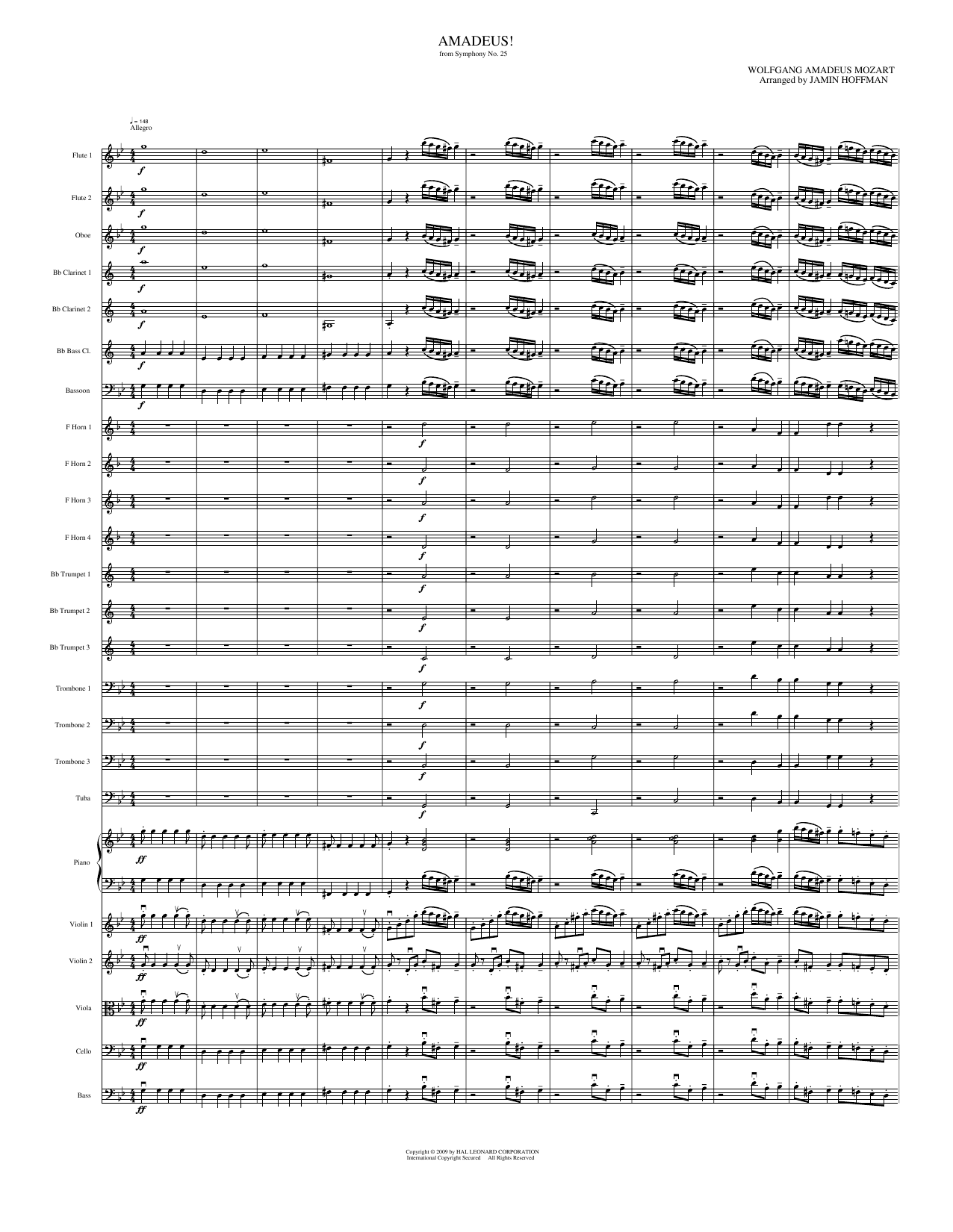
Amadeus! (symphony No. 25): String Orchestra Conductor Score & Parts

By Wolfgang Amadeus Mozart / Arranged by Jamin Hoffman

Grade: 3-4

Item: 35-PK00426794

Digital Download
$45.00

Buy Extra Parts (Digital PDF Download)

Product Price Quantity
Amadeus! (symphony No. 25) - Full Score $45.00

Parts Added to Cart!

Description
Amadeus! (Symphony No. 25)

Amadeus! (symphony No. 25): String Orchestra Conductor Score & Parts isn't in MakeMusic Cloud just yet...but it could be. Let us know you'd like to see it, and you'll help shape what comes next. In the meantime, start a free trial and dive into thousands of interactive titles your students can play along with today.

Sample Audio
No sample audio found.
Sample Video
Additional Details
Publisher: Hal Leonard
SKU: 35-PK00426794

More about this title

About the Composer: Wolfgang Amadeus Mozart

Wolfgang Amadeus Mozart (1756-1791) composed his 40 symphonies across three decades, each one revealing his evolving mastery of form, orchestration, and harmonic language. Symphony No. 25 in G minor stands among his most dramatic works, written when Mozart was in his mid-twenties and already commanding the full expressive range of the Classical idiom. This symphony demonstrates why Mozart remains central to string orchestra repertoire: his writing for strings is idiomatic, emotionally direct, and endlessly rewarding for players at every level.

Why we love this

Jamin Hoffman's arrangement makes Mozart's dramatic minor-key symphony accessible to younger ensembles without sacrificing the work's emotional weight or structural integrity. The Grade 3-4 range opens this masterpiece to orchestras that might otherwise need to wait years before tackling Mozart at this depth. Students encounter authentic Classical form and Mozart's characteristic blend of elegance and intensity in a version they can actually play.

What to expect

Urgency and drama infuse this minor-key work from its opening gesture. Mozart writes with restless energy here; even moments of lyrical calm feel tinged with unresolved tension. The piece maintains Classical grace and proportion while channeling genuine emotional turbulence, giving students a chance to inhabit music that's elegant and deeply felt simultaneously.

Who it's for

String orchestras at the intermediate level who want to tackle substantial Classical repertoire without requiring advanced soloists or splitting parts. Directors building a concert program need recognizable, musically satisfying works that stretch student musicians without becoming rehearsal drains. This arrangement serves ensembles ready for Mozart's formal demands but not yet prepared for the original full orchestration.

How to get the most out of it

  • Shape the opening theme with clear two-bar phrases; Mozart's melodies breathe in short units rather than long sweeping arcs.
  • Balance the viola line carefully in tutti passages; these inner voices carry crucial harmonic color that defines the piece's character.
  • Keep the tempo steady through the faster sections without rushing; Classical form depends on proportional pacing between movements.
  • Emphasize the contrast between the agitated G minor material and any major-key episodes; dramatic opposition drives this symphony's narrative.

How to use it

Position this as a main-stage anchor piece for a concert exploring Classical form, pairing it with lighter contemporary arrangements or shorter Classical works to frame its intensity. It works particularly well as the centerpiece of a program exploring Mozart across different genres, or as the capstone work in a unit on symphonic structure. Save this for the concert where you want to showcase how far your ensemble has come technically and musically.

Skills your students will build

  • Reading and executing rapid passagework in G minor
  • Maintaining ensemble balance in dense tutti textures
  • Understanding Classical sonata form through a minor-key dramatic work
  • Coordinating bow control across multiple parts during fast scales and figurations
  • Responding to subtle dynamic and articulation changes that define Mozart's style

You May Also Like