Amadeus Grooves: 4th Trombone Sheet Music Preview

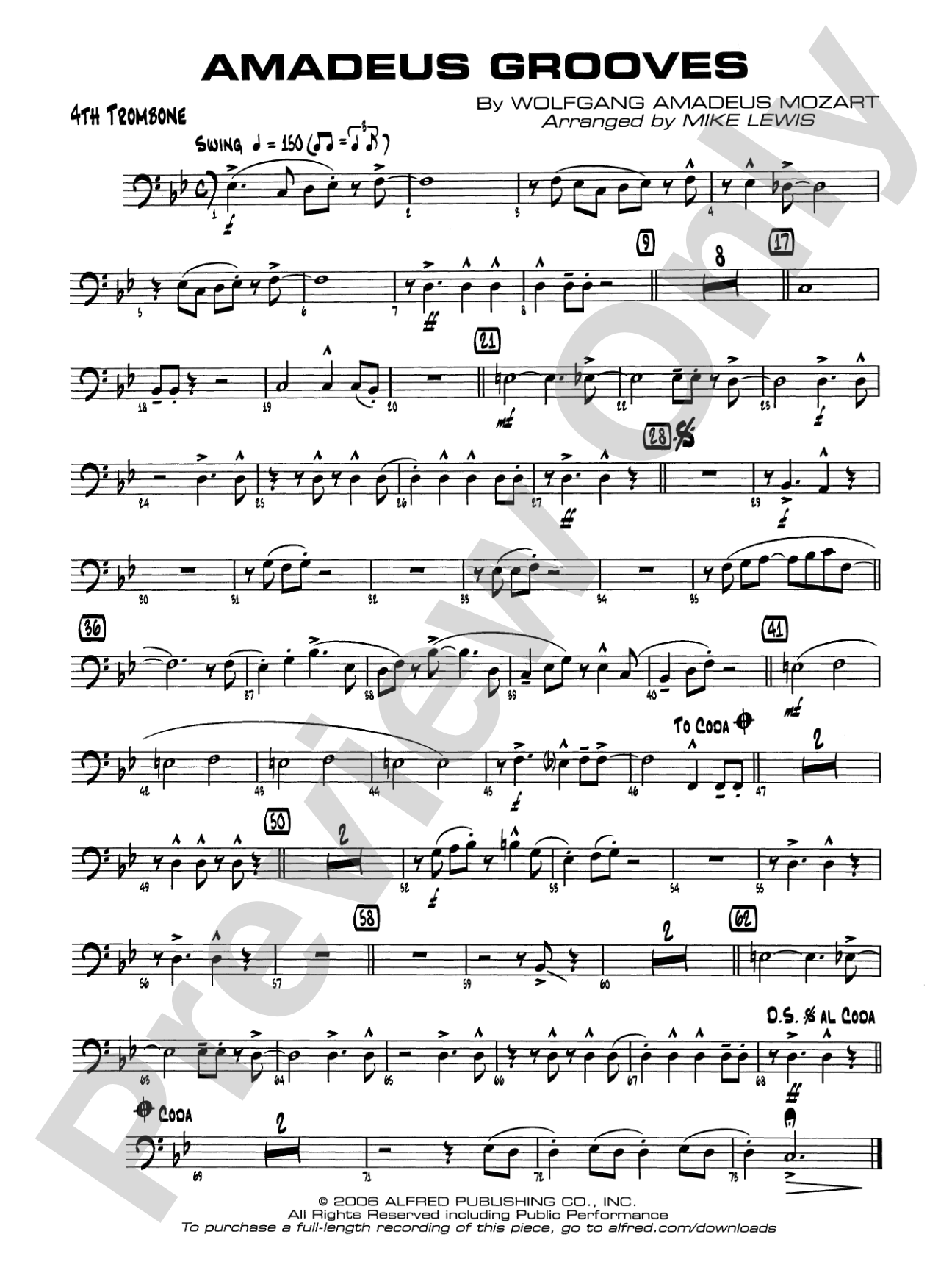
Amadeus Grooves: 4th Trombone

Music by Wolfgang Amadeus Mozart / arr. Mike Lewis

Grade: 2 (Medium Easy)

Item: 00-PC-0016173_TN4

Digital Download
$3.00
Description
Celebrate Mozart's 250th anniversary with a jazz chart! Mike Lewis arranged Mozart's 40th Symphony using a swing feel with no individual solos---just plenty of ensemble. The brass range is accessible, the rhythms are easy, and this chart bounces the melody back and forth between sections. Add the string players to this chart; check out the optional string parts for violin, viola, and cello plus all the regular optional wind parts.

Don't just read it, hear it, play along with it, and watch your students grow with it. In MakeMusic Cloud, Amadeus Grooves: 4th Trombone comes alive with professional accompaniment, adjustable tempo, and built-in practice tools that turn solo practice into real progress.

Sample Audio
0:00
0:00
Sample Video
Additional Details
Series: Jazz Expressions
Publisher: Alfred Music
Page Count: 56
SKU: 00-PC-0016173_TN4

More about this title

About the Composer: Wolfgang Amadeus Mozart

Wolfgang Amadeus Mozart (1756-1791) stands among history's most prolific and influential composers, having written over 600 works across every major genre before his death at 35. His Symphony No. 40 in G minor ranks among his most celebrated orchestral works, written during an extraordinarily productive period in Vienna that also produced his great operas and final symphonies. For music educators, Mozart's clarity of form, memorable melodies, and gift for orchestration make his work an ideal foundation for teaching harmonic structure, phrasing, and ensemble balance.

Why we love this

Mike Lewis's arrangement strips away the symphonic weight and lets the swing feel breathe, making this chart feel like a conversation between sections rather than a classical display piece. The absence of solos keeps the ensemble locked together, and the accessible brass ranges mean your younger or less experienced players won't struggle with stratospheric high notes. Pairing Mozart with jazz idiom creates a genuine musical surprise that audiences love and students find genuinely fun to play.

What to expect

Bright, bouncing, and conversational. The melody travels between brass and reeds with a lightness that feels more playful than the original symphony's intensity, while the swing rhythm grounds everything in groove rather than formal structure. It swings without ever losing Mozart's essential elegance.

Who it's for

Jazz ensemble directors working with Grade 2 players who want to program something spirited and accessible without sacrificing musical substance. High school and middle school jazz groups will find plenty of ensemble blend work and section coordination practice here, and the inclusion of optional string parts makes it flexible for programs that combine jazz and classical instrumentalists.

How to get the most out of it

  • Keep the swing feel relaxed and grounded; resist the urge to rush the eighth-note subdivision even as the ensemble gains confidence.
  • Balance the melody as it trades between sections by adjusting section volumes slightly rather than having one section dominate whenever the phrase lands on them.
  • Use the optional strings to deepen the harmonic palette if you have string players available; they add sophistication without complicating the rhythmic foundation.
  • Lock the rhythm section (drums and bass) first, then layer the horns and reeds around that anchor to maintain the groove.

How to use it

Program this as a concert opener or second piece to establish an upbeat tone while showcasing your ensemble's technical control and musicality. It works especially well on a concert pairing classical repertoire with jazz, or as part of a Mozart anniversary celebration that spans multiple musical styles and eras.

Skills your students will build

  • Reading and performing swing eighth notes with consistent subdivision
  • Trading melodies and maintaining awareness of section independence within ensemble texture
  • Balancing ensemble sound across brass and reed sections
  • Interpreting articulation and dynamics in a jazz idiom
  • Recognizing melodic and harmonic structures from classical masterworks in contemporary arrangement

You May Also Like