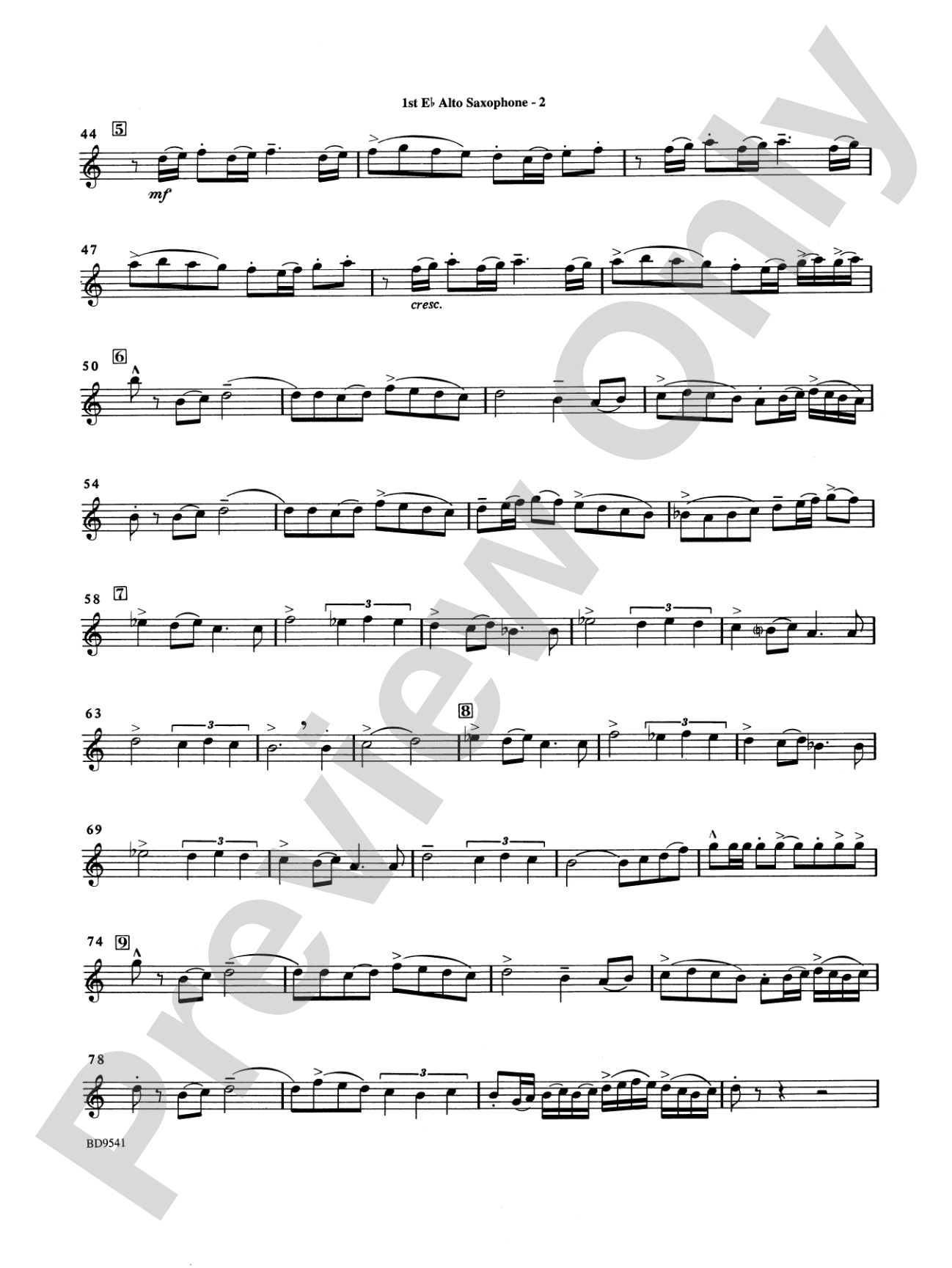
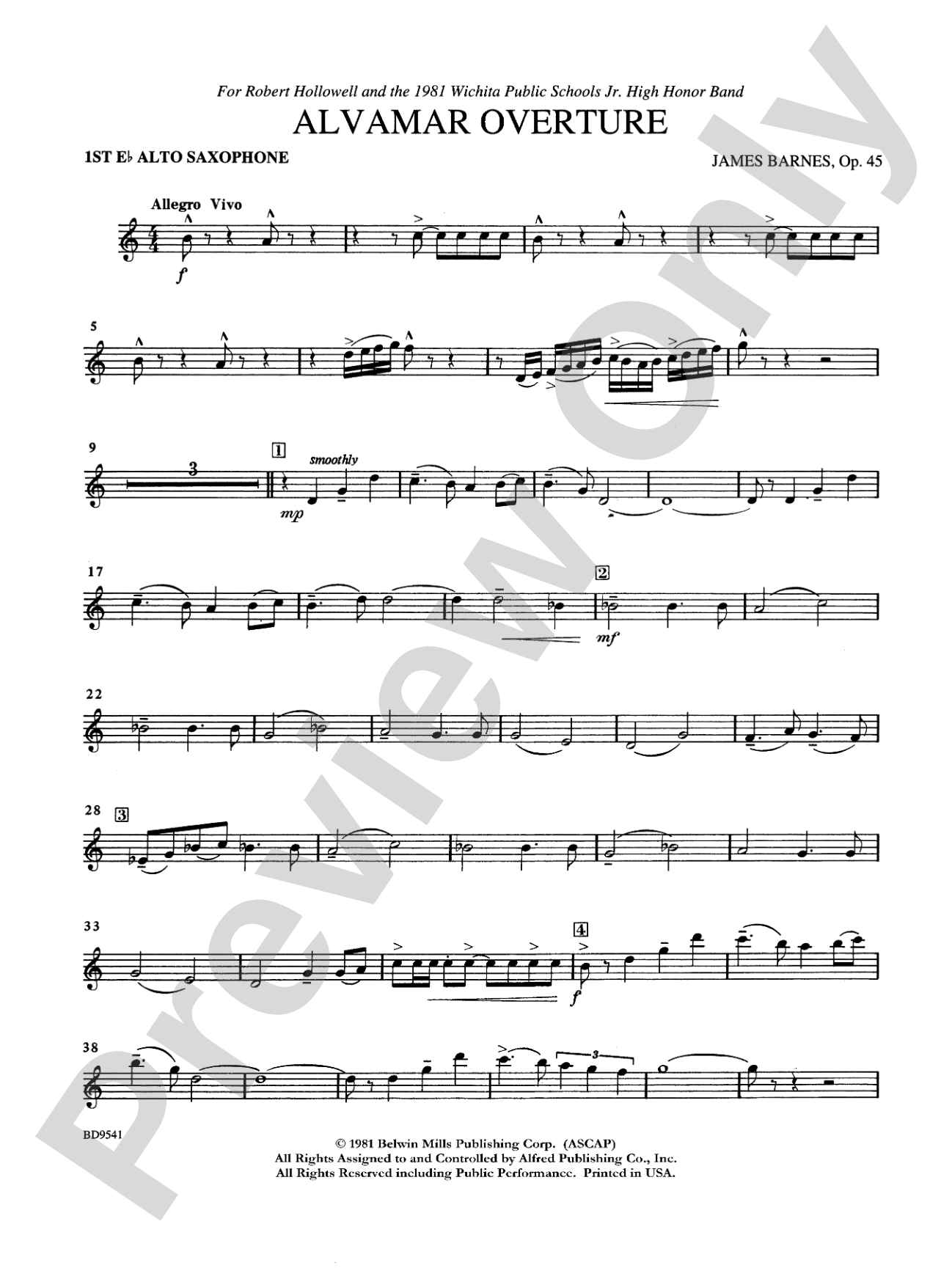
Alvamar Overture: E-flat Alto Saxophone Sheet Music Preview

Alvamar Overture: E-flat Alto Saxophone

By James Barnes

Grade: 5 (Medium Advanced)

Item: 00-PC-0002016_AX1

Digital Download
$3.00
Description
Gigantic in structure, with fabulously rich and lavishly orchestrated thematic material, this work ranks on a grand scale within the repertoire of the modern-day concert band. Every line is interesting and every player is equally challenged in this bravura work. While not for the timid, Alvamar Overture offers rehearsal and performance rewards worth the effort of preparation. Colossal! (7:41)

Don't just read it, hear it, play along with it, and watch your students grow with it. In MakeMusic Cloud, Alvamar Overture: E-flat Alto Saxophone comes alive with professional accompaniment, adjustable tempo, and built-in practice tools that turn solo practice into real progress.

Sample Audio
No sample audio found.
Sample Video
Additional Details
Series: Belwin Symphonic Band
Publisher: Alfred Music
Page Count: 292
SKU: 00-PC-0002016_AX1

More about this title

About the Composer: James Barnes

James Barnes is among the most performed composers in American band literature, with a catalog spanning over 150 works for wind ensemble, orchestra, and chamber groups. His writing combines accessibility with sophistication, balancing lyrical invention against rigorous orchestration that engages every section of the ensemble. Barnes has received commissions from major universities, military bands, and wind ensemble festivals, and his works are staples of contest and festival programming across North America.

Why we love this

Alvamar Overture delivers the architectural scope and orchestrational density that define modern concert band literature at its most ambitious. Every voice carries genuine musical substance, so your ensemble experiences the satisfaction of contributing to something genuinely complex and rewarding rather than padding the texture. This is a contest-festival vehicle that demands serious preparation but repays it with performances that genuinely impress.

What to expect

Alvamar unfolds with grand architectural vision, moving through thematic territories that shift between lyrical warmth and brilliant orchestral splendor. The writing feels expansive and uncompromising, treating the concert band as a full orchestra capable of subtle interplay and overwhelming harmonic richness. You hear the ambition in every measure.

Who it's for

This work demands a Grade 5 ensemble with strong fundamentals across all sections, reliable intonation, and the stamina for sustained technical and musical engagement. It suits bands preparing for state or regional contests, all-state auditions, or concert programs where you want to showcase serious capability and musicianship.

How to get the most out of it

  • Balance the brass section carefully in the full-ensemble moments; the richly orchestrated texture can obscure melodic lines if the upper brass dominate. Rehearse with full parts before addressing balance.
  • Establish rock-solid tempo security in smaller sectional groups before bringing sections together. The length and structural complexity demand that no one is guessing at pulse.
  • Mark all dynamic transitions in rehearsal scores and parts. The piece moves through multiple key centers and textural shifts where ensemble cohesion depends on synchronized response.
  • Schedule extra rehearsal time on the woodwind and brass articulation passages. Precise tonguing and attack across multiple sections define the character of the overture's dramatic moments.

How to use it

Alvamar Overture works as a centerpiece on concert programs where you want to establish your ensemble's technical and musical maturity. Programming it in the second half of a concert gives audiences a powerful emotional climax after lighter or more narrative opening works. It also serves as a strong festival or contest entry where judges expect evidence of serious ensemble training.

Skills your students will build

  • Reading complex full-band scores with multiple simultaneous thematic lines
  • Maintaining ensemble blend and balance across seven-minute harmonic and textural shifts
  • Executing sustained dynamic control in densely orchestrated passages
  • Coordinating precise articulation and rhythmic attacks across multiple sections
  • Responding to rapid key center changes and harmonic progressions

You May Also Like