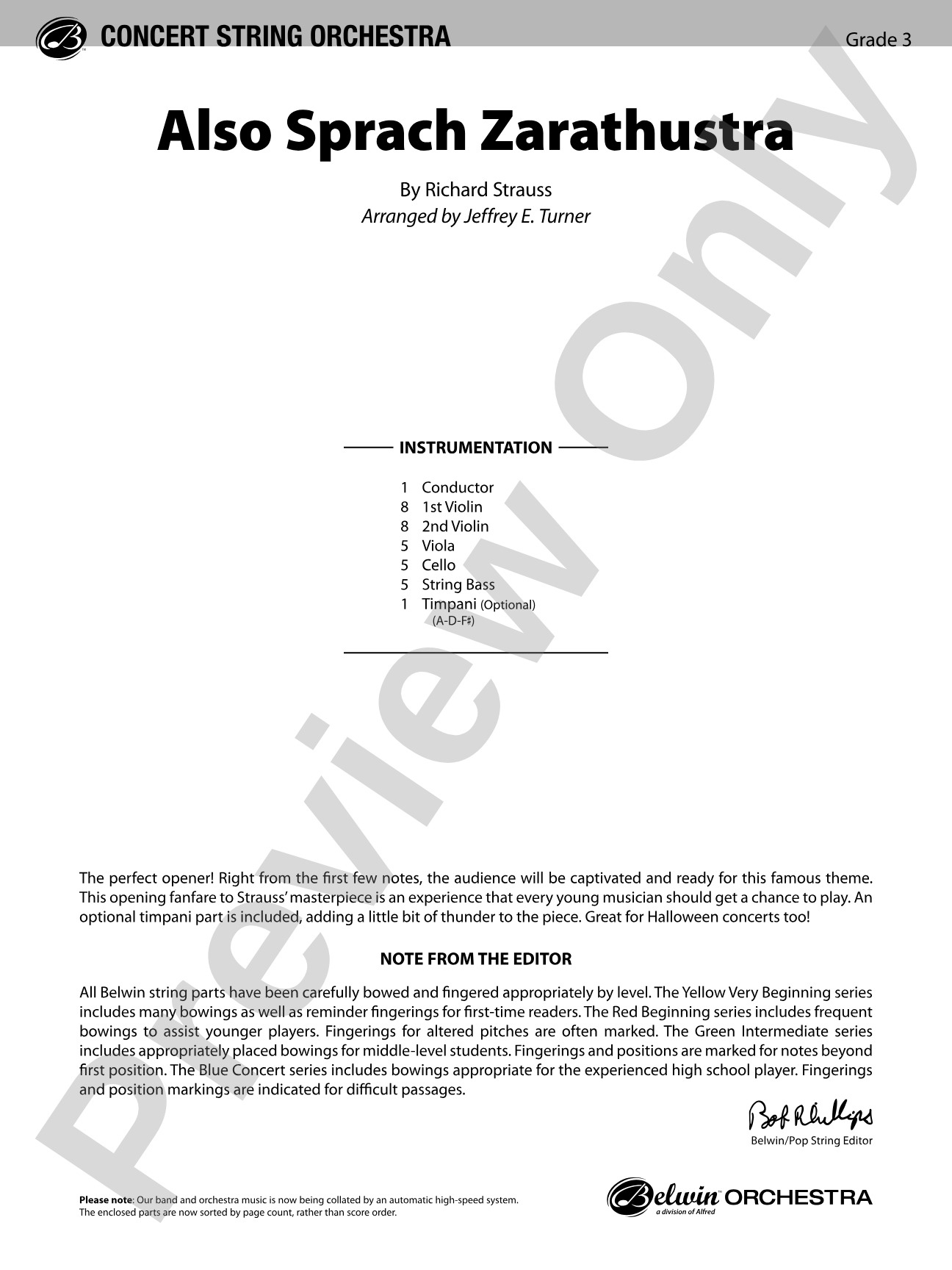
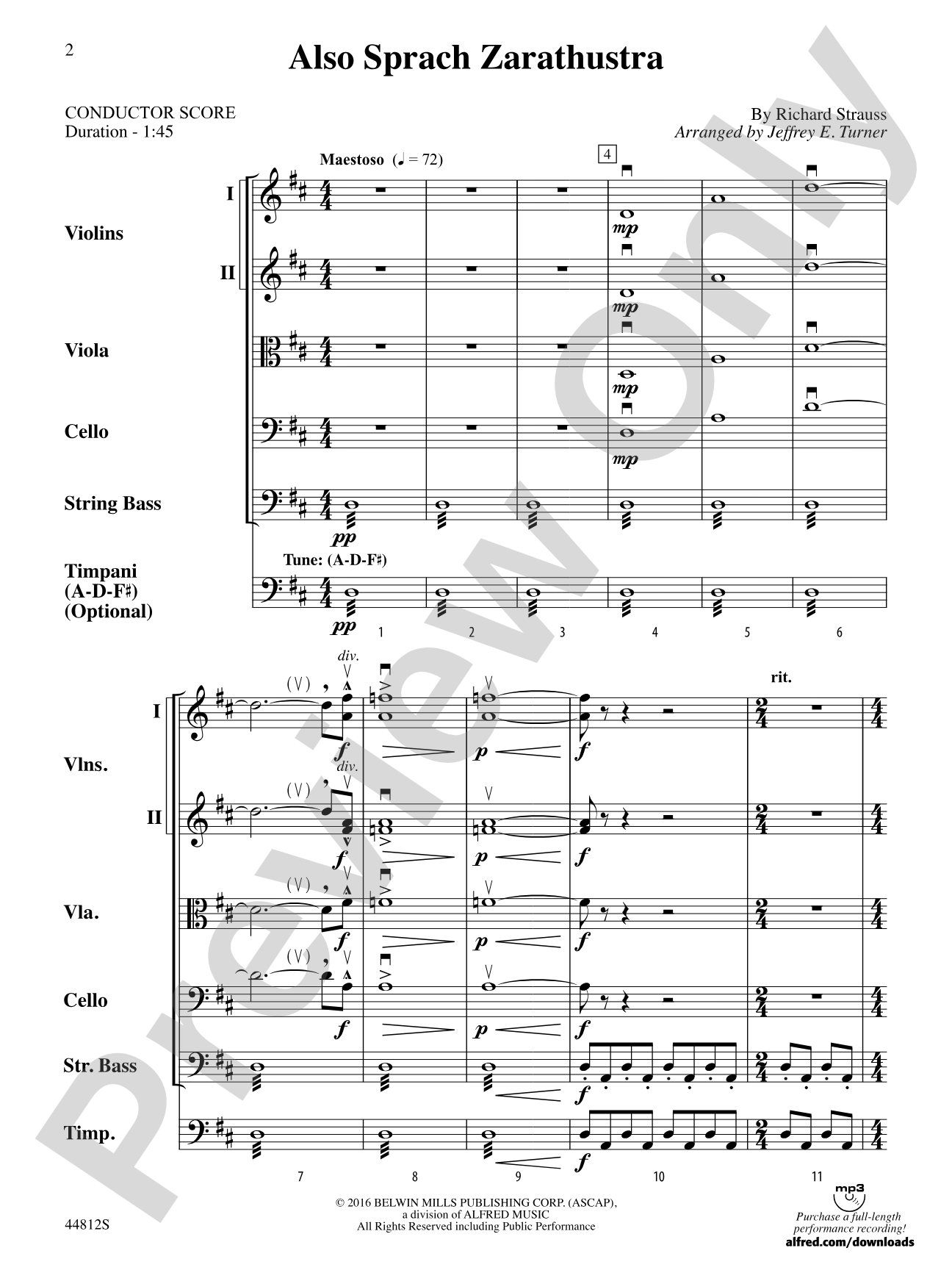
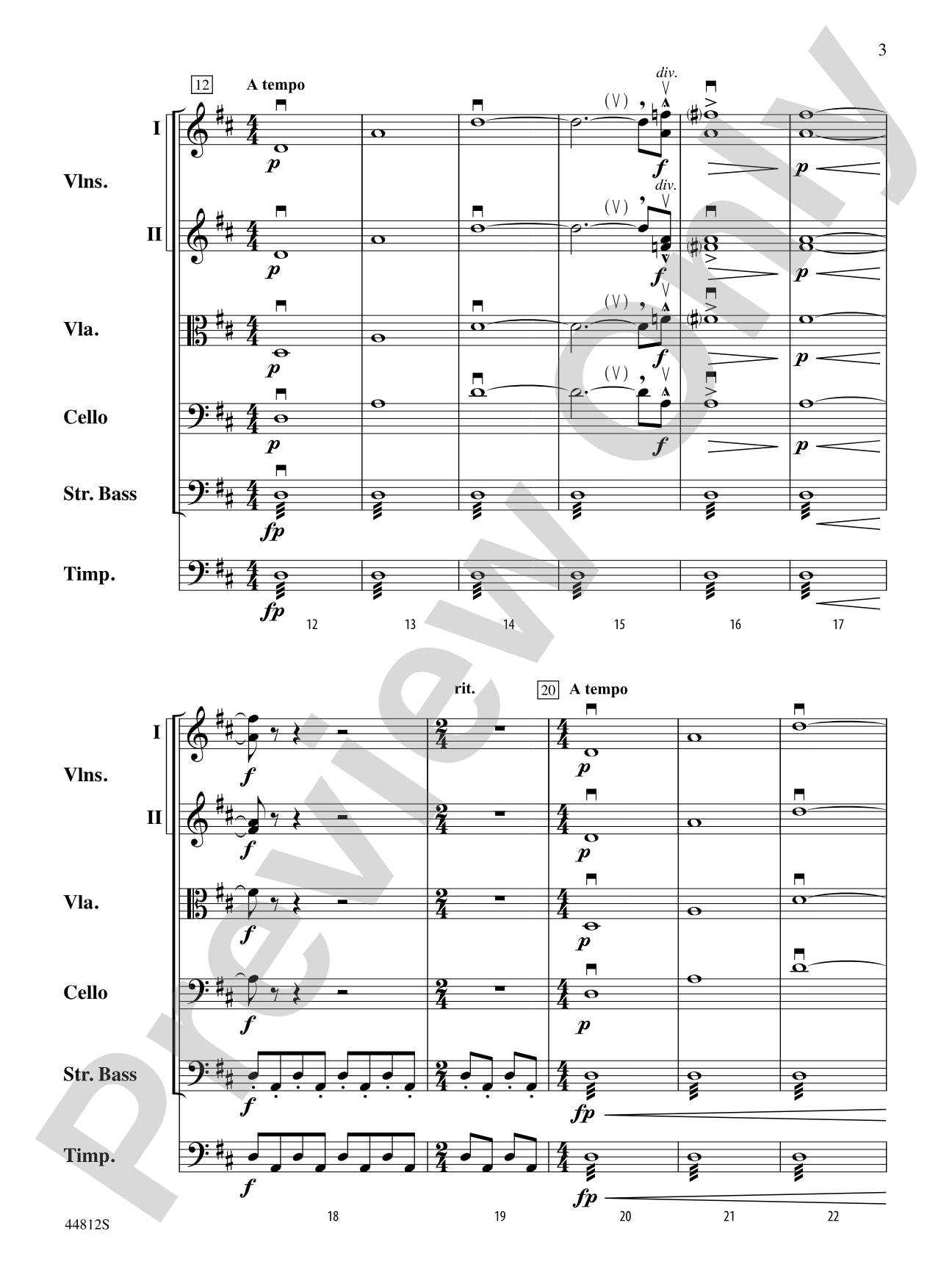
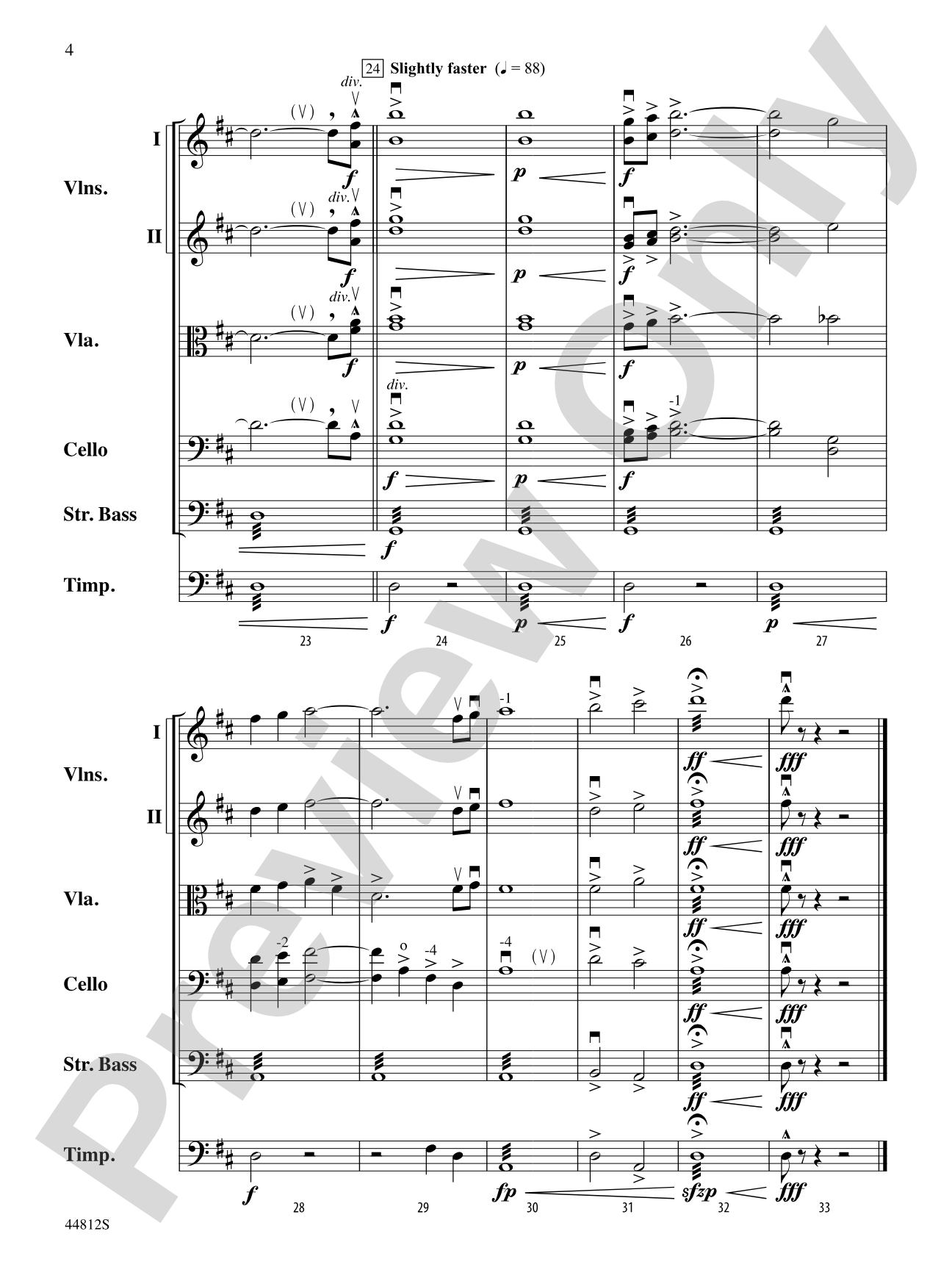
Also Sprach Zarathustra: Score
By Richard Strauss / arr. Jeffrey E. Turner
Grade: 3
Item: 00-PR-0005608
Pickup currently not available
Description
Don't just read it, hear it, play along with it, and watch your students grow with it. In MakeMusic Cloud, Also Sprach Zarathustra: Score comes alive with professional accompaniment, adjustable tempo, and built-in practice tools that turn solo practice into real progress.
Jump straight in and assign it today.
Open this title and explore the full library in minutes.
Sample Audio
Sample Video
Additional Details
More about this title
About the Composer: Richard Strauss
Richard Strauss (1864-1949) stands as one of the late Romantic era's most inventive orchestrators and dramatic storytellers. His tone poems, including Also Sprach Zarathustra, revolutionized how composers could paint vivid musical narratives without words, combining lush harmony with startling instrumental color and structural ambition that influenced generations of film and concert composers.
Why we love this
This arrangement captures the sheer theatrical impact of Strauss's iconic opening without overwhelming a young string orchestra. Jeffrey Turner has scaled the orchestration to sit comfortably at Grade 3 while preserving the fanfare's swagger and the famous rising three-note motive that makes this theme instantly recognizable to audiences of all ages.
What to expect
Cosmic and commanding. The famous three-note motive unfolds like a sunrise or a cosmic awakening, building from mystery into affirmation. Even at Grade 3, the arrangement retains Strauss's sense of grandiosity and that satisfying swell of recognition when the theme blooms.
Who it's for
String orchestra directors at the middle school and young high school level who want an opener with immediate audience appeal and professional gravitas. Young string players benefit from tackling a genuine masterwork arrangement that challenges their intonation, ensemble blend, and interpretive maturity without technical overload.
How to get the most out of it
- Shape the opening fanfare with confidence and clarity. The audience recognition happens in those first few notes, so nail the articulation and bring the melody forward in the first violin section.
- Balance the optional timpani part carefully. It should reinforce the fanfare's drama without drowning out the strings; think of it as punctuation rather than the main voice.
- Build energy gradually through the piece rather than playing at one dynamic level. The rising motive needs breathing room and clear phrase architecture to land its impact.
- Lock in on the pulse together before the concert. This piece relies on ensemble cohesion and confident rhythm section playing to feel grand and unified.
How to use it
Open your concert with this piece and watch the audience settle into their seats the moment that first phrase enters. It works especially well for fall or Halloween programs (as the product notes suggest), and it pairs beautifully with lighter contemporary pieces or classical favorites that follow, creating a "greatest hits" concert arc that feels both accessible and ambitious.
Skills your students will build
- Sustaining long melodic phrases with clear direction and warmth
- Playing with unified ensemble tone and consistent intonation across the string section
- Responding to clear conducting gestures and tempo changes within a dramatic context
- Balancing foreground and background voices so the main theme projects without overwhelming support lines
- Reading and executing rhythmic precision in fanfare and unison passages