
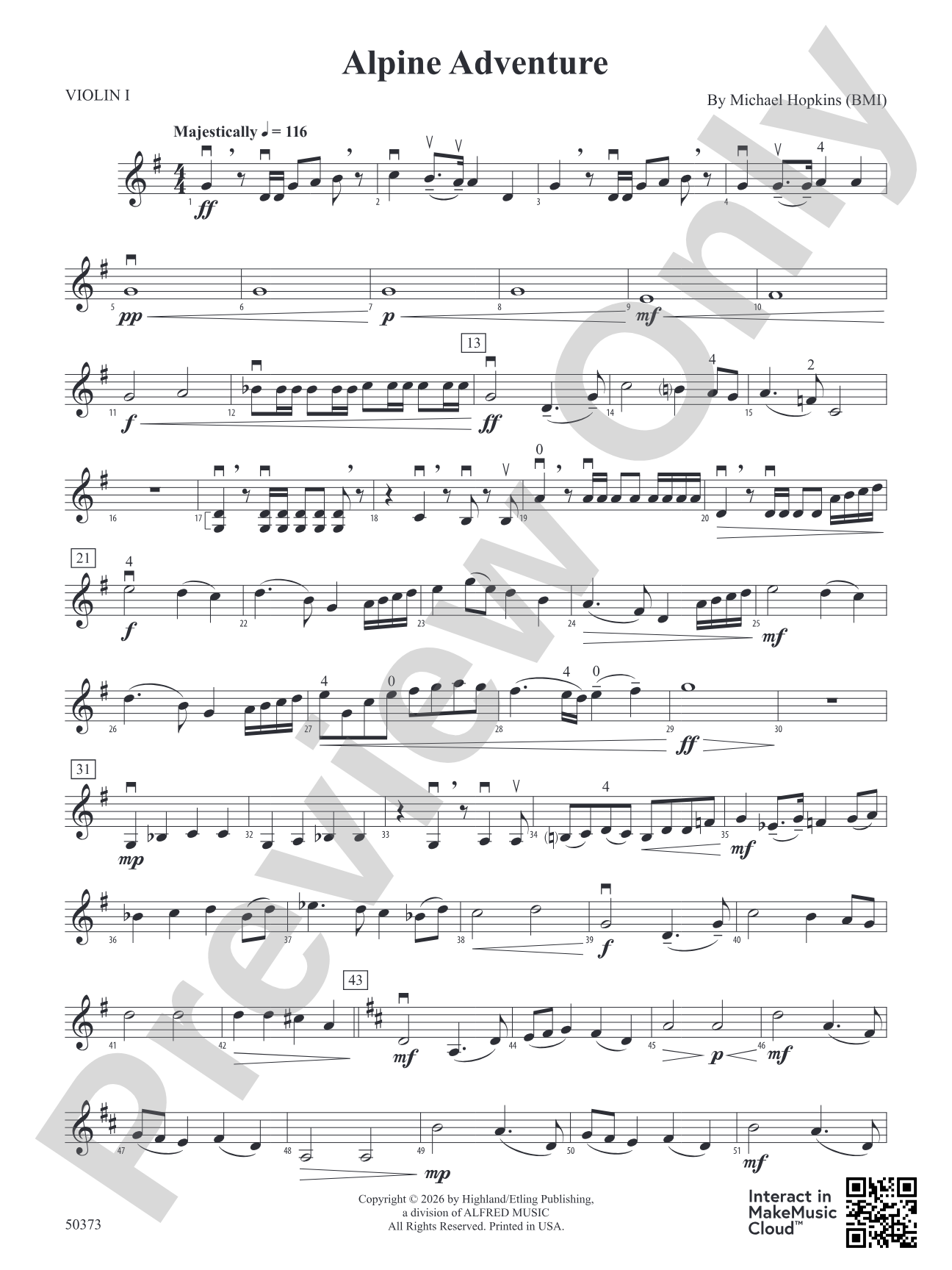

Alpine Adventure: 1st Violin
By Michael Hopkins (BMI)
Grade: 3
Item: 00-PC-0019670_VN1
$7.99
Pickup currently not available
Description
Alpine Adventure is a majestic fanfare by Michael Hopkins written to showcase all sections of the orchestra. The crisp rhythmic motives of the opening measures combine with a soaring melody, depicting a journey through the Rocky Mountains. A lyrical middle section leads to a recap that prominently features the violas, cellos, and basses. The piece builds in energy to an exciting climax. This is an excellent piece for teaching repeated downbows, hooked upbows, louré bowing, and martelé bowing.


Don't just read it, hear it, play along with it, and watch your students grow with it. In MakeMusic Cloud, Alpine Adventure: 1st Violin comes alive with professional accompaniment, adjustable tempo, and built-in practice tools that turn solo practice into real progress.
Open in the Player
Jump straight in and assign it today.
Start Your Free Trial
Open this title and explore the full library in minutes.
Sample Audio
1
Audio File
--:--
0:00
0:00
Sample Video
Additional Details
Series:
Highland String Orchestra
Publisher:
Alfred Music
SKU:
00-PC-0019670_VN1
More about this title
About the Composer: Michael Hopkins

Michael Hopkins leads the music education program at the University of Michigan, where he teaches string techniques, orchestra methods, and music psychology. His career spans three decades of conducting university orchestras, directing school ensembles across Colorado, Michigan, and Vermont, and founding the Burlington Chamber Orchestra.
Hopkins has shaped string pedagogy through over 70 published compositions and arrangements, peer-reviewed research in music education journals, and his book The Art of String Teaching. He regularly conducts at festivals and clinics nationwide and brings deep expertise in instrumental technique to every work he writes.
Why we love this
Hopkins writes for real orchestras with real teaching priorities. Alpine Adventure packages four essential bowing techniques into one energetic, musically coherent journey that students want to play. The piece balances showmanship with genuine pedagogical intent, making it equally valuable for a concert program and a string technique clinic.
What to expect
Brisk and noble, like setting out on a mountain trail. The opening fanfare has sharp, purposeful energy that gives way to a reflective, soaring midsection before building back to triumphant momentum. The music captures both the grandeur of landscape and the physical exhilaration of the journey.
Who it's for
String orchestra directors preparing Grade 3 ensembles for competition or concert performance. This piece suits orchestras ready to tackle multiple bowing styles in a single work and students who benefit from learning technique through repertoire rather than exercises.
How to get the most out of it
- Mark the repeated downbow passages in the opening section with clear, deliberate strokes. Use consistent bow weight to maintain the crisp rhythmic character without sounding heavy or choppy.
- Work the hooked upbows in isolation before integrating them with the ensemble. Have players slow them down to build control, then gradually restore tempo to match the march-like energy of the fanfare.
- Shape the louré passages in the lyrical middle section with gentle bow pressure that supports the singing quality. This section offers a moment to ease from the technical focus of the opening and show tonal depth.
- Build the final climax gradually by staggering dynamic growth across the viola, cello, and bass features. Let the lower voices lead the energy surge so the recap feels earned rather than sudden.
How to use it
Program this as a vibrant opening concert piece or festival entry that demonstrates your orchestra's technical range without requiring extensive rehearsal time beyond your regular curriculum. It pairs well with a lyrical selection from another composer, letting audiences experience both the rhythmic precision and singing tone of your string section.
Skills your students will build
- Repeated downbows with rhythmic precision and consistency
- Hooked upbows integrated into flowing musical lines
- Louré bowing to create expressive, connected phrasing
- Martelé bowing with clean articulation and control
- Sectional coordination during ensemble crescendos and climactic moments
- Reading and interpreting fanfare-style articulation markings