
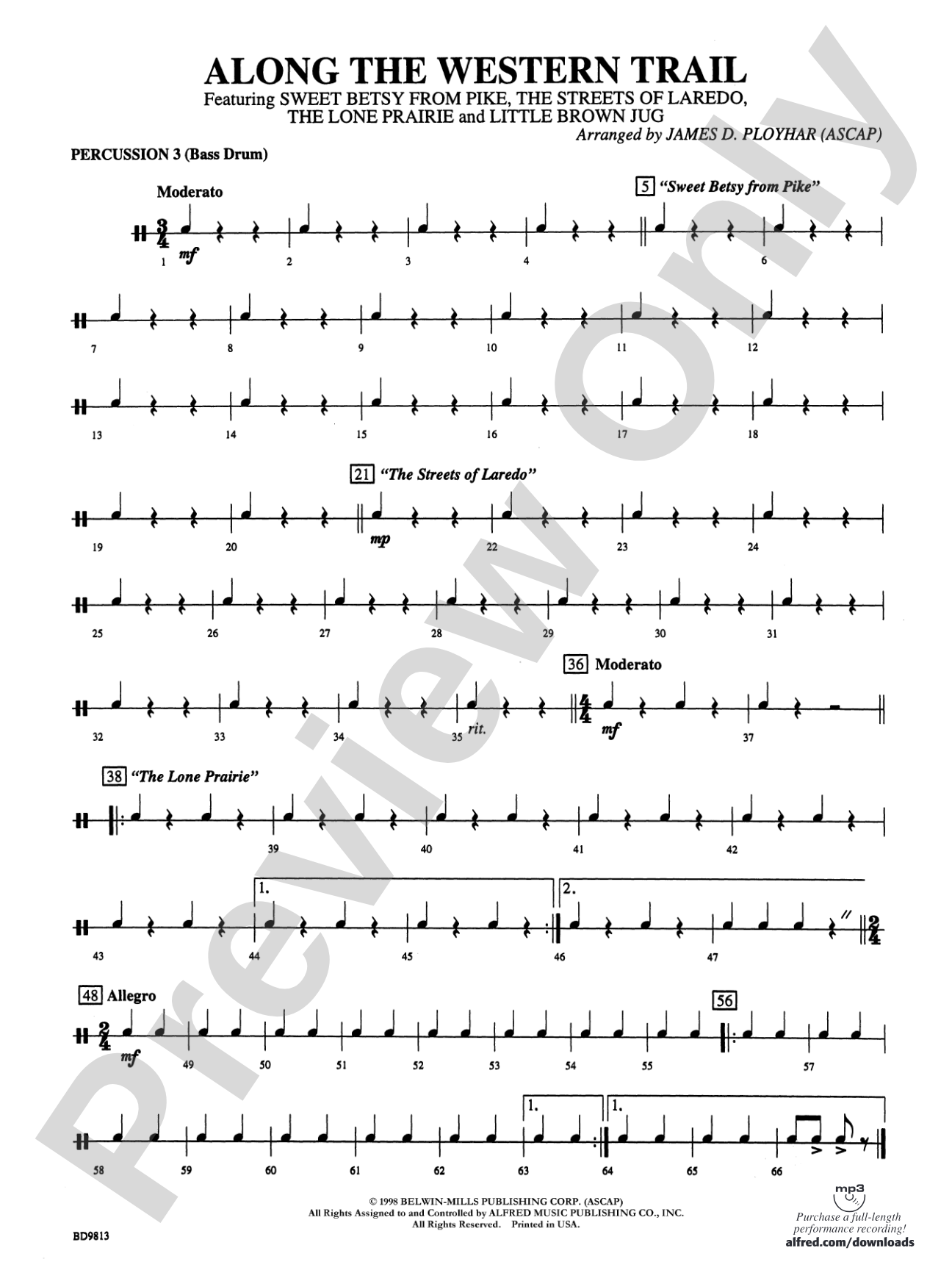

Along the Western Trail: 3rd Percussion
Featuring: Sweet Betsy from Pike / The Streets of Laredo / The Lone Prairie / Little Brown Jug
Arr. James D. Ployhar
Grade: 1 (Very Easy)
Item: 00-PC-0015194_PC3
$3.00
Pickup currently not available
Description
From radio to motion pictures to television, all have glamorized what we know as "The Wild West," but the folk songs from that era have lived on in an unaltered state. They tell stories of the lives, loves, and losses of the brave souls who ventured into a then uncharted landscape. Here is a musical salute to that time and its people, featuring SWEET BETSY FROM PIKE, THE STREETS OF LAREDO, THE LONE PRAIRIE, and LITTLE BROWN JUG. Head 'em up and move 'em out! (2:04)


Don't just read it, hear it, play along with it, and watch your students grow with it. In MakeMusic Cloud, Along the Western Trail: 3rd Percussion comes alive with professional accompaniment, adjustable tempo, and built-in practice tools that turn solo practice into real progress.
Open in the Player
Jump straight in and assign it today.
Start Your Free Trial
Open this title and explore the full library in minutes.
Sample Audio
1
Audio File
--:--
0:00
0:00
Sample Video
No sample videos found.
Additional Details
Series:
Belwin Beginning Band
Publisher:
Alfred Music
Page Count:
126
SKU:
00-PC-0015194_PC3
More about this title
About the Arranger: James D. Ployhar
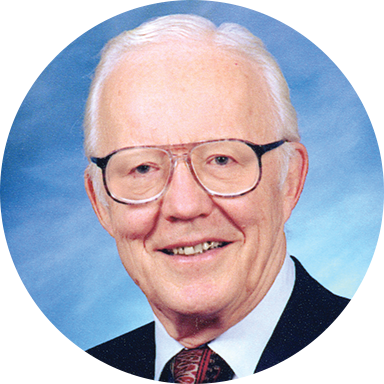
James D. Ployhar brings decades of professional experience to music education, with over 800 publications and a career spanning composition, orchestration, and pedagogy. He authored the Contemporary Band Course, now published by Alfred Music and used internationally, including throughout Norway where it was translated into the local language. His orchestration studies under Knud Havalden of the Danish Royal Philharmonic and his work at the college and university level inform the clarity and musicality of his educational writing.
Beyond the page, Ployhar has conducted and clinicked extensively across North America and Europe, earning the National Band Association Citation of Excellence for his contributions to band music. His public school teaching experience (over 19 years) and graduate training in composition at California State University-Long Beach ground his arrangements in both the classroom and the concert hall. He holds degrees from Valley City State University and Northern Colorado University.
Why we love this
Ployhar's knack for capturing the narrative arc of folk material shines here. Four recognizable songs woven together feel like scenes from a genuine American story rather than a parade of tunes, and the Grade 1 scoring lets every section contribute meaningfully without overwhelming any player. The arrangement respects the melodies that have endured for generations while giving young musicians the satisfaction of performing something that actually feels like a concert piece.
What to expect
Riding across open landscape with stories unfolding around you. The melodies are instantly recognizable and emotionally direct, evoking resilience and longing without sentimentality. The arrangement sits lightly on the ear; it breathes space and clarity rather than dense harmonies, making room for young players to discover their own musicality.
Who it's for
This arrangement is designed for beginning concert bands ready to move beyond isolated exercises into genuine repertoire. It works well for groups in their first or second year of study, where players have basic technical control but thrive when tackling music with historical and cultural weight rather than abstract pedagogy.
How to get the most out of it
- Shape the melodic lines with gentle dynamic swells rather than rigid terraced dynamics; the folk tunes themselves suggest phrasing more organic than what's always marked on the page.
- Balance upper woodwinds and brass carefully during melody statements so the tune comes through cleanly even when multiple sections carry related figures.
- Allow a slight breath or softening at key transitions between songs to help the audience follow the narrative shift without an abrupt restart.
- Keep the rhythmic foundation steady but not mechanical; folk music breathes naturally, and your rhythm section should anchor without feeling rigid.
How to use it
Program this early in a concert to establish an Americana theme for the evening, or use it as a bridge between classical repertoire and contemporary works to show students how folk music connects across genres and centuries. The short duration (2:04) and accessible difficulty also make it ideal for outdoor concerts or community events where you want immediate musical impact without technical barrier.
Skills your students will build
- Sustaining consistent tone across phrase boundaries
- Reading concert band score layout and finding individual parts within ensemble texture
- Balancing blend when multiple sections share thematic material
- Responding to musical narrative and character as an ensemble
- Maintaining rhythmic integrity in moderate tempos while allowing natural phrase breathing