
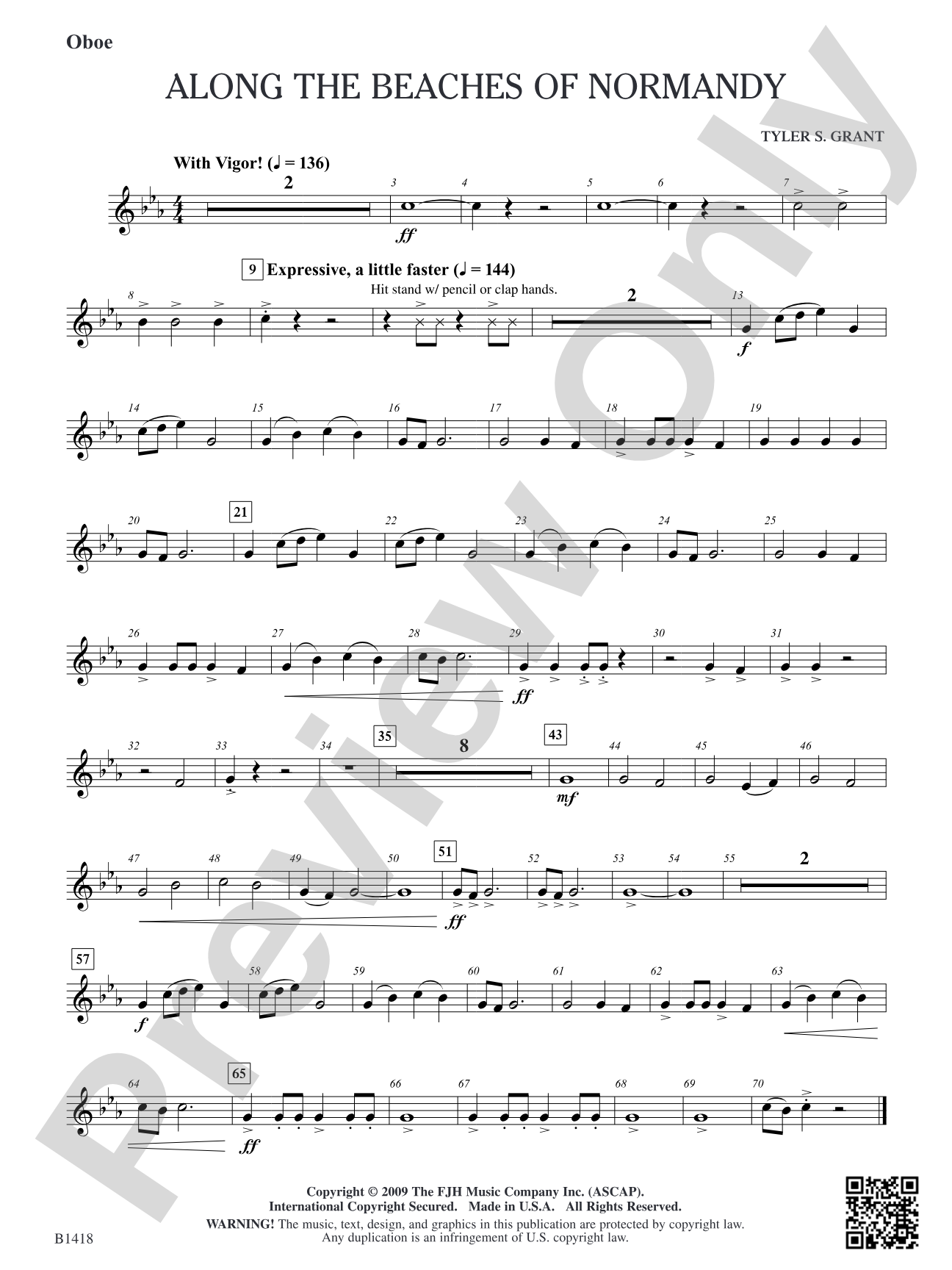

Along the Beaches of Normandy: Oboe
By Tyler S. Grant
Grade: 1.5
Item: 98-PC-DB1418_O1
$7.00
Pickup currently not available
Description
Inspire your students with music written by one of their peers! Thirteen-year-old composer Tyler Grant has written a wildly intense work based on the attack that occurred on the Normandy beaches during World War II. Pencils tapping stands and foot rumbling help represent the sound of the battlefield as this work comes to life. A great way to motivate your students to dream big and aspire to achieve those dreams!


Along the Beaches of Normandy: Oboe isn't in MakeMusic Cloud just yet...but it could be. Let us know you'd like to see it, and you'll help shape what comes next. In the meantime, start a free trial and dive into thousands of interactive titles your students can play along with today.
Request This Title
Tell us you want it.
Start Your Free Trial
Explore everything that's ready to play right now.
Sample Audio
1
Audio File
--:--
0:00
0:00
Sample Video
No sample videos found.
Additional Details
Series:
FJH Developing Band
Publisher:
The FJH Music Company, Inc.
SKU:
98-PC-DB1418_O1
More about this title
About the Composer: Tyler S. Grant

Tyler S. Grant brings a prolific composing and conducting career to concert band literature, with works performed regularly by regional and all-state honor ensembles across North America. His compositions have appeared on prestigious repertoire lists worldwide, and his Panoramic Fanfare won the Dallas Wind Symphony's 2014 "Call for Fanfares" Competition before gaining performances by collegiate and professional ensembles. Since 2010, he has maintained a steady stream of commissions and new publications while also serving as a clinician with over 100 school programs across 15 states.
Beyond composition, Grant conducts at major venues including The Midwest Clinic and all-state bands in multiple states, and has contributed to Alfred Music's Sound Innovations: Ensemble Development series. A University of Alabama graduate in instrumental music education, he studied conducting with Professor Randall Coleman and credits Brian Balmages as a formative mentor in his development as a composer.
Why we love this
A composer still in his teens has produced a concert work with genuine theatrical intensity and historical weight, giving your students a powerful model of what young musicians can achieve. The integration of unconventional sounds like pencil taps and foot rumbling creates vivid storytelling without requiring extended techniques or excessive difficulty. This is the kind of piece that sparks conversations about how music communicates beyond notes on a page.
What to expect
The work creates an immersive sonic landscape of conflict and tension, moving beyond typical battle depictions through the creative use of percussion effects that evoke the visceral environment of Normandy. The music builds with cumulative intensity, drawing the listener into the scale and urgency of the historical moment while remaining accessible to younger musicians.
Who it's for
This piece suits concert bands at the Grade 1.5 level seeking accessible yet substantive repertoire with genuine artistic purpose. It works particularly well for groups that want to program something historically meaningful without stretching into advanced technical demands, and it serves as an especially powerful teaching tool when students know the composer's age and story.
How to get the most out of it
- Establish clear cueing patterns for the rhythmic percussive elements so the ensemble locks into the battlefield soundscape as a unified texture rather than scattered effects.
- Balance the dynamic and timbral contrasts thoughtfully; the contrast between quiet intensity and explosive sections will deepen the work's emotional impact.
- Rehearse the foot rumbling separately with the bass section to ensure it supports the harmonic foundation rather than overwhelming it.
How to use it
Program this as a concert centerpiece that can anchor a thematic concert about historical events, youth achievement, or American composers. Its Grade 1.5 level makes it a natural fit for mid-year festivals and contests where you want a piece with both accessibility and artistic substance.
Skills your students will build
- Interpreting unconventional notation and percussive effects (pencil taps, foot rumbling)
- Balancing dynamic control across sustained and impact-based moments
- Connecting musical storytelling to historical context
- Ensemble synchronization in sections featuring layered rhythmic elements