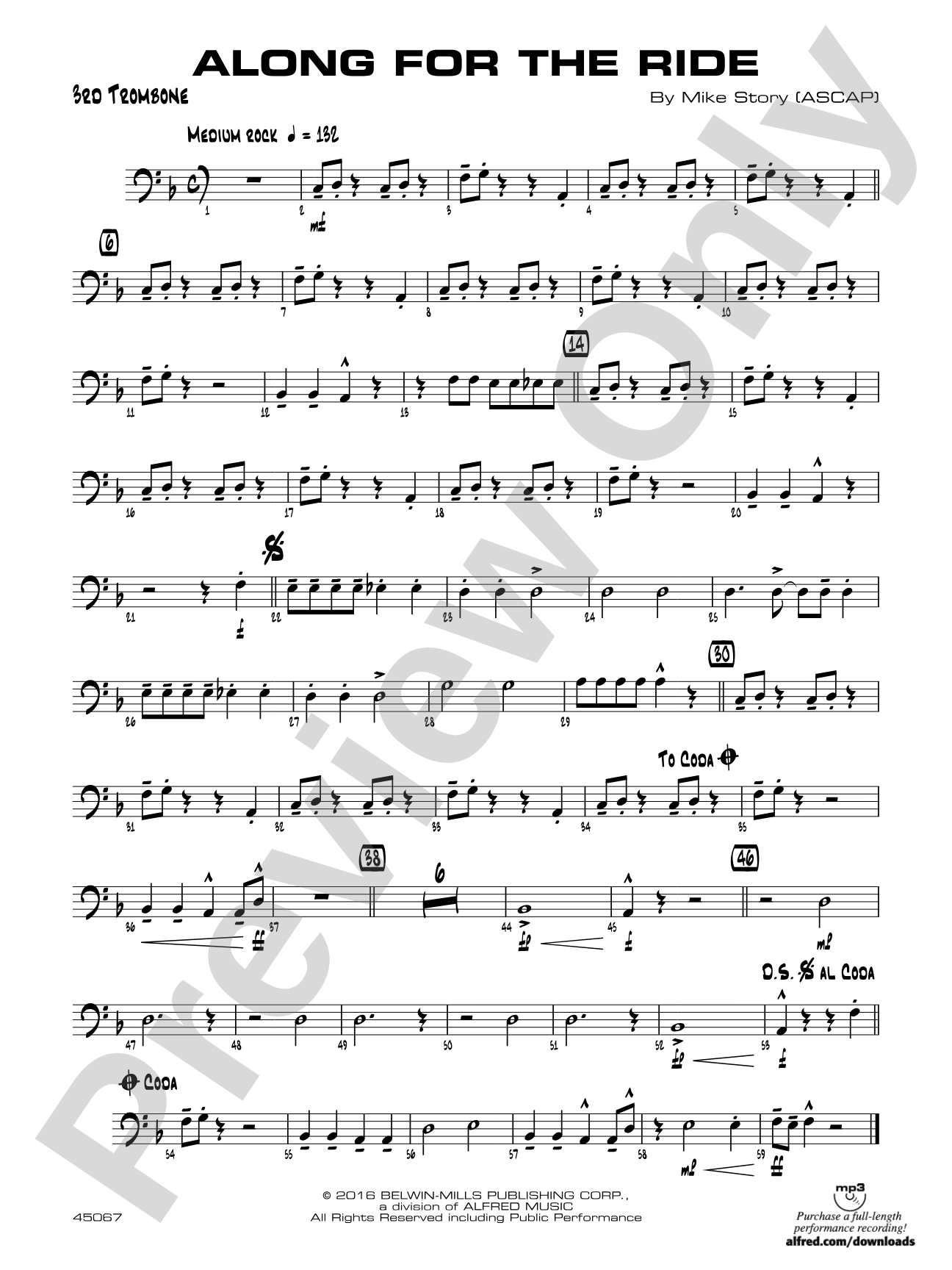
Along for the Ride: 3rd Trombone Sheet Music Preview

Along for the Ride: 3rd Trombone

By Mike Story

Grade: 1 (Easy)

Item: 00-PC-0017476_TN3

Digital Download
$3.00
Description
What a great title---"Along for the Ride"---clearly a great rock arrangement for a young jazz ensemble. Specific articulation notation, easy brass ranges, a written tenor sax solo (the ride), optional parts, and a fun chart to play---it's all you need! Composed by Mike Story. (2:13)

Don't just read it, hear it, play along with it, and watch your students grow with it. In MakeMusic Cloud, Along for the Ride: 3rd Trombone comes alive with professional accompaniment, adjustable tempo, and built-in practice tools that turn solo practice into real progress.

Sample Audio
0:00
0:00
Sample Video
Additional Details
Series: First Year Charts for Jazz Ensemble
Publisher: Alfred Music
Page Count: 68
SKU: 00-PC-0017476_TN3

More about this title

About the Composer: Mike Story

Mike Story is a prolific composer and arranger whose work spans jazz education, commercial scoring, and concert music. His compositions for young jazz ensembles have become staples in school programs, known for their clear pedagogical intent paired with genuine musical sophistication and playability.

Why we love this

Story writes with a direct understanding of what early jazz ensembles actually need: clear articulation marks that teach style without guesswork, brass ranges that let young players breathe, and a melody-forward design that keeps everyone engaged. The written tenor sax solo gives students a concrete model to learn from rather than forcing them to invent something on the spot.

What to expect

Infectious and forward-moving, with a rock-influenced groove that feels contemporary and fun. The melody sits naturally in the upper voices, giving the arrangement buoyancy and accessibility while the rhythm section drives the piece with enough pocket and swagger to feel genuinely jazzy.

Who it's for

Beginning jazz ensembles and first-year jazz students who need an energetic, confidence-building chart that doesn't condescend musically. Directors transitioning students from concert band to jazz setting will find this invaluable for teaching jazz phrasing, articulation, and ensemble blend without overwhelming rhythm section players or soloists.

How to get the most out of it

  • Use the articulation markings as your primary rehearsal tool. They define the groove, so have the ensemble match them exactly before worrying about tempo or dynamics.
  • Let the rhythm section lock in first. Once drums, bass, and piano are anchored, add the horns section by section so the ensemble hears the harmonic movement clearly.
  • The tenor sax solo is written, so the soloist has room to interpret and add slight rubato without losing the chart's shape. Encourage them to make it personal while respecting the melody.

How to use it

Slot this into a full concert as a first-set closer or a midprogram energizer. Its 2:13 duration and upbeat character make it ideal for audiences encountering jazz for the first time, and it works equally well as a festival or competition piece where young ensembles need to make an impression without technical overreach.

Skills your students will build

  • Jazz articulation and phrasing (tonguing, light attacks, swing feel)
  • Reading and executing written notation in a jazz context
  • Rhythm section entrustment and responsiveness to groove
  • Solo interpretation from a composed framework
  • Brass blend and balance in jazz voicings

You May Also Like