
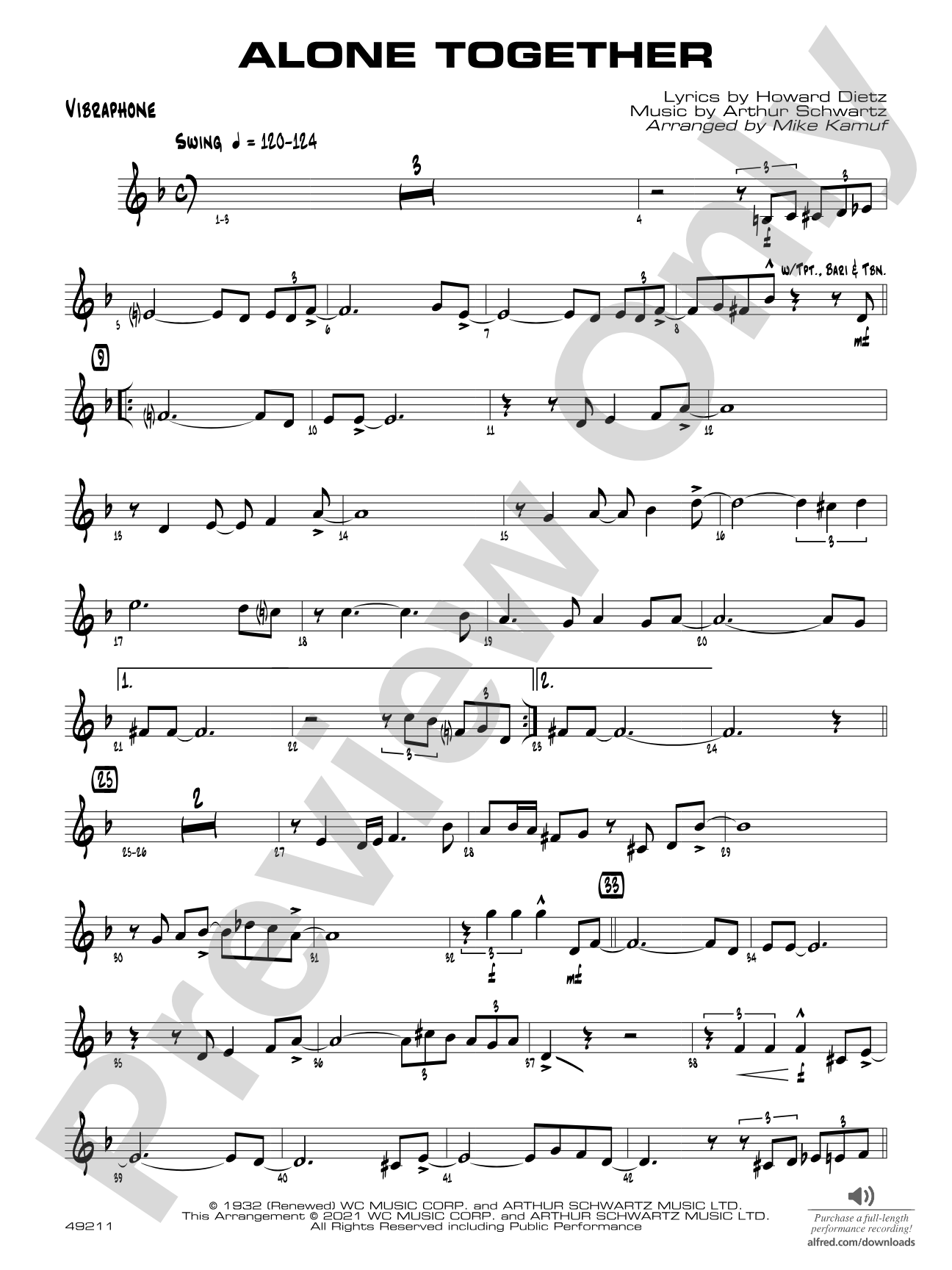

Alone Together: Vibraphone
Lyrics by Howard Dietz, music by Arthur Schwartz / arr. Mike Kamuf
Grade: 3.5 (Medium)
Item: 00-PC-0018728_V
$3.00
Pickup currently not available
Description
A great jazz standard that really hits the mark. The chart is played around 124 BPM with lead trumpet range to written B above the staff, and solo space for tenor 1 with a sample solo provided. The development section features trombones plus the other sections as well. Vibes and flute optional parts. A first-class chart! Alone Together is arranged by Mike Kamuf. (5:30)


Don't just read it, hear it, play along with it, and watch your students grow with it. In MakeMusic Cloud, Alone Together: Vibraphone comes alive with professional accompaniment, adjustable tempo, and built-in practice tools that turn solo practice into real progress.
Open in the Player
Jump straight in and assign it today.
Start Your Free Trial
Open this title and explore the full library in minutes.
Sample Audio
1
Audio File
--:--
0:00
0:00
Sample Video
Additional Details
Series:
Jazz Band Series
Publisher:
Alfred Music
Page Count:
106
SKU:
00-PC-0018728_V
More about this title
About the Composer: Arthur Schwartz
Arthur Schwartz (1900-1984) was a prolific Broadway and film composer whose gift for melody made him a defining voice in American musical theater. His collaborations with lyricist Howard Dietz produced some of the era's most sophisticated song standards, including "Dancing in the Dark" and "That's Entertainment." Schwartz's compositions have remained central to the jazz repertoire because of their harmonic richness and memorable lines that invite skilled improvisation.
In the classroom and rehearsal room, Schwartz's standards offer jazz ensembles a direct path to the Great American Songbook. His melodies are intuitive enough for developing musicians to grasp quickly, yet sophisticated enough to reward deeper study of harmony and phrasing. Arrangers continue to return to his work because the underlying compositions support creative reinterpretation without losing their essential character.
Why we love this
Mike Kamuf's arrangement captures what makes this standard endure: a clean, swinging chart that gives every section room to breathe while maintaining forward momentum. The tenor solo space with a written example gives students a concrete model for improvisation, and the development section's tutti writing creates real stakes for section coordination without overwhelming an ensemble at this level.
What to expect
Smooth and propulsive, with that effortless sophistication that defines the best jazz standards. The melody is elegant without being precious; the harmonies support elegant soloing, and the ensemble writing swings with natural grace rather than grinding effort.
Who it's for
Jazz ensembles at the intermediate level seeking a standard that balances sophistication with accessibility. This chart works equally well for high school jazz bands building confidence in swing repertoire and college/community ensembles aiming to perform a recognizable, well-crafted tune.
How to get the most out of it
- Lock the tempo at 124 BPM early in rehearsal and reinforce it through the form. This tune relies on steady pocket playing; even small tempo fluctuations will derail the ensemble's collective swing feel.
- Balance the lead trumpet line carefully against the ensemble. At written B above the staff, the lead part will dominate the texture if not managed; use dynamic shaping to keep the melody singing without drowning out harmonic voices.
- Study the provided tenor solo as a group before assigning it to a soloist. Discussing the solo's construction, phrasing choices, and harmonic targets helps the improviser understand what works and gives section players confidence in backing a real interpretation.
- Feature the development section's trombone writing as a rehearsal priority. This passage requires blend and rhythmic precision; isolate it with the other sections responding in their parts to build the unified sound that makes this chart stand out.
How to use it
Pair this with other Schwartz or Dietz standards to build a set exploring Great American Songbook composers, or use it as a centerpiece in a jazz concert alongside blues and bebop charts to show stylistic range. The five-and-a-half-minute duration makes it ideal for a set-closing number or a feature that doesn't demand the full program weight of a longer work.
Skills your students will build
- Swinging eighth-note articulation and phrasing at medium tempo
- Solo construction and melodic improvisation within chord changes
- Ensemble balance between lead and harmonic voices
- Section coordination in densely voiced development passages
- Reading and executing jazz ensemble notation and dynamics