
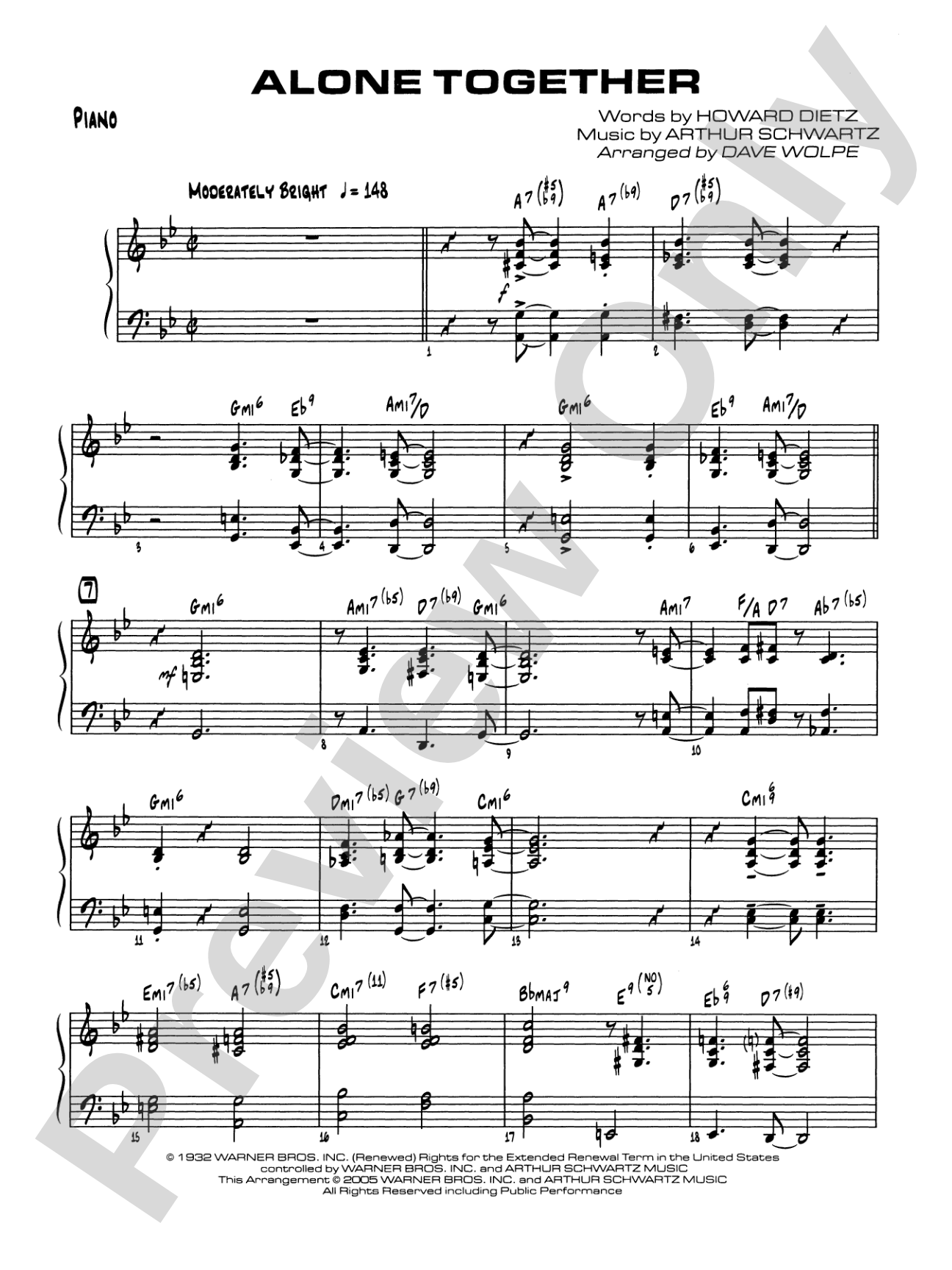

Alone Together: Piano Accompaniment
By Howard Deitz and Arthur Schwartz / arr. Dave Wolpe
Grade: 4 (Medium Advanced / Difficult)
Item: 00-PC-0017273_K
$5.99
Pickup currently not available
Description
Another winner from master arranger Dave Wolpe, "Alone Together" features a duet for tenor sax and trombone with solos for each. This is some of the finest ensemble writing on the planet. A swinging groove throughout, hip chord changes, accessible brass ranges, and years of writing experience will deliver a successful performance for your band every time. Quality writing! (3:41)


Don't just read it, hear it, play along with it, and watch your students grow with it. In MakeMusic Cloud, Alone Together: Piano Accompaniment comes alive with professional accompaniment, adjustable tempo, and built-in practice tools that turn solo practice into real progress.
Open in the Player
Jump straight in and assign it today.
Start Your Free Trial
Open this title and explore the full library in minutes.
Sample Audio
1
Audio File
--:--
0:00
0:00
Sample Video
No sample videos found.
Additional Details
Series:
Premier Jazz Series
Publisher:
Alfred Music
SKU:
00-PC-0017273_K
More about this title
About the Composer: Howard Dietz
Howard Dietz (1896-1983) was a lyricist and librettist who shaped the sound of American musical theatre across five decades. Working frequently with composer Arthur Schwartz, Dietz crafted songs for Broadway shows that balanced sophistication with genuine popular appeal, earning him a place alongside the era's most literate songwriters. His melodies and harmonic language became foundational repertoire for jazz musicians seeking standards with harmonic depth and memorable contours.
Dietz's theatrical background meant his songs were built for performers. They sit naturally in the voice, feature singable melodic lines, and contain the kind of chord movement that invites improvisation. This combination has made his standards enduring choices for jazz ensembles.
Why we love this
Dave Wolpe has arranged this standard with the ear of someone who understands what makes a jazz ensemble swing. The tenor sax and trombone duet opens the piece with genuine musical conversation, and the solo sections give your section leaders room to shine while the ensemble writing stays clean and supportive. Dietz's harmonic vocabulary here is sophisticated enough to keep experienced players engaged, yet the brass ranges and voice-leading make the parts singable for bands working at Grade 4.
What to expect
Urbane and relaxed, with the ease of a late-night conversation between old friends. The groove swings throughout, never rushing or dragging, while the harmonies create just enough harmonic sophistication to catch the ear of listeners who know jazz standards. This is elegant without being precious, swinging without being obvious.
Who it's for
Jazz ensemble directors seeking Grade 4 repertoire with genuine musical substance will find this arrangement rewarding for both players and audiences. The piece works equally well for competitive festival settings and concert performances, and offers meaningful solo opportunities for your best tenor sax and trombone players without sacrificing ensemble cohesion.
How to get the most out of it
- Balance the front-line duet carefully during the opening; the trombone should sit just below the tenor sax so both lines cut through without either overshadowing the other.
- Establish the swing feel early in rehearsal by having the rhythm section lock the fundamental groove first, then bring in the horns once that pocket is solid.
- Shape the solo sections with dynamic support from the ensemble. The band's comping voicings should breathe and pull back slightly when soloists take their space, then rise to meet them at phrase endings.
- Pay attention to Wolpe's articulation markings throughout. The precision of tonguing and phrasing in the ensemble passages is what gives this arrangement its professional sheen.
How to use it
Program this alongside other Wolpe arrangements from the Premier Jazz Series to showcase the range of your ensemble's stylistic control. It pairs naturally with uptempo swingers for contrast within a single concert or festival set, and works particularly well as a second-set opener where audiences are settled and ready to listen closely to the front-line detail.
Skills your students will build
- Trading solo space and responding musically as an ensemble
- Swing comping and rhythmic flexibility in the rhythm section
- Balancing two melodic lines in a duet texture
- Reading jazz articulations and interpreting syncopated rhythms accurately
- Supporting soloists with dynamic control and harmonic sensitivity