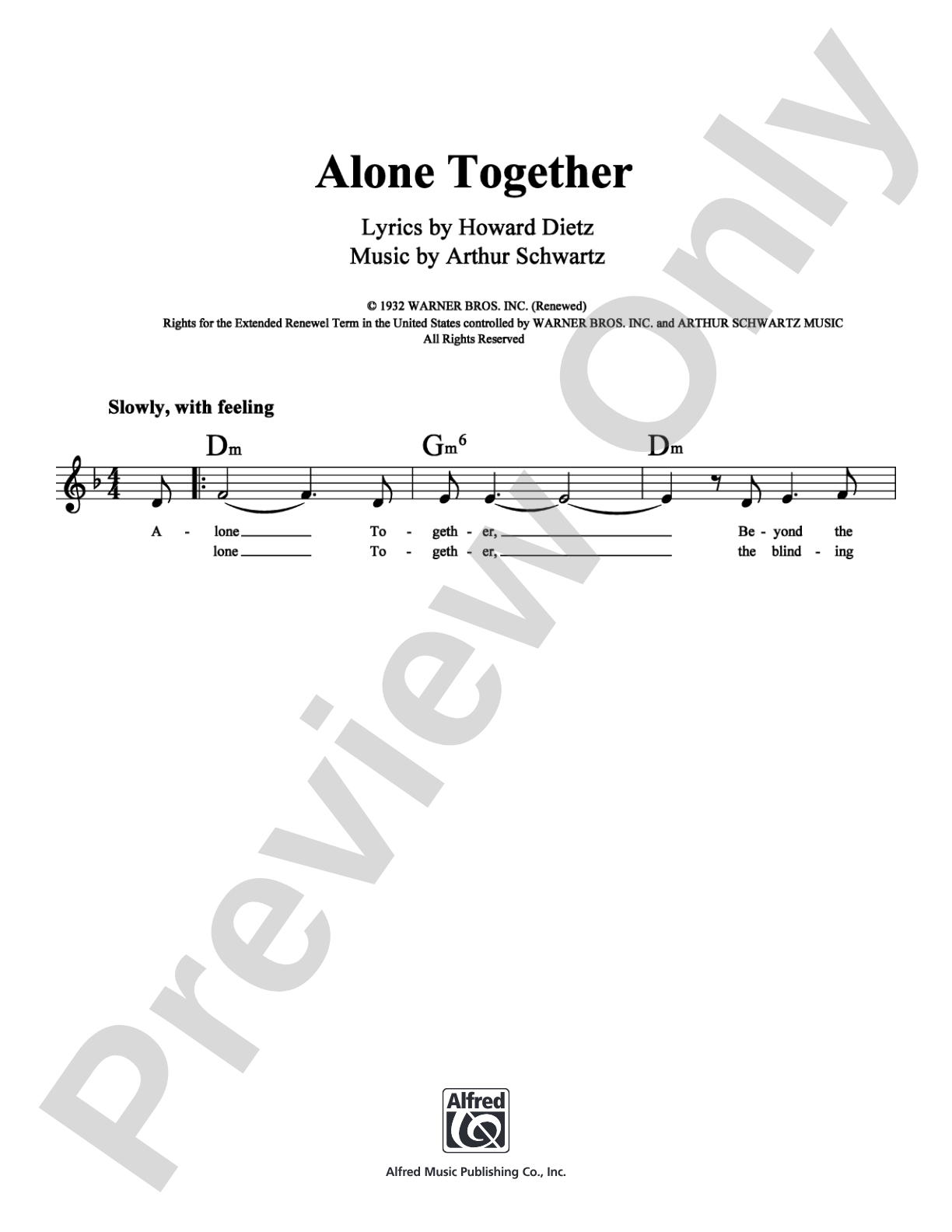
Alone Together: Lead Sheet Digital Sheet Music

Alone Together: Lead Sheet Digital Sheet Music

Dizzy Gillespie, Arthur Schwartz

Item: 00-PS-0008433

Digital Download
$1.99
Description

Alone Together: Lead Sheet Digital Sheet Music isn't in MakeMusic Cloud just yet...but it could be. Let us know you'd like to see it, and you'll help shape what comes next. In the meantime, start a free trial and dive into thousands of interactive titles your students can play along with today.

Sample Audio
No sample audio found.
Sample Video
Additional Details
SKU: 00-PS-0008433

More about this title

About the Artist: Dizzy Gillespie

Dizzy Gillespie (1917-1993) was a virtuoso trumpeter and one of the primary architects of bebop. His technical innovations—including the use of altered chords, complex rhythmic phrasing, and extended range—transformed jazz trumpet playing and influenced generations of musicians across all instruments. As both a composer and bandleader, Gillespie created a body of work that remains essential to jazz pedagogy and performance.

Beyond his musical innovations, Gillespie was a bandleader who mentored young players and championed Afro-Cuban jazz fusion. His compositions and arrangements balance accessibility with sophistication, making them valuable repertoire for students learning jazz language and idiom.

Why we love this

Gillespie's bebop vocabulary is distilled into a melody that swings hard without sacrificing singability. The lead sheet format makes this ideal for jazz combos and vocal ensembles exploring the idiom, allowing students to hear and internalize the phrasing and harmonic language that defined an era.

What to expect

Buoyant and conversational. The melody bounces with characteristic bebop humor and angular phrasing, turning corners you don't always expect. There's a lightness to the melodic line even as the harmonic rhythm stays sophisticated and demanding.

Who it's for

Jazz musicians and students learning bebop language, from intermediate high school players through college jazz ensembles. This lead sheet works equally well for trumpet, saxophone, vibraphone, or vocalist seeking to understand how Gillespie constructed melody over complex harmony.

How to get the most out of it

  • Study the original recording to absorb the exact rhythmic placement of the melody; bebop phrasing lives in the spaces between written notes and rests.
  • Treat the chord changes as a conversation, not a roadmap. Leave room for reharmonization and comping choices that respond to what other players are doing.
  • Lock the time feel with your rhythm section early in rehearsal. The swing eighth-note feel is specific; nail that before adding melodic interpretation.
  • Experiment with different voicings of the melody across your range. Bebop tunes often sound fresh when played in unexpected registers or doublings.

How to use it

Include this in a jazz concert exploring bebop standards and composers, or use it as a bridge piece between swing and modern jazz studies. It pairs well with other Gillespie compositions to show his range as a melodist, and it gives students a chance to hear how a single melody can support multiple interpretations and arranging approaches.

Skills your students will build

  • Reading and interpreting bebop phrasing and articulation
  • Understanding chord extensions and upper structure voicings
  • Developing conversational soloing and reharmonization within a jazz context
  • Building time feel and swing sensibility through interaction with rhythm section

You May Also Like