
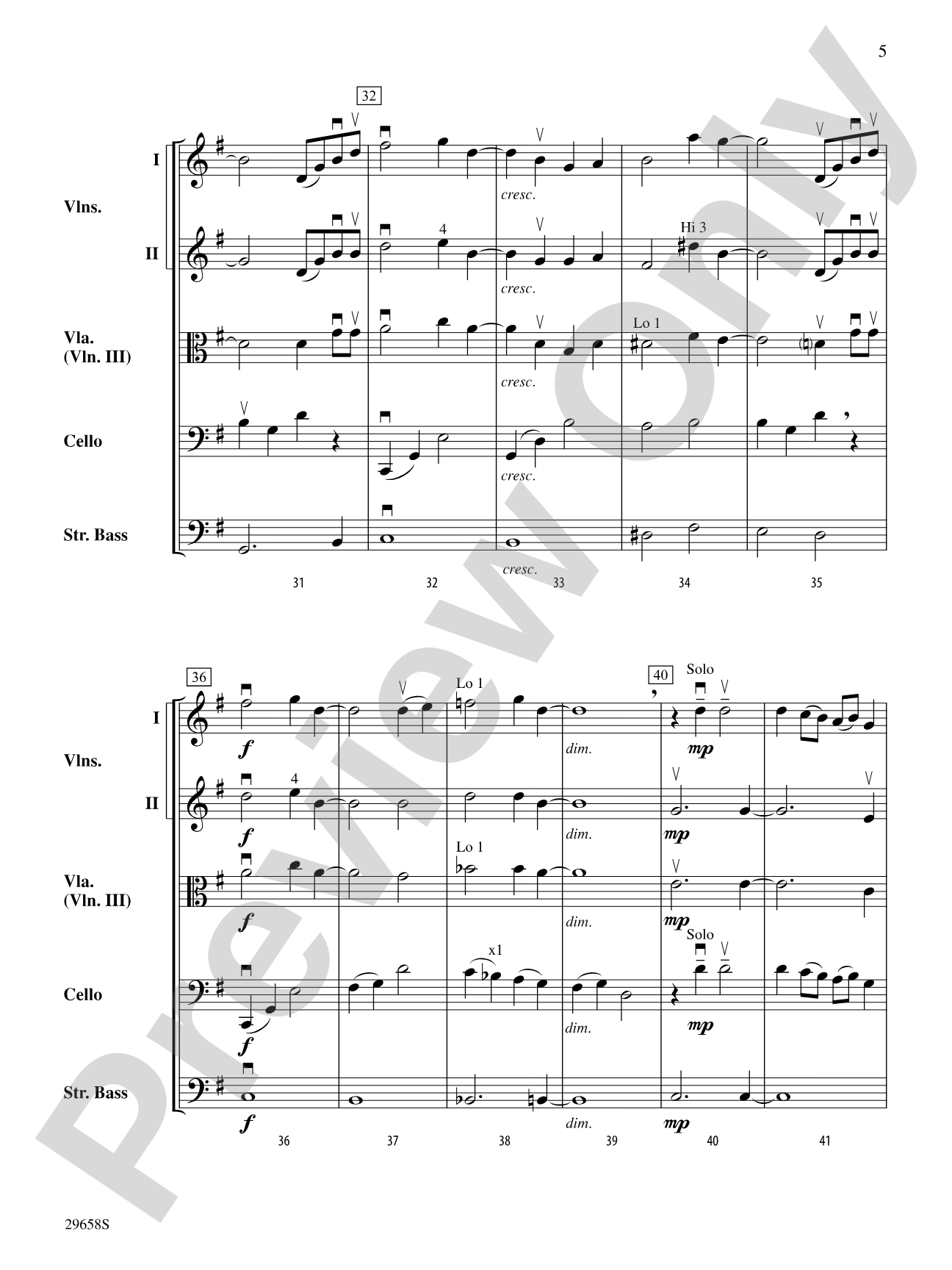
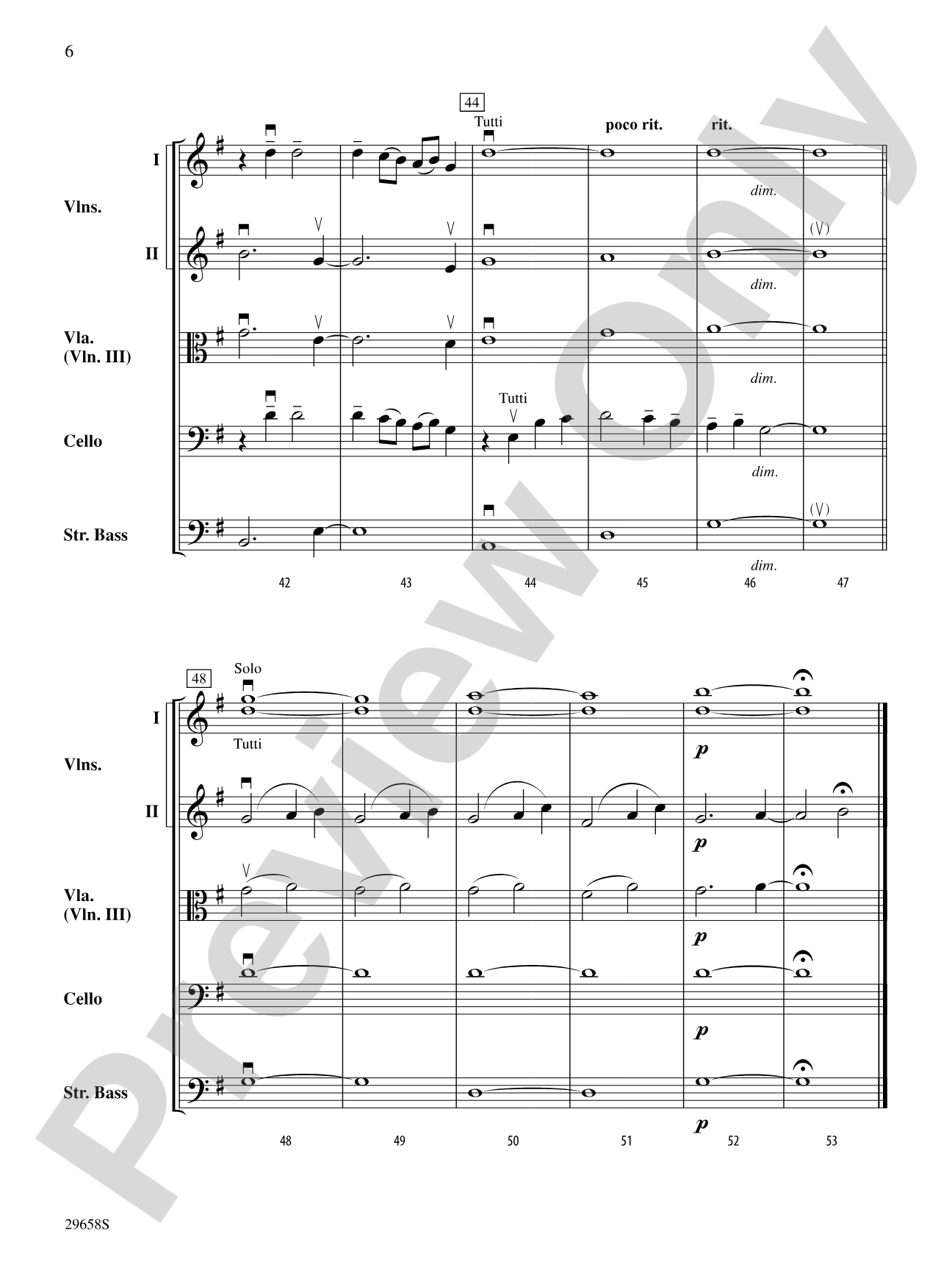



Alone in the Universe (from Seussical the Musical): String Orchestra Conductor Score & Parts
Lyrics by Lynn Ahrens, music by Stephen Flaherty / arr. Bob Cerulli
Grade: 2
Item: 00-PK-0001543

$45.00
One moment…
Related Items
Alone in the Universe (from Seussical the Musical): String Orchestra Conductor Score |
$9.00
|
View |
Description
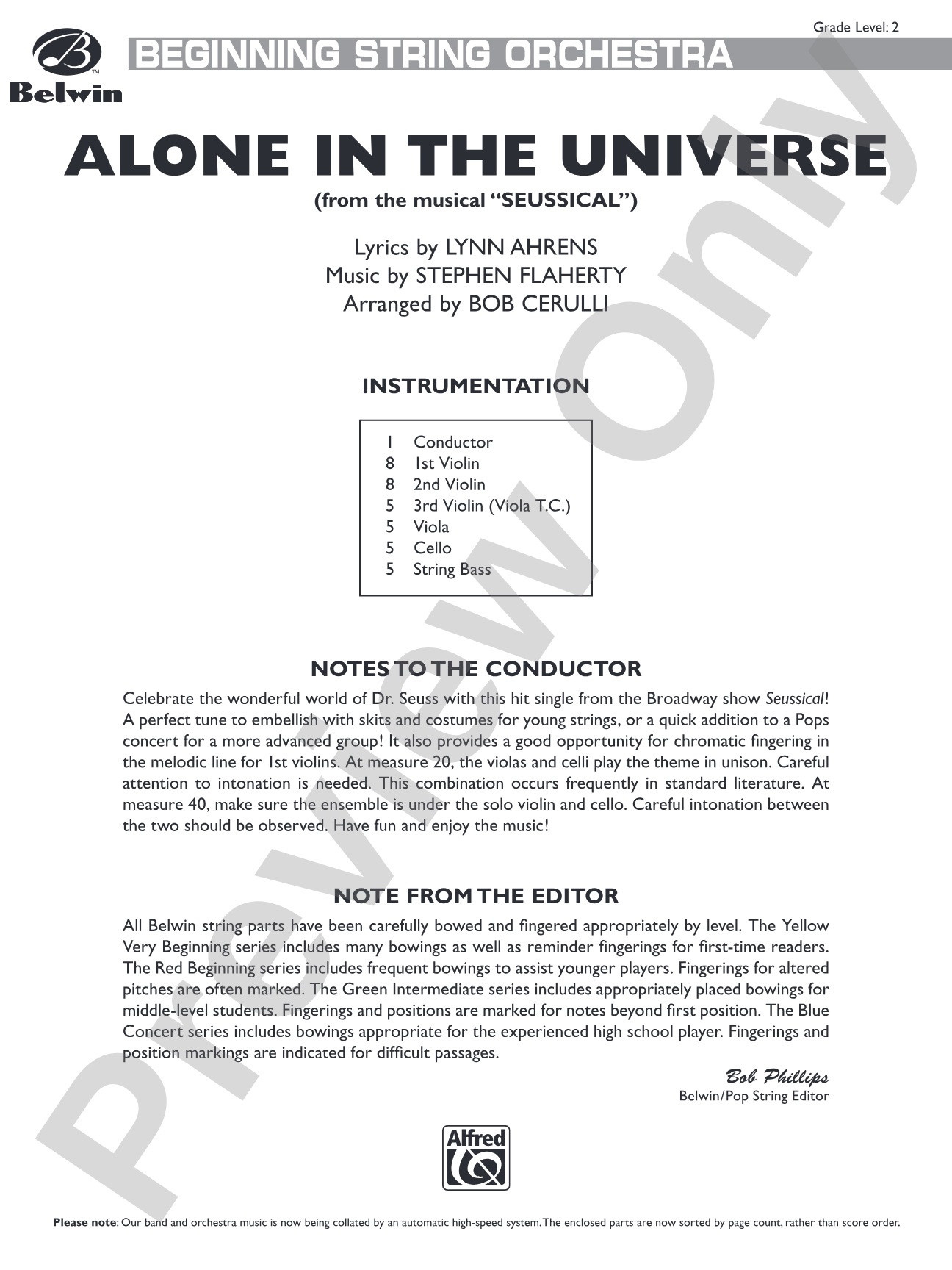
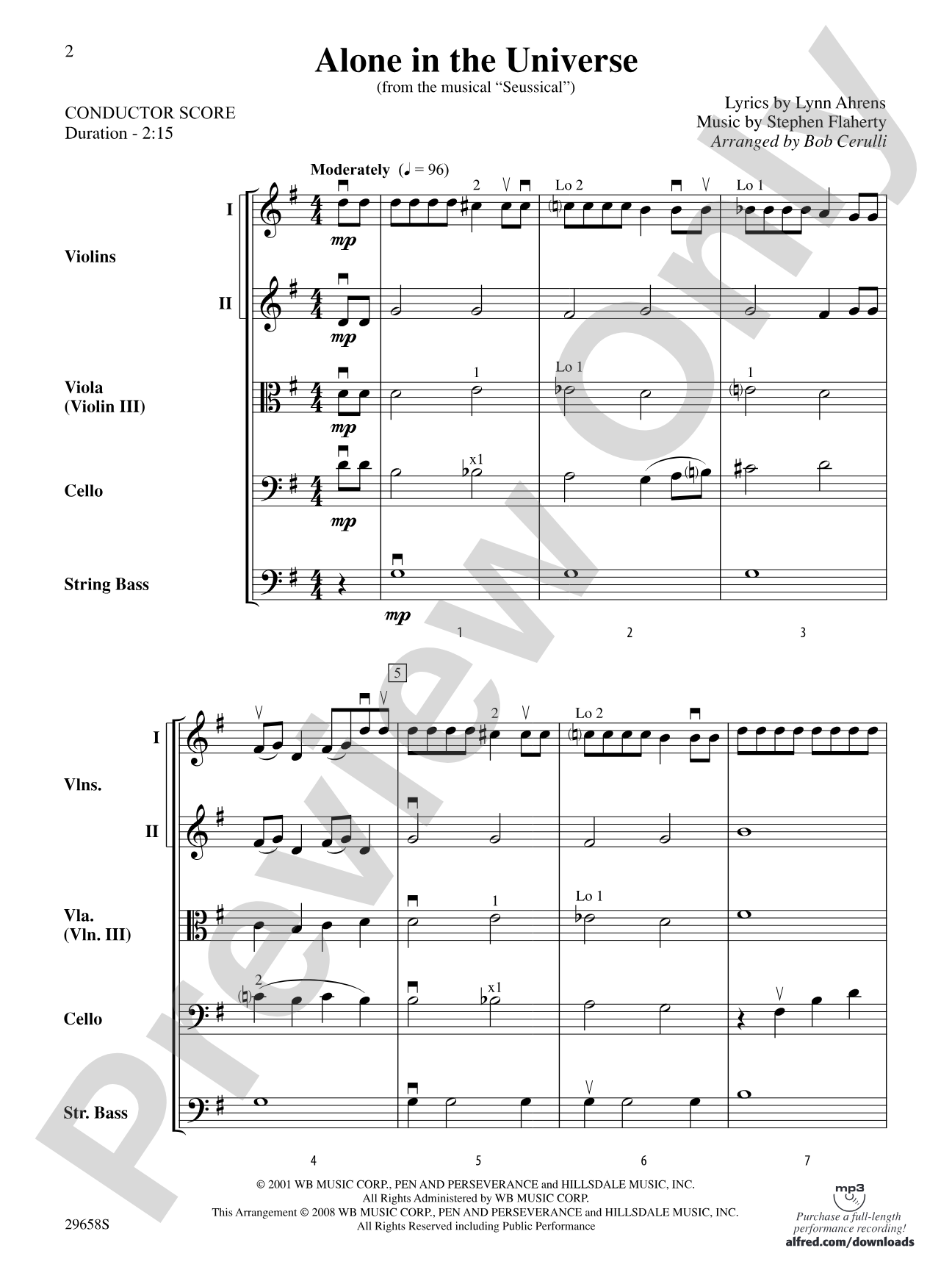
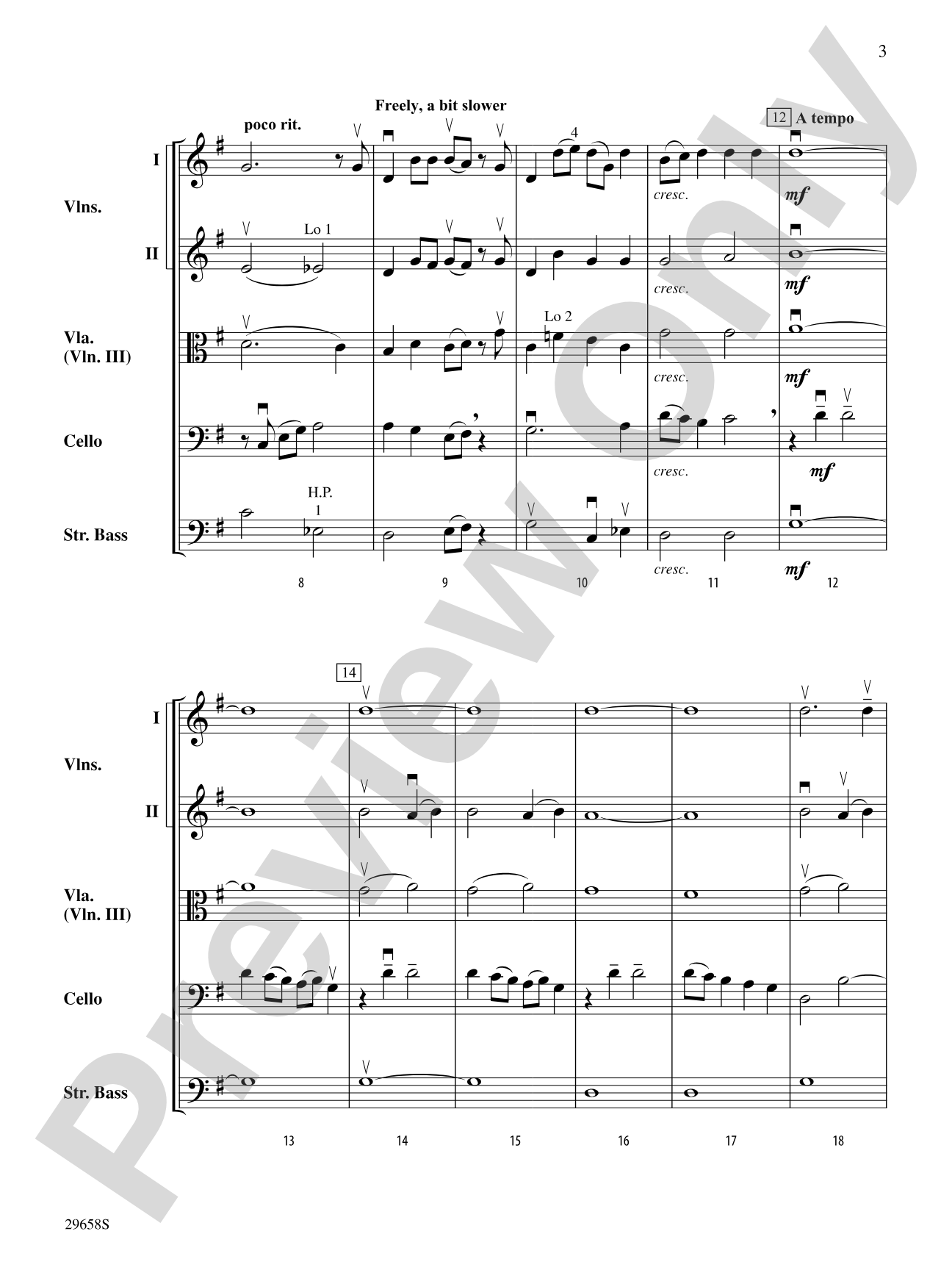
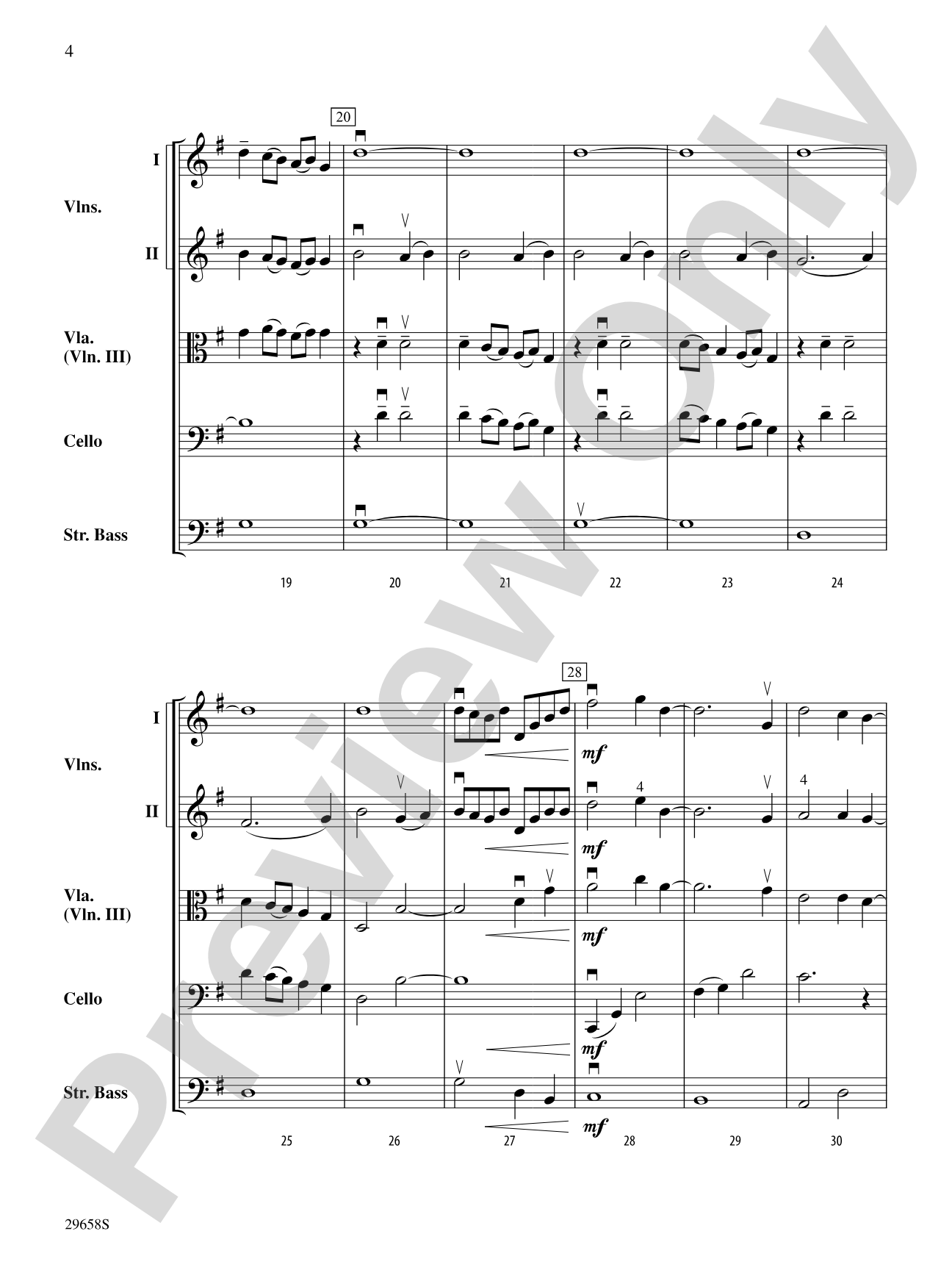
Celebrate the wonderful world of Dr. Seuss with this hit single from the Broadway show, Seussical! While providing harmonic structure that will allow work on intonation, this is also a perfect tune to embellish with skits and costumes for young strings or as a quick addition to a Pops concert for a more advanced group! (2:15)


Don't just read it, hear it, play along with it, and watch your students grow with it. In MakeMusic Cloud, Alone in the Universe (from Seussical the Musical): String Orchestra Conductor Score & Parts comes alive with professional accompaniment, adjustable tempo, and built-in practice tools that turn solo practice into real progress.
Open in the Player
Jump straight in and assign it today.
Start Your Free Trial
Open this title and explore the full library in minutes.
Sample Audio
1
Audio File
--:--
0:00
0:00
Sample Video
No sample videos found.
Additional Details
Series:
Pop Beginning String Orchestra
Publisher:
Alfred Music
Page Count:
72
SKU:
00-PK-0001543
More about this title
About the Composer: Stephen Flaherty
Stephen Flaherty has established himself as one of Broadway's most prolific and inventive composers, with scores ranging from intimate character studies to sweeping theatrical spectacles. His work across musical theater, film, and concert music demonstrates a gift for melody that is both immediately engaging and musically sophisticated, making his compositions accessible to learners while remaining dramatically compelling.
Why we love this
Flaherty's melodic gift shines through Bob Cerulli's string arrangement, which balances simplicity with harmonic interest. Young orchestras will find themselves playing something recognizable and genuinely entertaining, not a watered-down novelty, while the harmonic content gives you real pedagogical work to do around intonation and voice leading.
What to expect
Whimsical and heartfelt all at once. The melody carries the wonder of a Seussian world, tender and slightly quirky, while the string orchestration wraps it in warm, supporting harmonies. There's playfulness here without condescension, and genuine emotional resonance beneath the fun.
Who it's for
This works equally well for beginning string orchestras (Grade 2) who benefit from an engaging, Broadway-familiar melody paired with accessible but purposeful harmony, and for more advanced groups seeking a quick, high-impact addition to a Pops program. The 2:15 duration and theatrical nature make it a natural choice for young musicians building confidence in ensemble playing.
How to get the most out of it
- Treat the melody with warmth and slight rubato rather than metronomic rigidity; Seussian charm lives in the phrasing, not the precision.
- Dial in intonation carefully during the harmonic moments where inner voices support the line; sloppy voicing will expose tuning issues immediately.
- Use the skits-and-costumes suggestion as a rehearsal tool: younger players often commit more carefully to their parts when they understand the theatrical context.
- Balance ensemble sound so the primary melodic voice emerges clearly without drowning out the harmonic foundation that gives the arrangement its character.
How to use it
Program this as a crowd-pleasing palate cleanser in a Pops concert, or as the anchor piece in a Young People's Concert themed around Seuss or musical theater. For younger orchestras, it pairs well with other accessible concert pieces and genuinely benefits from staging, costumes, or narration that younger audiences will remember and enjoy.
Skills your students will build
- Reading and playing sustained ensemble melodic lines
- Intonation refinement within harmonic contexts
- Balancing primary melodic voice against supporting harmonic parts
- Musical phrasing and shaping beyond note-to-note accuracy
- Coordinating ensemble entries and releases across multiple string sections