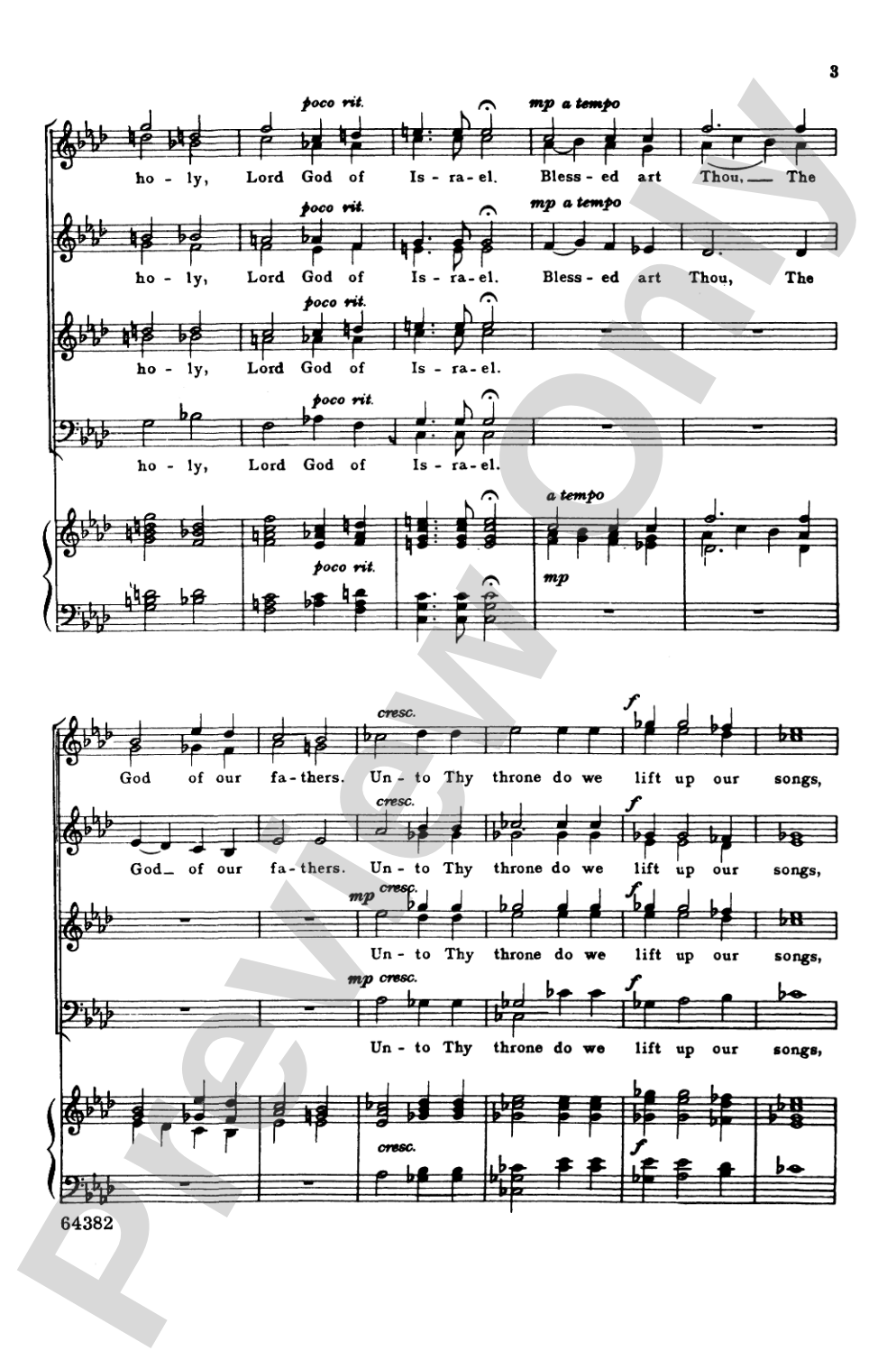
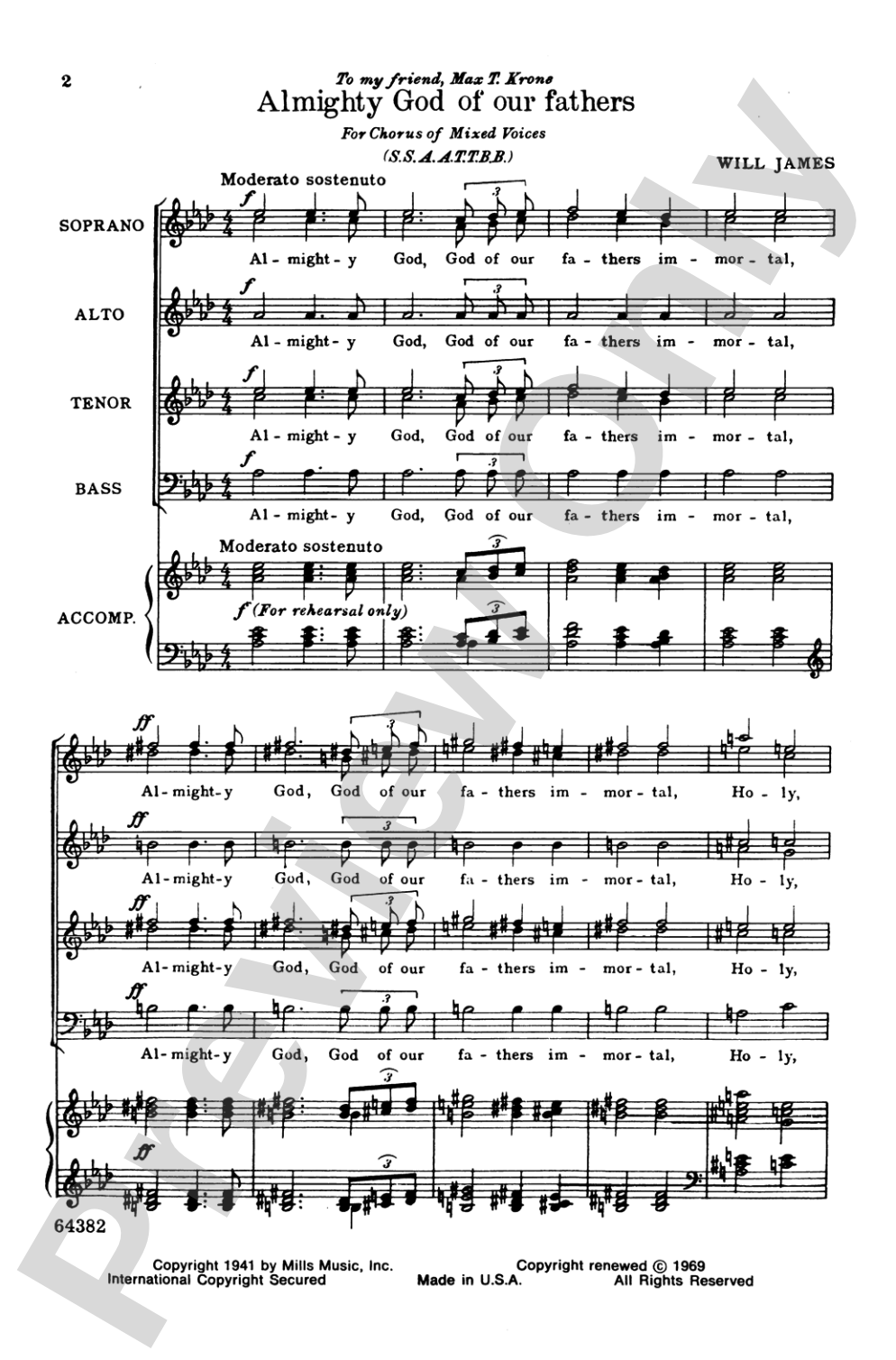
Almighty God of Our Fathers Sheet Music Preview

Almighty God of Our Fathers: SSAATTBB, a cappella Choral Octavo

By Will James

Level: Difficult

Item: 00-PO-0004528

Digital Download
$2.25

Minimum order quantity: 20 copies

Description

Almighty God of Our Fathers: SSAATTBB, a cappella Choral Octavo isn't in MakeMusic Cloud just yet...but it could be. Let us know you'd like to see it, and you'll help shape what comes next. In the meantime, start a free trial and dive into thousands of interactive titles your students can play along with today.

Sample Audio
No sample audio found.
Sample Video
Additional Details
Series: Alfred Archive Edition: Belwin Choral Series
Publisher: Alfred Music
Page Count: 8
SKU: 00-PO-0004528

More about this title

Why we love this

This setting demands serious ensemble maturity and rewards it with rich harmonic textures that only eight independent voices can deliver. The a cappella context strips away accompaniment crutches, forcing your choir to listen acutely and blend with precision. It's the kind of piece that transforms a group's understanding of what they're capable of achieving together.

What to expect

The piece unfolds with reverent solemnity, its harmonies stacked and interweaving to create moments of both profound stillness and building intensity. Without instrumental anchoring, every voice becomes essential to the harmonic architecture, lending an intimate yet ceremonial quality that feels both timeless and immediate.

Who it's for

Advanced high school and college choirs with strong sight-reading skills and the ability to balance eight distinct vocal lines without instrumental support. This is also suitable for accomplished community or semi-professional ensembles preparing for festival competition or concert performance.

How to get the most out of it

  • Map out the harmonic progressions across all eight parts before rehearsal so singers understand how their line relates to the fuller sonority, not just to their immediate neighbors.
  • Work the inner voices (second soprano, second alto, second tenor, baritone) with special attention; they often carry crucial harmonic movement that soloists in the outer parts may overshadow.
  • Build the piece in layered sections, adding voices gradually in rehearsal to isolate tuning problems and ensure each part is secure before combining the full texture.
  • Use a recorded reference at low volume during early rehearsals to establish pitch center and harmonic color, then remove it as the choir gains independence.

How to use it

Position this as a substantial choral centerpiece on a sacred or festival concert, where its difficulty and eight-part writing will command full attention. Pair it with simpler literature to give your audience (and your ensemble) breathing room, allowing the sophistication of this piece to stand out.

Skills your students will build

  • Singing independent harmonic lines while maintaining awareness of the full choral texture
  • Balancing eight distinct voice parts in an a cappella setting
  • Pitch accuracy and intonation without instrumental reference
  • Score reading and part relationships in complex voicings
  • Sustaining tone and blending across register breaks in double-voiced parts

You May Also Like