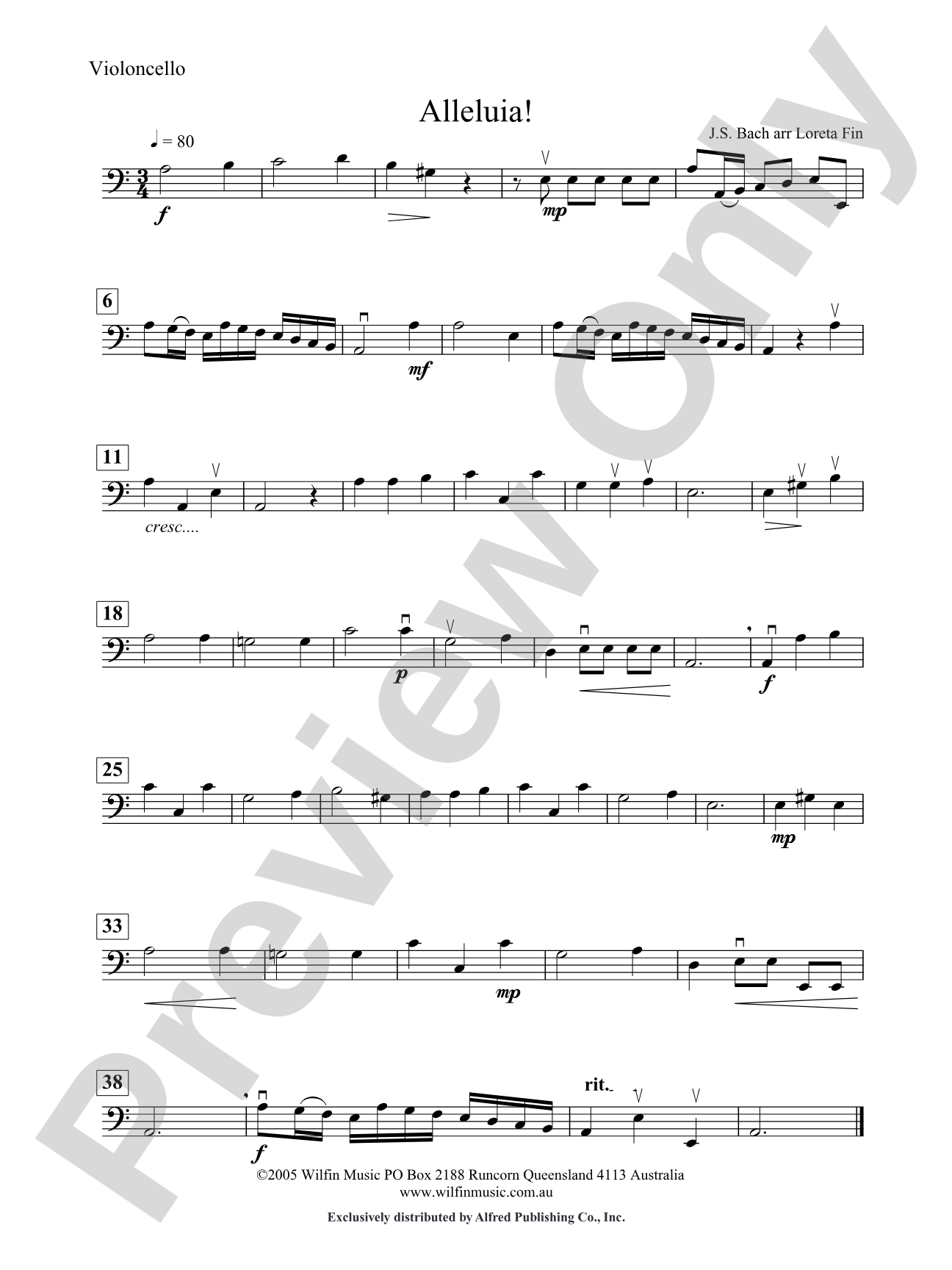
Alleluia!: Cello Sheet Music Preview

Alleluia!: Cello

Arr. Loreta Fin

Grade: 3-3.5

Item: 76-PC-0000035_VC1

Digital Download
$5.99
Description
Although it is in the key of A minor, this piece has a joyful, optimistic feel. The first violins and celli need to have good technique and, whilst the inner parts are not difficult, the intonation needs to be very secure. Suitable for a more advanced high school ensemble.

Alleluia!: Cello isn't in MakeMusic Cloud just yet...but it could be. Let us know you'd like to see it, and you'll help shape what comes next. In the meantime, start a free trial and dive into thousands of interactive titles your students can play along with today.

Sample Audio
No sample audio found.
Sample Video
Additional Details
Series: Wilfin String Orchestra: Young String Ensemble Series
Publisher: Wilfin Music
Page Count: 82
SKU: 76-PC-0000035_VC1

More about this title

About the Arranger: Loreta Fin

Loreta Fin

Loreta Fin AM is an Australian violist, conductor, and prolific composer for string ensemble. A graduate of the Sydney Conservatorium of Music and former first violinist with the Sydney Youth Orchestra, she spent over 25 years as Principal Viola player with the Queensland Pops Orchestra while maintaining an active chamber and orchestral performance schedule. She has worked alongside internationally recognized artists across multiple continents.

Fin has shaped string education in Australia for decades as Director of Strings at Somerville House School in Brisbane since 1993, and served the Australian Strings Association for over 25 years, including terms as both State and National President. Her contributions to music education earned her a Queensland State Award in 2009 and a National Award for Services to Music and String Teaching. She regularly conducts state and national honours ensembles in Brisbane, examines for the Australian Music Examinations Board, and has published over 100 works for string orchestra with Alfred Music, including a beginner ensemble series launched in 2017.

Why we love this

Fin understood what advanced high school orchestras need: music that demands secure fundamentals while offering genuine musical reward. The A minor tonality gives this arrangement architectural integrity, and her writing for first violins and celli ensures your strongest players have material worthy of their technique without leaving the rest of the ensemble behind.

What to expect

Despite the A minor key signature, this arrangement radiates optimism and forward momentum. The writing sparkles with clean articulation and joyful energy, creating a piece that feels celebratory and alive in performance.

Who it's for

Advanced high school string orchestras ready to balance technical demands with ensemble cohesion. Players in the first violin and cello sections should be comfortable with moderately challenging passage work, while the rest of the ensemble benefits from focused intonation work across the full score.

How to get the most out of it

  • Establish a steady reference for intonation before rehearsal begins. With secure tuning essential across all parts, consider tuning the section leaders first, then build outward from there.
  • Balance the joyful character with the A minor key by keeping the tempo buoyant and the bow strokes clean. The emotional lift comes from clarity, not from dragging.
  • Isolate the inner voices in sectional rehearsals. These parts may not demand flashy technique, but their harmonic support shapes the whole sound.
  • Shape the first violin and cello passages with subtle dynamic breathing. These players have the technique to sing through their lines; let them lead the ensemble's phrasing.

How to use it

Program this as a bright opening number or as an energizing mid-concert lift. It works particularly well alongside more substantial masterwork arrangements or original compositions, where it can demonstrate your ensemble's technical command and musical maturity.

Skills your students will build

  • Secure intonation across all four voice parts
  • Technical facility in first violin and cello passages
  • Harmonic listening and inner voice awareness
  • Balance between melodic independence and ensemble blend
  • Musical interpretation of minor key material with affirmative character

You May Also Like