
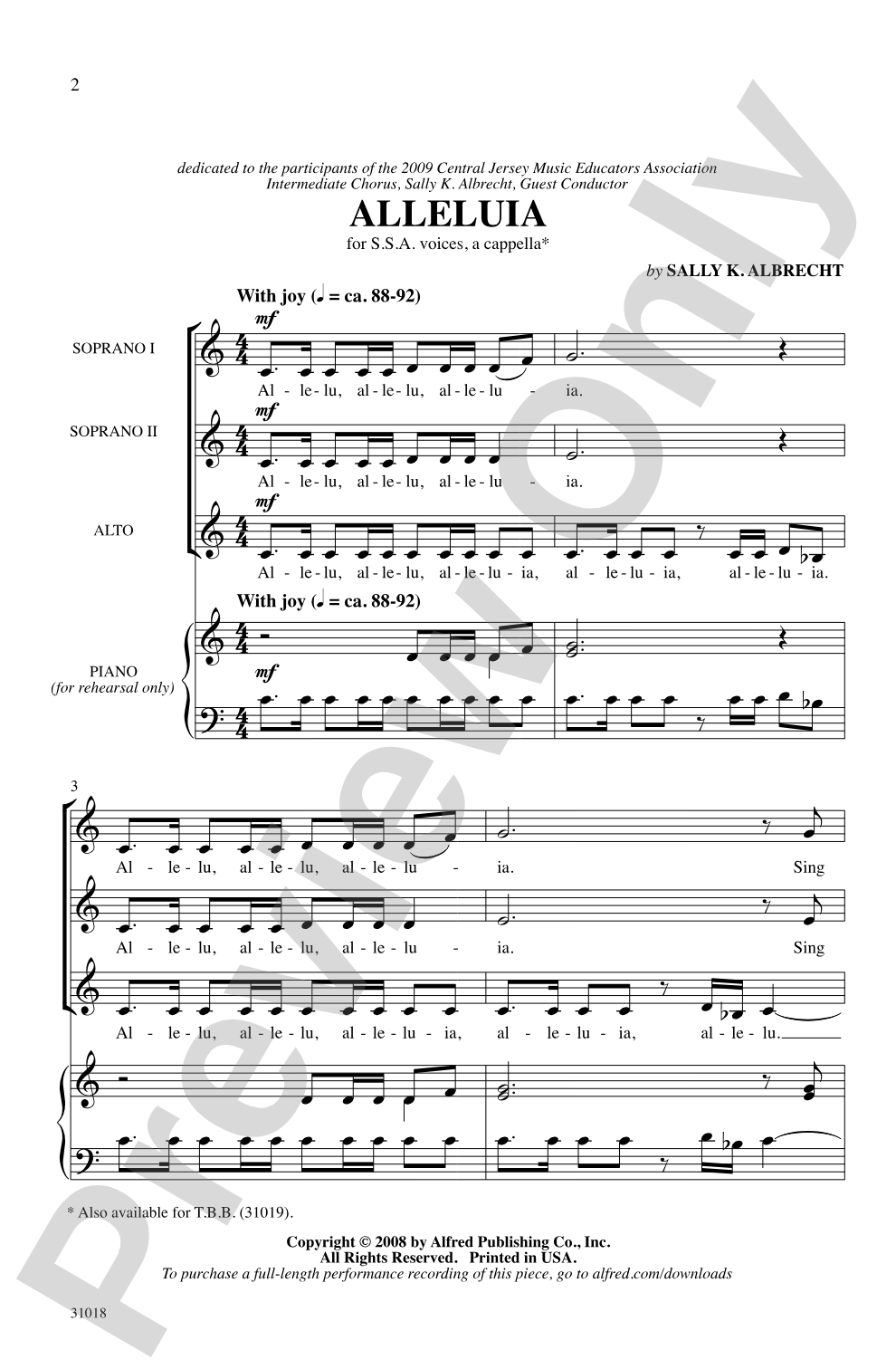
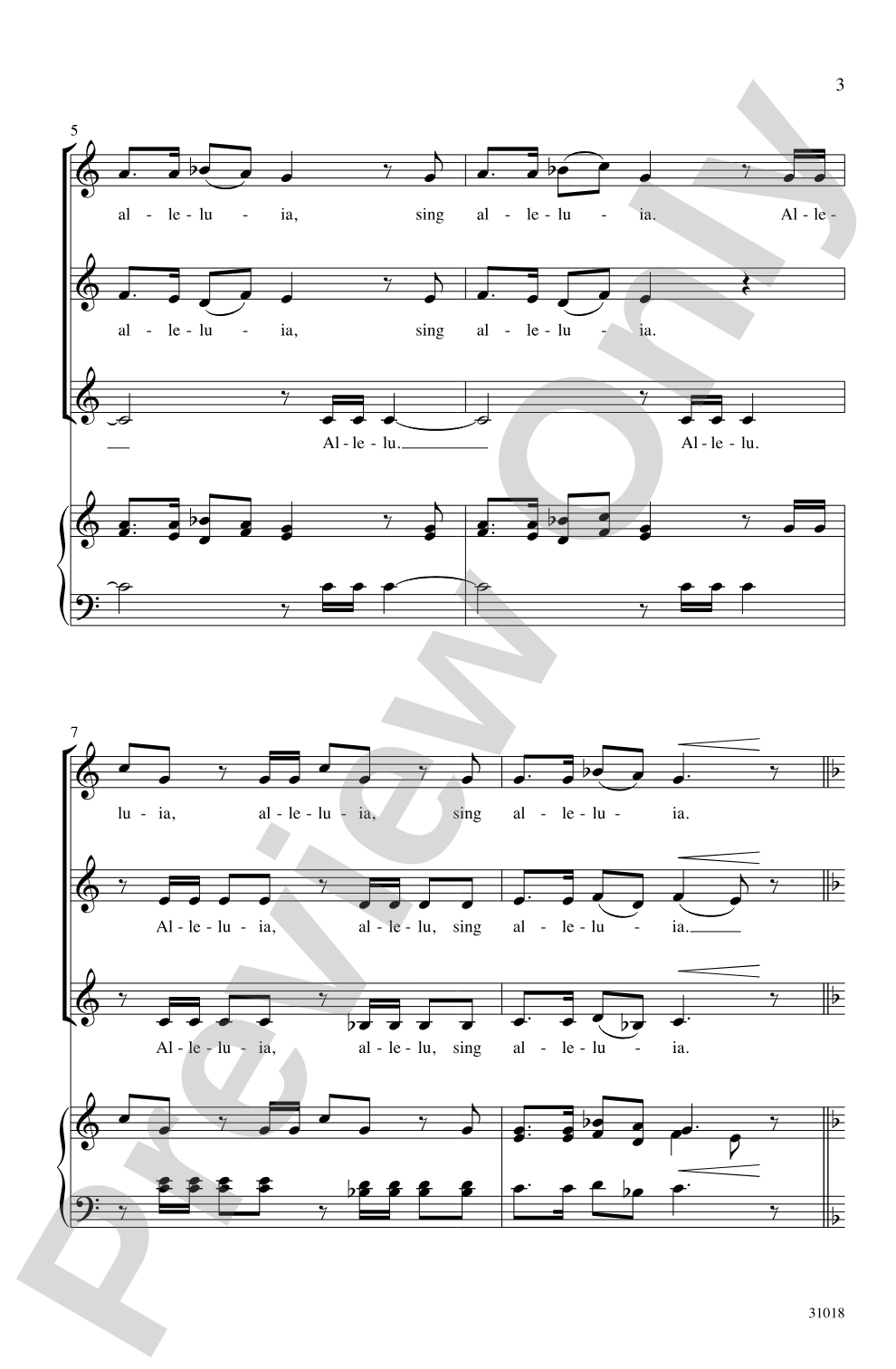

Alleluia: SSA, a cappella Choral Octavo
By Sally K. Albrecht
Item: 00-PO-0000751
$1.75
Minimum order quantity: 20 copies
Pickup currently not available
Description
This a cappella feature for treble or male choirs is an oustanding choice for any time of year. Strong individual voice lines add up to an exciting, dynamic, and vibrant concert feature. ABA format with a lyrical legato section in the middle.


Alleluia: SSA, a cappella Choral Octavo isn't in MakeMusic Cloud just yet...but it could be. Let us know you'd like to see it, and you'll help shape what comes next. In the meantime, start a free trial and dive into thousands of interactive titles your students can play along with today.
Request This Title
Tell us you want it.
Start Your Free Trial
Explore everything that's ready to play right now.
Sample Audio
1
Audio File
--:--
0:00
0:00
Sample Video
No sample videos found.
Additional Details
Series:
Alfred Choral Designs
Publisher:
Alfred Music
Page Count:
12
SKU:
00-PO-0000751
More about this title
About the Composer: Sally K. Albrecht
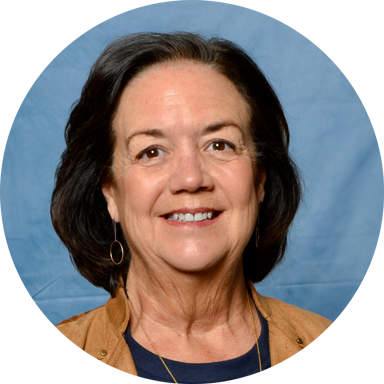
Sally K. Albrecht has shaped choral music education for over forty years as a composer, conductor, and clinician with a distinctive focus on movement and kinesthetic engagement. Her catalog of more than 600 choral works and 75 musicals and songbooks reflects a deep understanding of what works in rehearsal and performance, earned through decades leading honor choirs at major venues including Lincoln Center, Carnegie Hall, and The Kennedy Center. Since 1987, she has been a consistent recipient of the ASCAP Special Music Award, recognizing her ongoing contributions to American choral composition.
Albrecht's academic background spans music and theater: she holds a B.A. from Rollins College (1976), an M.A. in Drama from the University of Miami (1977), and an M.M. in Accompanying from Miami (1979). For more than thirty years, she directed school choral and vocal publications at major educational publishers, culminating in her role as Director of School Choral, Vocal, and Elementary Publications at Alfred Music. She has taught at Oakland University, Jersey City State College, and Meredith College. In recent years, Albrecht received the Distinguished Alumna Award from both the University of Miami Frost School of Music and Rollins College, where she serves on the Board of Trustees.
Why we love this
Albrecht's gift for writing singable, energetic lines shines here: the ABA structure gives singers something satisfying to perform, and the contrast between rhythmic vitality and the lyrical middle section keeps audiences engaged. The piece works equally well as a concert feature or festival selection because it showcases voice independence without demanding extreme range or technical fireworks, letting musicianship and blend do the heavy lifting.
What to expect
Alleluia unfolds with a sense of joy and celebration tempered by moments of intimate reflection. The outer sections pulse with rhythmic drive and layered textures, while the lyrical center invites singers to breathe and sustain, creating a piece that feels both contemporary and timeless.
Who it's for
Directors programming for treble or male ensembles who want a piece that demonstrates vocal independence and musicality without requiring extensive technical preparation. This works for high school and college choirs, as well as auditioned community ensembles, and holds its own in both contest and concert settings.
How to get the most out of it
- Emphasize the independence of each voice line in the outer sections; this is where the piece's energy lives. Avoid blending so tightly that you obscure the individual melodic contours.
- Shape the legato middle section with sustained support and careful attention to vowel consistency across the three parts. This contrast makes the return to the A section feel earned.
- Use minimal accompaniment in rehearsal and performance. The a cappella texture demands that singers tune carefully to one another, especially at section transitions.
How to use it
Program this as a standalone feature that can anchor the treble or male choir section of a concert. Its moderate length and flexible sacred context make it equally at home in a spring concert, a choral festival, or a holiday program that calls for something beyond the expected Christmas fare.
Skills your students will build
- Singing independent melodic lines while maintaining blend and tuning in a cappella texture
- Shaping and sustaining long phrases with consistent breath support
- Contrasting articulation and character between rhythmically active and lyrical sections
- Sight-reading SSA voicing in sacred repertoire