
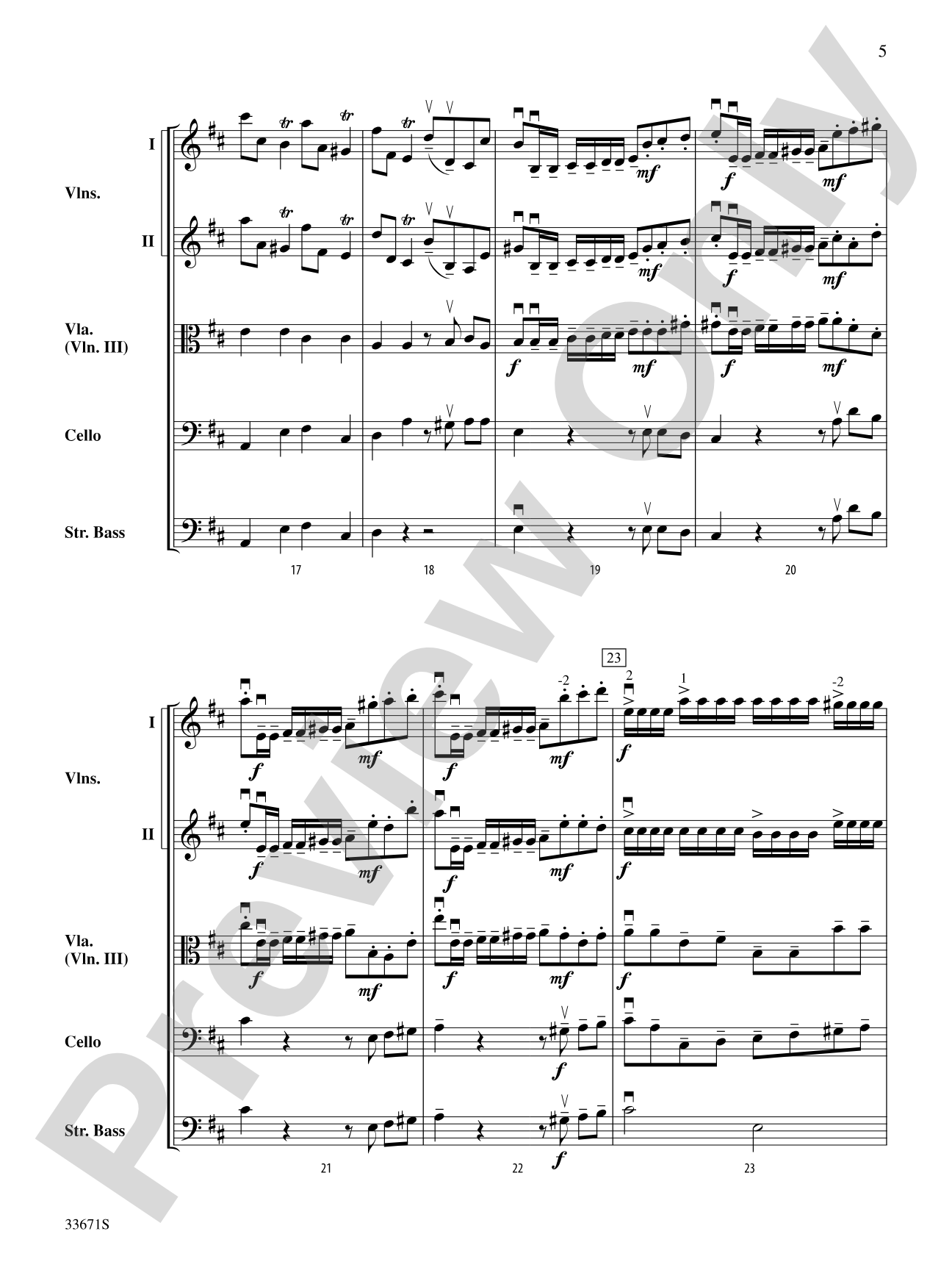
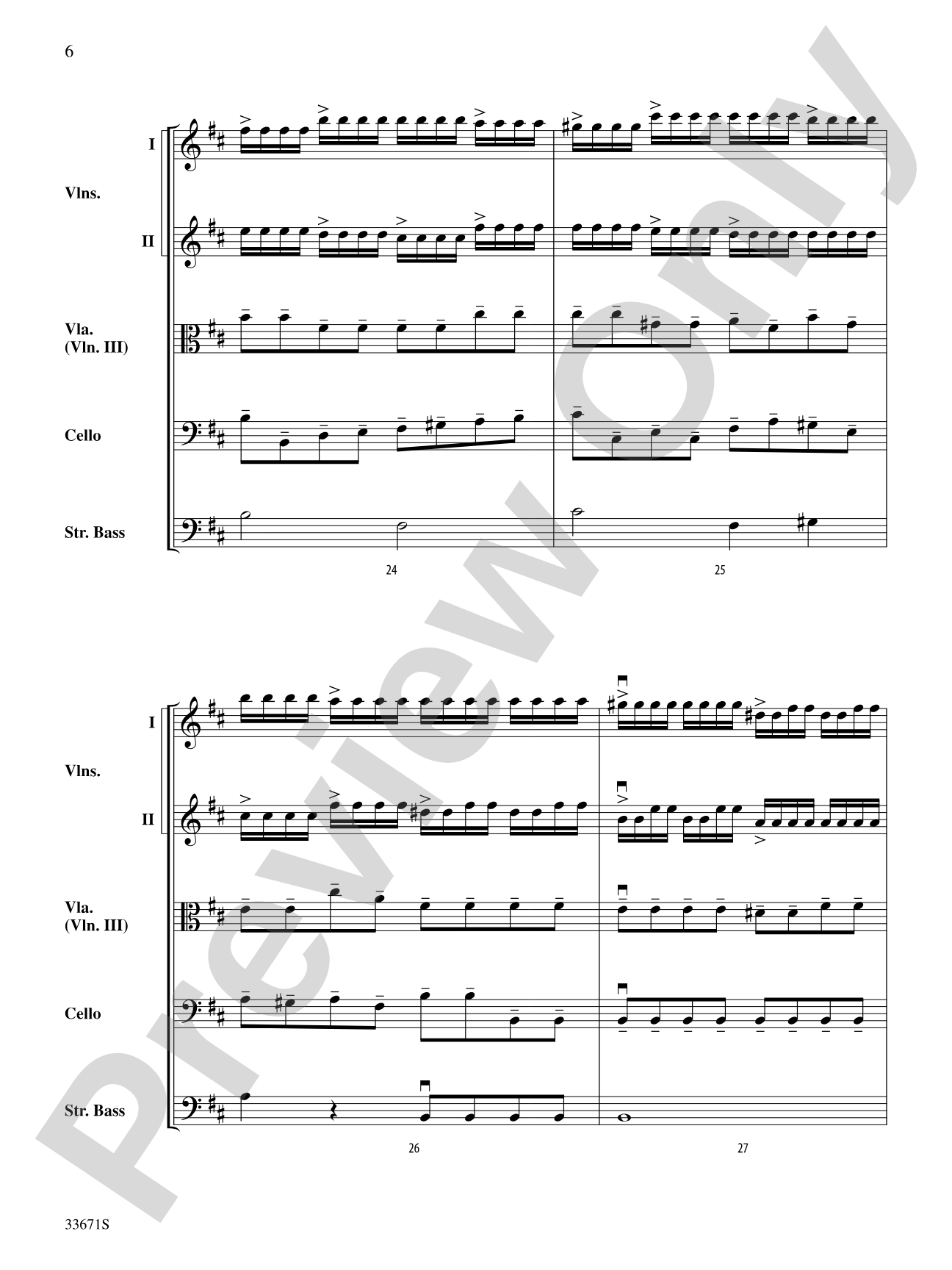
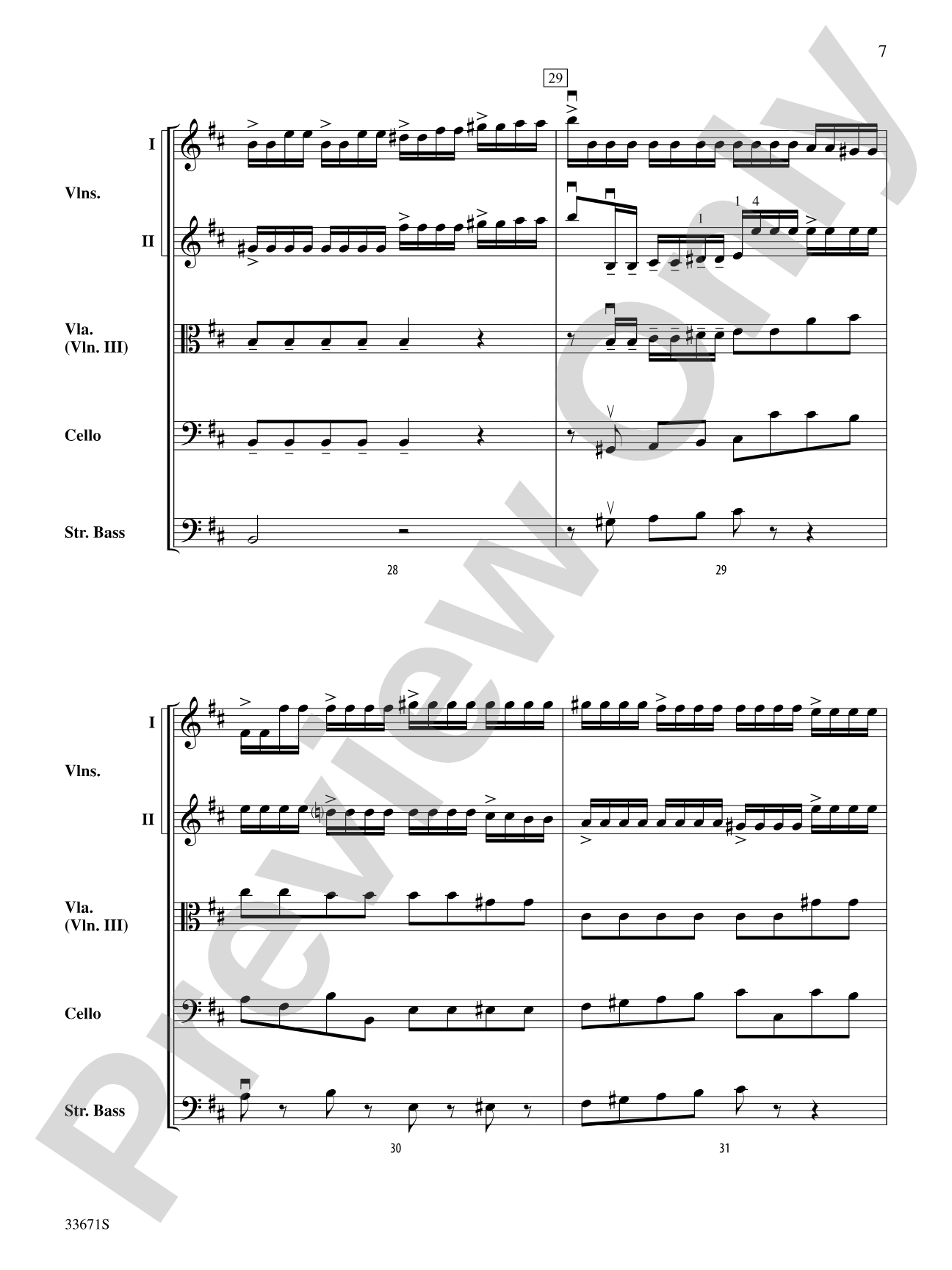
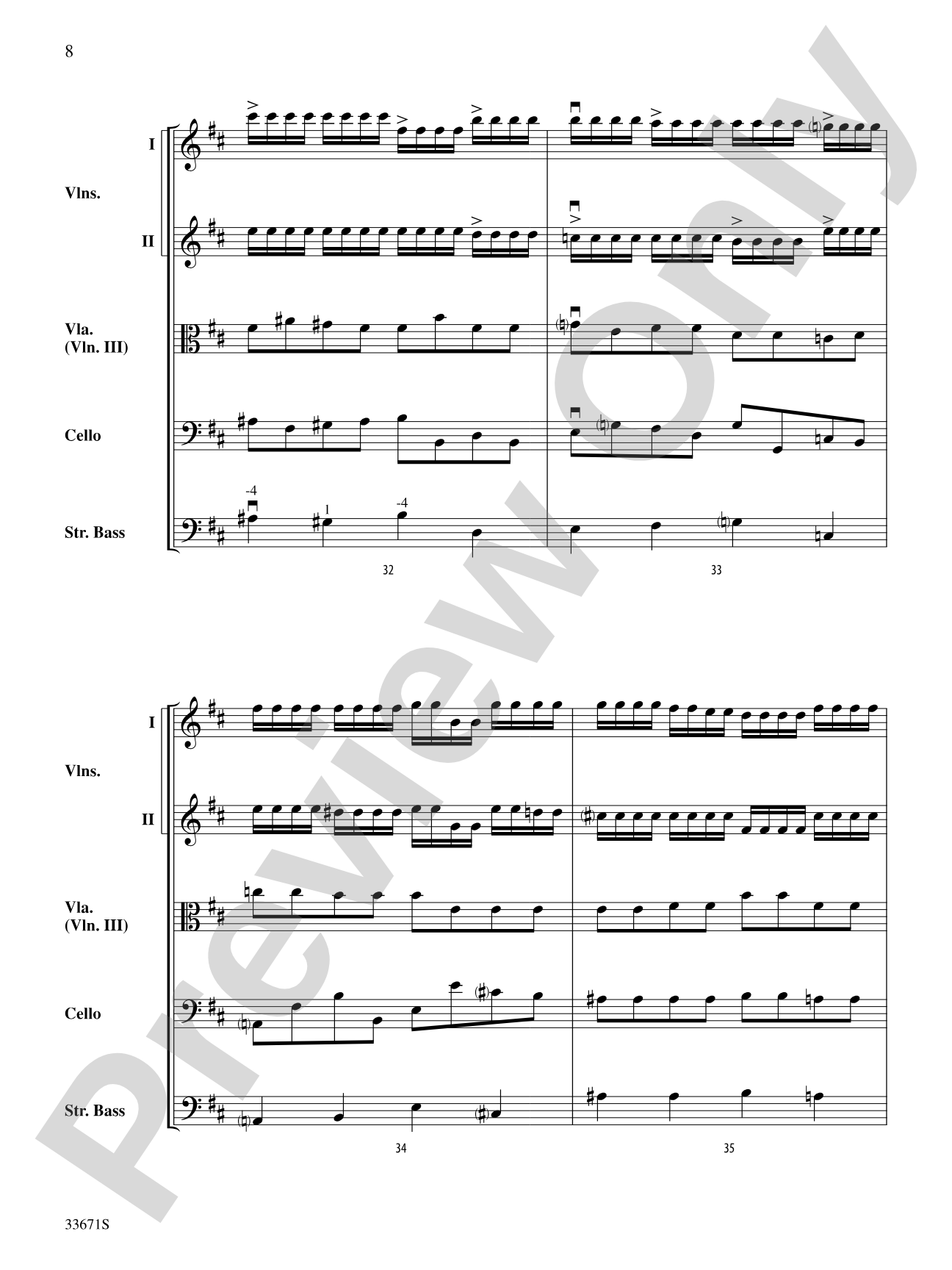
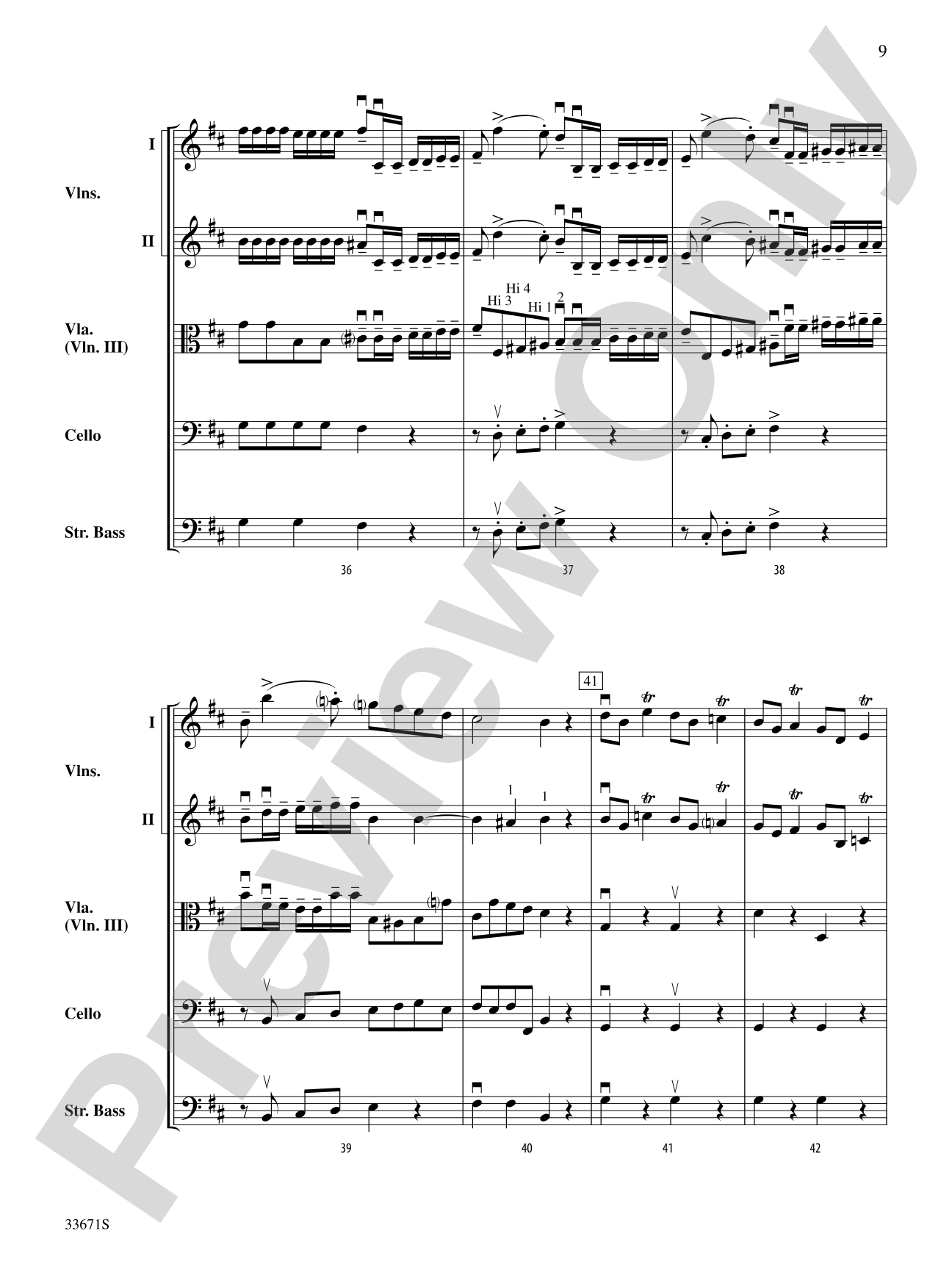
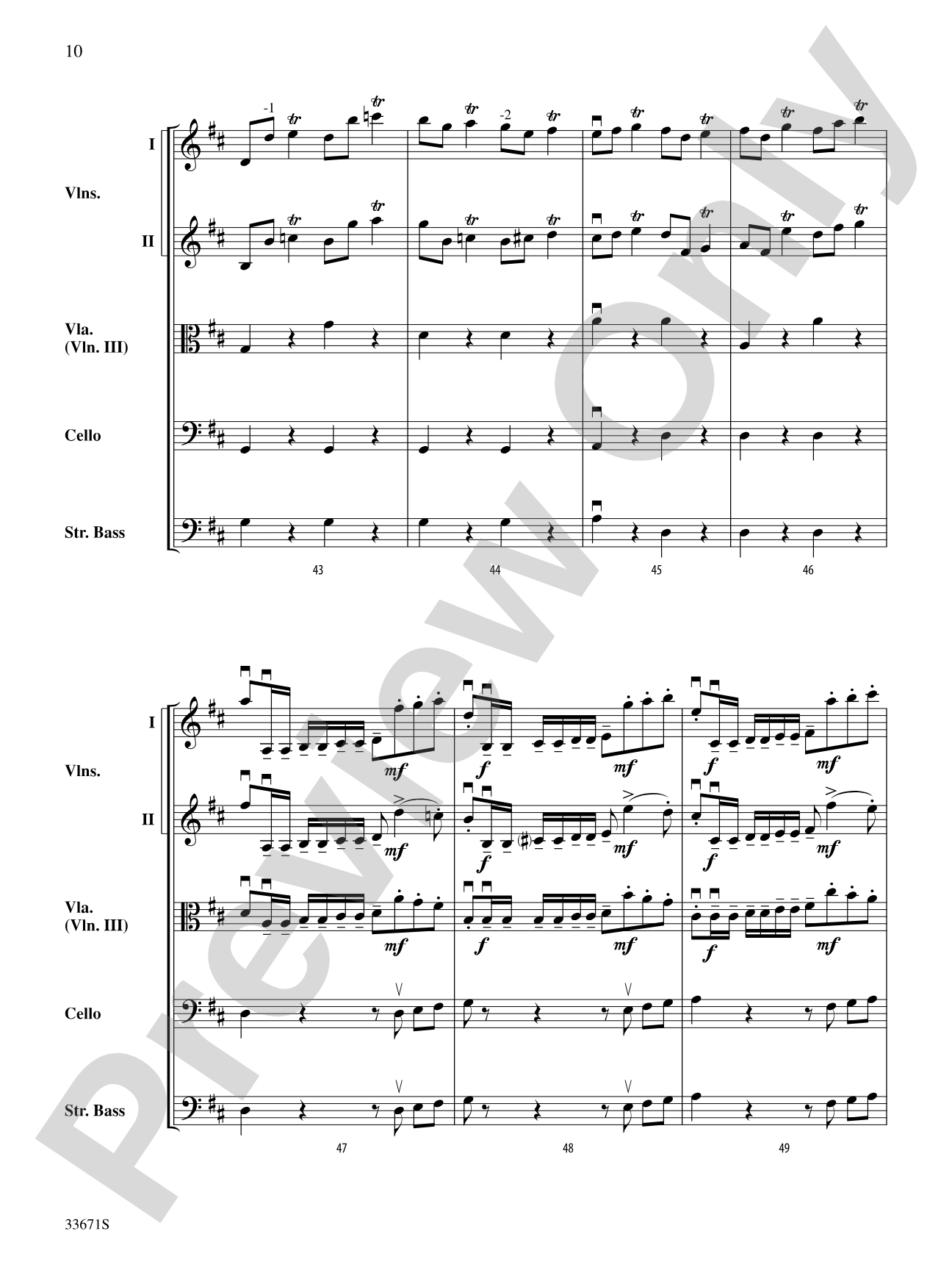
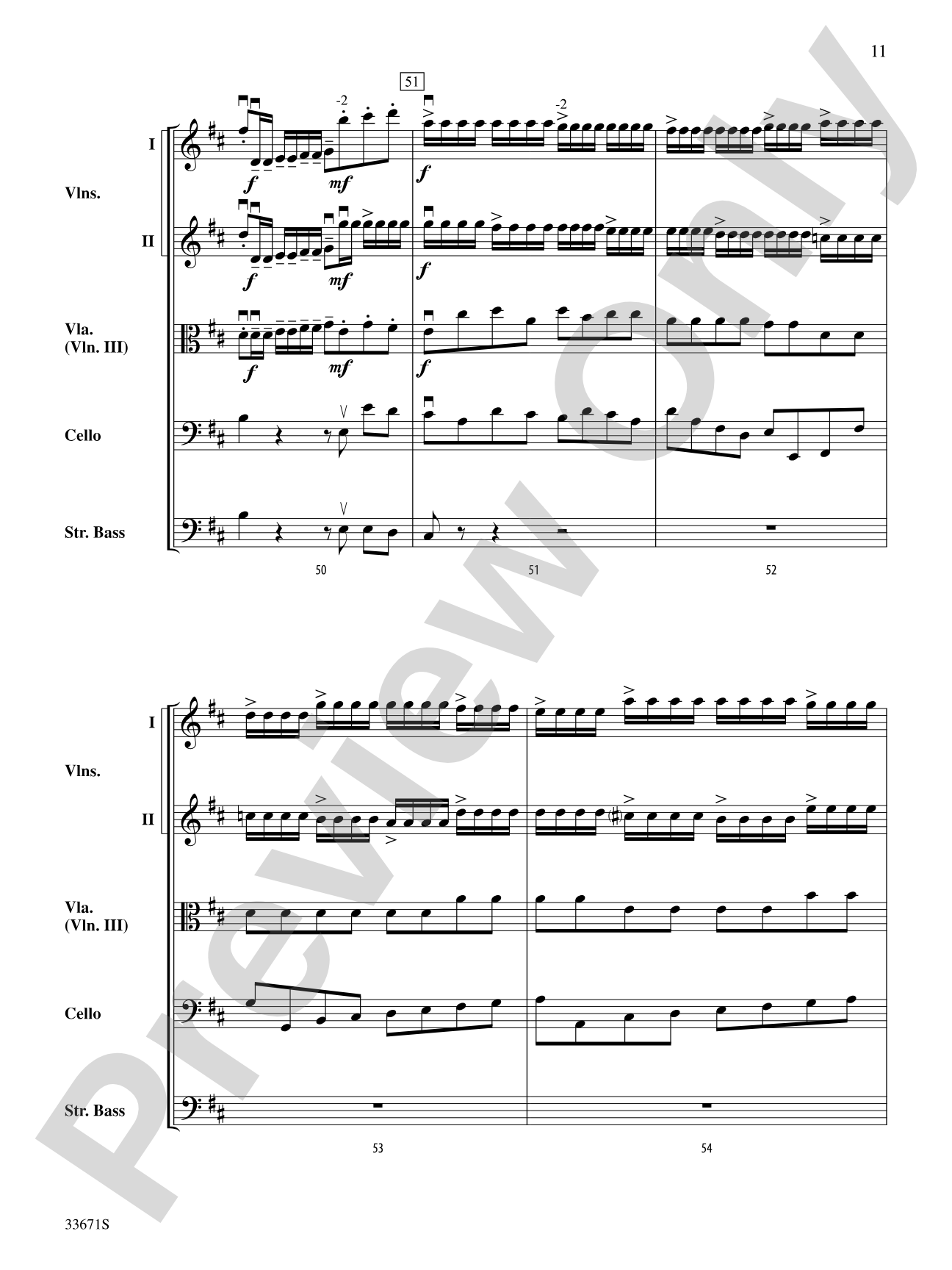
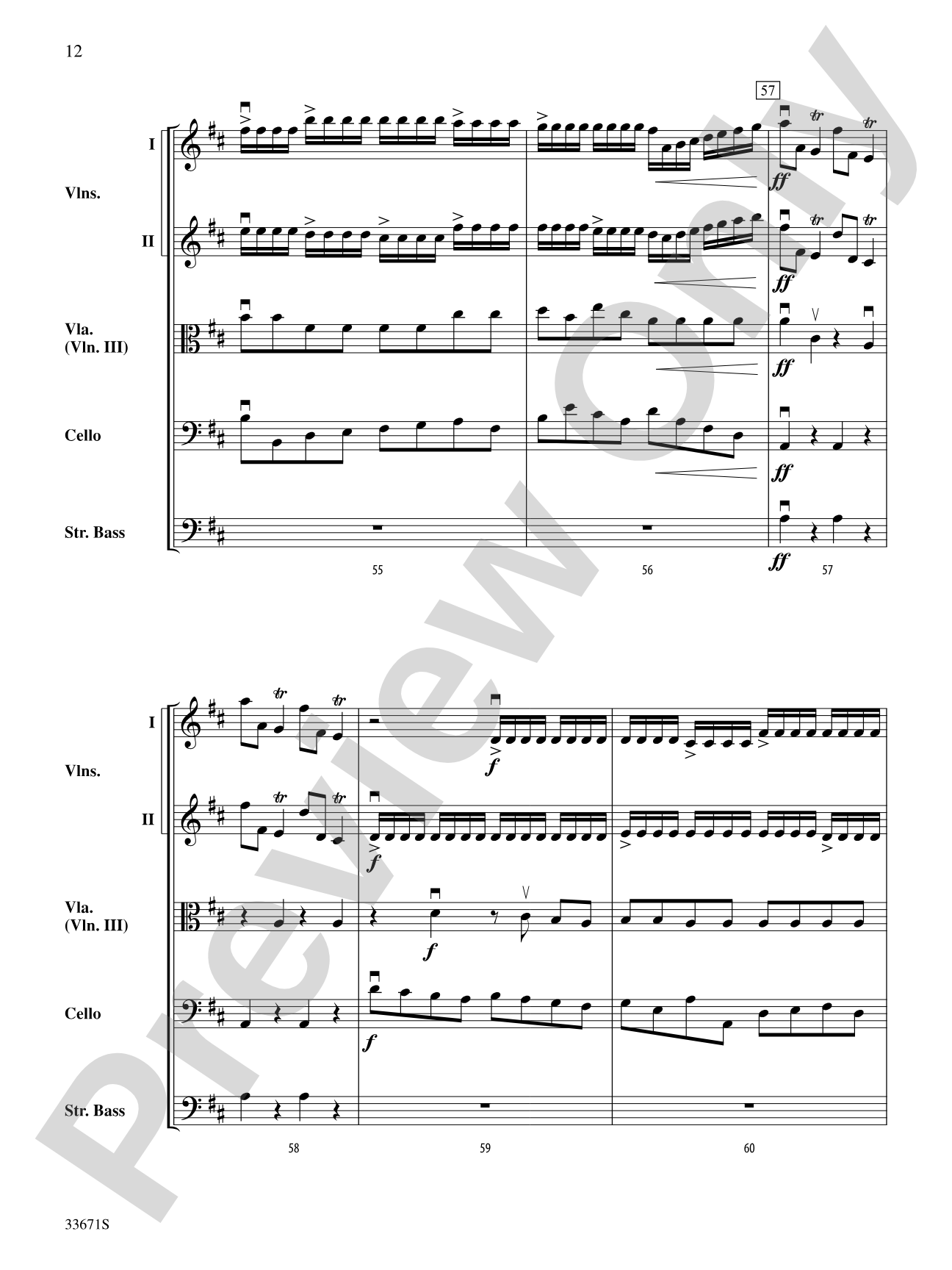
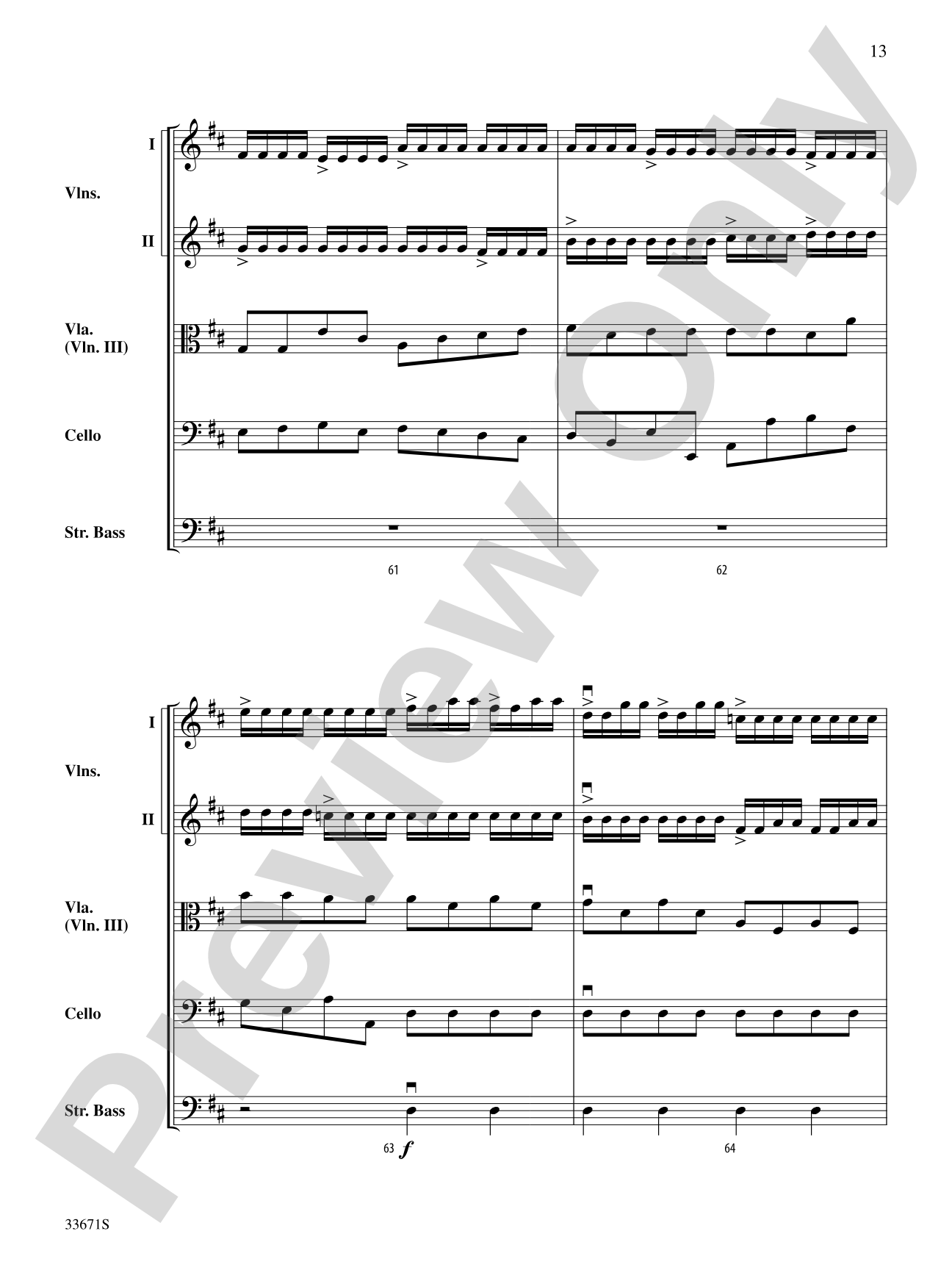
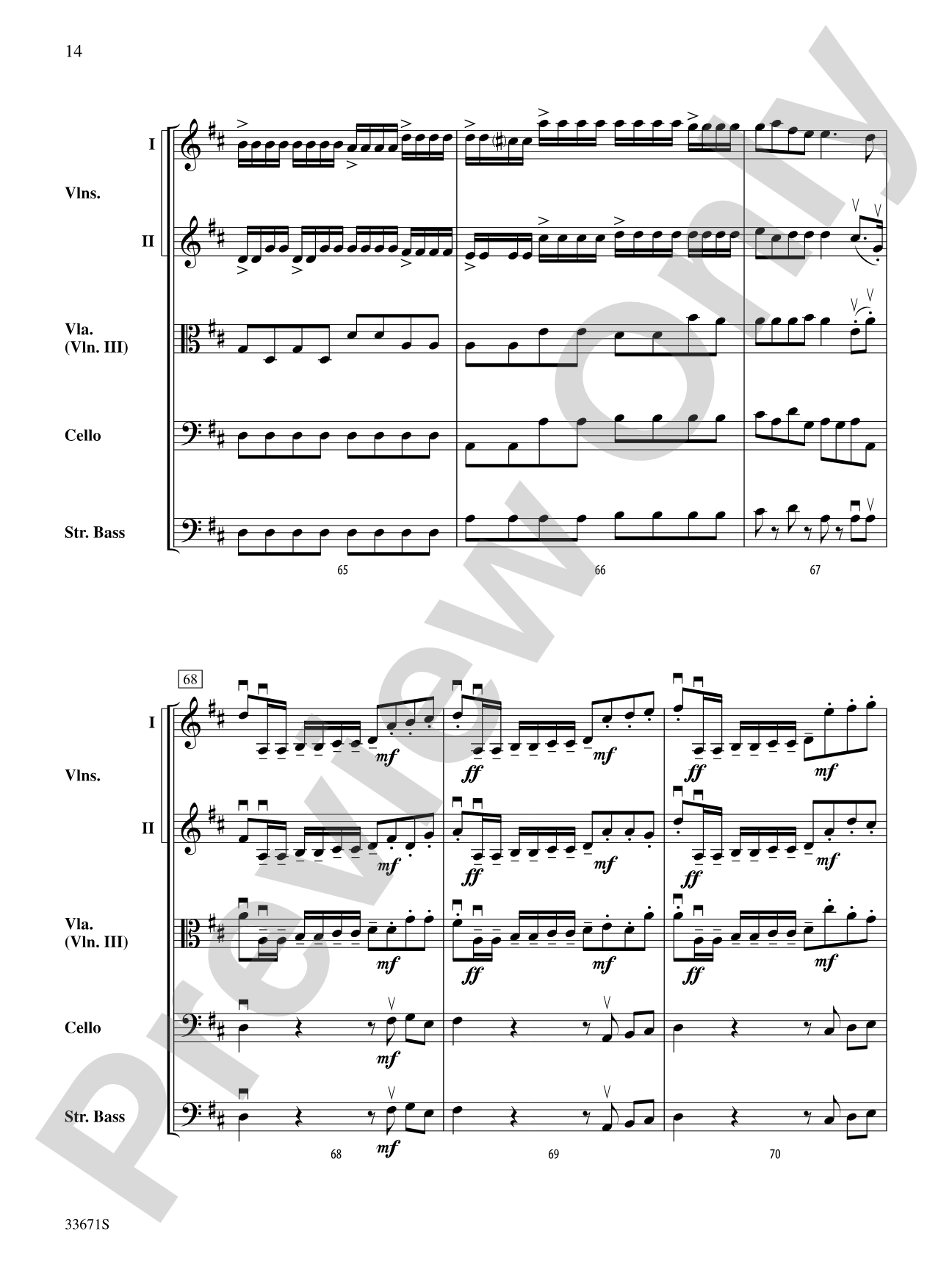
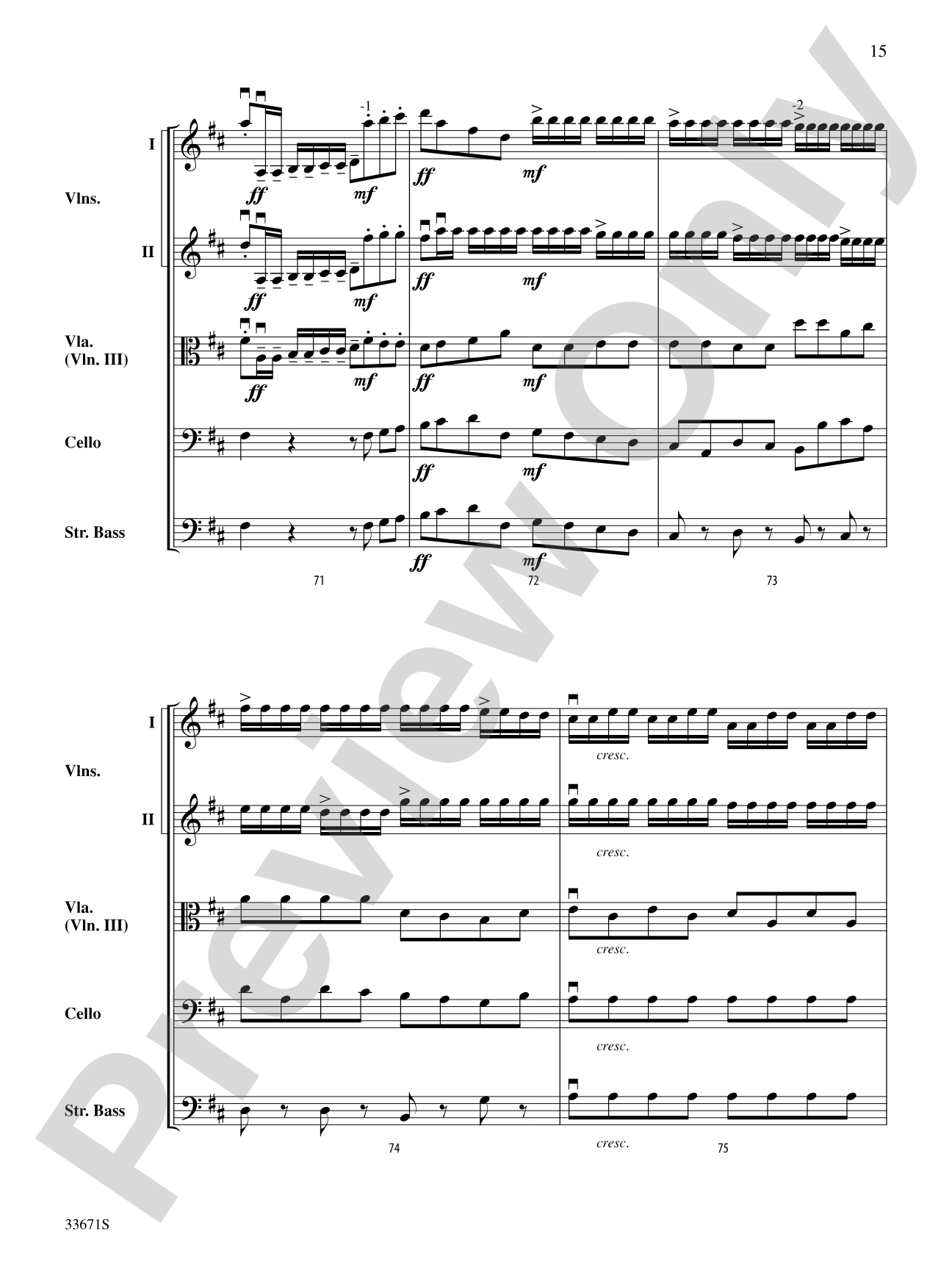
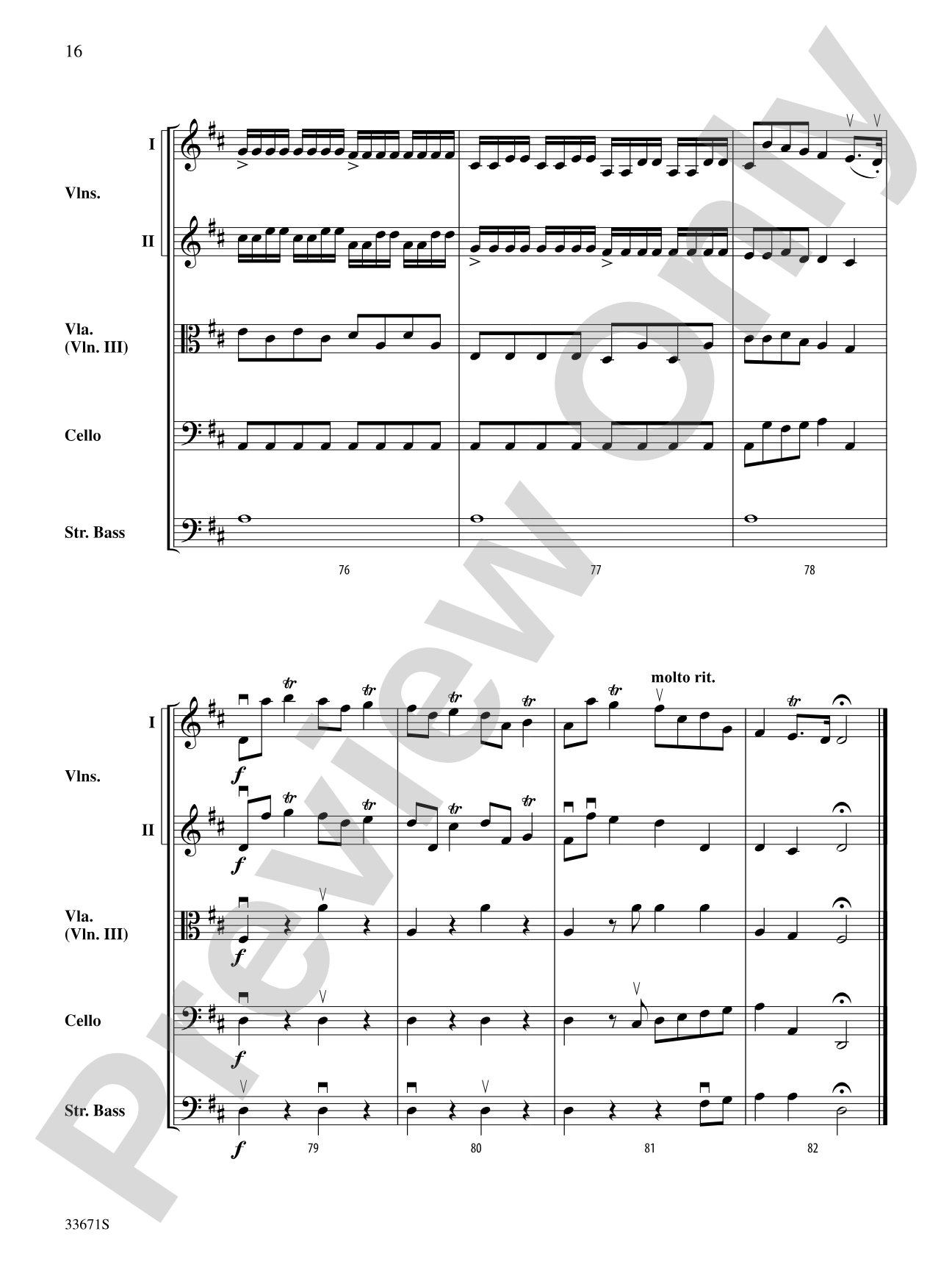

Allegro Vivo: Score
By George Frideric Handel / arr. Tim McCarrick
Grade: 3.5
Item: 00-PR-0002783
$9.00
Pickup currently not available
Description
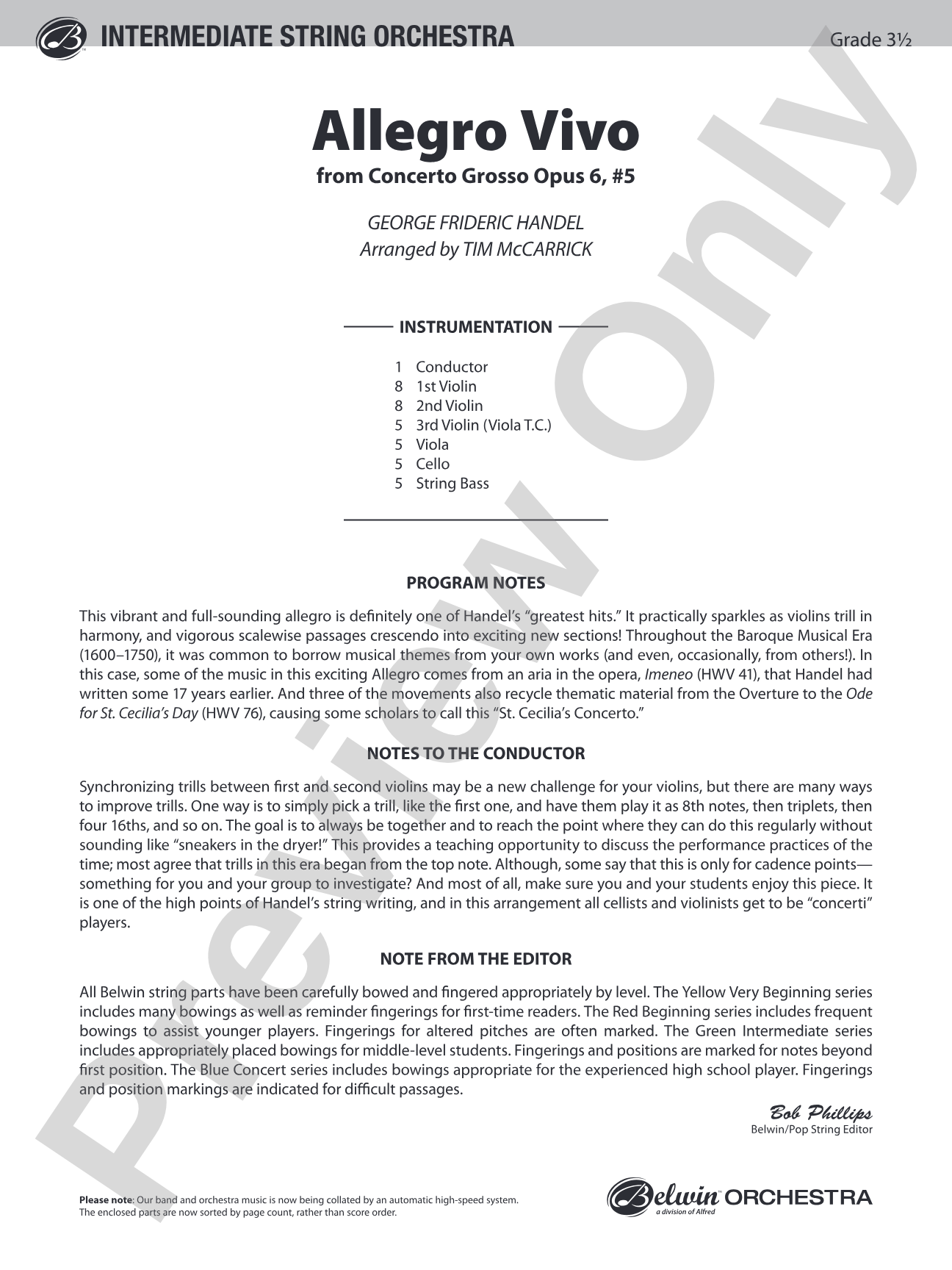
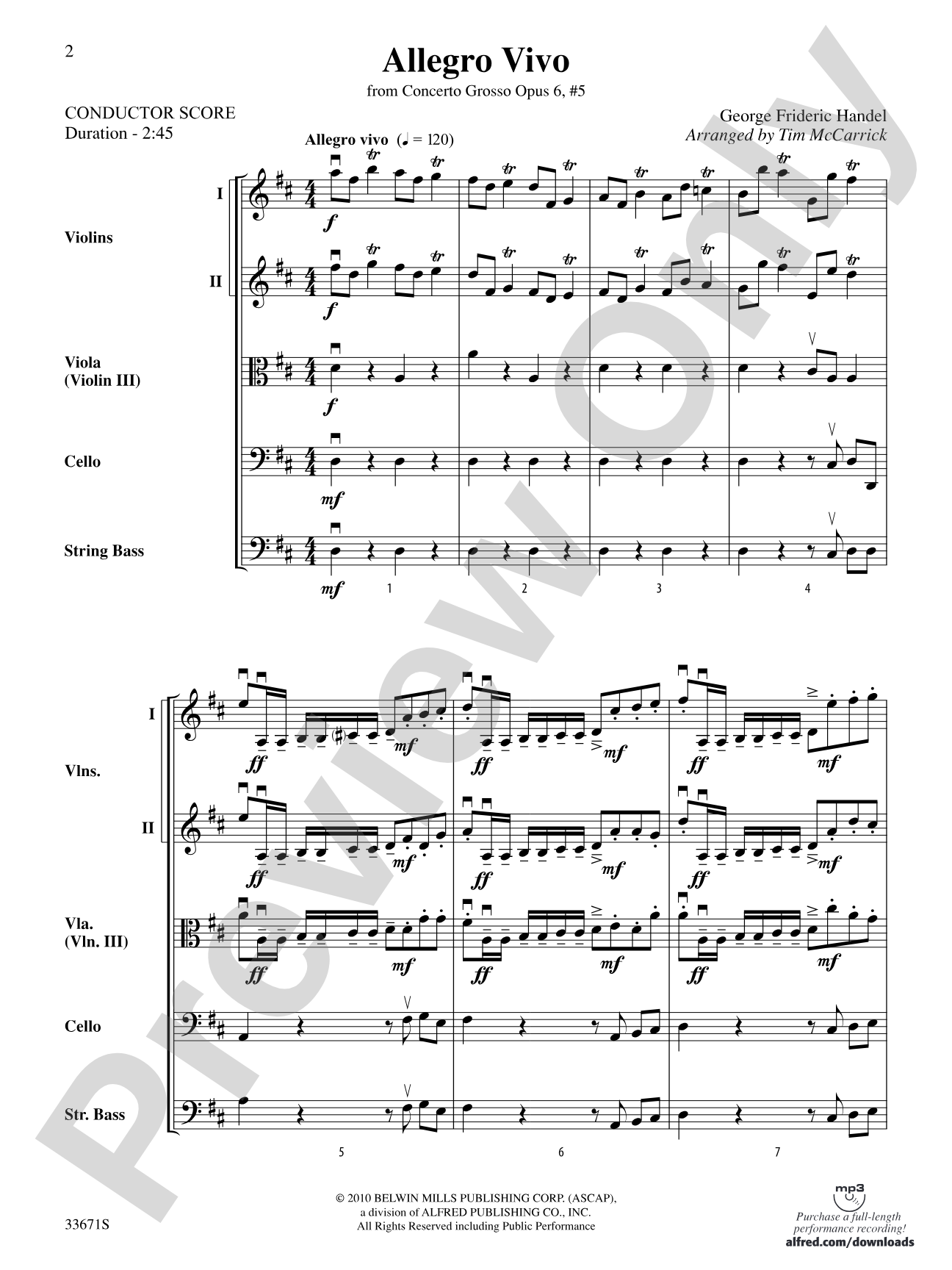
This vibrant and full-sounding allegro is definitely one of Handel's "greatest hits." It practically sparkles as violins trill in harmony, and vigorous scalewise passages crescendo into exciting new sections! As the final Allegro to one of the most well-known Concerto Grossos, this certainly ranks in the "Best of the Baroque!" This title is available in MakeMusic Cloud.


Don't just read it, hear it, play along with it, and watch your students grow with it. In MakeMusic Cloud, Allegro Vivo: Score comes alive with professional accompaniment, adjustable tempo, and built-in practice tools that turn solo practice into real progress.
Open in the Player
Jump straight in and assign it today.
Start Your Free Trial
Open this title and explore the full library in minutes.
Sample Audio
1
Audio File
--:--
0:00
0:00
Sample Video
No sample videos found.
Additional Details
Series:
Belwin Intermediate String Orchestra
Publisher:
Alfred Music
Page Count:
144
SKU:
00-PR-0002783
More about this title
About the Composer: George Frideric Handel
George Frideric Handel (1685–1759) was a German-born composer who spent much of his career in England, where he became one of the most celebrated musicians of the Baroque era. He excelled across multiple genres, from opera to oratorio to instrumental music, and his works remain central to the orchestral and choral repertoire today.
Handel's Concerti Grossi stand among his most enduring compositions, showcasing his gift for crafting memorable melodic lines and orchestrating them with clarity and brilliance. These concertos have proven invaluable to music education because they balance musical substance with accessibility, offering students exposure to authentic Baroque style without overwhelming technical demands.
Why we love this
This is Baroque that actually energizes an orchestra. The trilling violins and cascading scales create genuine excitement rather than feeling like an exercise in period style, and the arrangement by Tim McCarrick captures that drive without sacrificing the elegance of the original. At Grade 3.5, it's ambitious enough to challenge your ensemble but straightforward enough that rehearsal time stays focused on musical interpretation rather than deciphering notation.
What to expect
Bright, spirited, and surprisingly modern in its forward momentum. The constant interplay between trilling textures and soaring melodic lines creates a sense of lift and buoyancy that feels almost contemporary, even though every note comes straight from the Baroque masters. There's an unforced elegance here that invites the listener in rather than impressing from a distance.
Who it's for
String orchestras at the intermediate level who want to perform authentic Baroque repertoire with confidence. This arrangement works equally well for orchestras building their contest or festival program and for musicians developing their understanding of period style and instrumental color.
How to get the most out of it
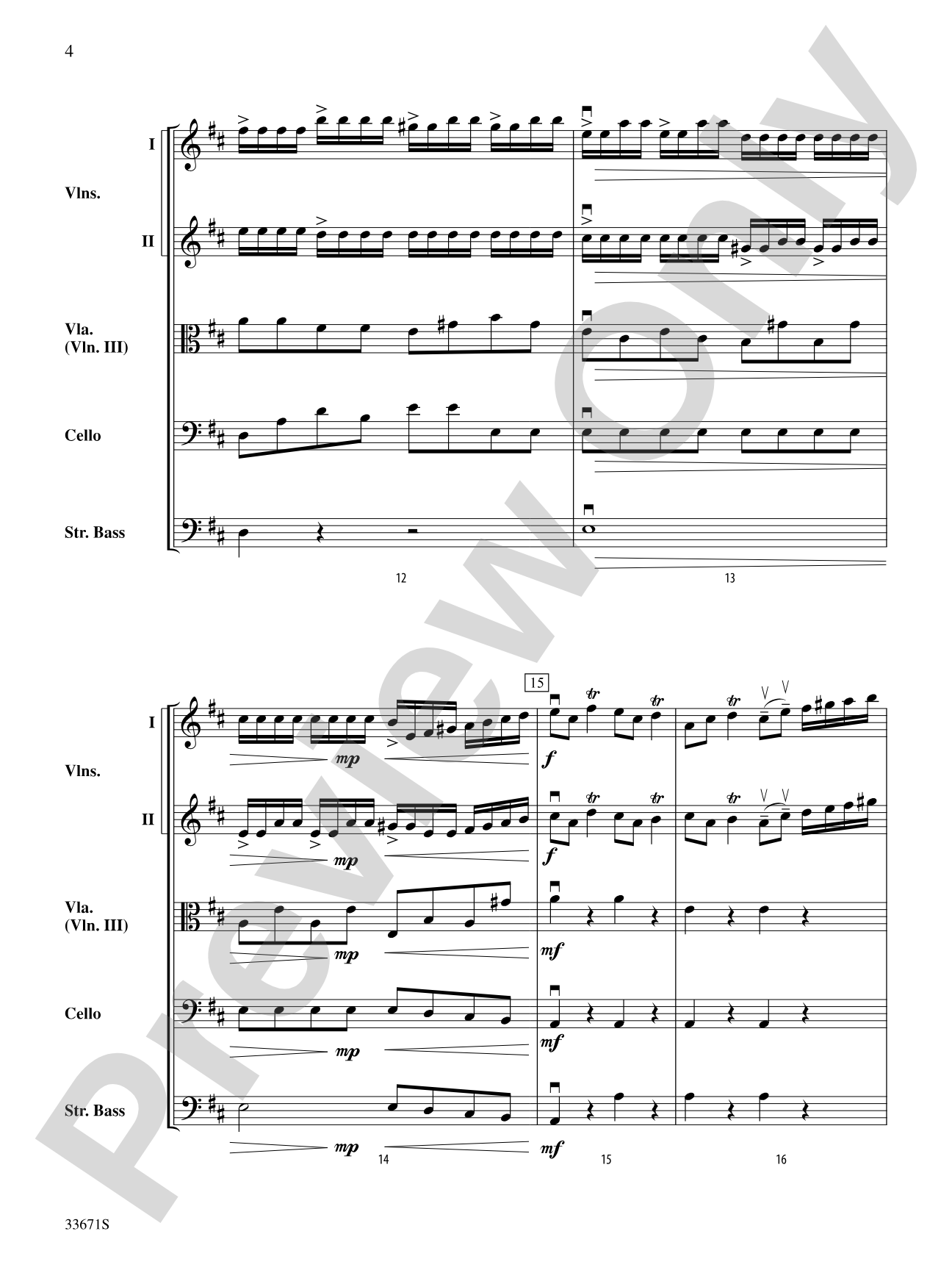
- Balance the violin trills so they sparkle without overpowering the harmonic foundation. Have your first violins and violas lock in early on this texture; uneven trills will muddy the effect.
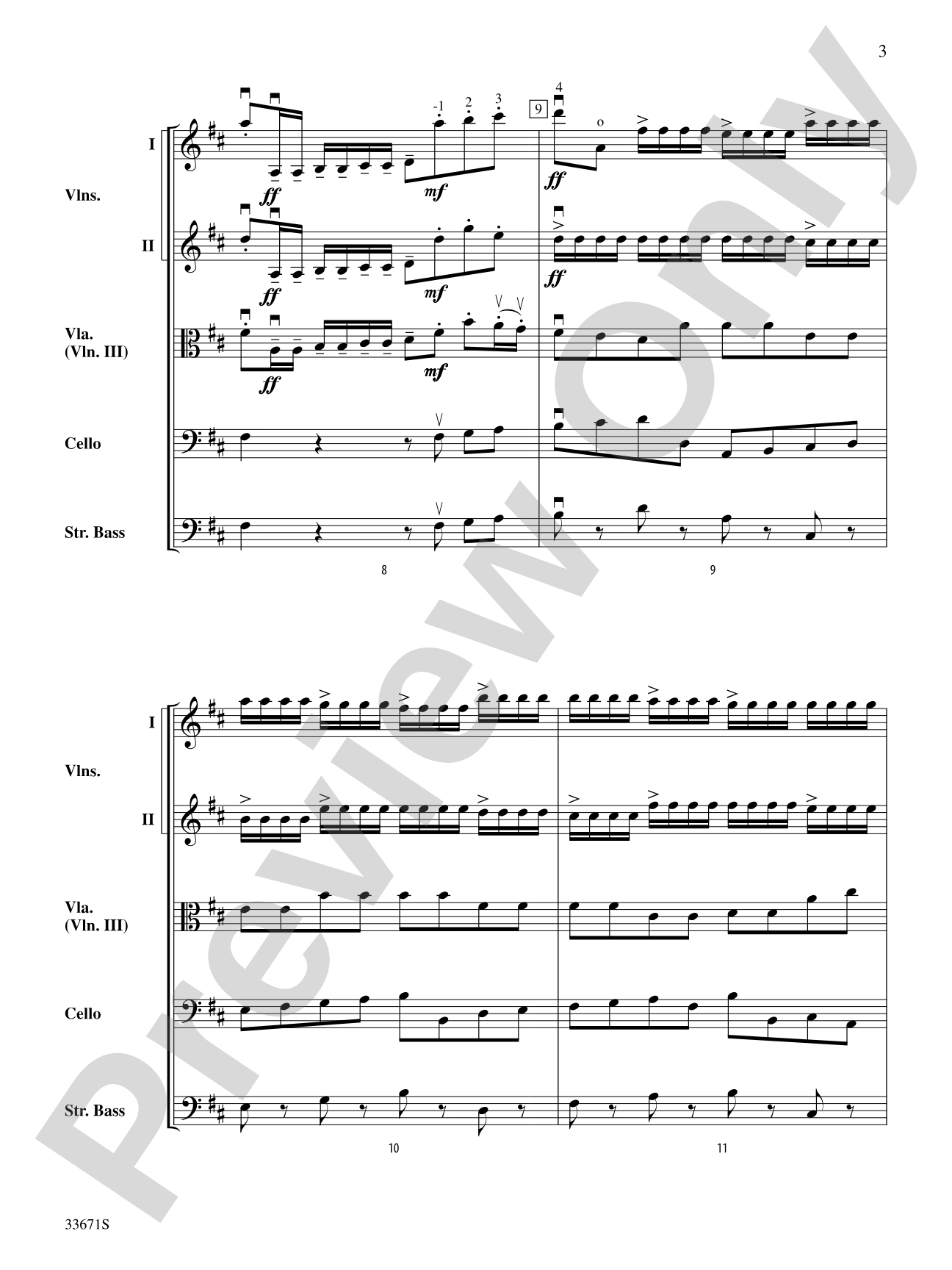
- Shape the scalewise passages with forward momentum. Resist the urge to slow down as dynamics increase; let the crescendos build naturally into the new sections.
- Articulate cleanly in the faster passages. Baroque style calls for crisp tonguing and bowing, which will give the piece the rhythmic clarity it needs to really shine.
- Use the cadences as breath points for your ensemble. Even though it's continuous music, a slight lift at key harmonic arrivals will refresh the energy and clarify the form.
How to use it
This Allegro works beautifully as a concert opener or as part of a Baroque-focused set with other period works. Its compact length and high energy make it an ideal contest selection, especially when paired with a contrasting slow movement or a more intricate fugal work to show your orchestra's range.
Skills your students will build
- Playing Baroque articulation and style conventions
- Executing trilled figures with tonal clarity and rhythmic precision
- Reading and performing scalewise sixteenth-note passages at tempo
- Balancing inner voices while maintaining harmonic texture
- Shaping crescendos that drive toward structural cadences