Allegro: Viola Sheet Music Preview

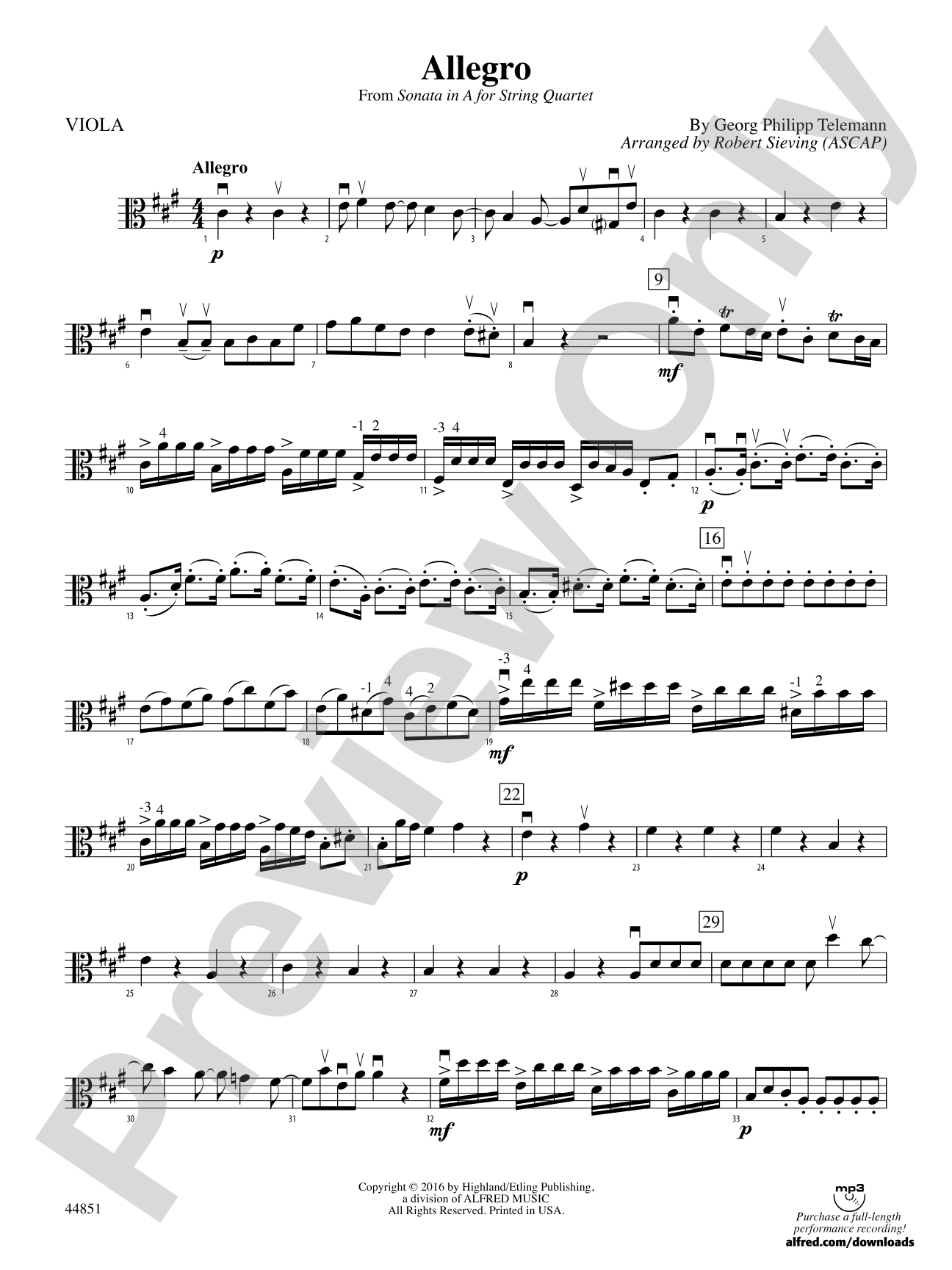
Allegro: Viola

From Sonata in A for String Quartet

By Georg Philipp Telemann / arr. Robert Sieving

Grade: 3

Item: 00-PC-0017368_VA1

Digital Download
$5.99
Description
Wonderful for teaching Baroque style and bowing concepts, this piece features limited third position for the violins, cellos, and basses. Violas share in the thematic materials with string basses, mostly sharing the basso continuo line with cellos. This movement from Telemann's Sonata in A for String Quartet has been perfectly set by Robert Sieving. (3:20)

Don't just read it, hear it, play along with it, and watch your students grow with it. In MakeMusic Cloud, Allegro: Viola comes alive with professional accompaniment, adjustable tempo, and built-in practice tools that turn solo practice into real progress.

Sample Audio
0:00
0:00
Sample Video
Additional Details
Series: Highland/Etling String Orchestra
Publisher: Alfred Music
Page Count: 124
SKU: 00-PC-0017368_VA1

More about this title

About the Composer: Georg Philipp Telemann

Georg Philipp Telemann (1681-1767) was one of the most prolific composers of the Baroque era, producing over 3,600 works across all genres. A master of orchestration and melodic invention, he held prestigious positions throughout Germany, including Kapellmeister roles in Eisenach, Koblenz, and Hamburg. His music balances Italian elegance with German contrapuntal tradition, making his chamber works and concertos ideal teaching material.

Telemann's output was so vast and his style so accessible that his works remained central to music education long after his death. His chamber sonatas in particular showcase clear formal structures and singable melodies that engage student musicians while introducing them to authentic Baroque compositional techniques.

Why we love this

Robert Sieving's orchestration of this Telemann movement delivers genuine pedagogical value without sacrificing musical substance. The arrangement distributes thematic material across the ensemble, giving violas and lower strings meaningful lines rather than filler parts, which keeps every player invested and accountable throughout the three-minute span.

What to expect

Elegant and buoyant, this Allegro breathes with the sprightly confidence of the Baroque. Telemann's balanced phrasing and transparent orchestration invite singers to explore character and phrasing rather than wrestling with technical complexity. The movement feels finished and substantial, not like a study or excerpt.

Who it's for

String orchestra directors teaching Grade 3 ensembles who want to introduce Baroque style and authentic bowing concepts through repertoire that sounds more advanced than it is. This work suits student musicians ready to handle limited position work and ensemble textures beyond unison melody.

How to get the most out of it

  • Shape the phrases with elegant, long-line bowing rather than chopping at phrase endings. Baroque style thrives on continuous melodic energy even during cadences.
  • Balance the dialogue between violins and violas carefully. These voices trade the primary theme, and clarity here will bring the structure into sharp focus for your audience.
  • Limited third position in the upper strings should feel comfortable and secure. If players rush this shift, lock it down in sectionals and mark the exact measure where the shift occurs.
  • The basso continuo line shared between cellos and violas needs rhythmic precision and light articulation. Avoid too much weight, which will muddy the harmonic foundation.

How to use it

Place this on a concert exploring Baroque chamber music, pairing it with your Grade 2 pieces or other Telemann arrangements to frame a thematic program around Baroque masters. Its three-minute length makes it an ideal opening or interlude piece that sets a refined tone without overtaxing rehearsal time on a single work.

Skills your students will build

  • Reading and executing limited third position (violins, cellos, basses)
  • Baroque articulation and phrasing conventions
  • Listening across parts to balance ensemble texture and voice leading
  • Sustaining long melodic lines with intentional bow control
  • Recognizing and performing basso continuo functions in string writing

You May Also Like