
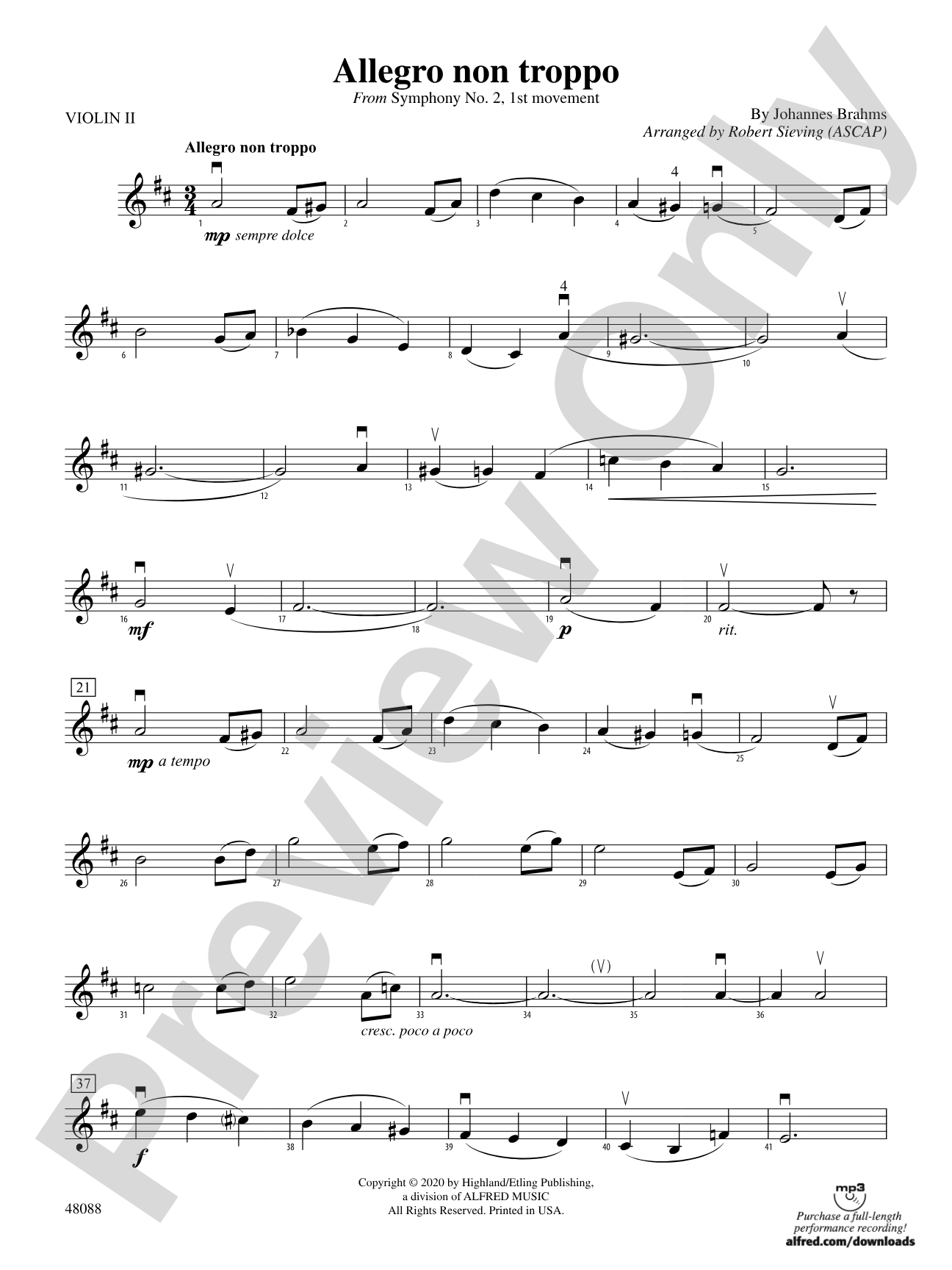

Allegro non troppo: 2nd Violin
From Symphony No. 2, 1st Movement
By Johannes Brahms / arr. Robert Sieving
Grade: 2.5
Item: 00-PC-0018523_VN2
$3.00
Pickup currently not available
Description
Allegro non troppo by Johannes Brahms, arranged by Robert Seiving, features a folk-like, yet mature theme that is shared across all the sections. This approachable, yet sophisticated arrangement with minimal rhythmic independence builds confidence. Limited 3rd positions are required of Violin I. (2:35) This title is available in MakeMusic Cloud.


Don't just read it, hear it, play along with it, and watch your students grow with it. In MakeMusic Cloud, Allegro non troppo: 2nd Violin comes alive with professional accompaniment, adjustable tempo, and built-in practice tools that turn solo practice into real progress.
Open in the Player
Jump straight in and assign it today.
Start Your Free Trial
Open this title and explore the full library in minutes.
Sample Audio
1
Audio File
--:--
0:00
0:00
Sample Video
Additional Details
Series:
Highland/Etling String Orchestra
Publisher:
Alfred Music
Page Count:
124
SKU:
00-PC-0018523_VN2
More about this title
About the Composer: Johannes Brahms
Johannes Brahms (1833-1897) was a German composer whose chamber and orchestral works fundamentally shaped the musical language of the 19th century. His mastery of form, harmonic sophistication, and gift for memorable melody made him a bridge between Romantic expression and Classical structure, influencing countless composers who followed.
Brahms had a deep affinity for folk traditions and frequently wove folk-like themes into his concert music, creating works that feel both intimate and grand. This approach makes his music particularly rewarding for student ensembles, where the combination of accessible melodic content and mature harmonic language builds musicianship across multiple levels.
Why we love this
Robert Sieving's arrangement captures Brahms's gift for elegant melodic writing while keeping the technical demands reasonable for Grade 2.5 ensembles. The folk character of the theme gives students a memorable, singable line to anchor their playing, and the transparent orchestration lets each section contribute meaningfully without overwhelming younger players.
What to expect
The theme has the warmth and directness of a folk tune, yet Brahms's harmonic language beneath it carries a mature, reflective quality. There's a conversational ease to the piece, neither hurried nor heavy, that invites listeners into an intimate musical moment while maintaining the dignity of a concert-hall work.
Who it's for
This arrangement works beautifully for Grade 2.5 string orchestras building confidence with Brahms without technical overreach. It's ideal for ensembles ready to move beyond simplified repertoire but still developing consistency in shifting, intonation, and ensemble balance. Contest and concert contexts both suit this piece equally well.
How to get the most out of it
- Balance the melody across sections as it passes around the ensemble. The folk-like nature of the theme will shine when no single voice dominates; think of it as a song the entire orchestra is singing together.
- Shape the phrasing in two or four-bar units rather than measure-to-measure. This larger architectural view helps students understand where the theme is heading and sustains forward momentum.
- Allow a slight ease in tempo at phrase endings to let the theme breathe. The title itself (Allegro non troppo) invites a conversational pace that avoids sounding rushed.
- Keep the accompaniment figures light and supportive. Limited rhythmic independence means your inner voices should enhance rather than compete with the melody.
How to use it
Program this as a contrast piece on a concert that includes faster or louder selections; its gentle, song-like character offers welcome variety. It also serves well as a festival or contest entry where judges appreciate musical maturity from younger ensembles without expecting virtuosity. The 2:35 duration makes it flexible for programming around longer works.
Skills your students will build
- Melodic awareness and phrase shaping across multiple measures
- Limited third position shifting on Violin I (building toward intermediate technique without overwhelming)
- Maintaining harmonic balance when playing accompaniment figures
- Unified ensemble intonation during slower tempos and sustained passages
- Interpreting a folk-influenced melody with maturity and restraint