
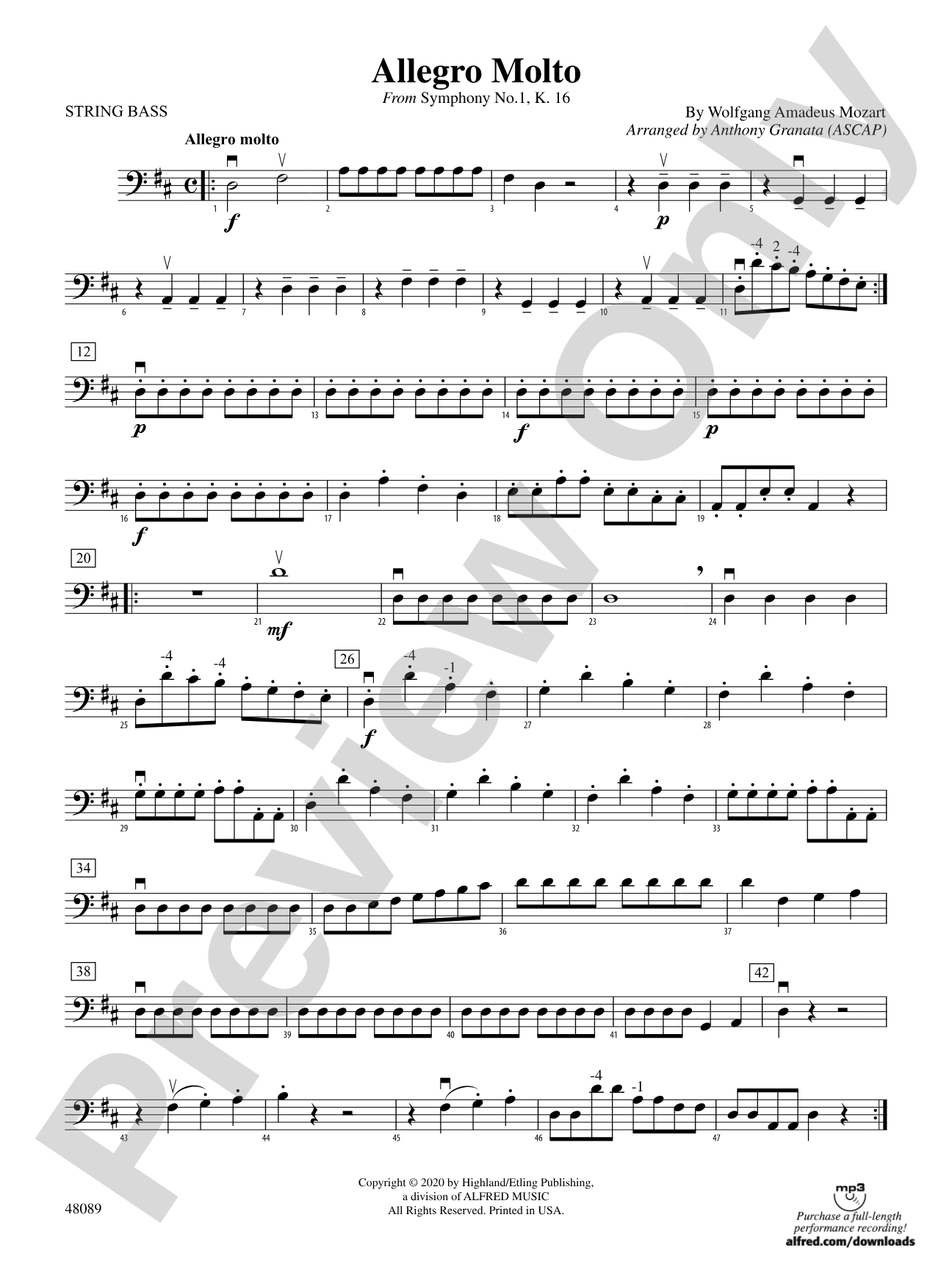

Allegro Molto: String Bass
From Symphony No. 1, K. 16
By Wolfgang Amadeus Mozart / arr. Anthony Granata
Grade: 2
Item: 00-PC-0018524_SB
$3.00
Pickup currently not available
Description
A perfect classical choice for late-beginner and early-intermediate orchestras, "Allegro Molto" from Symphony No. 1, K.16 by Wolfgang Amadeus Mozart and arranged by Anthony Granata has been rewritten from the key of E-flat major to D major. This wonderful teaching piece features simple eighth-note patterns, dynamics, articulations, and accidentals. The work retains the simplicity, charm, and elegance of the original, while still giving your students a bold and mature sound, reminiscent of the Classical era. Younger orchestras can now enjoy the beauty and wonders of the infamous musical prodigy's first symphony. This is a wonderful concert program opener or closer. (2:30) This title is available in MakeMusic Cloud.


Don't just read it, hear it, play along with it, and watch your students grow with it. In MakeMusic Cloud, Allegro Molto: String Bass comes alive with professional accompaniment, adjustable tempo, and built-in practice tools that turn solo practice into real progress.
Open in the Player
Jump straight in and assign it today.
Start Your Free Trial
Open this title and explore the full library in minutes.
Sample Audio
1
Audio File
--:--
0:00
0:00
Sample Video
Additional Details
Series:
Highland/Etling String Orchestra
Publisher:
Alfred Music
Page Count:
62
SKU:
00-PC-0018524_SB
More about this title
About the Composer: Wolfgang Amadeus Mozart
Wolfgang Amadeus Mozart (1756-1791) stands as one of history's most prolific and influential composers, having written over 600 works across nearly every genre before his death at thirty-five. His early symphonies, including the first, emerged from his childhood years as a touring prodigy alongside his sister Maria Anna, and they showcase the hallmarks of his genius: elegant phrasing, transparent orchestration, and structural clarity that would define the Classical period.
For music educators, Mozart's symphonic works remain invaluable teaching tools. His mastery of balance between simplicity and sophistication makes his music accessible to young ensembles while never feeling condescending. The first symphony in particular demonstrates how a beginner orchestra can sound confident and polished when performing genuinely composed music rather than simplified exercises.
Why we love this
Anthony Granata's rewriting into D major removes the technical barrier of E-flat without sacrificing Mozart's melodic architecture or the authentic Classical sound your students will recognize. A Grade 2 piece that doesn't require apologies, it delivers real musicianship alongside accessible notation—the kind of programming choice that builds ensemble confidence and audience respect in equal measure.
What to expect
Bright, purposeful, and unmistakably composed for court rather than concert hall. The piece dances forward with the courtesy and poise of the era, moving between moments of simple beauty and passages where every voice has something musical to contribute. There's a maturity in the sound that surprises students who discover they're capable of something this refined.
Who it's for
Late-beginner and early-intermediate string orchestras ready to tackle genuine orchestral literature without overwhelming their reading ability. Conductors seeking a confident concert opener that showcases student growth and respect for the Classical tradition.
How to get the most out of it
- Shape the eighth-note patterns as conversational phrases rather than mechanical runs; light articulation and consistent bow control will reveal the elegance Mozart built into each figure.
- Allow the dynamics to breathe naturally between the marked changes; younger orchestras often rush from piano to forte without the swell and settle that makes Classical style sound mature.
- Establish rhythmic precision early in rehearsals by locking the ensemble on the principal lines while letting accompanying parts sit slightly lighter, creating transparency that prevents the piece from feeling muddled.
- Balance violin sections carefully so the first and second violins share melodic weight; this prevents the top line from overriding the harmonic conversation happening below.
How to use it
Program this as a season opener to set a high standard for ensemble musicianship, or close a concert with it to leave the audience with something elegant and historically grounded. It pairs well with Baroque or contemporary works on the same program, bridging different eras within a single rehearsal focus.
Skills your students will build
- Reading and executing consistent eighth-note rhythmic patterns across multiple measures
- Dynamic control and shaping across soft to forte ranges
- Articulation clarity (staccato and legato) within a Classical style context
- Listening for balance and transparency within a four-part harmonic texture
- Understanding and performing authentic Classical phrasing and period style