
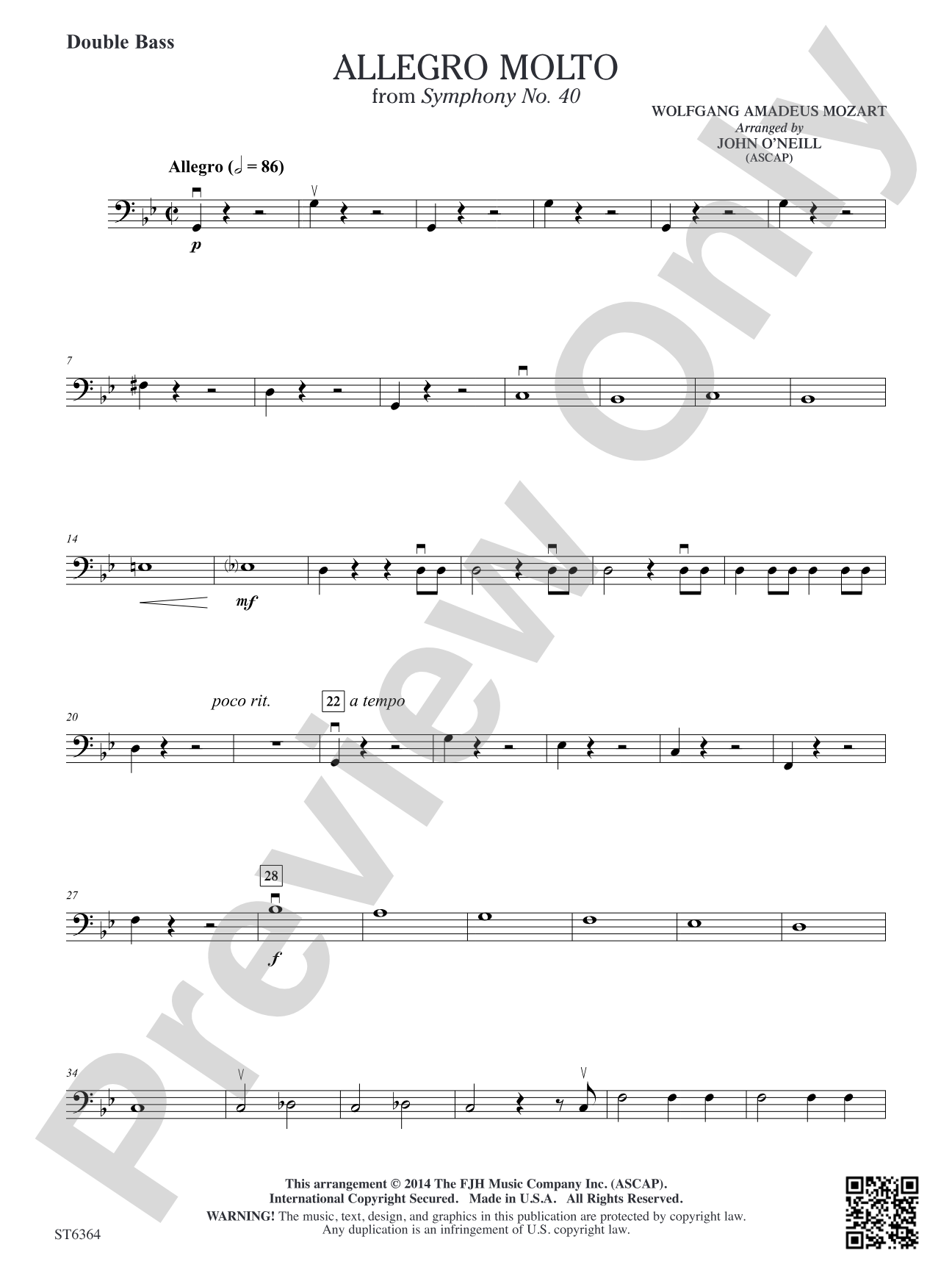

Allegro molto from Symphony No. 40: Double Bass
By Wolfgang Amadeus Mozart / arr. John O'Neill
Grade: 4
Item: 98-PC-DST6364_SB
$7.00
Pickup currently not available
Description
The Allegro molto from Mozart's Symphony No. 40 is arguably one of the most well-known melodies in all of classical literature. This arrangement goes well beyond the melody to give a broad representation of the entire movement while remaining very accessible to students.


Don't just read it, hear it, play along with it, and watch your students grow with it. In MakeMusic Cloud, Allegro molto from Symphony No. 40: Double Bass comes alive with professional accompaniment, adjustable tempo, and built-in practice tools that turn solo practice into real progress.
Open in the Player
Jump straight in and assign it today.
Start Your Free Trial
Open this title and explore the full library in minutes.
Sample Audio
1
Audio File
--:--
0:00
0:00
Sample Video
No sample videos found.
Additional Details
Series:
FJH String Orchestra
Publisher:
The FJH Music Company, Inc.
SKU:
98-PC-DST6364_SB
More about this title
About the Composer: Wolfgang Amadeus Mozart
Wolfgang Amadeus Mozart (1756-1791) composed across every major genre of his era and left an indelible mark on orchestral writing. His symphonies remain cornerstones of the concert repertoire, valued equally by professionals and student ensembles for their structural clarity, memorable themes, and emotional range. The 40th symphony, written in G minor, stands among his most performed works and continues to shape how musicians understand the bridge between Classical form and expressive depth.
For string players, Mozart's symphonic writing offers an ideal model of idiomatic orchestration. Each voice remains musical and singable while contributing to larger harmonic and textural goals. His mastery of dialogue between sections, coupled with transparent instrumentation, makes his work especially rewarding for students learning to balance individual responsibility with ensemble listening.
Why we love this
O'Neill's arrangement captures the movement's dramatic arc without compromising accessibility. Rather than strip the work down to its famous opening, this version honors the development section and structural breadth of Mozart's original, allowing students to experience genuine symphonic thinking at a manageable technical level. Conductors appreciate arrangements that teach repertoire authentically, and this one accomplishes that across a standard string orchestra.
What to expect
The urgency and seriousness of G minor unfolds through elegant phrasing and dialogue between sections. The opening theme projects dramatic intensity, yet the movement breathes with Classical proportion and logic. Moments of driving rhythmic energy alternate with lyrical passages, creating contrast that keeps players engaged and audiences attentive.
Who it's for
String orchestra directors seeking repertoire that combines pedagogical value with concert appeal. This arrangement works for ensembles that have solid rhythmic foundation and can manage multiple independent parts; students benefit from hearing and performing a recognized masterwork without confronting the technical demands of the original orchestration.
How to get the most out of it
- Shape the opening theme with subtle dynamic contour rather than playing it straight; the melody benefits from gentle peaks that follow the phrase structure.
- Establish clarity between first and second violin parts early in rehearsals, as their independence is essential to Mozart's orchestration and helps students hear individual responsibility within the ensemble.
- Balance the lower strings carefully in the development section so that harmonic movement remains audible; Mozart often carries crucial material below the melody line.
- Maintain consistent tone quality across tempo transitions; students should play with the same musical intent whether in passages of moderate motion or quicker figuration.
How to use it
Program this as a centerpiece for a concert focused on masterwork arrangements or as the anchor of a Classical-era set. It pairs well with smaller-scale Mozart works (like divertimenti) or with other arranged symphonic movements, allowing you to build a coherent concert narrative around music students actually know. The work also fits spring festival calendars where accessible, recognizable repertoire draws strong attendance.
Skills your students will build
- Reading and maintaining independent lines within a multi-part texture
- Shaping long melodic phrases with appropriate dynamic and tonal inflection
- Responding to harmonic motion and understanding how inner parts support the overall structure
- Balancing articulation and tone across fast figuration and sustained passages
- Coordinating as a section while listening to other string families