
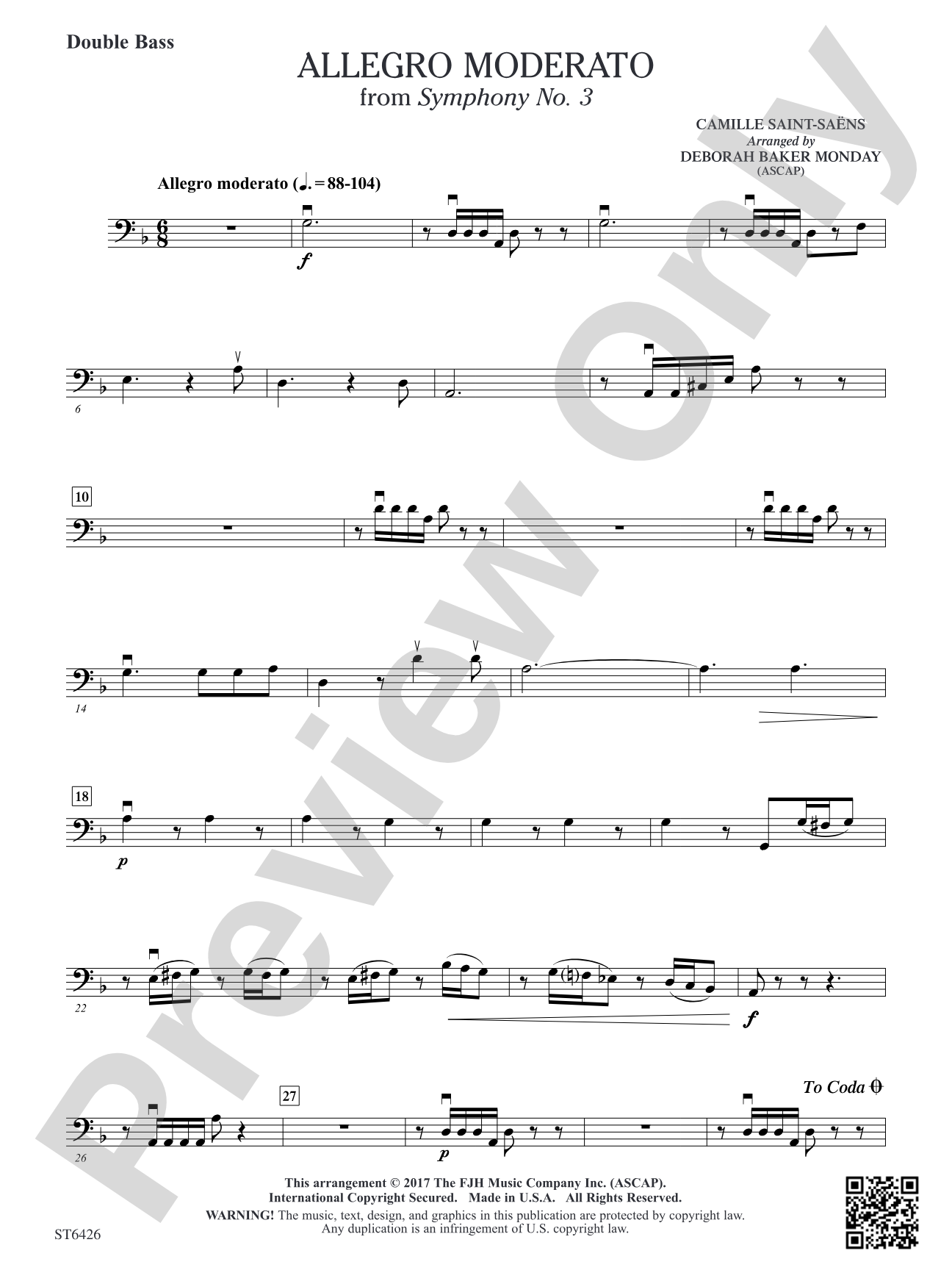

Allegro Moderato (From Symphony No. 3): Double Bass
From Symphony No. 3
By Camille Saint-Saëns / arr. Deborah Baker Monday
Grade: 4
Item: 98-PC-DST6426_SB
$7.00
Pickup currently not available
Description
This movement of the famous "organ symphony" includes two of the most memorable themes ever penned by Saint-Saëns. This arrangement includes the highly energetic string theme and the beautiful fugue based on his four note theme, which cycles throughout the entire symphony. The two contrasting sections of this arrangement offer two extremes of bowing style: one requiring heavy strokes at the frog and the other using legato, expressive, full bowing. (4:15)


Don't just read it, hear it, play along with it, and watch your students grow with it. In MakeMusic Cloud, Allegro Moderato (From Symphony No. 3): Double Bass comes alive with professional accompaniment, adjustable tempo, and built-in practice tools that turn solo practice into real progress.
Open in the Player
Jump straight in and assign it today.
Start Your Free Trial
Open this title and explore the full library in minutes.
Sample Audio
1
Audio File
--:--
0:00
0:00
Sample Video
Additional Details
Series:
FJH String Orchestra
Publisher:
The FJH Music Company, Inc.
SKU:
98-PC-DST6426_SB
More about this title
About the Composer: Camille Saint-Saëns
Camille Saint-Saëns (1835-1921) was a French composer of towering technical mastery and prolific output. His orchestral works combine Romantic lyricism with structural clarity, and his facility at the keyboard was legendary; he could sight-read virtually anything placed before him. Saint-Saëns wrote across all genres, but his symphonies and concertos remain cornerstones of the concert repertoire.
Why we love this
Deborah Baker Monday's arrangement captures the essence of Saint-Saëns' organ symphony without demanding the logistical complexity of a full orchestra plus organ. String players encounter two radically different musical landscapes in one movement, forcing them to master both rhythmic precision and singing legato in quick succession. The themes are instantly recognizable and deeply satisfying to perform.
What to expect
The piece opens with crackling, restless energy as strings drive forward with bright articulation. Then it pivots into a luminous, intricate world where a simple four-note kernel spirals through different voices, each line singing in conversation with the others. The shift from virtuosic propulsion to meditative counterpoint feels like stepping from sunlight into a cathedral.
Who it's for
This is ideal for Grade 4 string orchestras preparing for festival or contest. Players with solid fundamentals in bowing technique and music reading will thrive on the stylistic contrasts, while less experienced sections can still produce satisfying results with focused rehearsal on these two distinct approaches.
How to get the most out of it
- Establish a clear physical distinction between the two sections. The energetic theme demands quick, controlled strokes at the frog; the fugue section needs the weight of full-length bowing to sing through the contrapuntal texture.
- Balance the four-note fugal theme across all sections as it cycles. Mark entrances lightly during rehearsal so players can track where the theme lands and respond to its shape rather than following a predetermined dynamic.
- Shape phrase endings in the legato fugue section with a slight ritard and diminuendo. These moments of breath prevent the piece from feeling mechanical despite its formal structure.
- Lock the rhythmic energy of the first section by conducting the subdivision clearly. Players need to feel where the beat sits within each measure so syncopated passages land with precision.
How to use it
Program this early in a concert to showcase the orchestra's range of bowing colors and style. It also works well as a contest selection, since the clear structural divisions and contrasting demands give judges immediate evidence of your students' technical breadth. Pairing it with a contemporary work or a different orchestral arrangement creates welcome variety in a program built on familiar masterworks.
Skills your students will build
- Controlled spiccato and detached bowing at the frog in bright tempo
- Sustained, expressive legato bowing with full bow length
- Following a fugal theme as it moves between sections and voices
- Rhythmic precision in syncopated passages
- Dynamic shaping across phrase boundaries
- Listening for and balancing polyphonic texture