
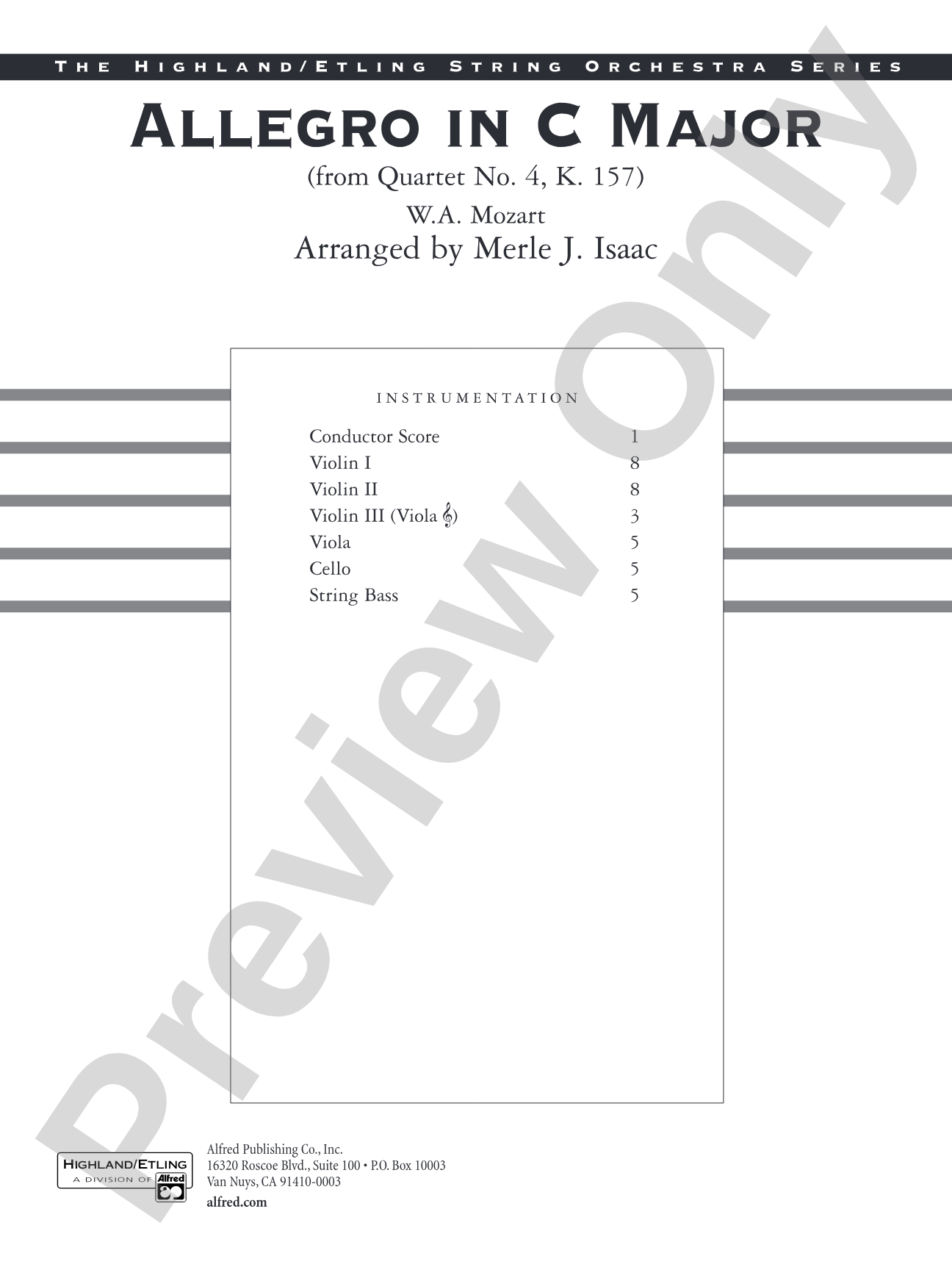
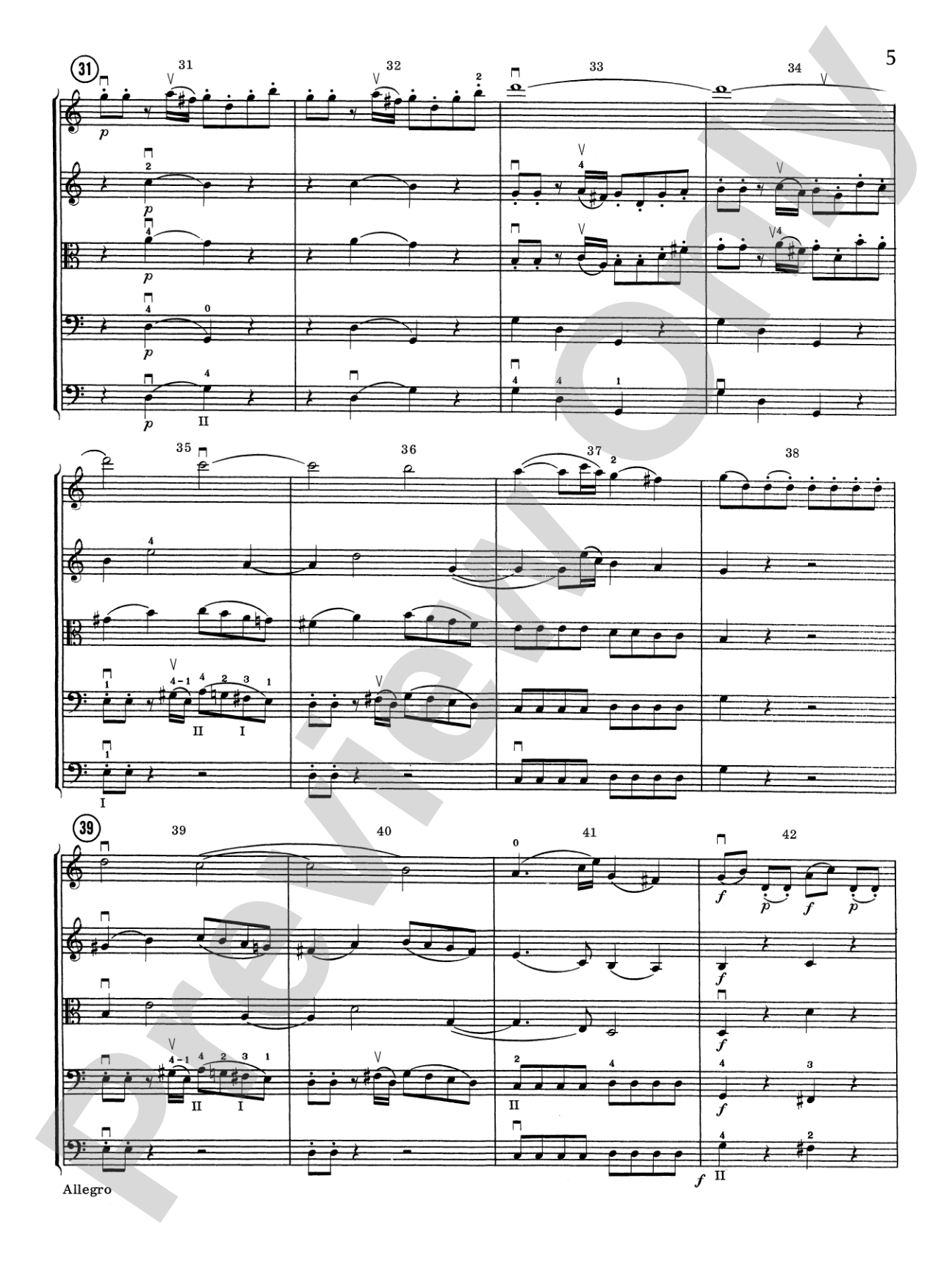
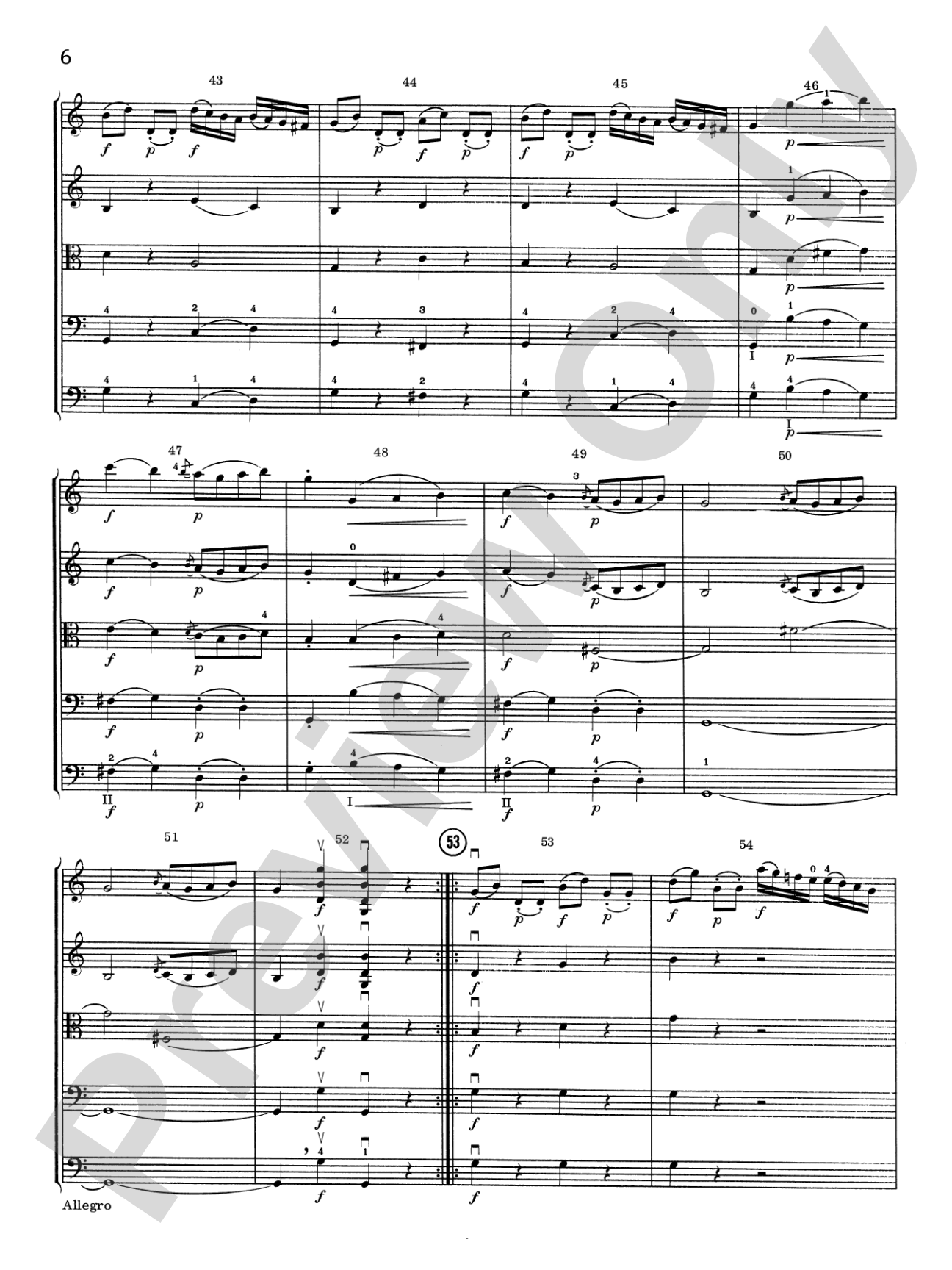
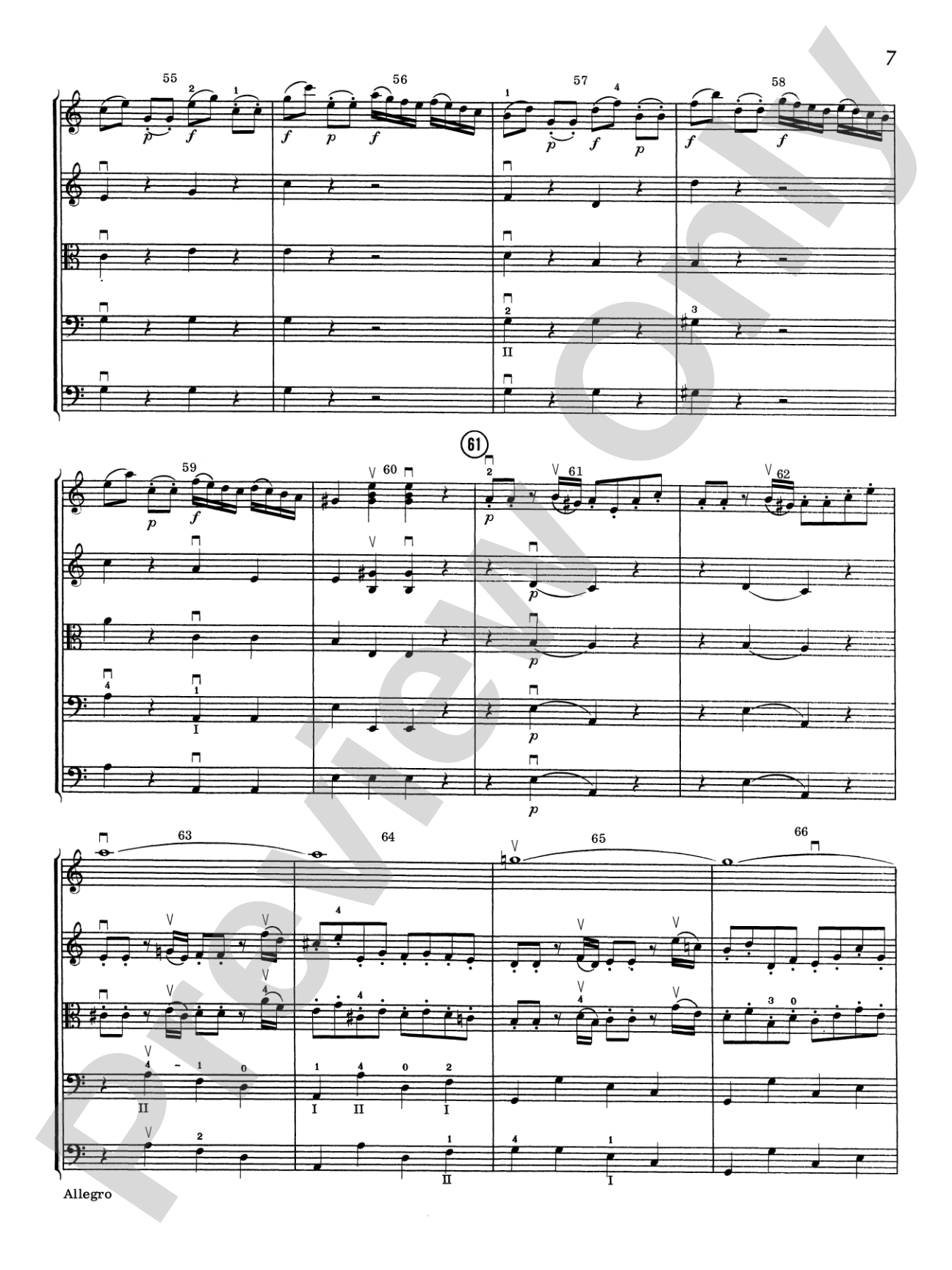
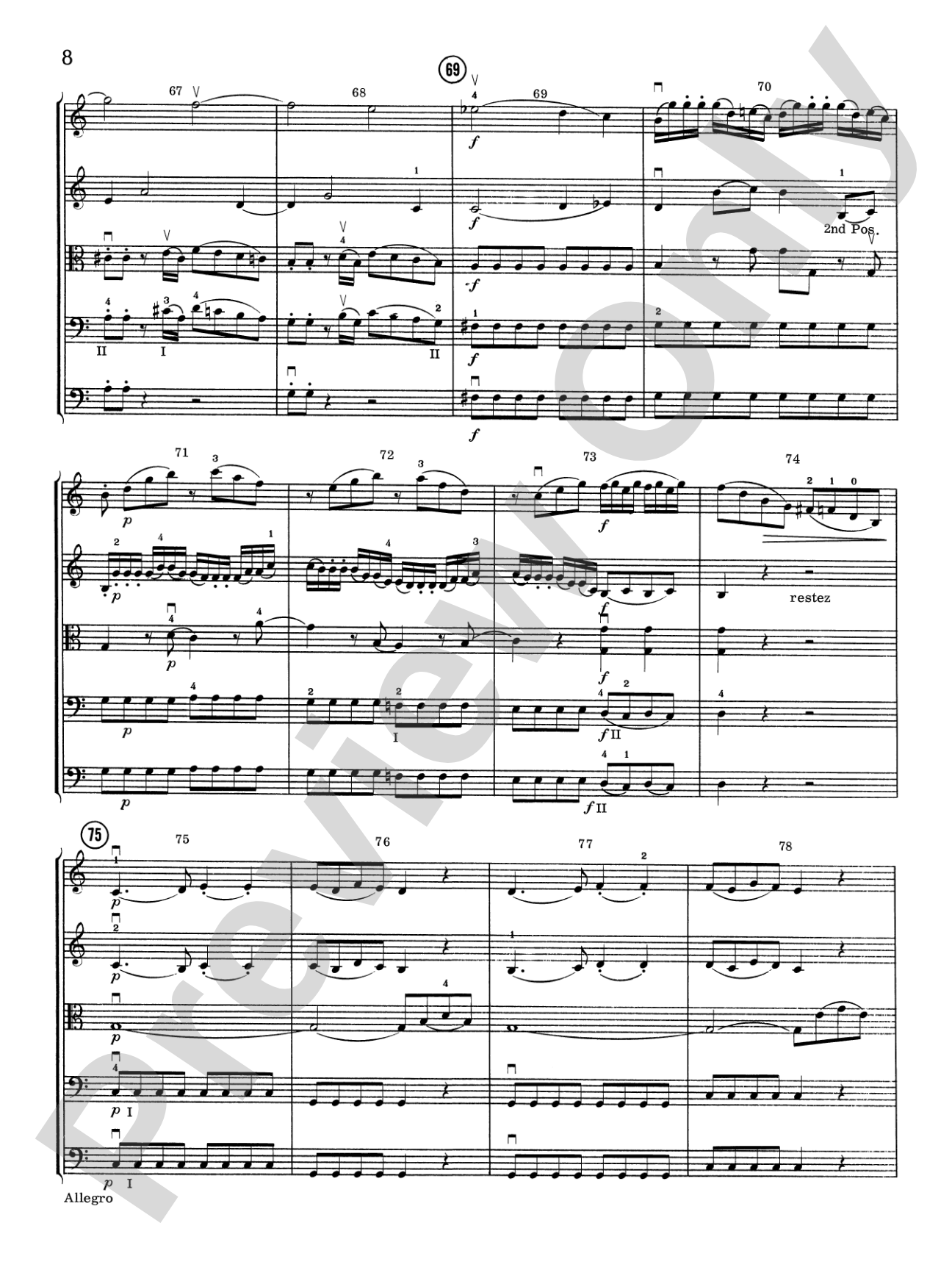
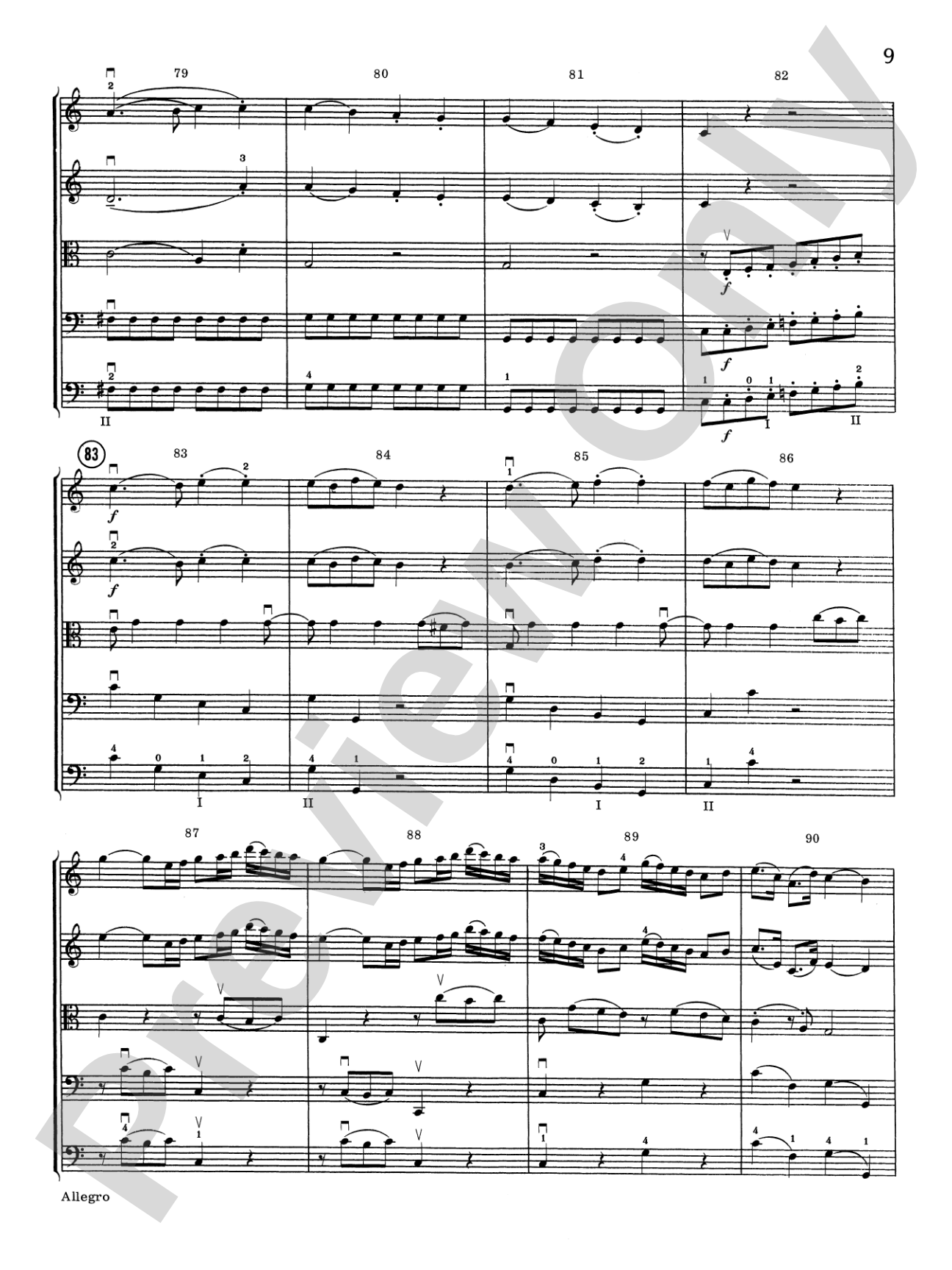
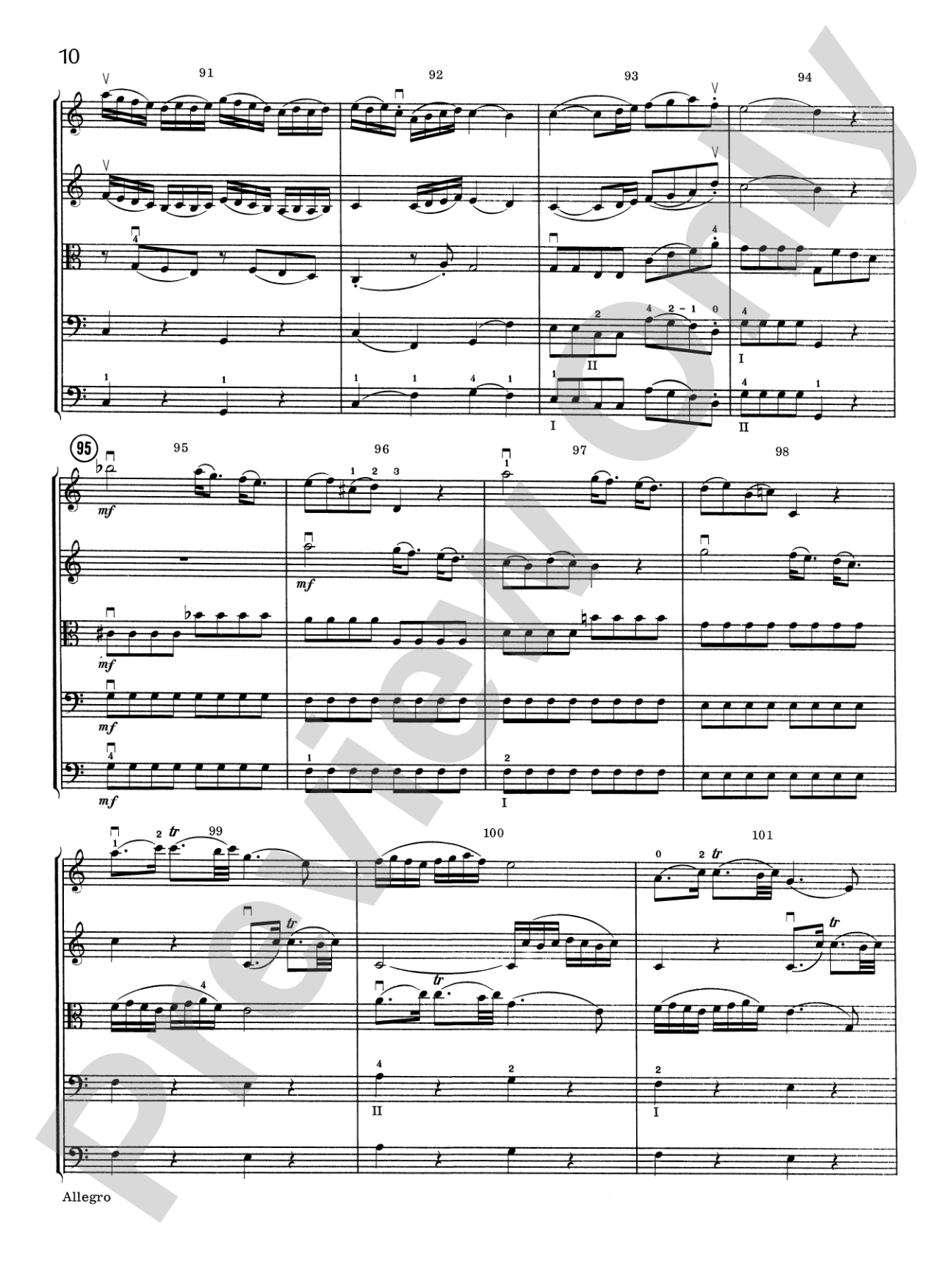
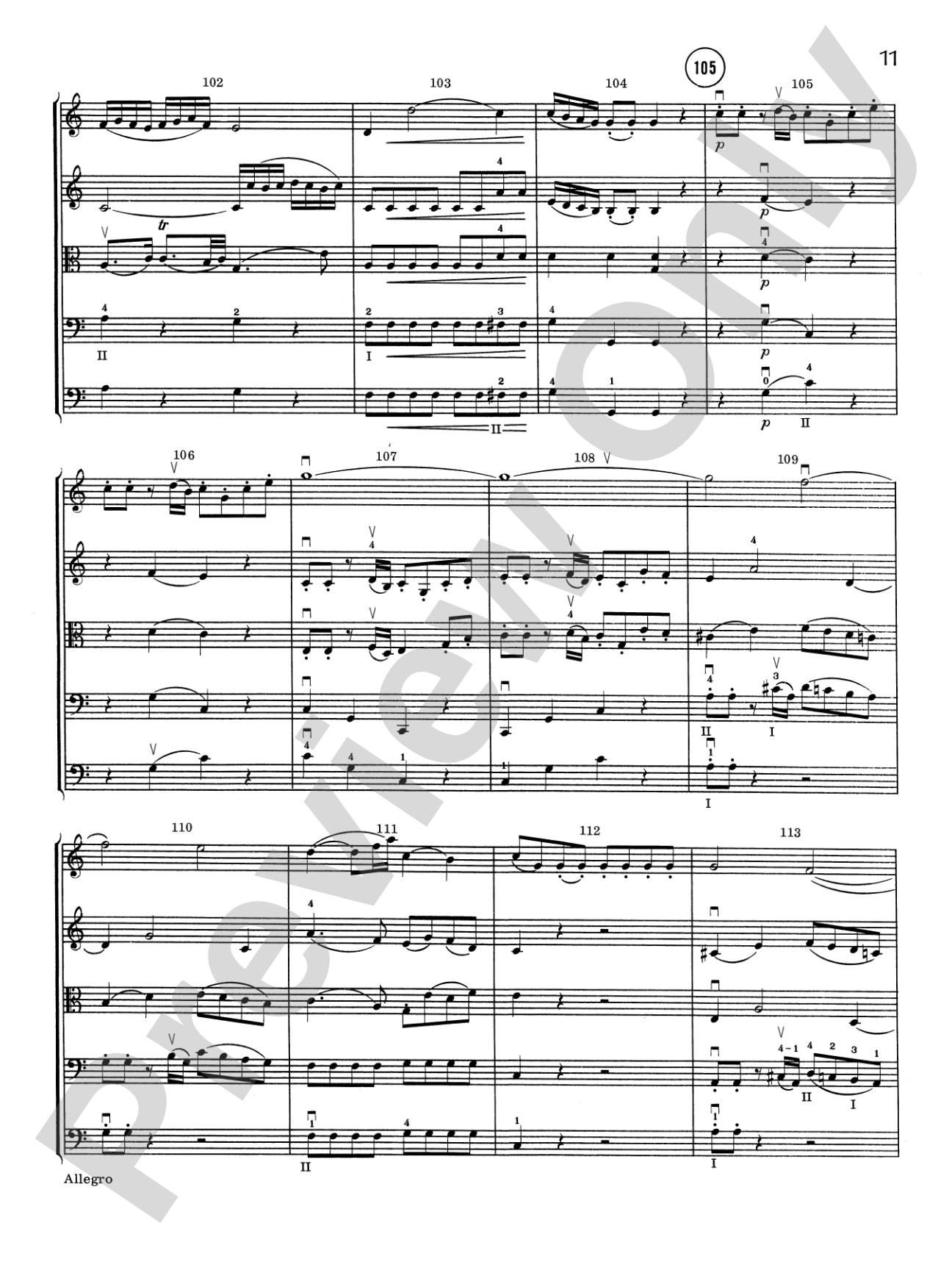
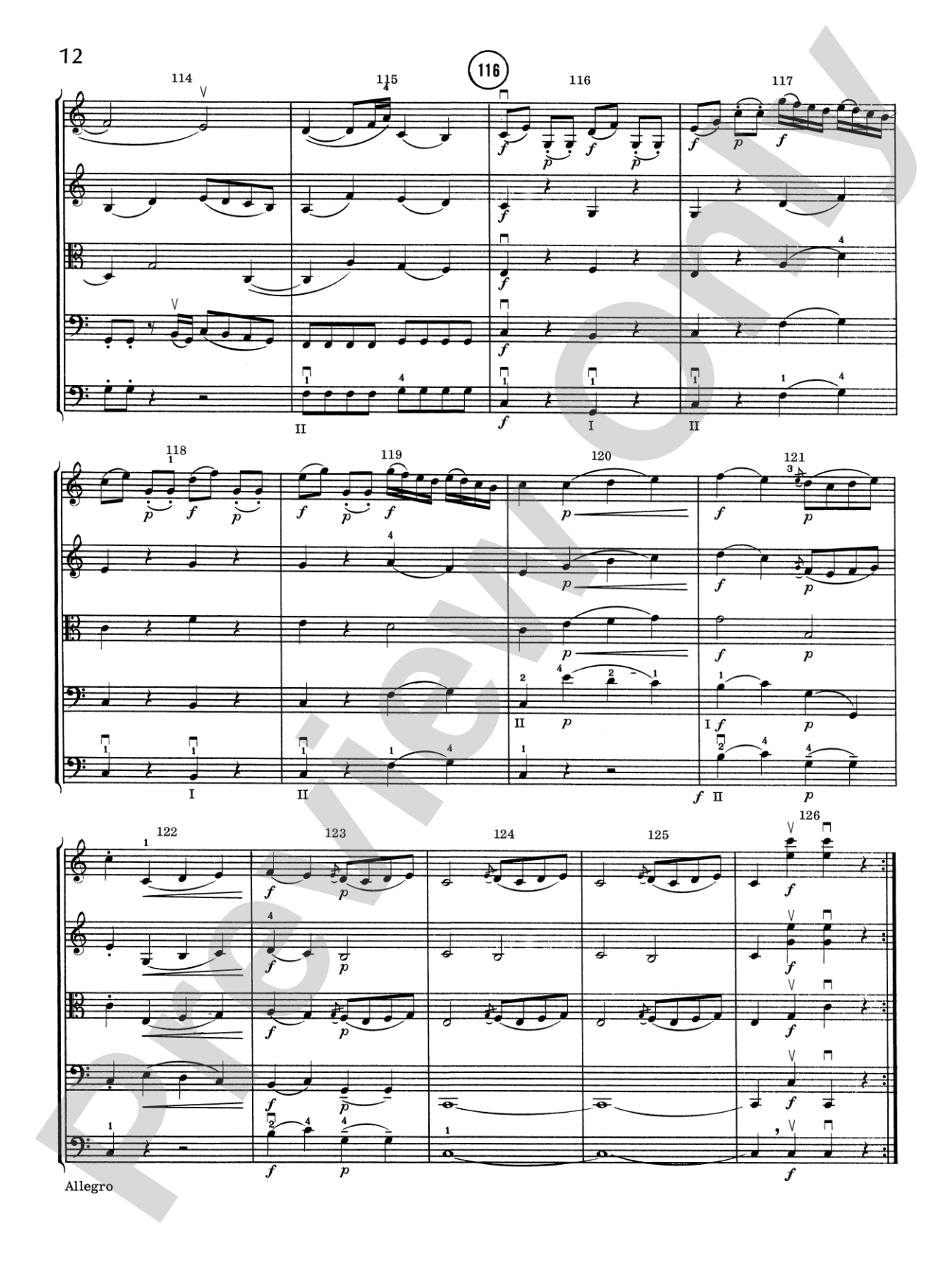

Allegro in C Major: String Orchestra Conductor Score & Parts
By Wolfgang Amadeus Mozart / arr. Merle J. Isaac
Grade: 3
Item: 00-PK-0000086

$60.00
Pickup currently not available
Buy Extra Parts (Digital PDF Download)
| Product | Price | Quantity |
|---|---|---|
| Allegro in C Major: Score | $6.00 | |
| Allegro in C Major: 1st Violin | $5.99 | |
| Allegro in C Major: 2nd Violin | $5.99 | |
| Allegro in C Major: 3rd Violin (Viola [TC]) | $5.99 | |
| Allegro in C Major: Viola | $5.99 | |
| Allegro in C Major: Cello | $5.99 | |
| Allegro in C Major: String Bass | $5.99 |
Parts Added to Cart!
Description


Don't just read it, hear it, play along with it, and watch your students grow with it. In MakeMusic Cloud, Allegro in C Major: String Orchestra Conductor Score & Parts comes alive with professional accompaniment, adjustable tempo, and built-in practice tools that turn solo practice into real progress.
Open in the Player
Jump straight in and assign it today.
Start Your Free Trial
Open this title and explore the full library in minutes.
Sample Audio
No sample audio found.
Sample Video
No sample videos found.
Additional Details
Series:
Highland/Etling String Orchestra
Publisher:
Alfred Music
Page Count:
136
SKU:
00-PK-0000086
More about this title
About the Composer: Wolfgang Amadeus Mozart
Wolfgang Amadeus Mozart (1756-1791) composed across every major genre of his era and fundamentally shaped the Classical style. His prolific output includes over 600 works written across a career that began in childhood; his command of melody, harmonic clarity, and structural balance made him a model for generations of composers. For string orchestra educators, Mozart's works remain essential repertoire because they teach clean voice leading, transparent textures, and the relationship between accompaniment and melody.
Why we love this
This arrangement gives students direct access to Mozart's architectural clarity without the technical demands of a full symphony. Merle Isaac has preserved the brilliant Classical idiom while creating a score that sits comfortably within Grade 3 reach, making it ideal for orchestras ready to tackle repertoire with real harmonic sophistication but still developing ensemble precision.
What to expect
Bright and graceful, with the effortless buoyancy that defines Mozart's best writing. The Allegro tempo propels the listener forward through clear melodic lines and dancing accompaniment figures, all held together by the harmonic language that makes Classical style so immediately recognizable.
Who it's for
String orchestras at Grade 3 ready to engage with genuine Classical masterworks will find this arrangement meets them at the right level. Conductors seeking to build students' understanding of phrase structure, voice independence, and stylistic elegance will appreciate how this work demands precision without overwhelming the ensemble.
How to get the most out of it
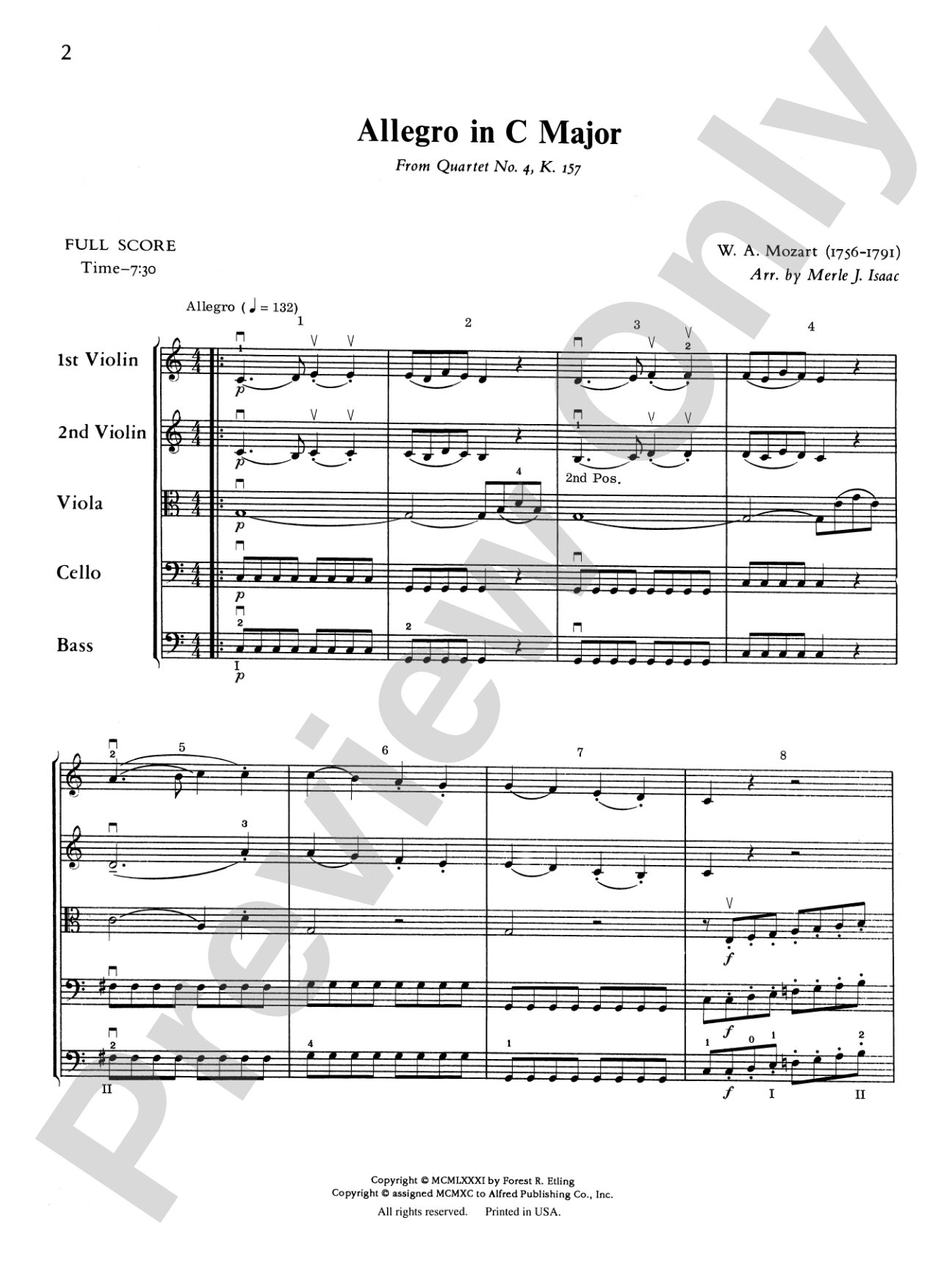
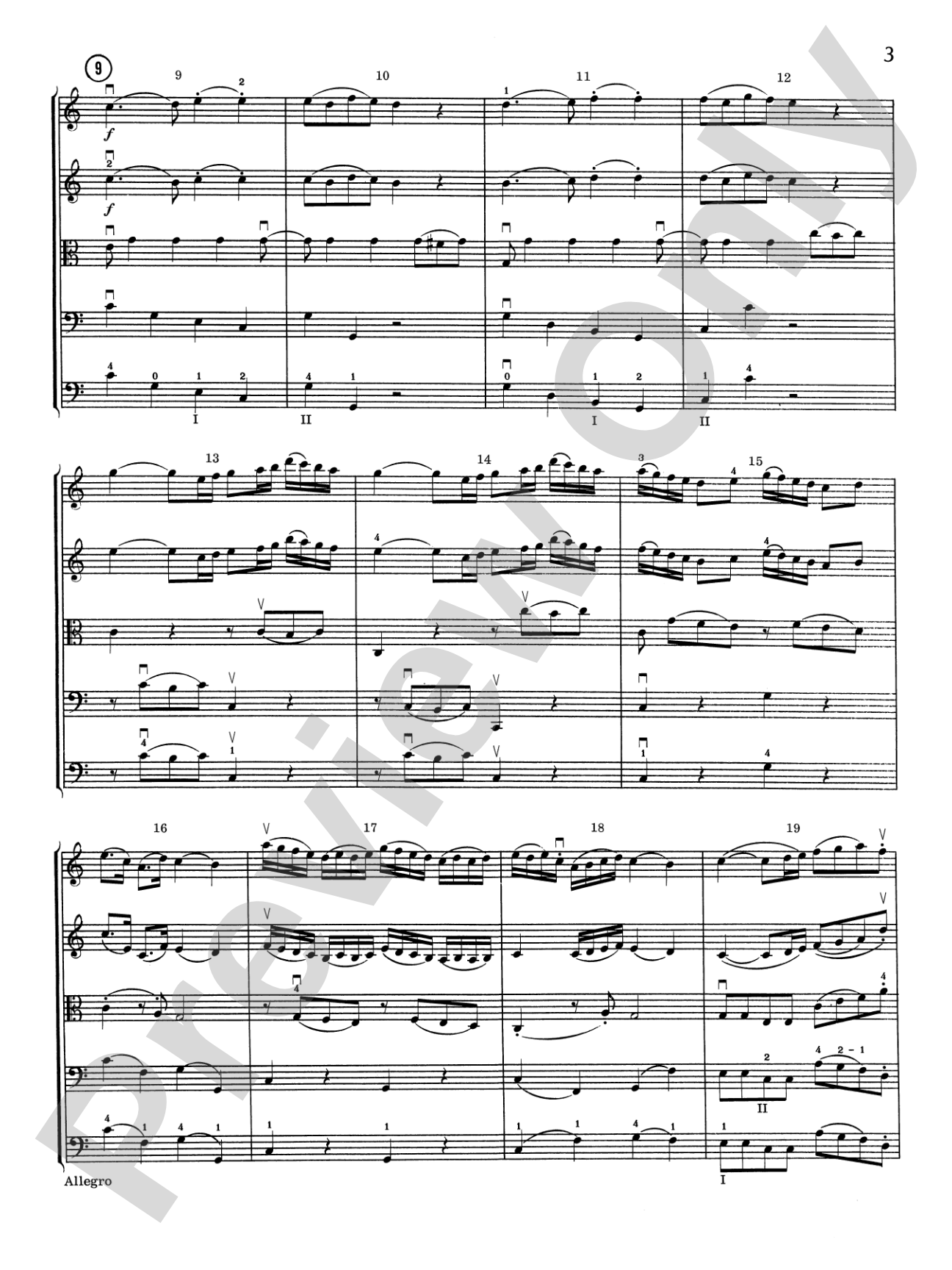
- Shape the opening phrase with a gentle arrival on beat 1 of each measure; avoid rushing the sixteenth-note passagework that often follows by keeping the accompanimental voices steady and light.
- Balance the first violins' melodic line so it projects clearly over the harmonic foundation without asking the section to force; this is Mozart's test of a mature ensemble's ability to voice a chord.
- Establish a consistent vibrato approach across the section for the sustained notes that carry harmonic weight; inconsistent vibrato will blur the transparent texture Mozart requires.
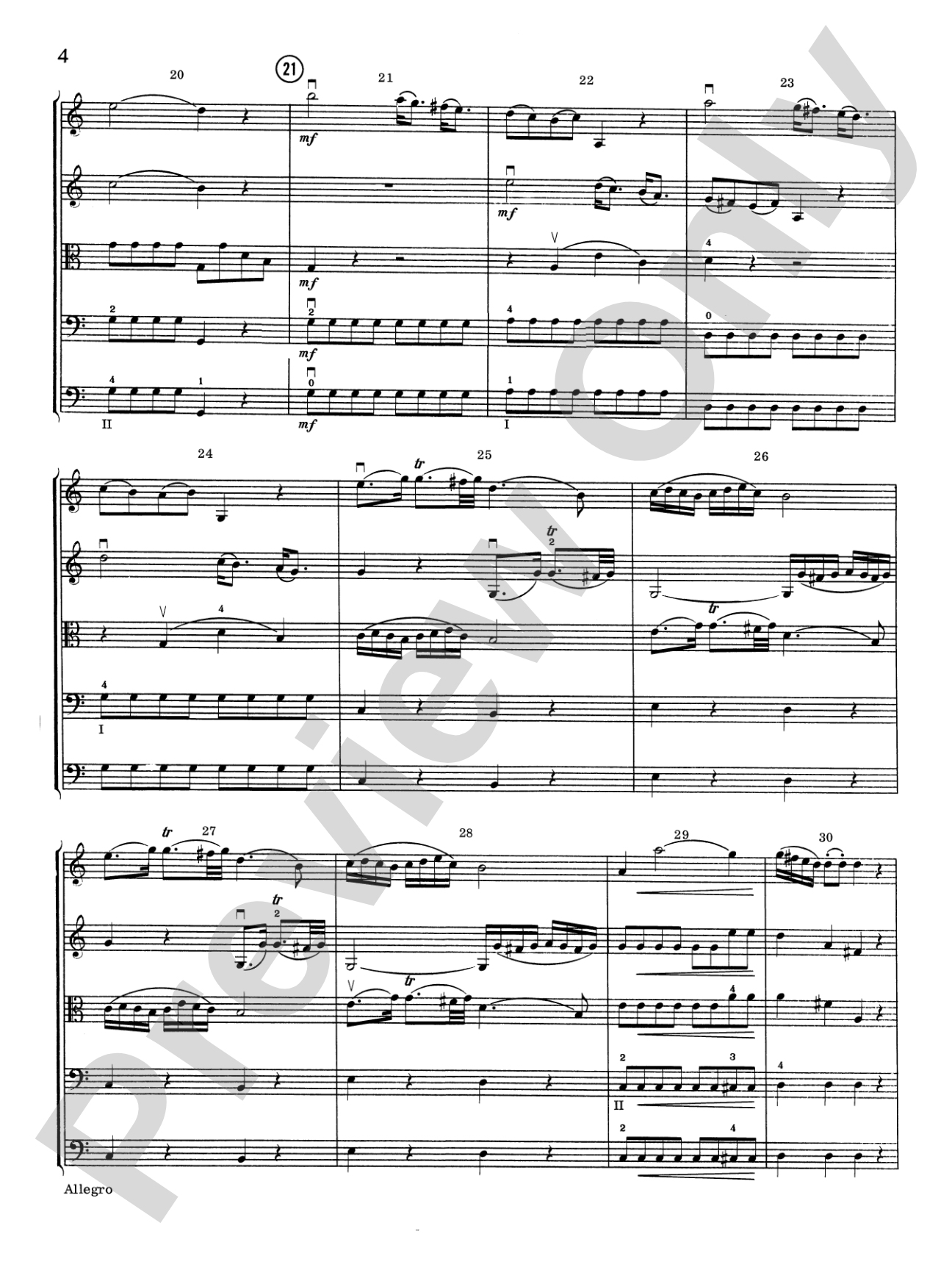
- Use the conductor score's phrase marks as guides for breath points in the strings; releasing together at these moments creates the articulate, dancing character typical of Classical style.
How to use it
Position this as a bridge between simpler Grade 2 repertoire and the symphonic works students will encounter later. It works beautifully on a concert alongside other Classical period selections or as an opening number that establishes the ensemble's technical foundation and stylistic awareness early in the program.
Skills your students will build
- Understanding harmonic function and progression in Classical style
- Balancing melody and accompaniment across string sections
- Maintaining steady pulse during sixteenth-note passagework and sustained chords
- Responding to phrase architecture and release points in Classical phrasing
- Achieving transparent voicing across four-part string texture