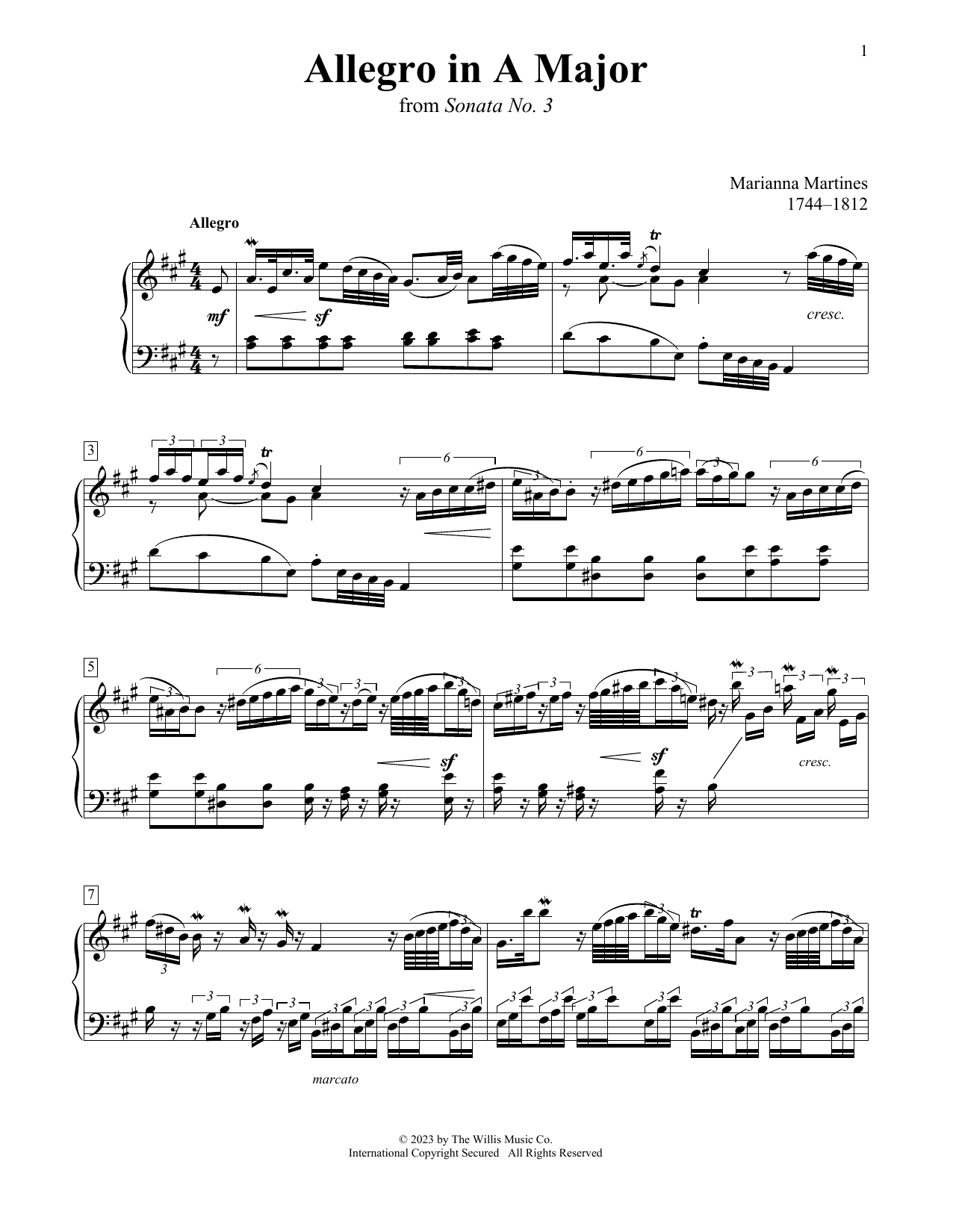
This four-page piece sits at exactly the right difficulty for students ready to move beyond simplified arrangements but not yet tackling full-length sonata movements. The A major key signature keeps the writing accessible while the Allegro tempo gives students something genuinely musical to sink their teeth into, not just technical exercises dressed up as compositions.
What to expect
Bright and propulsive. A major's natural brilliance gives the piece an optimistic, forward momentum; you're working with open string resonance and a harmonic language that wants to sparkle. It feels satisfying to play because the key sits well under the hand and the Allegro keeps energy moving throughout.
Who it's for
Intermediate piano students (roughly grades 4-6 in most method books) who have solid technique but are building their classical repertoire. This works equally well for students preparing for festival or exam repertoire lists that call for a classical standard.
How to get the most out of it
Balance the melodic material in the right hand so listeners hear a singing quality even during passages with running sixteenth notes.
Establish the pulse clearly in the opening measures; the Allegro tempo requires steady, energetic phrasing without rushing.
Notice where harmonic rhythm changes and use that as a guide for shaping phrases rather than playing through 8- or 16-bar blocks mechanically.
Pedal conservatively in A major, since the key's brightness can muddy quickly under sustain.
How to use it
Pair this with Romantic-era character pieces in a solo recital or student showcase. Its classical clarity provides a strong anchor before moving into more atmospheric or emotionally complex territory. It also serves as ideal recital material for students who need something substantial yet approachable for end-of-year performances.
Skills your students will build
Reading and executing consistent sixteenth-note figurations
Voice leading between melody and accompaniment in the classical style
Maintaining even tempo and steady pulse through faster passagework
Shaping longer phrases with harmonic landmarks rather than bar-by-bar phrasing
Playing with clarity and independence between both hands
You May Also Like
Scan to Complete Your Purchase
Use your phone's camera to scan the code below
You'll log in on your phone and the order will be added to your account