
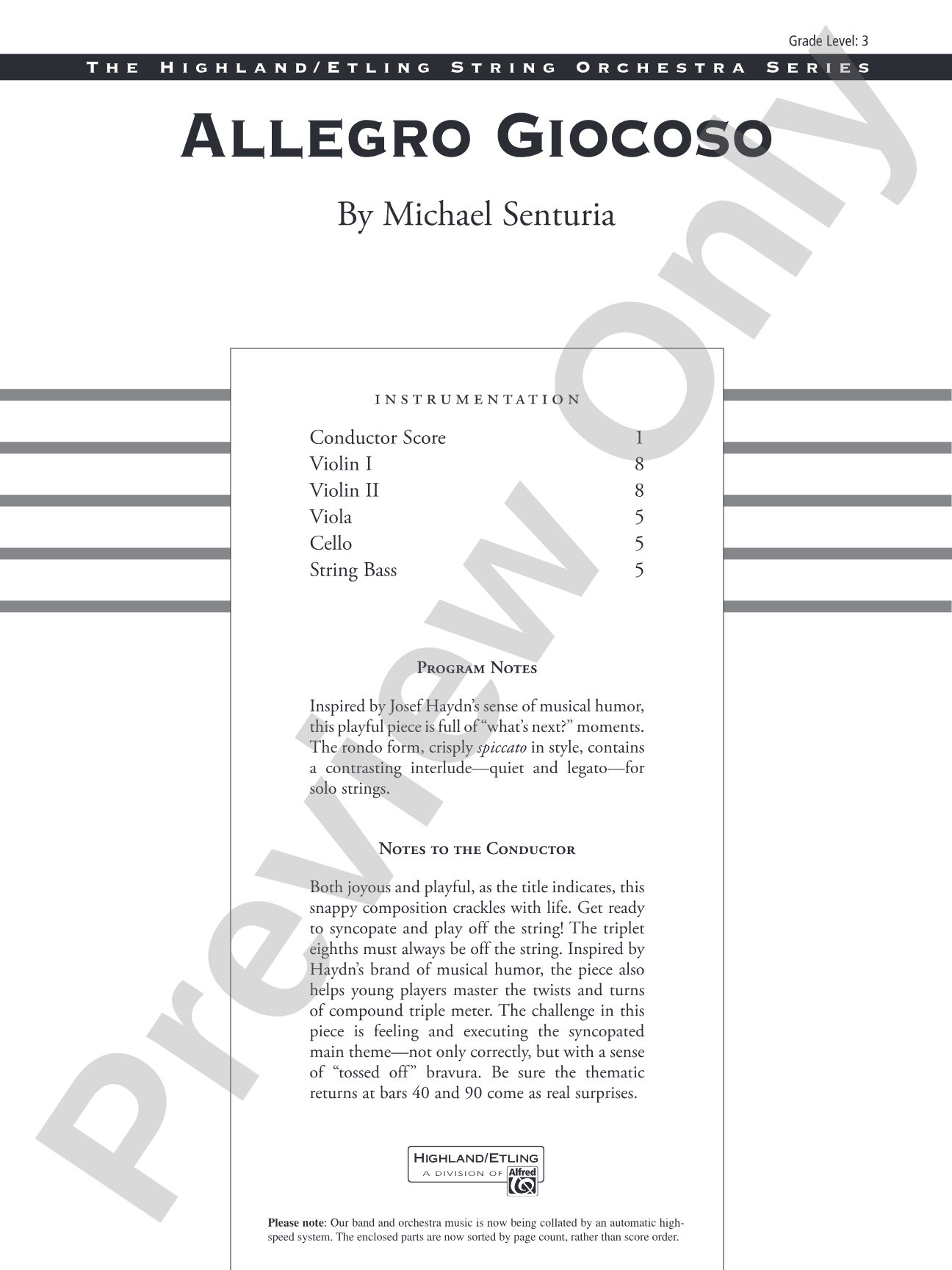
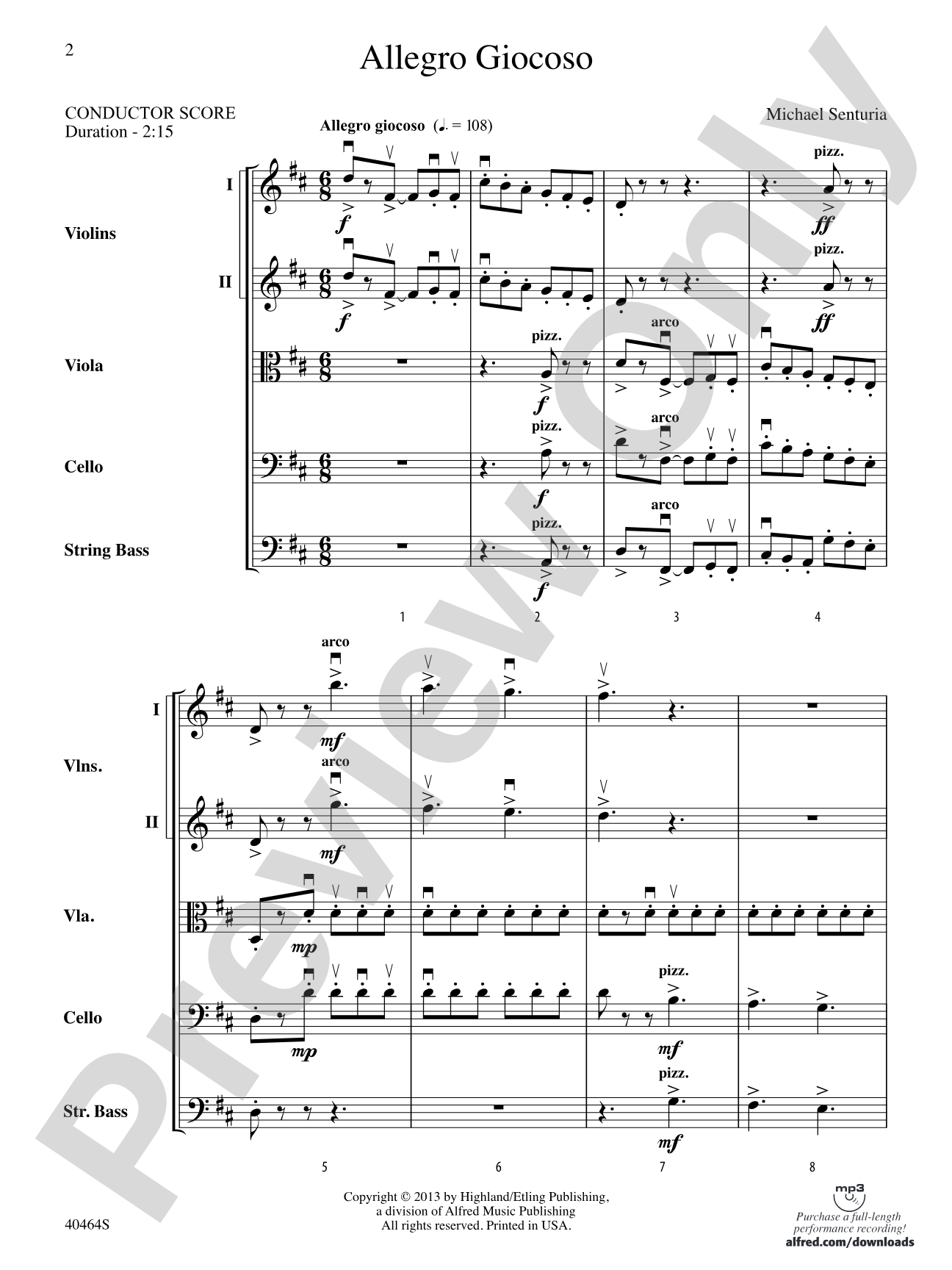
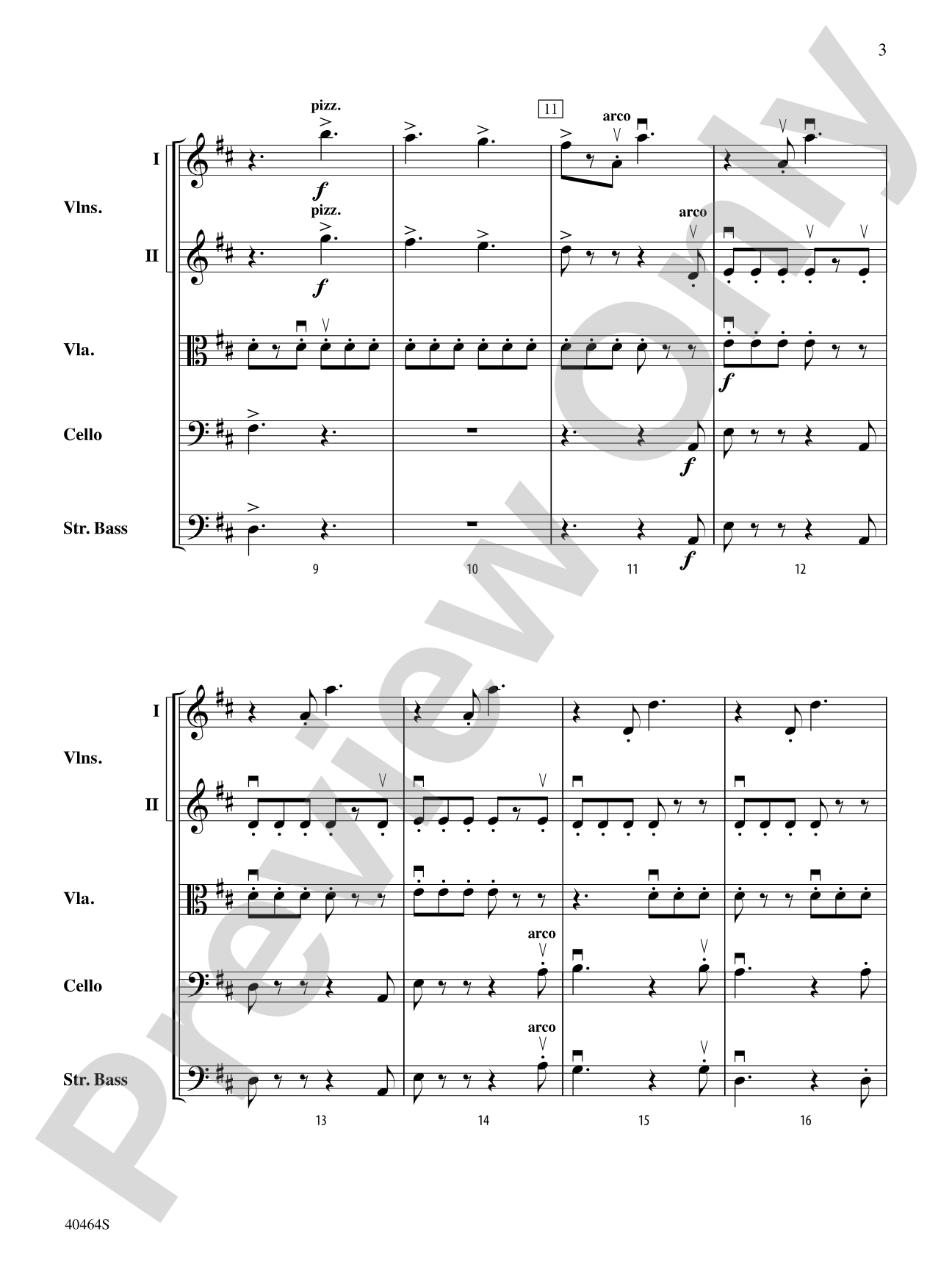
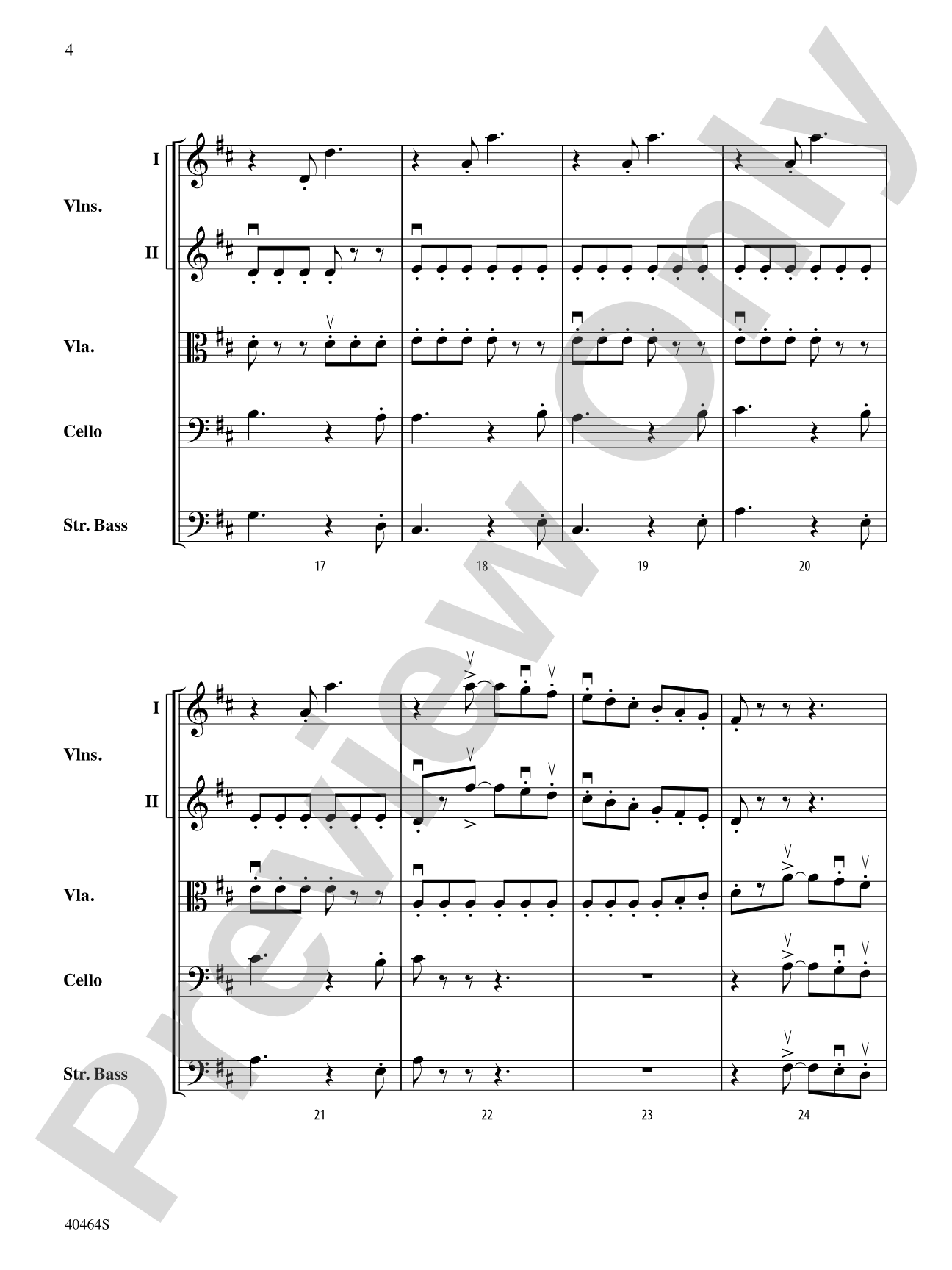
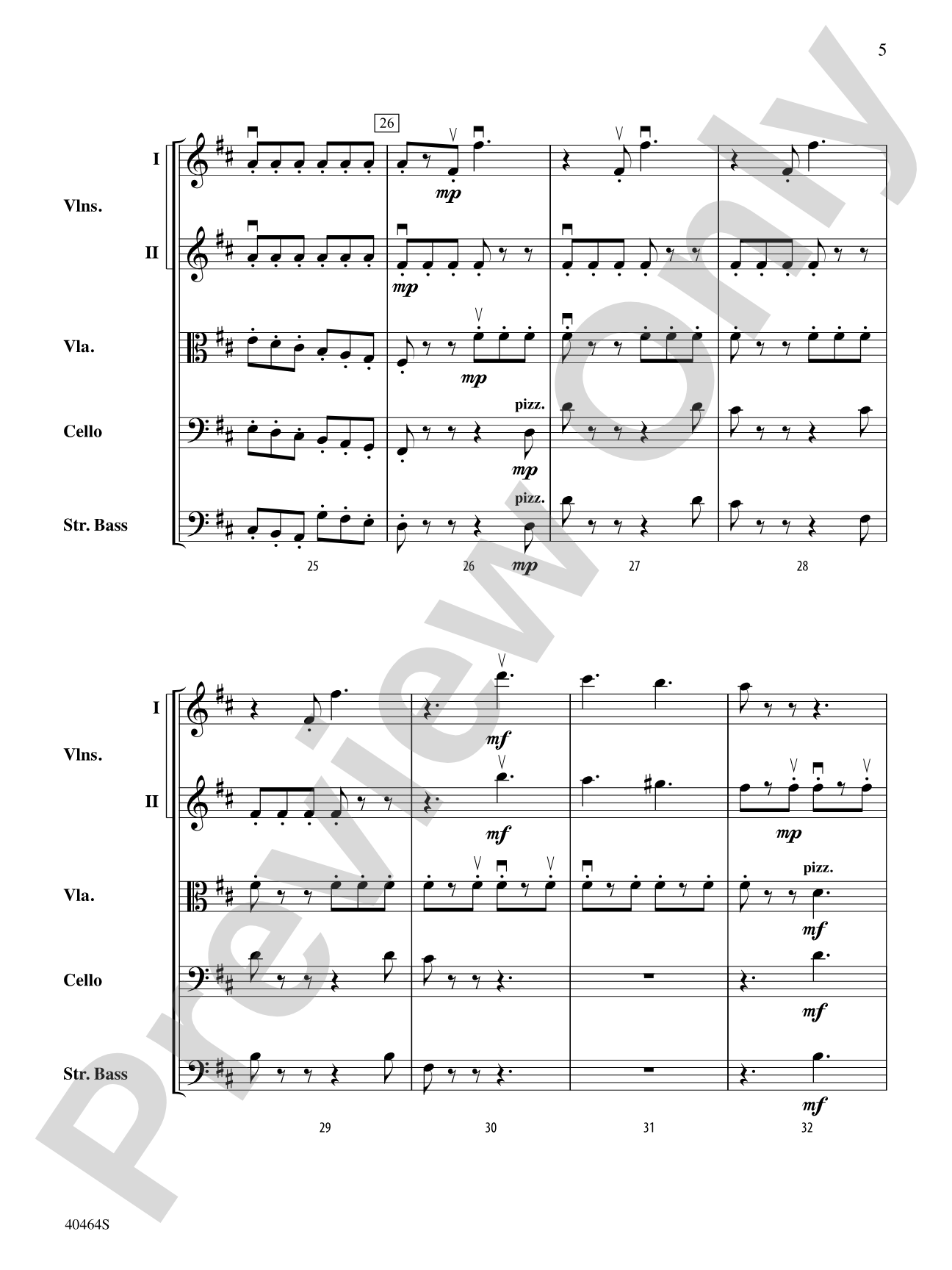
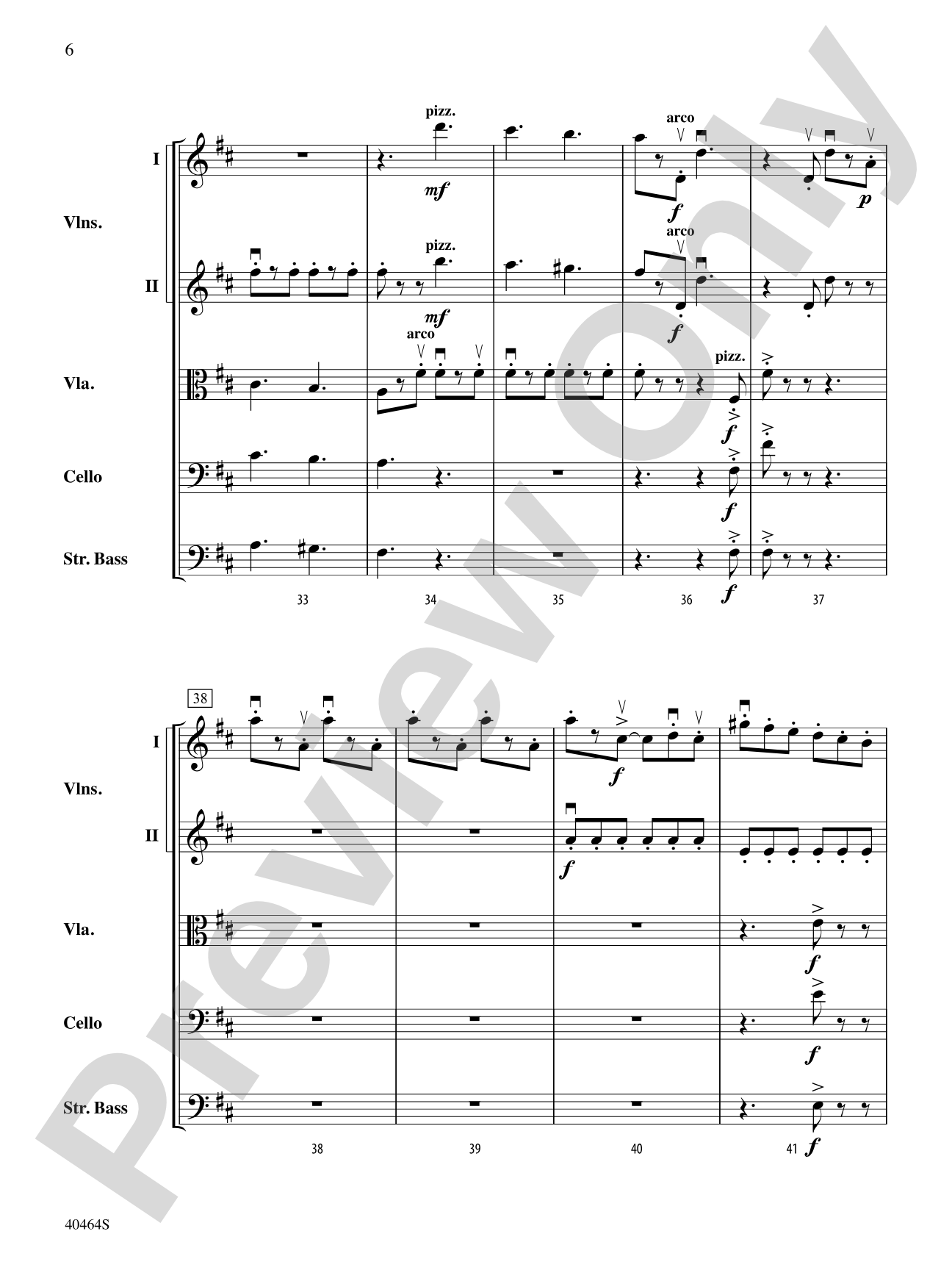
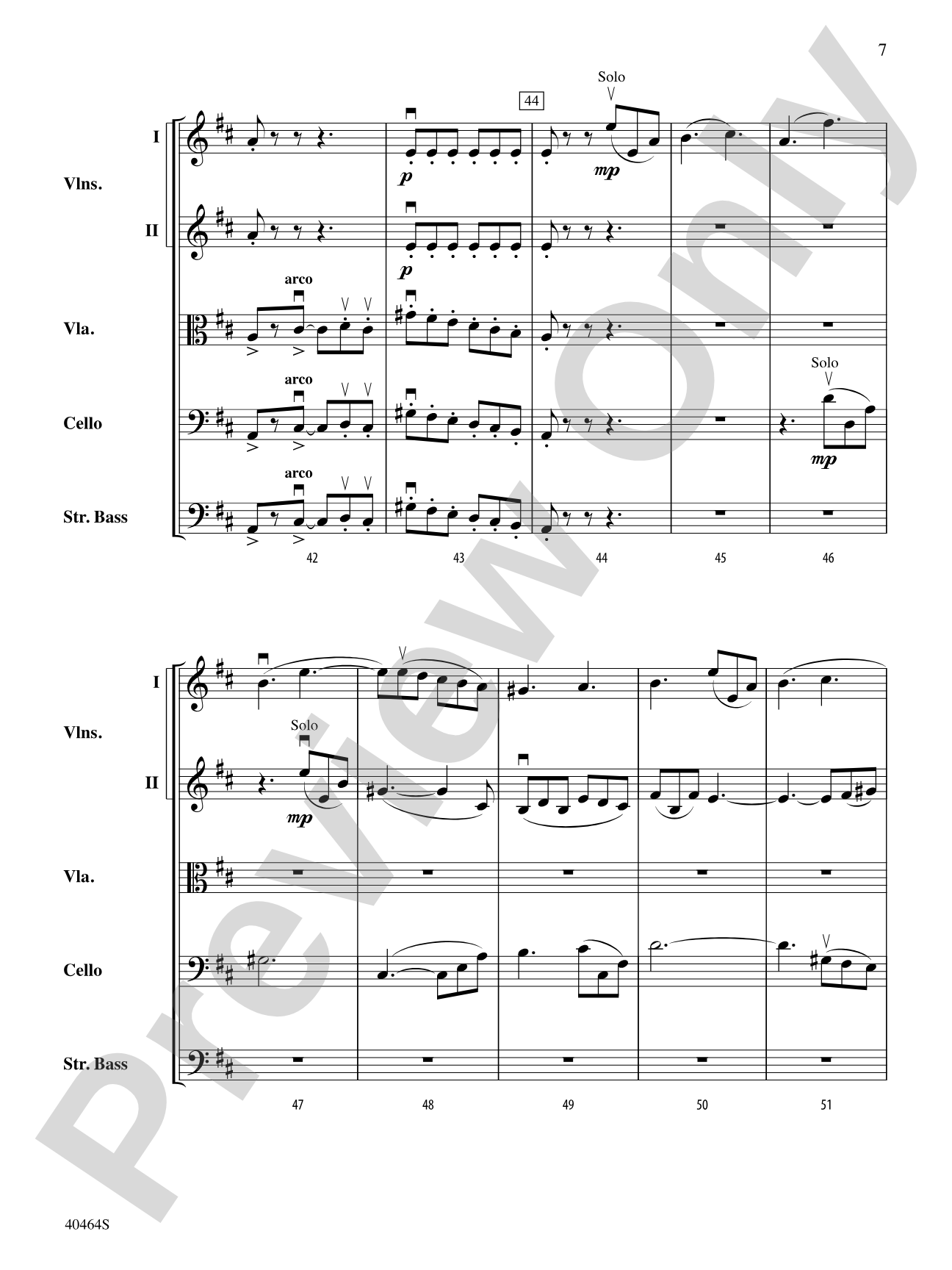
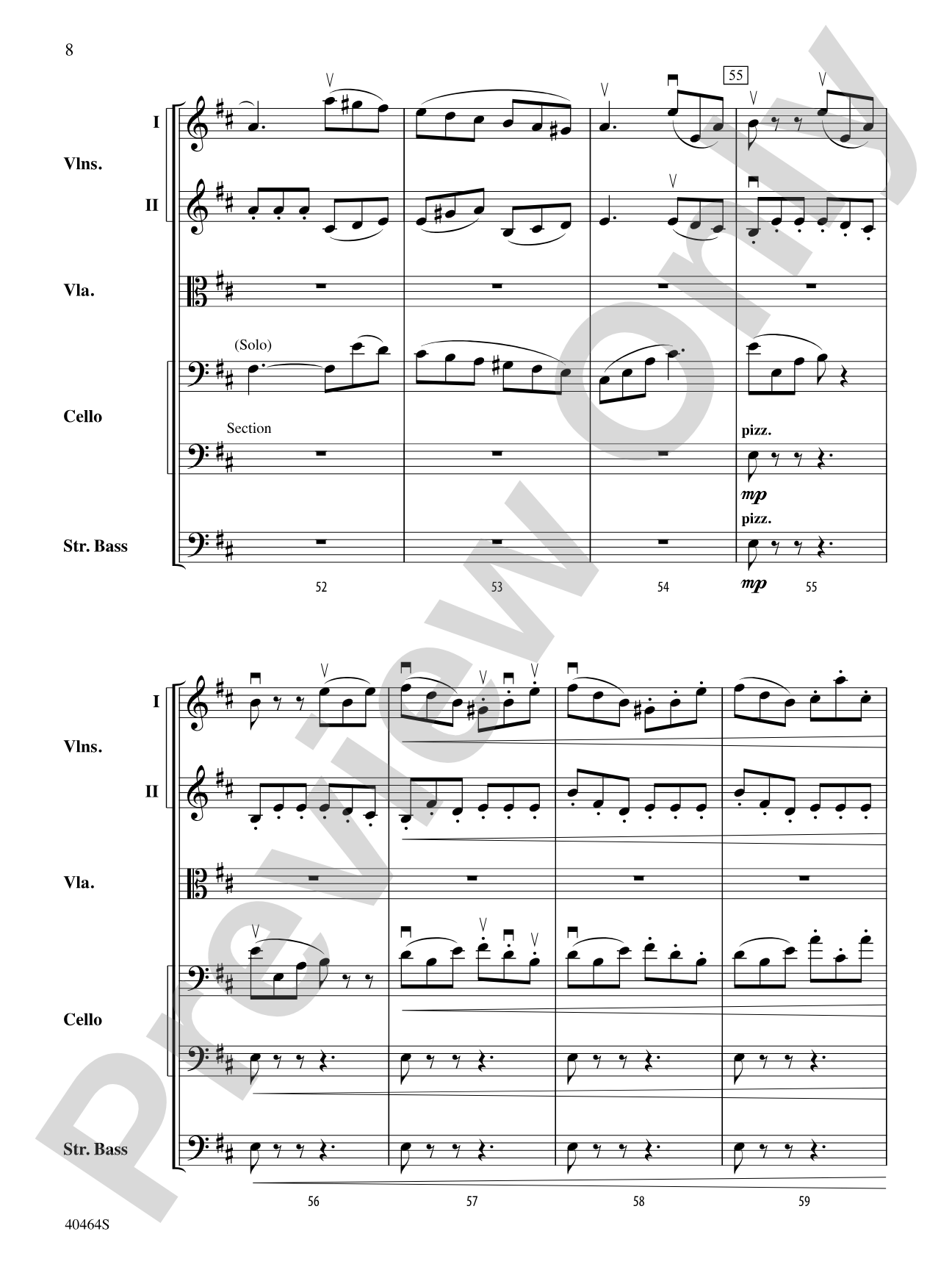
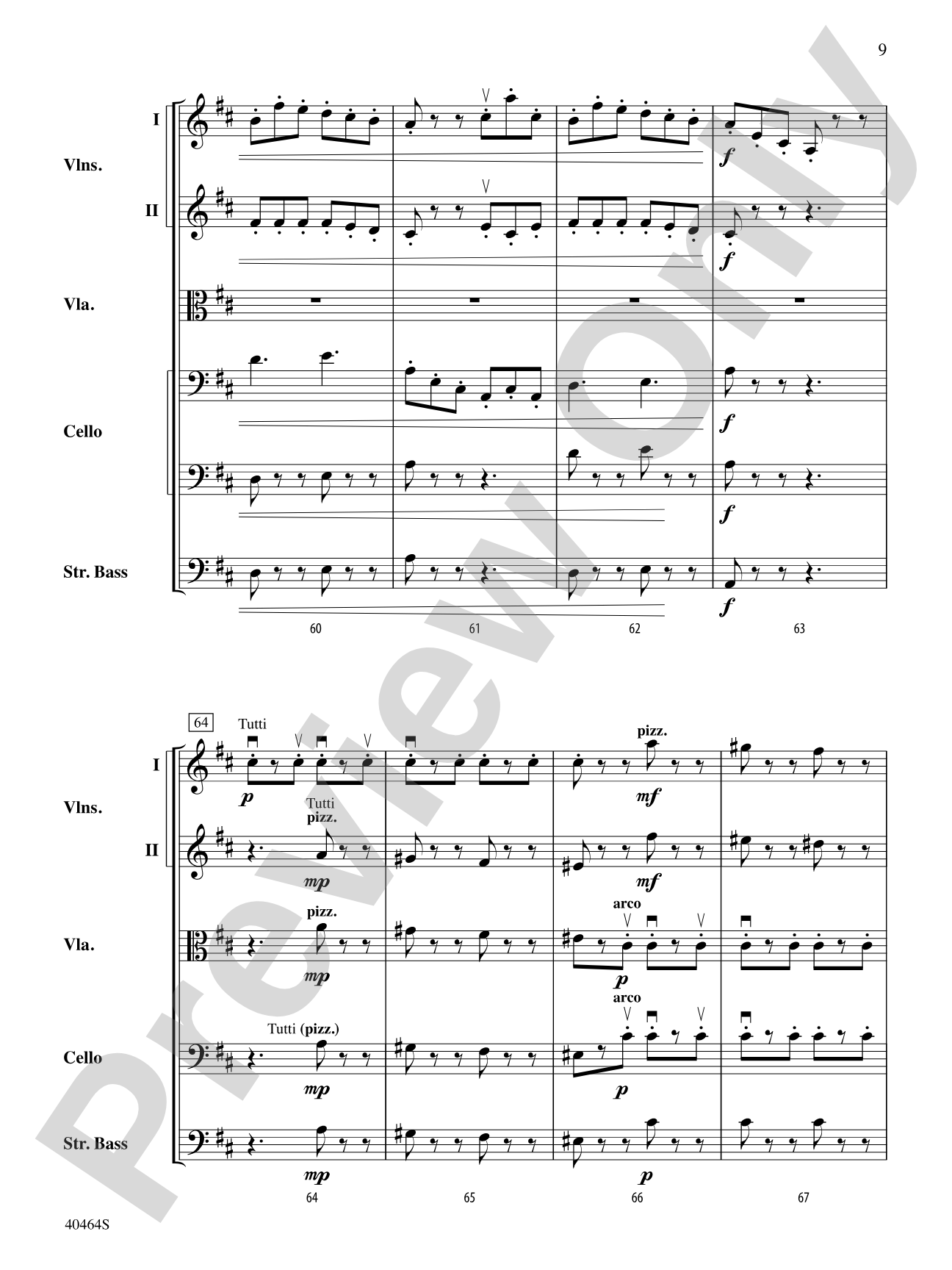
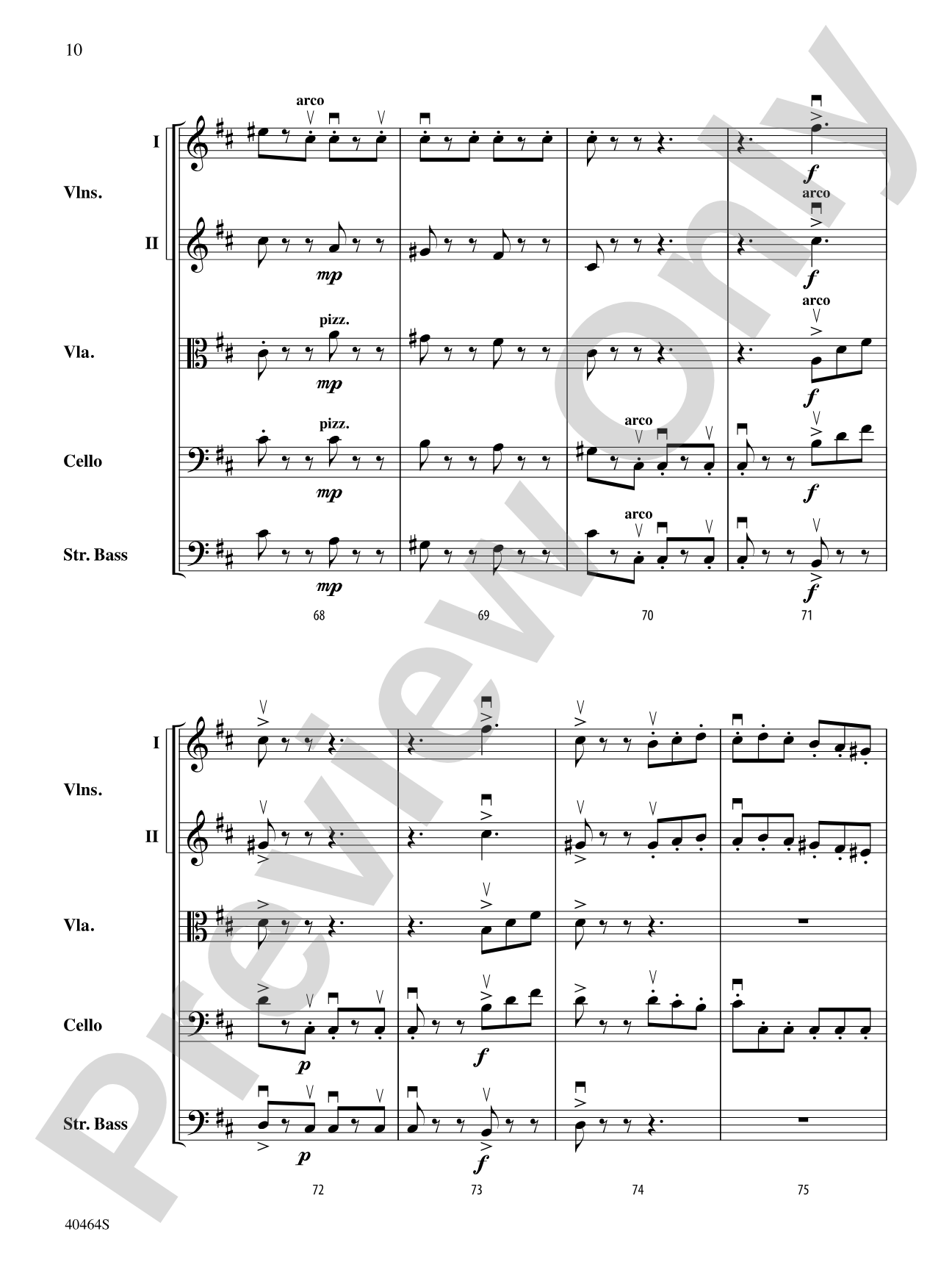
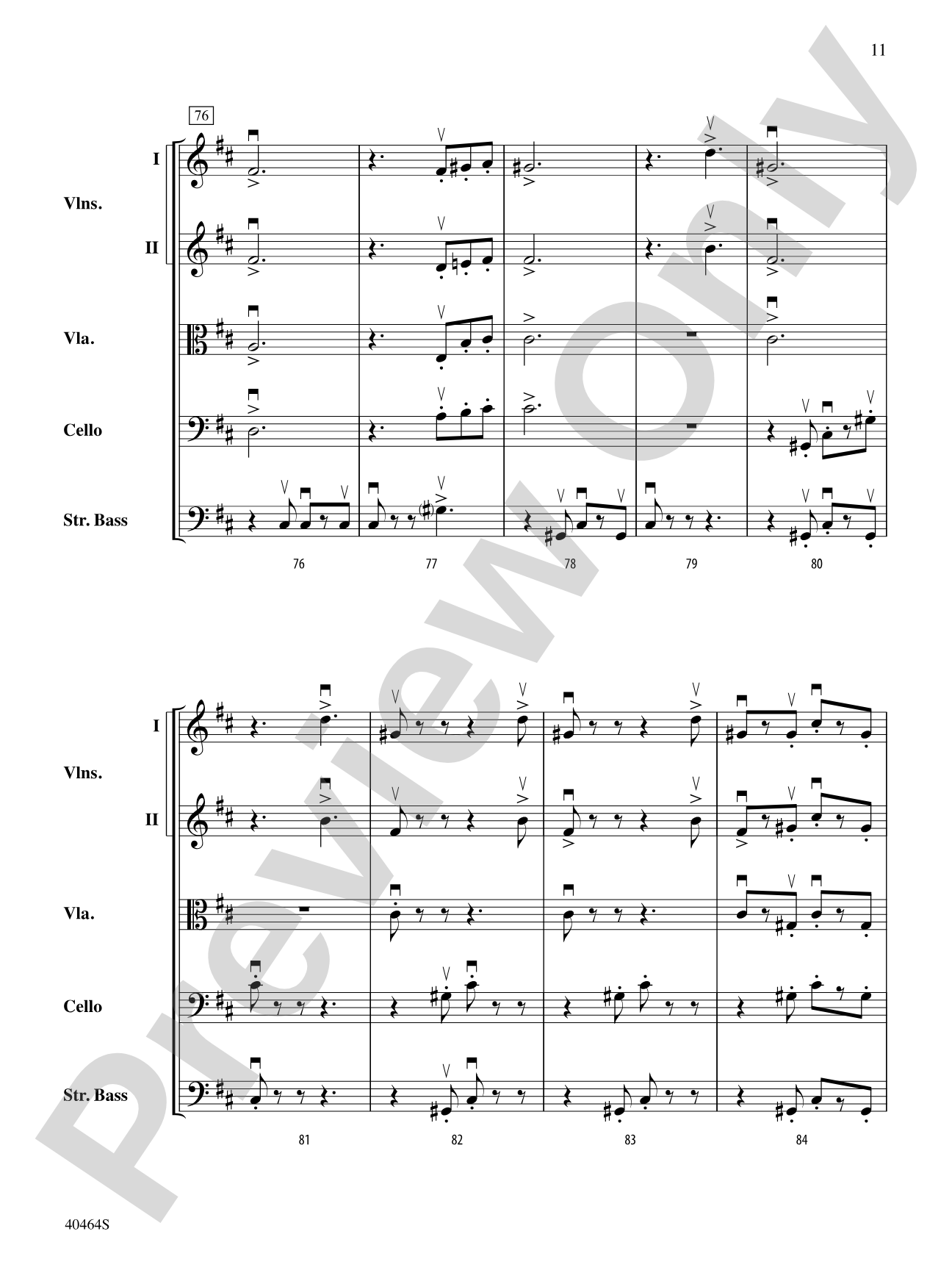
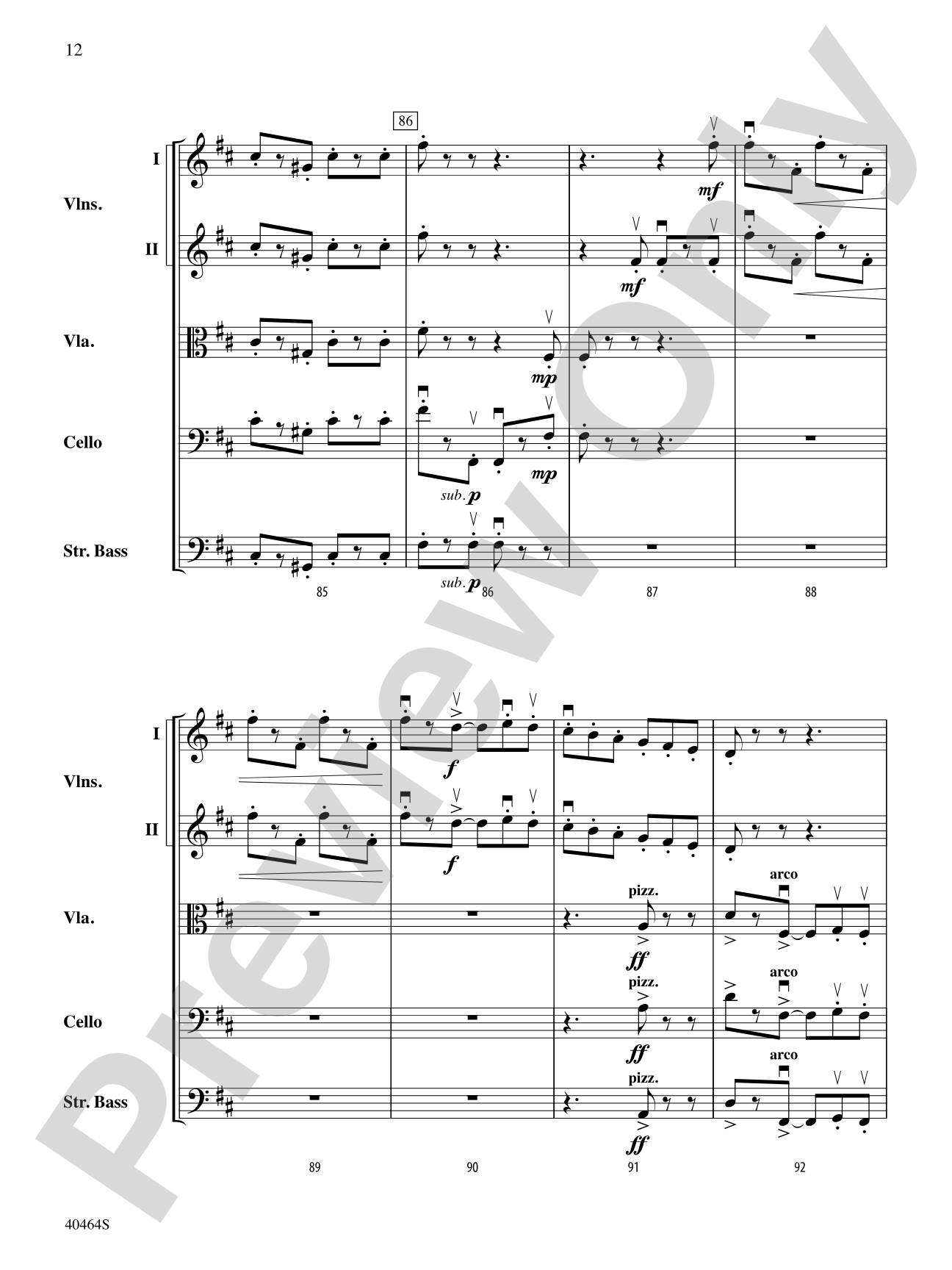
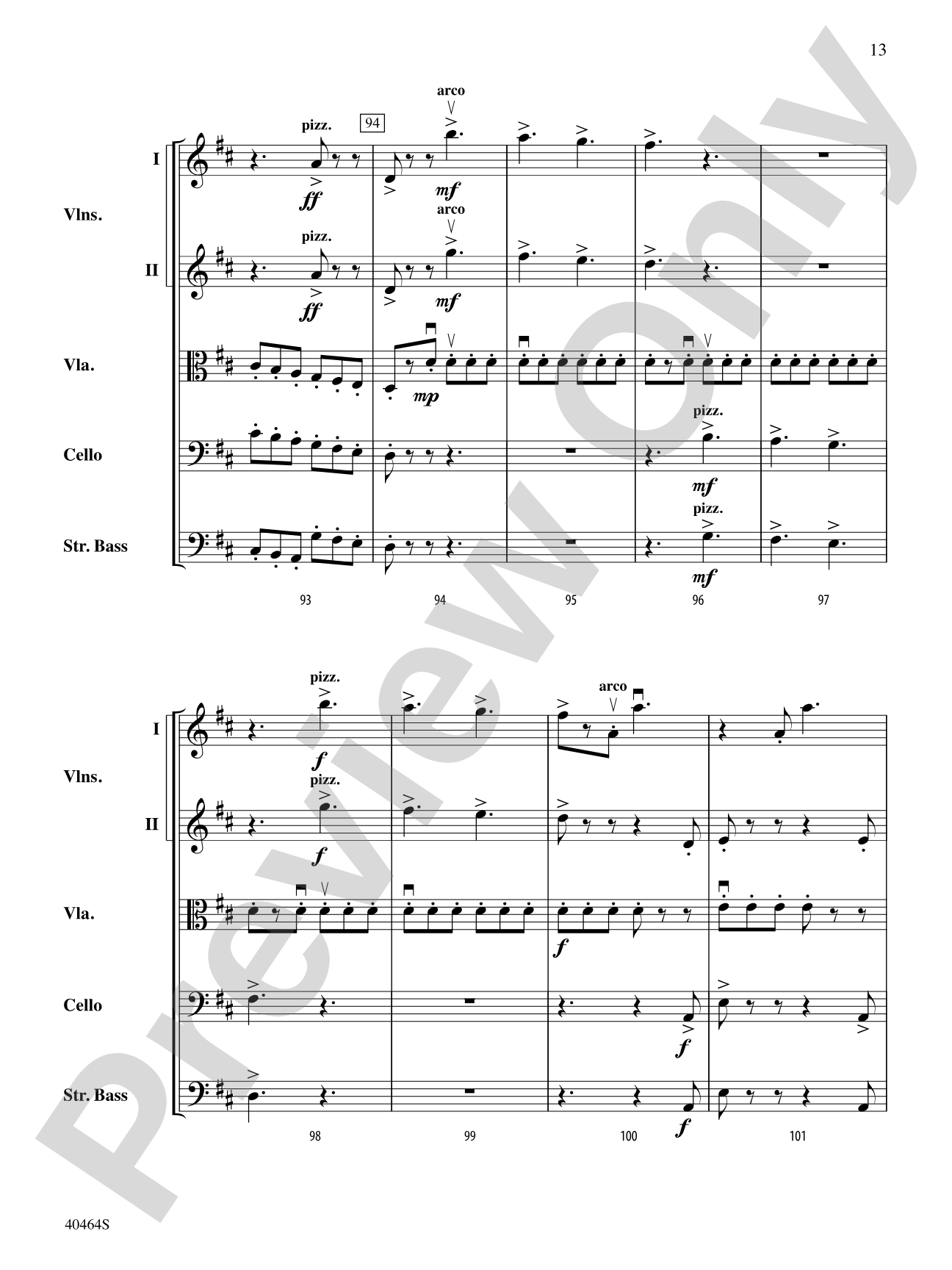
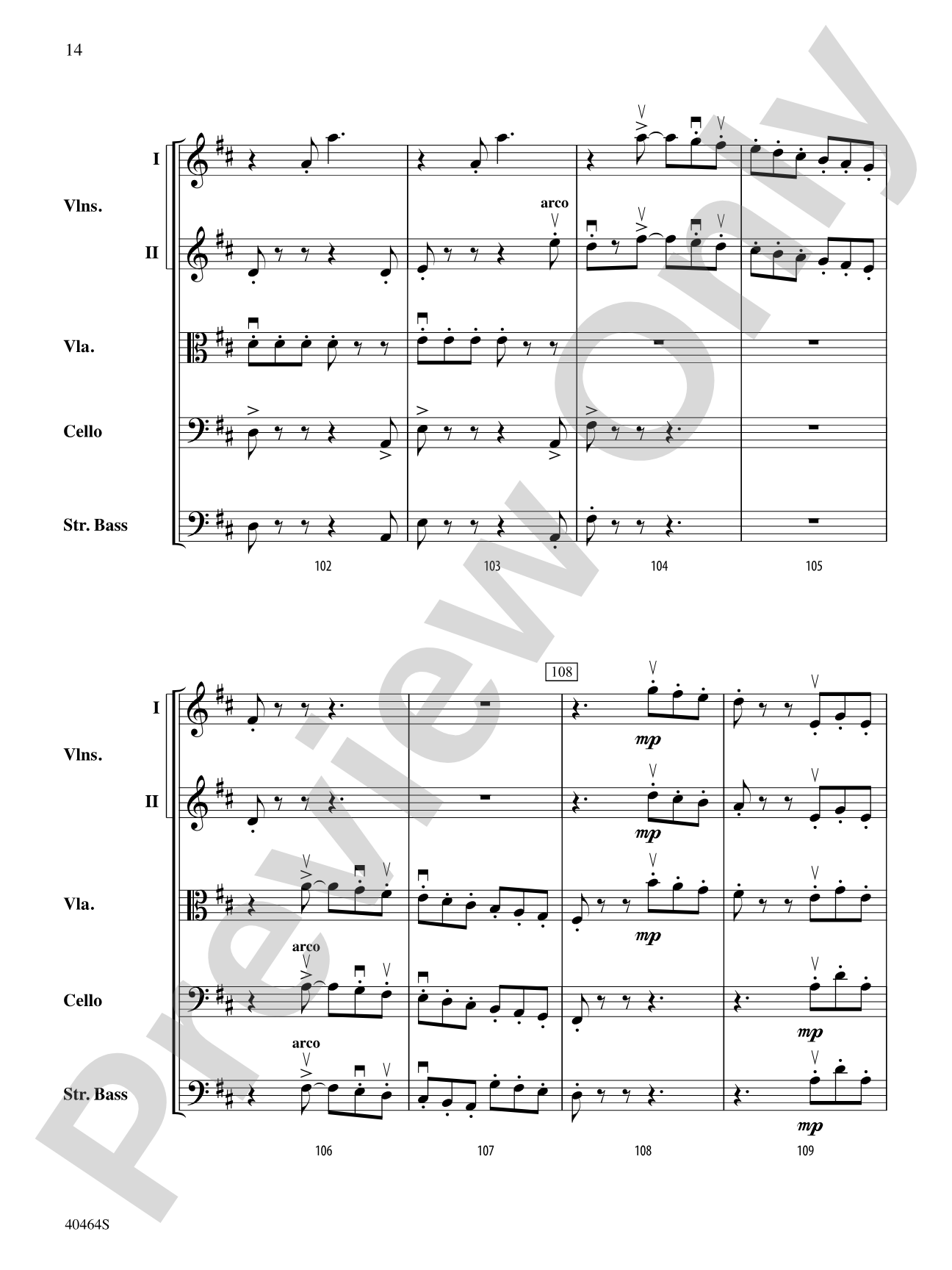
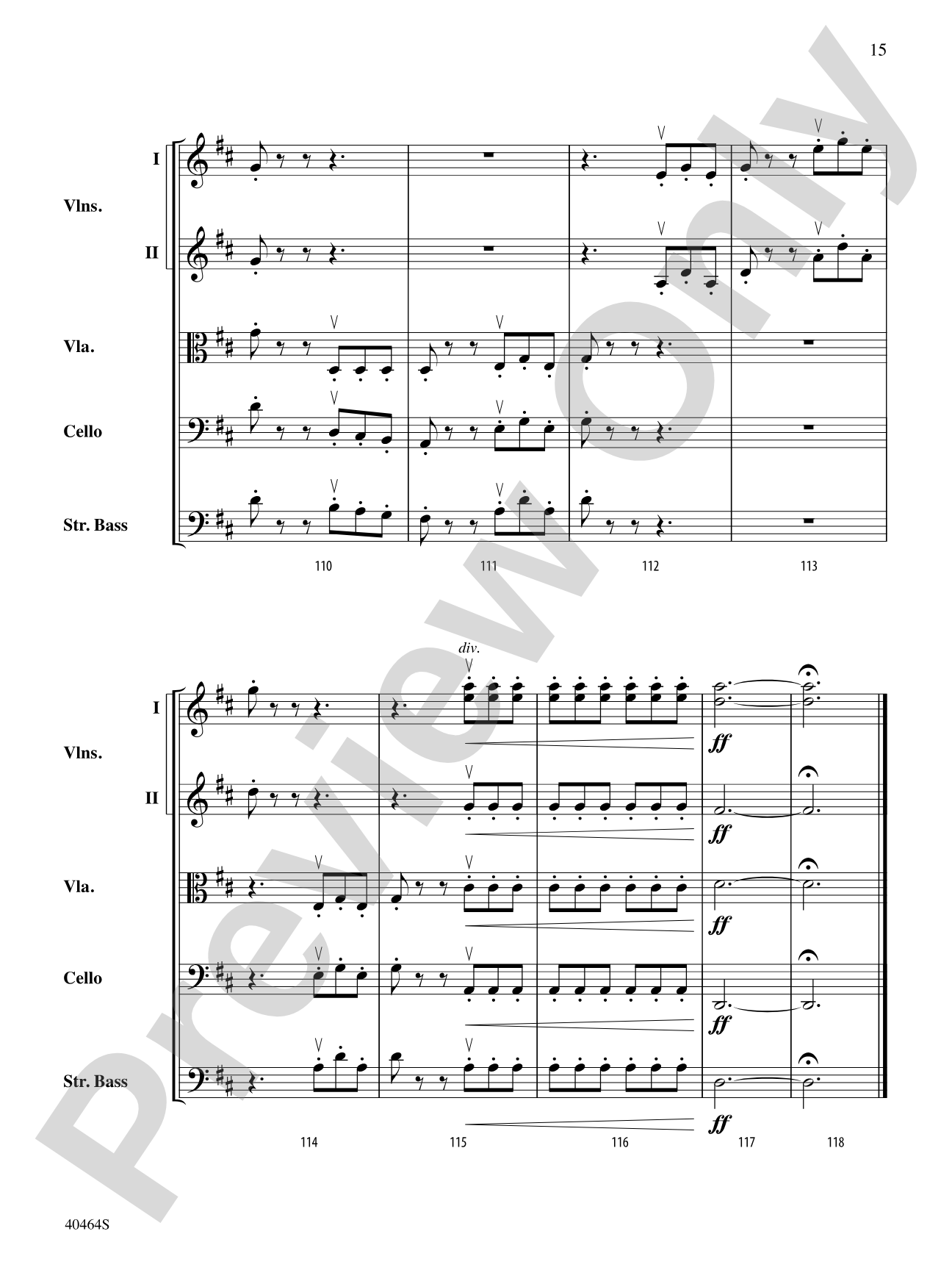


Allegro Giocoso: Score
By Michael Senturia
Grade: 3
Item: 00-PR-0004306
$9.00
Pickup currently not available
Description
Both joyous and playful as the title indicates, this snappy composition crackles with life and "what's next?" moments. Get ready to syncopate and play off the string! Inspired by Haydn's brand of musical humor, the piece also helps young players master the twists and turns of compound triple meter.


Don't just read it, hear it, play along with it, and watch your students grow with it. In MakeMusic Cloud, Allegro Giocoso: Score comes alive with professional accompaniment, adjustable tempo, and built-in practice tools that turn solo practice into real progress.
Open in the Player
Jump straight in and assign it today.
Start Your Free Trial
Open this title and explore the full library in minutes.
Sample Audio
1
Audio File
--:--
0:00
0:00
Sample Video
No sample videos found.
Additional Details
Series:
Highland/Etling String Orchestra
Publisher:
Alfred Music
Page Count:
124
SKU:
00-PR-0004306
More about this title
About the Composer: Michael Senturia
Michael Senturia is a composer and arranger whose work for young musicians balances accessibility with genuine musical substance. His compositions for string orchestra demonstrate a strong grasp of what Grade 3 players can handle technically while still delivering sophisticated humor and musical wit.
Why we love this
Senturia captures the irreverent spirit of Classical wit without relying on pastiche. The syncopated rhythms and unexpected harmonic turns keep players engaged bar by bar, while the compound triple meter presents a genuine pedagogical challenge that feels musical rather than imposed. It's the kind of piece that makes young musicians sit up straighter during rehearsal because something genuinely surprising happens on the next beat.
What to expect
Imagine a musical punchline delivered with precision and style. The piece dances in compound meter with surprising harmonic swerves and syncopations that catch you off guard, much like Haydn's own wit but expressed entirely through string textures. There's energy, humor, and a genuine sense of forward momentum, never lingering long enough to let the listener settle in.
Who it's for
Young string orchestras in Grade 3 (typically middle school ensembles with 2 years of experience). Conductors seeking concert or festival repertoire that develops musicianship alongside technical skills, particularly in metric and rhythmic independence.
How to get the most out of it
- Lock in the compound triple meter (9/8 or 3/3) as a section before rehearsing rhythmically complex passages; thinking in larger three-beat units instead of individual eighth notes anchors the syncopation.
- Lighten your tone and articulation throughout. The playfulness depends on crisp bow strokes and a sense of humor in how you attack notes, not on volume.
- Shape the "what's next?" moments by letting dynamic peaks breathe naturally rather than forcing them; trust the compositional surprises to land if you play with genuine musical line.
- Balance the parts carefully in tutti sections so the orchestration's layering reads clearly; this piece rewards good balance between first and second violins, violas, cellos, and basses.
How to use it
This works beautifully as a concert opener or as a festive centerpiece on a program that might otherwise lean toward lyrical or serious works. The bright character and moderate length make it an ideal contest or festival selection for a young orchestra building confidence in rhythmically advanced repertoire.
Skills your students will build
- Compound triple meter reading and execution (9/8, 3/3, or similar compound divisions)
- Syncopation against regular pulse
- Ensemble balance in contrapuntal passages
- Stylistic articulation and bow control for Classical humor
- Harmonic awareness and independence within moving parts