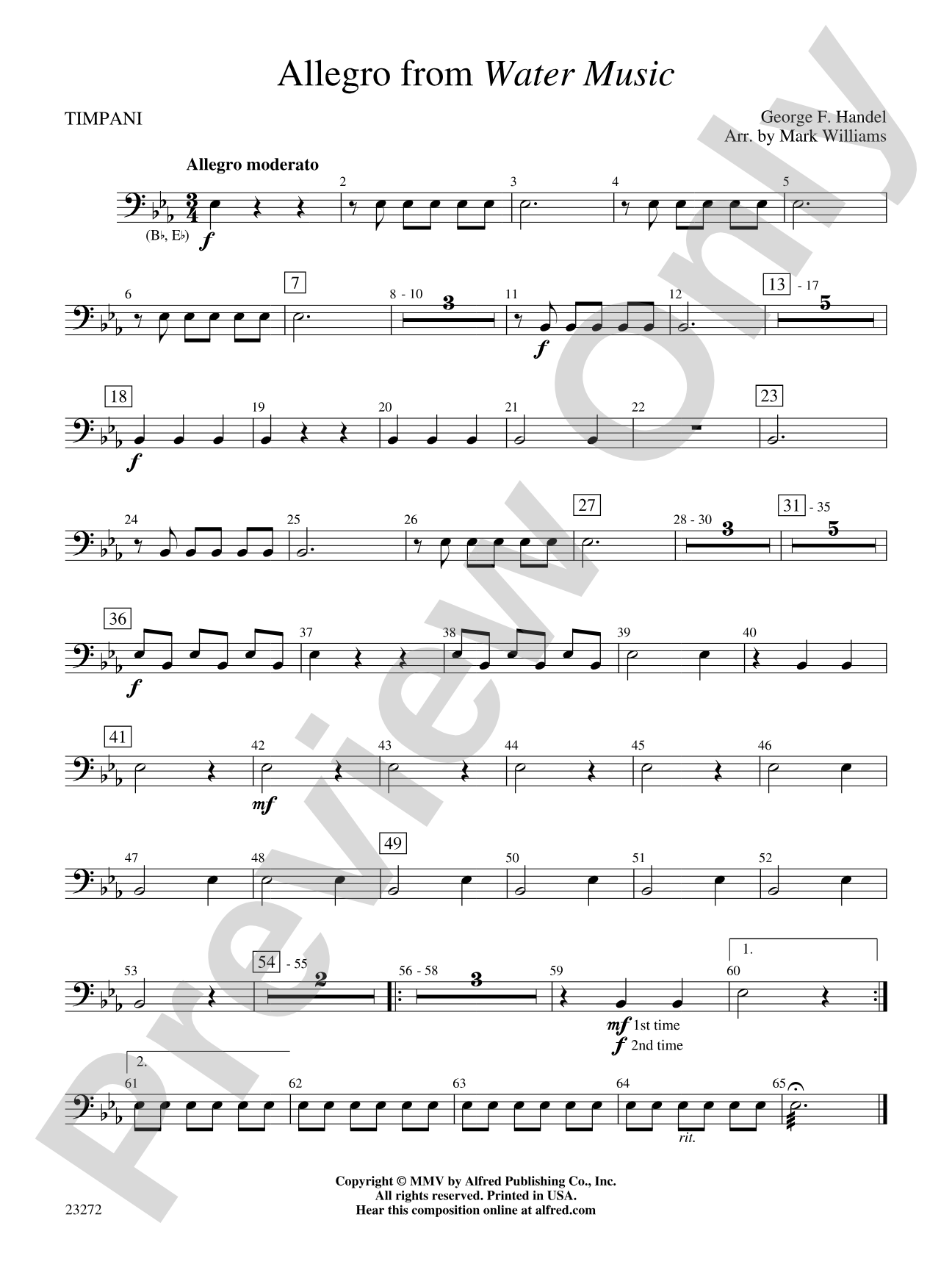
Allegro from Water Music: Timpani Sheet Music Preview

Allegro from Water Music: Timpani

By George Frideric Handel / arr. Mark Williams

Grade: 1 (Very Easy)

Item: 00-PC-0000622_TMP

Digital Download
$3.00
Description
Your audience is sure to recognize this famous melody from Water Music. Mark Williams has skillfully arranged this classic for your young band. You may also perform this work as the first part of a three-movement suite by following this arrangement with the Water Music arrangement found on page 21 of the Accent on Achievement, Book 2.

Don't just read it, hear it, play along with it, and watch your students grow with it. In MakeMusic Cloud, Allegro from Water Music: Timpani comes alive with professional accompaniment, adjustable tempo, and built-in practice tools that turn solo practice into real progress.

Sample Audio
0:00
0:00
Sample Video
Additional Details
Series: Accent on Achievement
Publisher: Alfred Music
Page Count: 122
SKU: 00-PC-0000622_TMP

More about this title

About the Composer: George Frideric Handel

George Frideric Handel (1685-1759) composed during the Baroque era and became one of the most celebrated musicians of his time. His mastery of melody, orchestration, and dramatic pacing made him a dominant figure in opera, oratorio, and instrumental music across Europe. Water Music stands among his most enduring works, originally composed for outdoor performance and remaining instantly recognizable to audiences nearly 300 years later.

For music educators, Handel's gifts as a melodist make his work ideal for young musicians. His phrases are clear and singable, his harmonic language is direct, and his instrumental writing suits developing bands. This Allegro movement captures the brightness and forward motion that define Baroque style without overwhelming early-level ensembles.

Why we love this

Mark Williams has preserved the immediate charm of Handel's melody while keeping the arrangement genuinely playable for Grade 1 musicians. The orchestration is transparent enough that young players hear themselves succeed without the piece losing its sophisticated identity. This is the kind of masterwork arrangement that builds student confidence and audiences recognize instantly.

What to expect

Bright and buoyant, with the rhythmic lightness of a dance. The melody floats effortlessly above a gently moving harmonic base, evoking the shimmer and flow of water. There is dignity in the writing without any weight; the piece moves forward with natural grace.

Who it's for

Beginning concert bands with solid rhythmic control and basic articulation skills will find this arrangement both accessible and rewarding. The Grade 1 level makes it suitable for middle school programs, smaller high school bands, or all-district and festival performances where young musicians need a crowd-pleasing showpiece.

How to get the most out of it

  • Maintain even eighth-note articulation throughout to capture the Baroque character; the style depends on clean tonguing rather than heavy phrasing.
  • Shape the melody with slight dynamic rises on approach notes to create forward momentum without relying on tempo changes.
  • Balance the harmonic foundation by bringing out inner voices and counter-lines; this exposes the craftsmanship of the arrangement and teaches ensemble listening.
  • Keep the overall tempo steady and dance-like rather than plodding; Allegro implies brightness and motion appropriate to water music's original outdoor context.

How to use it

Open a concert with this arrangement to establish audience engagement immediately. The fame of the melody draws listeners in right away and sets a confident tone for the ensemble. Alternatively, pair it with the Water Music arrangement on page 21 of Accent on Achievement, Book 2 to create a multi-movement suite that showcases repertoire selection and concert programming skill.

Skills your students will build

  • Baroque articulation and phrasing conventions
  • Steady ensemble tempo in dance-like contexts
  • Balancing melody with supporting harmonies
  • Clear single and double tonguing at moderate tempo
  • Listening to inner voices and counter-melodies

You May Also Like