Allegro from Sinfonia No. 6: Viola Sheet Music Preview

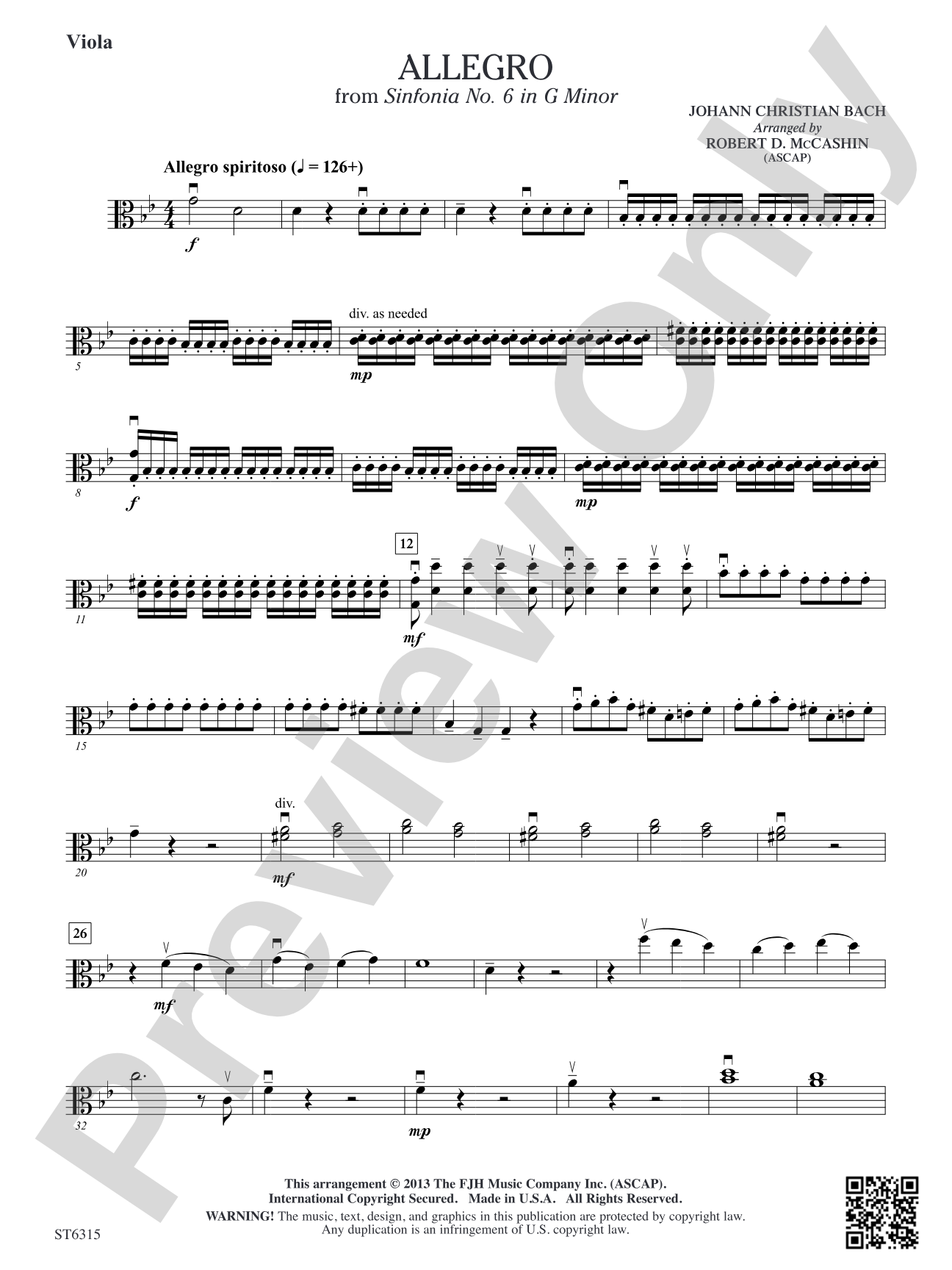
Allegro from Sinfonia No. 6: Viola

By Johann Christian Bach / arr. Robert D. McCashin

Grade: 4

Item: 98-PC-DST6315_VA1

Digital Download
$7.00
Description
Ideal as a concert opener or closer, this energetic work features strong rhythms and vibrant harmonies as the true genius of Johann Christian Bach shines through. Conductors can choose a tempo that fits their groups well without losing the engaging nature of the work. Certain to be a performer and audience favorite!

Don't just read it, hear it, play along with it, and watch your students grow with it. In MakeMusic Cloud, Allegro from Sinfonia No. 6: Viola comes alive with professional accompaniment, adjustable tempo, and built-in practice tools that turn solo practice into real progress.

Sample Audio
0:00
0:00
Sample Video
Additional Details
Series: FJH String Orchestra
Publisher: The FJH Music Company, Inc.
SKU: 98-PC-DST6315_VA1

More about this title

About the Composer: Johann Christian Bach

Johann Christian Bach (1735-1782) was the youngest son of Johann Sebastian Bach and carved his own distinctive path in the Classical era. While his father's music grounded itself in the Baroque tradition, J.C. Bach absorbed the emerging galant style and became a bridge between two musical worlds. His symphonies and instrumental works circulated widely across Europe and significantly influenced the young Mozart; Bach's ability to balance accessibility with genuine musical substance made him one of the most performed composers of his lifetime.

In the context of string orchestra repertoire, Bach's works remain invaluable teaching tools. His writing is transparent without being thin, and his harmonic language speaks clearly without sacrificing sophistication. String directors appreciate his music because it develops musicianship while remaining genuinely engaging for players and audiences alike.

Why we love this

This arrangement captures the rhythmic vitality and clean harmonic language that made Bach's symphonies essential concert fare in the 18th century, yet it works beautifully for contemporary string groups. The flexibility in tempo choice means your orchestra can own this piece regardless of technical facility or rehearsal time, and it sits perfectly as either a concert gateway or finale without requiring extensive preparation.

What to expect

Energetic and forward-moving, with the kind of straightforward rhythmic confidence that defined the Classical symphony's appeal. The vibrant harmonies and strong instrumental lines create an immediate sense of purpose and musicianship, inviting both players and listeners into a world of clarity and spirited engagement.

Who it's for

String orchestra conductors seeking a Grade 4 work that combines genuine musical substance with approachability. This arrangement suits groups with solid fundamentals and the desire to explore 18th-century style without navigating original Baroque textures.

How to get the most out of it

  • Bring clarity to the strong rhythmic figures by having section leaders establish a confident pulse in the first rehearsal; let the ensemble follow their lead before layering in expressive details.
  • Balance the vibrant harmonies by checking voice leading in tutti passages, ensuring inner parts cut through without overpowering the melodic line.
  • Experiment with your chosen tempo in context of the full concert; this work responds well to slightly brighter tempos that highlight its energy, but the arranger's design allows for flexibility that suits your group's character.
  • Shape phrases with conviction rather than rubato; Bach's Classical idiom responds better to architectural clarity than romantic flexibility.

How to use it

The concert opener or closer positioning is well earned; this work has enough personality to command attention without requiring an extended build. It pairs effectively alongside longer Baroque or early Classical works, or serves as a bridge between Romantic repertoire and contemporary pieces on a diverse program.

Skills your students will build

  • Baroque and early Classical style recognition and execution
  • Transparent voice leading and balance in Classical textures
  • Rhythmic precision and ensemble independence
  • Tempo flexibility and conductor-ensemble communication
  • Dynamic shaping within Classical phrase structures

You May Also Like