Allegro from Serenade No 1 in D: Violin 2 Sheet Music Preview

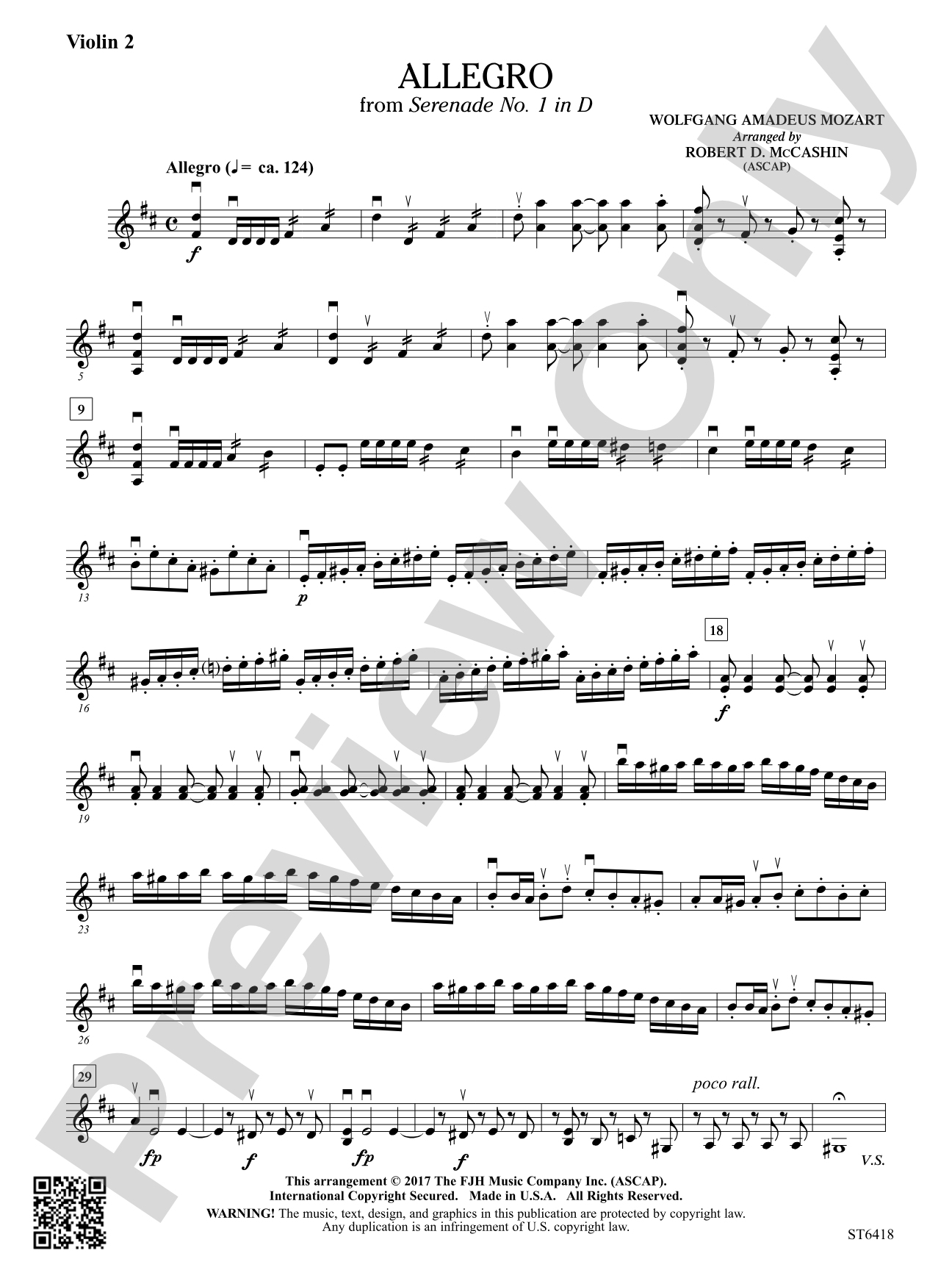
Allegro from Serenade No 1 in D: Violin 2

By Wolfgang Amadeus Mozart / arr. Robert D McCashin

Grade: 3

Item: 98-PC-DST6418_VN2

Digital Download
$7.00
Description
This delightful Serenade in D (K. 100/62a) was completed in 1769, when Mozart was a mere 13 years of age (and this is an ideal fact to share with students)! The first movement, even though composed at such a young age, provides challenges for every musician in the ensemble and is musically appealing to players and audience. This would be an outstanding addition at any point in a program but works particularly well as a concert closer!

Allegro from Serenade No 1 in D: Violin 2 isn't in MakeMusic Cloud just yet...but it could be. Let us know you'd like to see it, and you'll help shape what comes next. In the meantime, start a free trial and dive into thousands of interactive titles your students can play along with today.

Sample Audio
0:00
0:00
Sample Video
Additional Details
Series: FJH String Orchestra
Publisher: The FJH Music Company, Inc.
SKU: 98-PC-DST6418_VN2

More about this title

About the Composer: Wolfgang Amadeus Mozart

Wolfgang Amadeus Mozart (1756-1791) was an Austrian composer whose output spanned nearly every musical form of his era. Born in Salzburg, he began composing before age five and completed over 600 works across symphonies, concertos, operas, chamber music, and sacred music. His ability to write idiomatically for every instrument while maintaining melodic brilliance and harmonic sophistication made him a model for generations of composers.

Mozart's serenades occupy a unique place in his catalog, blending the elegance of court music with genuine substance. These works were written for occasions requiring both entertainment and musical depth, and they showcase his gift for making every section of an ensemble feel essential. The fact that he composed this Serenade at thirteen reveals a compositional maturity that students find both inspiring and humbling.

Why we love this

This movement combines genuine musical interest with approachable orchestration. Every voice gets moments to lead, and the rhythmic vitality keeps young players engaged without overwhelming them technically. Closing a concert with Mozart's crisp, confident Allegro leaves audiences satisfied in a way that feels both unpretentious and genuinely musical.

What to expect

The piece radiates the courtly elegance Mozart mastered so effortlessly: graceful but not delicate, energetic without aggression. The opening theme dances with an almost conversational ease, moving between instruments as if musicians were trading witty remarks at a salon.

Who it's for

String orchestras at the Grade 3 level will find this movement accessible yet musically worthwhile. Young musicians familiar with baroque articulation and basic sonata form concepts will engage deeply with the structure and content.

How to get the most out of it

  • Shape the opening theme with clear articulation in the violins; the two-note figure benefits from separation that lets the melody breathe without rushing.
  • Balance the accompanying figures in violas and second violins so they support without masking the primary melodic line.
  • Keep the tempo brisk but not breathless. Allegro here means spirited, not frantic; younger orchestras often gain better ensemble precision by resisting the urge to accelerate.
  • Listen for intonation in the sustained notes that underpin the melodic passages; these harmonic foundations must be rock-solid for the piece to speak cleanly.

How to use it

The compact duration and uplifting character make this an excellent concert closer, especially if your program includes heavier romantic or contemporary works earlier. It also pairs well in a chronological survey of serenade literature or as a centerpiece when programming multiple Mozart works at different grade levels.

Skills your students will build

  • Baroque articulation and phrasing in the classical context
  • Reading divisi string parts and balancing multiple written lines
  • Maintaining steady tempo under forward harmonic motion
  • Responding to text-book sonata form expectations (exposition and development awareness)

You May Also Like