
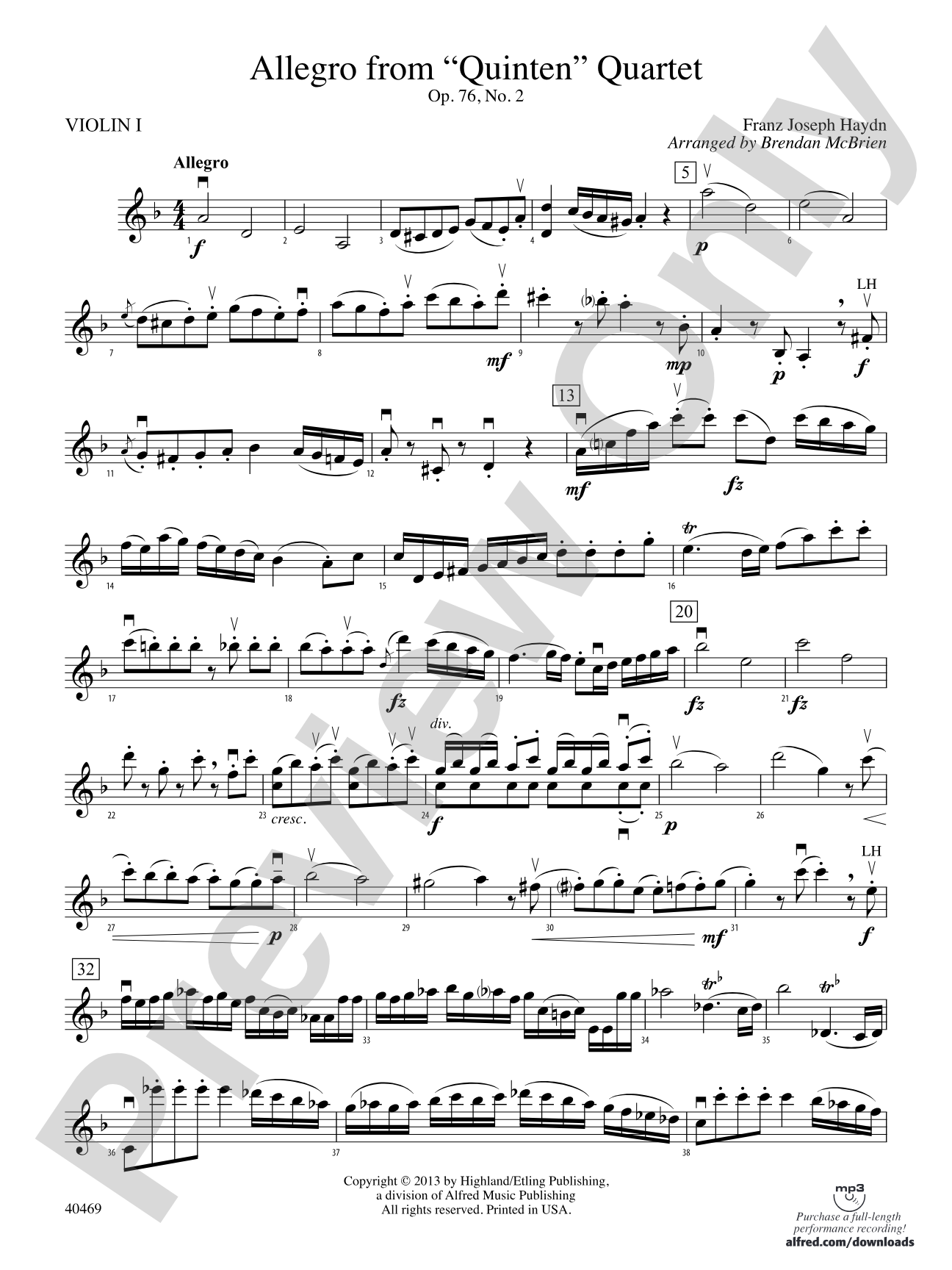

Allegro from "Quinten" Quartet: 1st Violin
Op. 76, No. 2
By Franz Joseph Haydn / arr. Brendan McBrien
Grade: 3.5
Item: 00-PC-0016001_VN1
$5.99
Pickup currently not available
Description
This Haydn quartet movement is a powerful example of the "Storm and Stress" style (Sturm und Drang) favored by the composer in many of his famous symphonies. Set in the dark key of D minor, rhythmic and harmonic agitation propel the music forward as Haydn develops its four-note theme through a variety of methods. Both musicians and audience will be captivated by this chamber music masterpiece set for string orchestra with an added bass part to strengthen its harmonic movement, making this the perfect concert or contest closer for your orchestra.
This title is available in MakeMusic Cloud.


This title is available in MakeMusic Cloud.
Don't just read it, hear it, play along with it, and watch your students grow with it. In MakeMusic Cloud, Allegro from "Quinten" Quartet: 1st Violin comes alive with professional accompaniment, adjustable tempo, and built-in practice tools that turn solo practice into real progress.
Open in the Player
Jump straight in and assign it today.
Start Your Free Trial
Open this title and explore the full library in minutes.
Sample Audio
1
Audio File
--:--
0:00
0:00
Sample Video
No sample videos found.
Additional Details
Series:
Highland/Etling String Orchestra
Publisher:
Alfred Music
Page Count:
124
SKU:
00-PC-0016001_VN1
More about this title
About the Composer: Franz Joseph Haydn
Franz Joseph Haydn (1732-1809) shaped the Classical symphony and string quartet into the forms we know today. His prolific output across every major genre established conventions that composers from Mozart to Beethoven would build upon, making him one of the most influential figures in Western music.
During the 1760s-1770s, Haydn embraced the Sturm und Drang (Storm and Stress) aesthetic that appealed to his era's intellectual and emotional currents. This period produced some of his most dramatic and harmonically adventurous works, including the "Quinten" Quartet, which exemplifies how he balanced structural clarity with passionate intensity.
Why we love this
This arrangement preserves every ounce of Haydn's dramatic intent while making the piece accessible to student orchestras. The added bass part deepens the harmonic foundation without cluttering the texture, and at Grade 3.5, the writing sits comfortably for developing musicians who are ready to tackle genuine masterwork repertoire with character and teeth.
What to expect
Dark, restless, and propulsive. The D minor tonality and relentless rhythmic drive create an atmosphere of intellectual urgency rather than mere agitation, with moments of harmonic surprise that recall Haydn's most forward-thinking chamber writing. This is music that grips the listener from its first notes.
Who it's for
String orchestras at the intermediate to upper-intermediate level who are ready to perform a major Classical work with dramatic substance. This arrangement serves students looking to understand how the greatest composers of the era structured and developed ideas, and it works equally well for concert and festival programming.
How to get the most out of it
- Shape the four-note theme with clear articulation and dynamic contrast so it registers across the harmonic turbulence; this motif is your anchor through all the development.
- Balance the first violins' melodic lines against the inner voices' rhythmic propulsion. Both layers matter equally to the Sturm und Drang aesthetic.
- Find the pulse beneath the harmonic tension rather than letting rhythmic agitation obscure the beat; this steadies the ensemble and lets the darker D minor tonality speak more powerfully.
- Use the fermatas strategically for dramatic effect, but keep the overall arc moving forward so the piece lands as a genuine concert closer, not a slow burn.
How to use it
Program this as your concert or contest finale to leave audiences with a memorable impression of ensemble sophistication and control. It pairs naturally with lighter Haydn symphonic movements or earlier-period string repertoire on the same concert, creating a dramatic arc that showcases the orchestra's range.
Skills your students will build
- Motivic development and variation techniques across multiple instrumental lines
- Balancing melodic interest with rhythmic accompaniment patterns
- Performing in minor keys with harmonic sophistication
- Ensemble precision in rapid, energetic material
- Interpreting Classical-era phrasing and style conventions