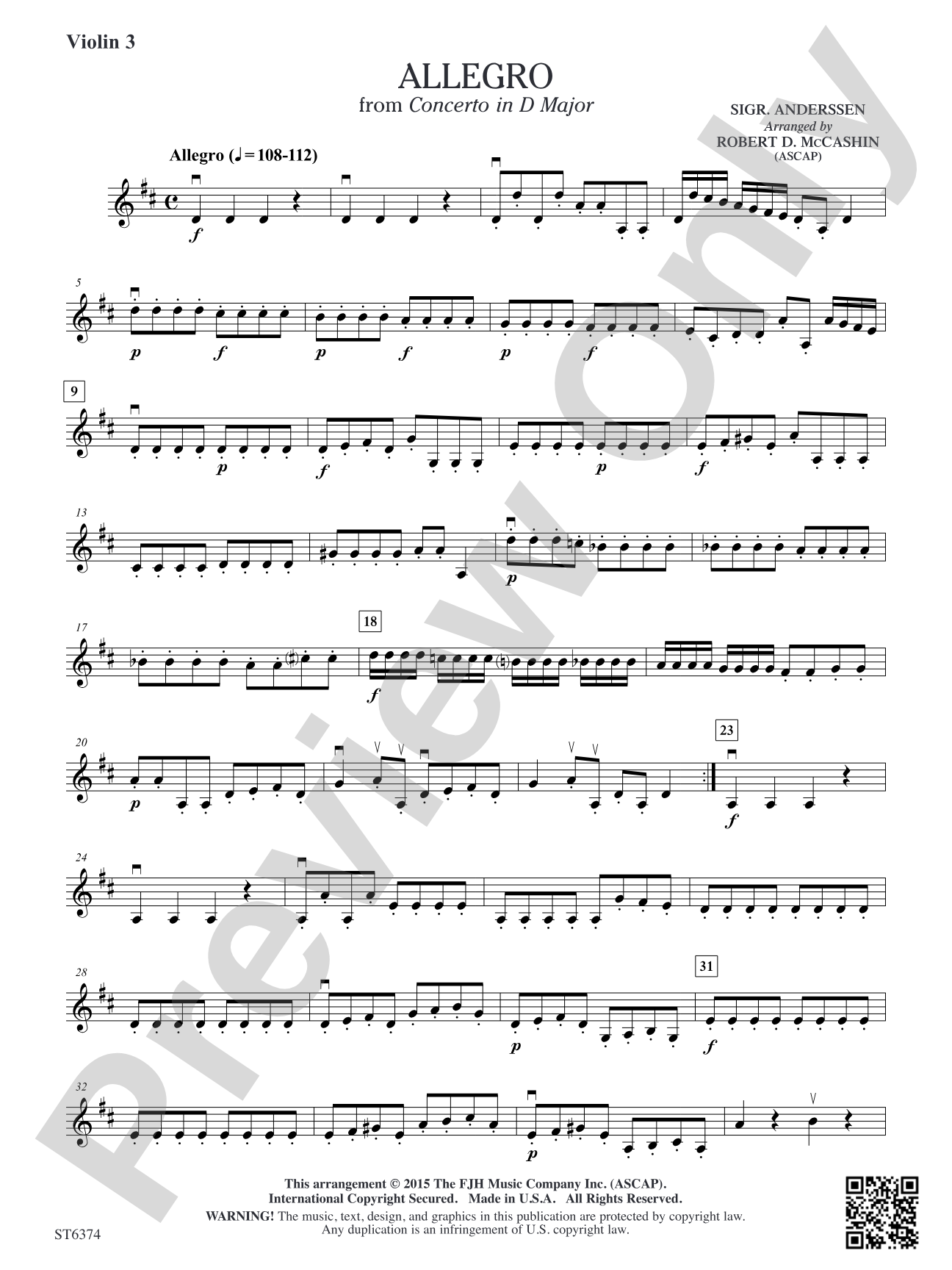
Allegro from Concerto in D Major: Violin 3 (Viola T.C.) Sheet Music Preview

Allegro from Concerto in D Major: Violin 3 (Viola T.C.)

By Sigr. Andersen

Grade: 3.5

Item: 98-PC-DST6374_VN3

Digital Download
$7.00
Description
This wonderful Baroque work by Swedish composer Anderssen is full of energy and harmonic excitement. This arrangement reduces some of the technical demands without compromising the artistic integrity of the original. An excellent classical addition to any concert!

Allegro from Concerto in D Major: Violin 3 (Viola T.C.) isn't in MakeMusic Cloud just yet...but it could be. Let us know you'd like to see it, and you'll help shape what comes next. In the meantime, start a free trial and dive into thousands of interactive titles your students can play along with today.

Sample Audio
0:00
0:00
Sample Video
Additional Details
Series: FJH String Orchestra
Publisher: The FJH Music Company, Inc.
SKU: 98-PC-DST6374_VN3

More about this title

About the Composer: Sigr Andersen

Sigr Andersen represents the Swedish Baroque tradition, a period when Nordic composers absorbed the formal structures and instrumental idioms of Continental Europe while maintaining their own distinctive voice. His concertos demonstrate the hallmarks of the era: clear harmonic architecture, energetic rhythmic drive, and writing that balances technical display with melodic substance.

Why we love this

Andersen's Allegro captures everything that makes Baroque string writing so effective: driving rhythmic momentum, transparent textures, and harmonic clarity that feels fresh even in a contemporary rehearsal room. The arrangement respects the original's musical architecture while giving younger orchestras genuine access to a substantive classical work without getting bogged down in technical hurdles.

What to expect

Energetic and spirited, with the kind of forward momentum that feels effortless once the ensemble locks in. The harmonic language is stable enough to feel grounded, but there's genuine excitement in the voice leading and the way the textures shift between homophonic and imitative passages.

Who it's for

String orchestras at the intermediate level (grades 3-4) looking for genuine Baroque repertoire that doesn't require advanced technique. This works equally well for a full string orchestra or a smaller ensemble with one player per part.

How to get the most out of it

  • Maintain separation between the violin parts in fugal passages; clarity matters more than blend at this grade level.
  • Shape the phrase arcs rather than driving straight through; this music breathes in four-bar units.
  • Balance the viola and cello parts carefully during harmonic shifts so the harmonic excitement comes through, not just the violin melody.
  • Keep the overall tempo steady but allow for natural rubato in the cadential figures to let the harmonic resolution land.

How to use it

Pair this with contemporary or romantic-era pieces for a concert that traces how classical forms evolved, or program it as an opener to establish the orchestra's command of articulation and rhythmic clarity before moving into larger works. It works particularly well in youth orchestra concerts where you want to showcase musicianship without pushing technique beyond the ensemble's readiness.

Skills your students will build

  • Baroque articulation and phrasing conventions
  • Listening for harmonic function during ensemble playing
  • Balancing melody and accompaniment voices in transparent textures
  • Maintaining steady tempo while shaping phrase contours
  • Reading and executing fugal writing with rhythmic precision

You May Also Like