Allegro Con Brio from Symphony No. 8 (First Movement): Violin 2 Sheet Music Preview

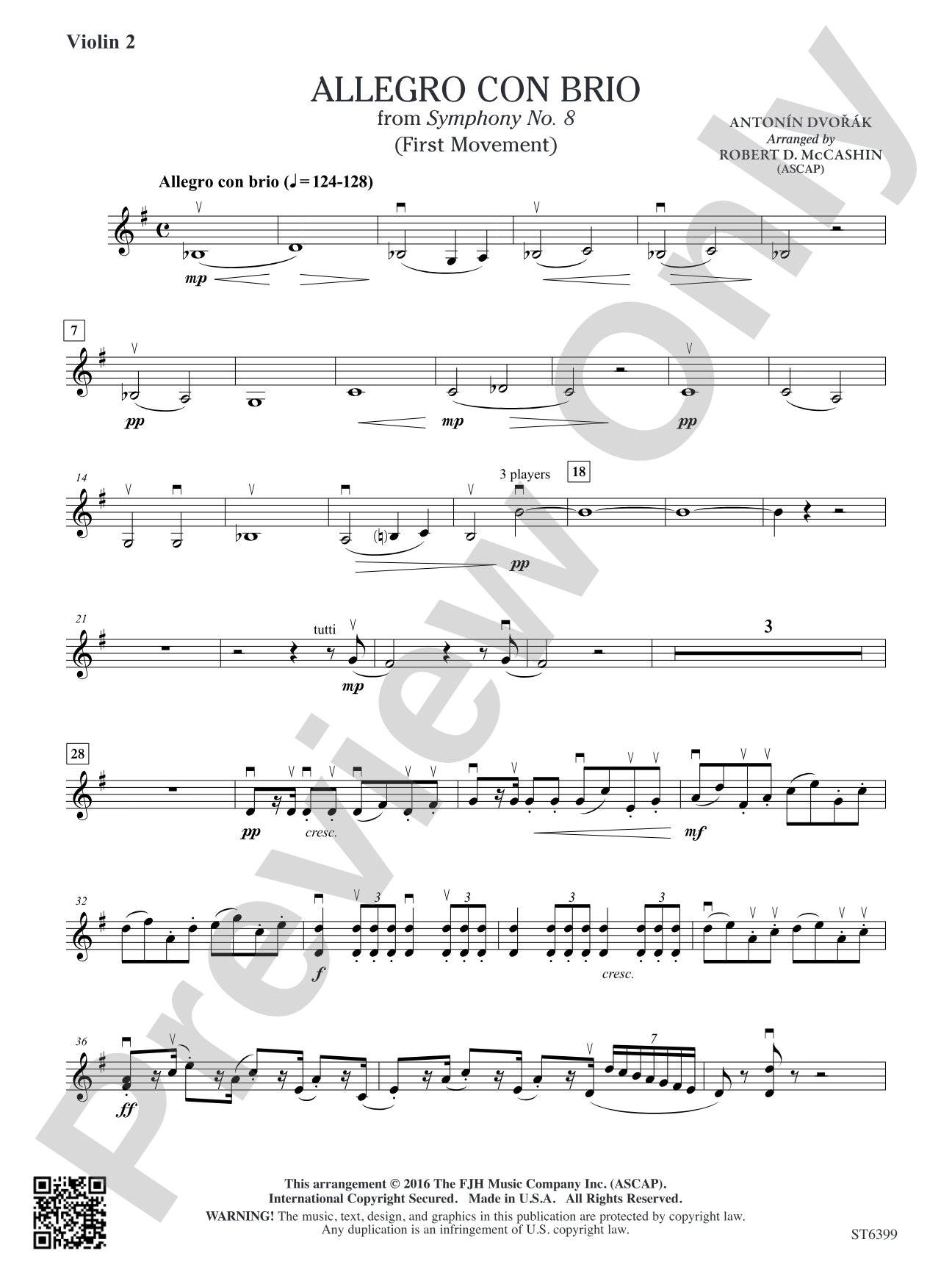
Allegro Con Brio from Symphony No. 8 (First Movement): Violin 2

First Movement

By Antonín Dvorák / arr. Robert D. McCashin

Grade: 4

Item: 98-PC-DST6399_VN2

Digital Download
$7.00
Description
This spectacular arrangement features the first movement of Dvorák's well-known Symphony No. 8. While the arrangement has been made accessible to younger ensembles, it retains all the expressiveness and primary thematic material of the original work. A delightful and spirited piece that will surely captivate your orchestra and audience!

Don't just read it, hear it, play along with it, and watch your students grow with it. In MakeMusic Cloud, Allegro Con Brio from Symphony No. 8 (First Movement): Violin 2 comes alive with professional accompaniment, adjustable tempo, and built-in practice tools that turn solo practice into real progress.

Sample Audio
0:00
0:00
Sample Video
Additional Details
Series: FJH String Orchestra
Publisher: The FJH Music Company, Inc.
SKU: 98-PC-DST6399_VN2

More about this title

About the Composer: Antonin Dvorák

Antonin Dvorák (1841-1904) stands as one of the most performed composers in the orchestral repertoire, yet his music never feels distant or academic. A Czech nationalist who drew deeply from folk melodies and rhythms, Dvorák created works that balance formal sophistication with genuine warmth and accessibility. His symphonies remain touchstones of the Romantic orchestra, prized for their memorable themes and orchestral color.

Dvoták's influence on music education is profound and practical. His melodies are singable and memorable, his orchestrations transparent enough for young musicians to hear their individual voices while supporting the ensemble sound, and his formal structures reward close listening. Teachers and directors return to Dvorák repeatedly because his music teaches and moves simultaneously.

Why we love this

This arrangement captures the infectious energy of Dvorák's original without overwhelming developing orchestras. McCashin has preserved the signature melodic sweep and rhythmic vitality of the first movement while scaling the harmonic and technical demands to suit Grade 4 players, making it genuinely rewarding to conduct and play rather than merely simplified.

What to expect

Bright, forward-moving, and full of Bohemian sunshine. The piece radiates optimism and joy, with folk-inflected melodies that dance across the strings and rhythmic drive that keeps momentum flowing from start to finish. There's buoyancy without lightness, a sense of celebration grounded in solid musical construction.

Who it's for

String orchestras at the intermediate level (grades 7-9 and advanced middle school ensembles) looking for substantial repertoire with genuine orchestral character. Directors preparing for festivals or concerts need a showpiece that sounds ambitious without requiring soloistic skill levels or extreme ranges.

How to get the most out of it

  • Shape the opening theme with clear phrase arcs; resist the impulse to drive the tempo faster as ensemble confidence grows. The spirited character comes from confident articulation and consistent pacing, not rushing.
  • Balance the primary melody against accompaniment figures with intentional voice leading. String sections often blur their internal textures in faster movements; rehearse second violin and viola lines separately so they support rather than muddy the first violin theme.
  • Use dynamic contrast to highlight thematic entrances and key moments of restatement. This arrangement likely reorders some material from the full score, so marking your score with tutti moments and exposed passages prevents missed cues.

How to use it

Position this as a first-half opener or finale depending on your concert arc. Its spirited character pairs well before or after slower lyrical work, and it's substantial enough to anchor a short all-Dvorák program or to represent the Romantic masterwork tradition in a varied repertoire concert.

Skills your students will build

  • Sustaining consistent tempo in fast, dance-like meters
  • Balancing melodic prominence with accompanimental texture
  • Responding to conductor cueing in multi-section orchestration
  • Executing articulation clarity (likely staccato and marcato figures) at tempo
  • Recognizing and executing thematic repetition and variation

You May Also Like