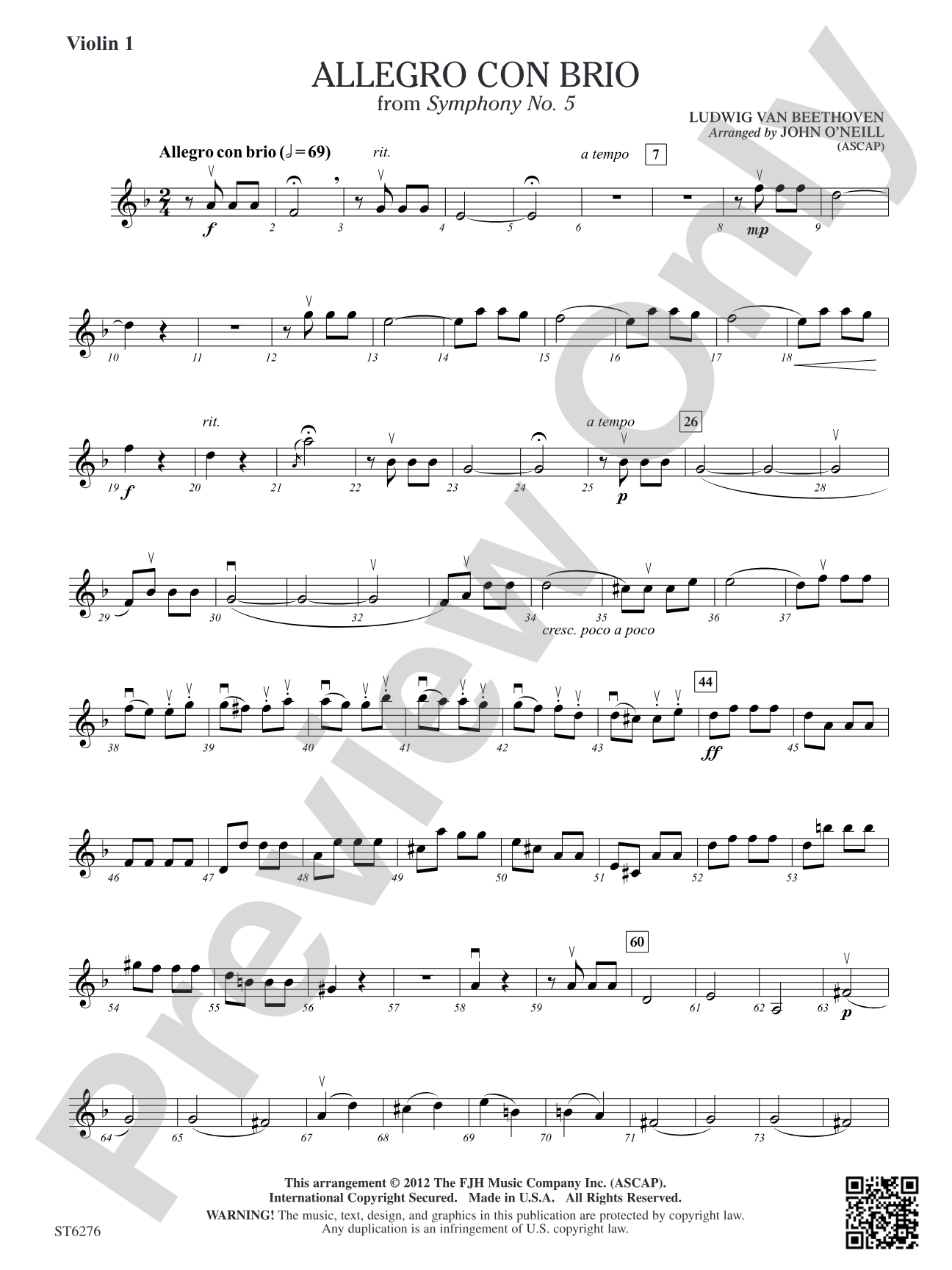
Allegro con brio from Symphony No. 5: Violin 1 Sheet Music Preview

Allegro con brio from Symphony No. 5: Violin 1

Arranged by John O'Neill

Grade: 2.5

Item: 98-PC-DST6276_VN1

Digital Download
$7.00
Description
This incredible arrangement of the first movement of Beethoven's Symphony No. 5 is not only extremely accessible, but also incorporates thematic material from the entire movement, not just the opening. Set in the key of D minor (instead of C minor), this version lies very well under the fingers of younger students yet retains all the fire and lyricism of the original. Finally, you can perform one of the most recognized melodies in all of classical music within its full context!

Don't just read it, hear it, play along with it, and watch your students grow with it. In MakeMusic Cloud, Allegro con brio from Symphony No. 5: Violin 1 comes alive with professional accompaniment, adjustable tempo, and built-in practice tools that turn solo practice into real progress.

Sample Audio
0:00
0:00
Sample Video
Additional Details
Series: FJH Developing Strings
Publisher: The FJH Music Company, Inc.
SKU: 98-PC-DST6276_VN1

More about this title

About the Arranger: John O'Neill

John O'Neill has built a reputation as an arranger who understands what developing musicians need: accessible voicings that preserve the integrity of great music. His work with the FJH Developing Strings series demonstrates a gift for transposing and recasting familiar works in ways that sit naturally under younger players' hands without sacrificing musical substance.

O'Neill's arrangements are thoughtfully crafted to serve both students and directors. He writes with an ear for balance and clarity, ensuring that ensemble parts support one another while allowing individual lines to sing.

Why we love this

O'Neill understands what makes this symphony work at the student level: he's transposed it to D minor so the string writing sits naturally under less experienced hands, yet he hasn't stripped away the drama. By incorporating thematic material from across the entire movement instead of just hammering the famous opening gesture, students hear the movement as Beethoven constructed it, not as a simplified fragment.

What to expect

Urgent and propulsive from the downbeat, with that relentless rhythmic engine driving forward. The arrangement captures the movement's arc: the mounting tension of the opening, the contrasting lyricism that offers relief, and the return of the main theme with renewed force and confidence.

Who it's for

String orchestras in grades 2-3 who are ready to tackle a genuine masterwork but need an arrangement that respects their technical limitations. This is ideal for students encountering Beethoven's Fifth for the first time, whether in concert, festival, or classroom performance.

How to get the most out of it

  • Shape the iconic four-note motive with rhythmic clarity and slight separation between notes; this motif appears throughout, and consistency in its articulation unifies the entire arrangement.
  • Balance the first violin line against the inner voices during the lyrical secondary theme; younger players often cover each other, so mark dynamics carefully in rehearsal to let the melody sing through the texture.
  • Manage the tempo through the movement's contrasting sections; the con brio marking demands forward motion, but the quieter passages need breath and space without dragging.

How to use it

Program this alongside other arranged masterworks to build students' familiarity with the classical repertoire canon without overwhelming them technically. It works equally well as a festival entry or as part of a concert exploring how symphonic themes reappear and develop, teaching form through performance rather than analysis alone.

Skills your students will build

  • Reading and responding to dynamic contrast within a single theme
  • Maintaining rhythmic precision in the opening four-note motive across multiple repetitions
  • Balancing melody and accompaniment in a multi-voice texture
  • Understanding thematic development and recapitulation in sonata form
  • Performing at a brisk tempo while maintaining ensemble cohesion

You May Also Like