Allegro Barbaro: Double Bass Sheet Music Preview

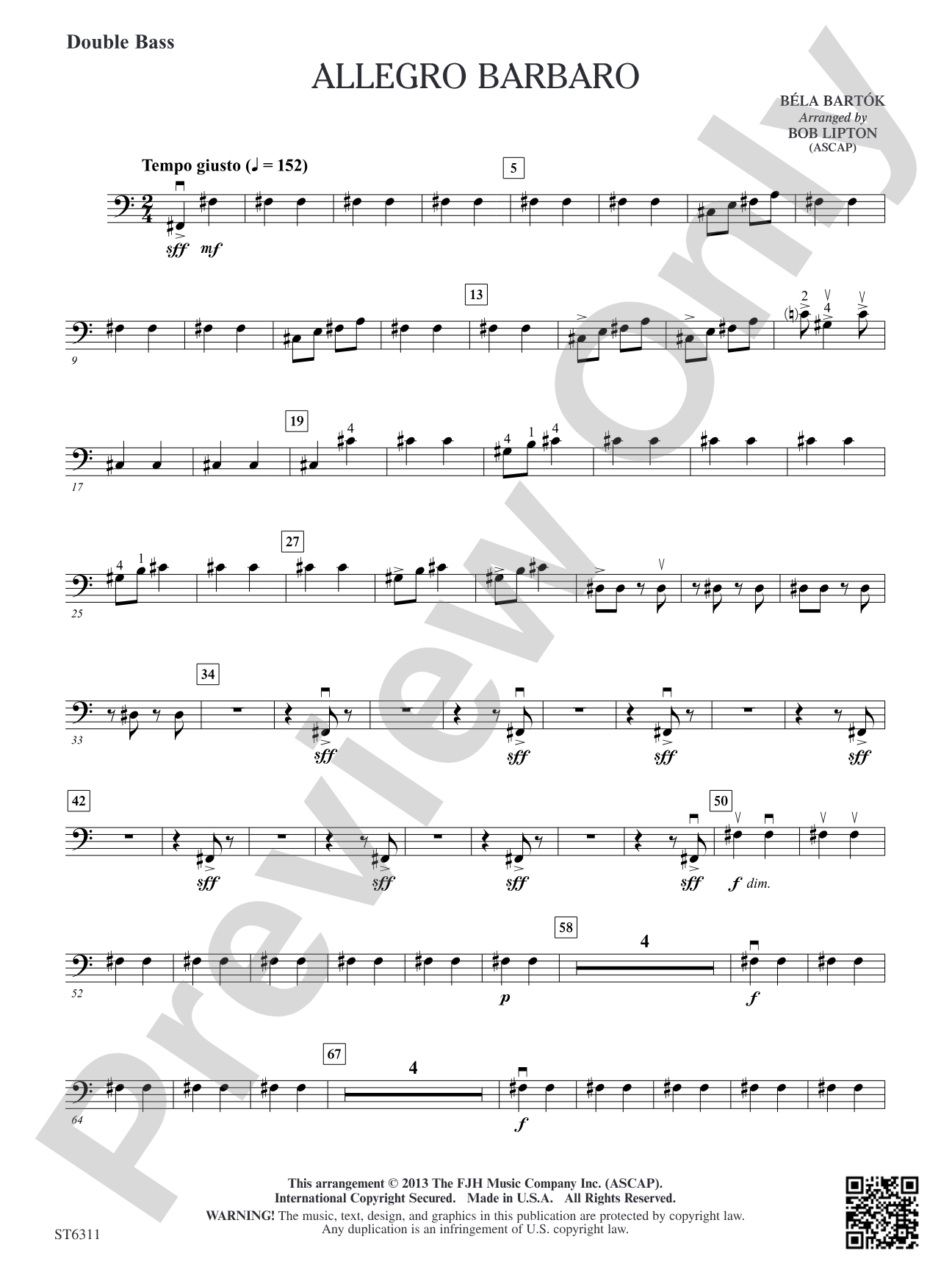
Allegro Barbaro: Double Bass

By Bela Bartok / arr. Bob Lipton

Grade: 4

Item: 98-PC-DST6311_SB

Digital Download
$7.00
Description
Intense driving rhythms, pounding ostinatos and Eastern European influences mark this arrangement of Bartók's famous piano piece. Your students will thrive on the energy and unique sound of this piece by a 20th century master. Harmonically complex and extremely compelling - listen to this arrangement once and you will be hooked!

Don't just read it, hear it, play along with it, and watch your students grow with it. In MakeMusic Cloud, Allegro Barbaro: Double Bass comes alive with professional accompaniment, adjustable tempo, and built-in practice tools that turn solo practice into real progress.

Sample Audio
0:00
0:00
Sample Video
Additional Details
Series: FJH String Orchestra
Publisher: The FJH Music Company, Inc.
SKU: 98-PC-DST6311_SB

More about this title

About the Composer: Bela Bartok

Béla Bartók (1881-1945) was a Hungarian composer and pianist who fundamentally changed how 20th century composers approached folk music and modernist harmony. Rather than simply quoting traditional melodies, Bartók embedded the rhythmic vitality and modal inflections of Eastern European folk music into highly sophisticated compositional structures, creating a synthesis that influenced generations of composers.

Bartók's output spans virtually every genre: orchestral works, chamber music, piano pieces, and vocal music. His relentless experimentation with rhythm, dissonance, and form makes his music pedagogically valuable for advanced students. Works like Allegro Barbaro showcase his gift for writing viscerally engaging music that demands technical precision while rewarding ensemble cohesion.

Why we love this

This arrangement captures the primal energy of Bartók's original without sacrificing the harmonic sophistication that makes his writing matter. String orchestras at this level rarely encounter a piece with this much rhythmic drive and tonal complexity, and the contest/festival designation means it's vetted for both musicality and ensemble playability.

What to expect

Relentless forward motion anchored by pounding rhythmic patterns. The piece charges forward with almost aggressive energy, yet the orchestration gives it a particular Eastern European color that feels both ancient and modern at once. Beneath the surface intensity lies sophisticated harmonic movement that rewards close listening.

Who it's for

String orchestras with strong rhythmic discipline and comfort reading chromatically complex harmonic writing. This works for advanced Grade 4 ensembles or competitive groups preparing for festival play.

How to get the most out of it

  • Anchor the ostinatos with your lower strings (cello and bass) before layering in upper string rhythmic figures; this prevents the piece from sounding scattered despite its intensity.
  • Lock the ensemble into the driving pulse through precise rhythmic unison in the opening gestures; Bartók's rhythmic language will feel disjointed if individual parts pull against the downbeat.
  • Balance the harmonic color shifts without losing momentum; Eastern European modal inflections can sound murky if inner voices aren't clearly articulated.
  • Use dynamic contrast deliberately across sections rather than maintaining relentless fortissimo; the piece's power comes from clarity and architectural shape, not volume alone.

How to use it

Feature this on a festival or competition program where your orchestra needs a contemporary masterwork that demonstrates both technical facility and mature musical interpretation. It also pairs effectively with Romantic-era string repertoire as a stark contrast in compositional approach and cultural voice.

Skills your students will build

  • Executing rapid rhythmic figures with ensemble precision across multiple parts
  • Reading and intonating modal harmony and chromatic voice leading
  • Balancing thick, complex textures while maintaining transparency of individual lines
  • Responding to dramatic dynamic and tempo shifts within a driving pulse
  • Understanding how folk-inflected rhythmic language functions in modernist composition

You May Also Like