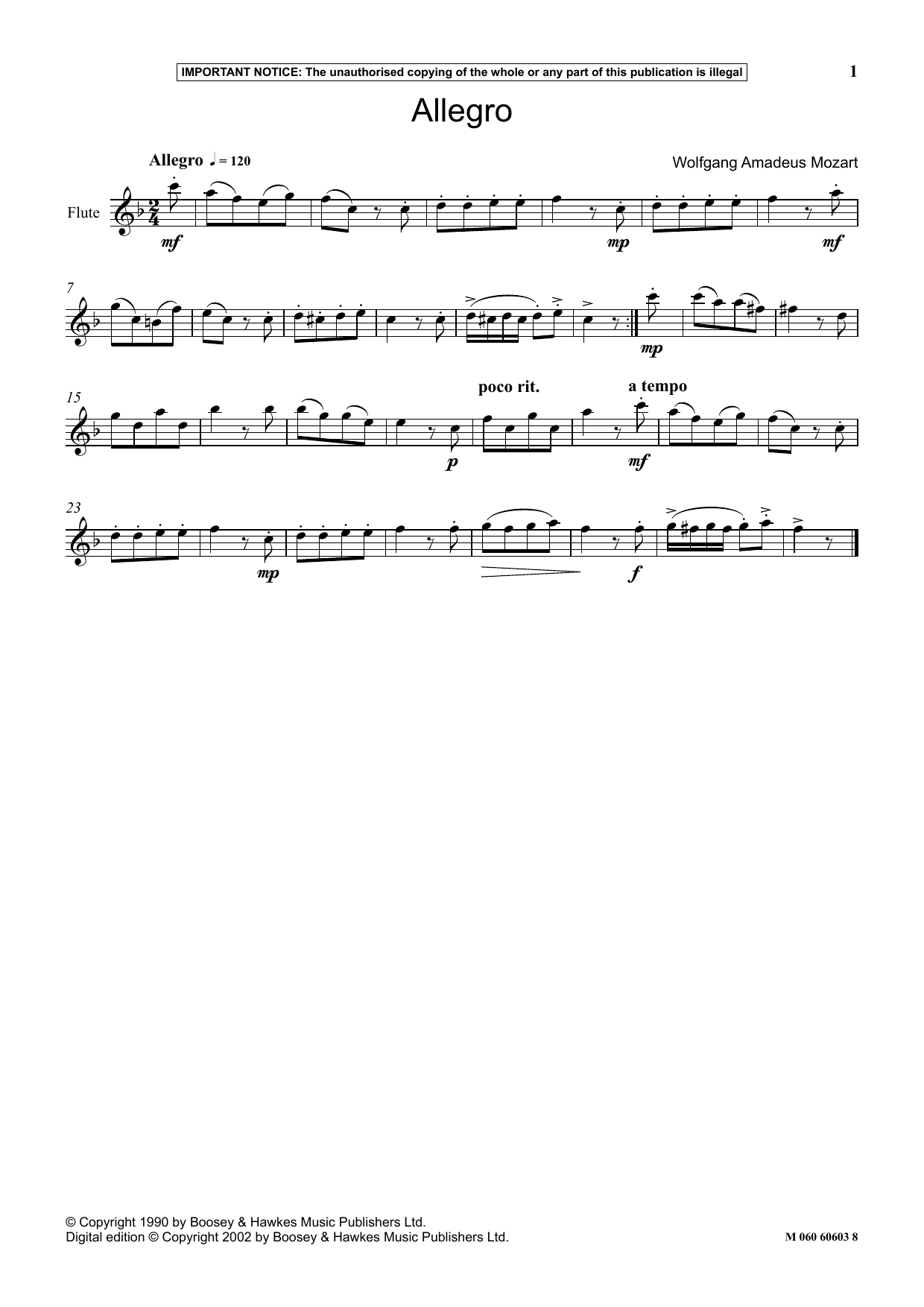
Mozart composed across every major genre of his time, and his instrumental works reveal the same clarity of thought and architectural precision that defined his operas and symphonies. Born in Salzburg in 1756, he spent his career navigating the courts and concert halls of Europe, writing music that balanced formal sophistication with immediate appeal. His ability to develop musical ideas economically while maintaining memorable melodic lines made him a model for composers who followed.
Why we love this
Mozart's shorter instrumental pieces offer students access to Classical form without the demands of larger works. This Allegro demonstrates the composer's gift for clear phrasing and balanced structure, making it an excellent example of how to sustain interest across a compact timeframe.
What to expect
Bright and forward-moving, with the graceful simplicity that defines the Classical aesthetic. The piece unfolds with natural elegance, never straining for effect while maintaining a sense of purpose and direction throughout.
Who it's for
This work suits intermediate students ready to engage with Classical-era conventions and teachers seeking repertoire that builds formal literacy without technical excess. It works equally well as a solo piece or as part of a student recital program.
How to get the most out of it
Shape each phrase with a gentle lift at the cadence rather than letting the line drop away; Mozart's melodies sit naturally in the voice and reward subtle dynamic shaping.
Keep the accompaniment light and rhythmically precise. The harmonic foundation should never overshadow the primary melodic line.
Observe the two-page length as an opportunity to maintain consistent tempo throughout. Any rubato should be minimal and serve the phrase structure, not interrupt it.
How to use it
Place this as an opening or closing number on a student showcase to establish the evening's tonal and stylistic foundation. It also serves well in a chronological survey of instrumental music or alongside other two-page Classical miniatures to demonstrate period conventions.
Skills your students will build
Recognition and execution of Classical-era phrase structures and cadential patterns
Maintenance of consistent tempo across a complete, though brief, compositional form
Balance between melodic projection and accompaniment voice independence
Understanding of period-appropriate articulation and dynamic shaping
You May Also Like
Scan to Complete Your Purchase
Use your phone's camera to scan the code below
You'll log in on your phone and the order will be added to your account