Allegretto (from Symphony No. 82 "The Bear"): 1st Violin Sheet Music Preview

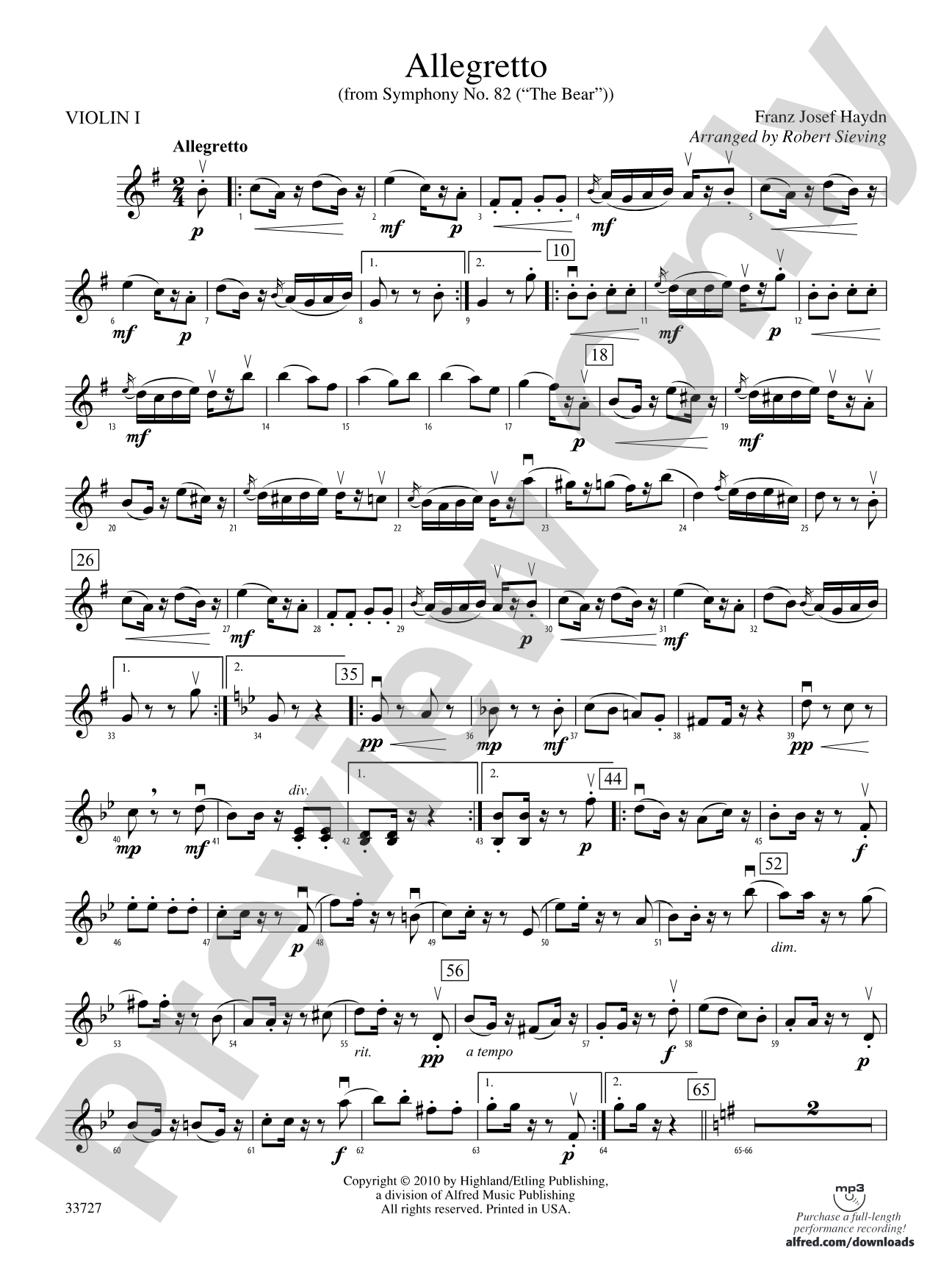
Allegretto (from Symphony No. 82 "The Bear"): 1st Violin

By Franz Joseph Haydn / arr. Robert Sieving

Grade: 3.5

Item: 00-PC-0014512_VN1

Digital Download
$5.99
Description
Featuring a relatively simple theme in the style of a gavotte, this piece will delight. In this arrangement, the many solos Haydn bestowed on the excellent French wind players of his day may now be enjoyed by strings! This title is available in MakeMusic Cloud.

Don't just read it, hear it, play along with it, and watch your students grow with it. In MakeMusic Cloud, Allegretto (from Symphony No. 82 "The Bear"): 1st Violin comes alive with professional accompaniment, adjustable tempo, and built-in practice tools that turn solo practice into real progress.

Sample Audio
0:00
0:00
Sample Video
Additional Details
Series: Highland/Etling String Orchestra
Publisher: Alfred Music
Page Count: 124
SKU: 00-PC-0014512_VN1

More about this title

About the Composer: Franz Joseph Haydn

Franz Joseph Haydn (1732-1809) shaped the Classical symphony and string quartet into their modern forms. Working for decades at the Esterházy court in Hungary, he composed with extraordinary productivity across every genre, leaving behind 104 symphonies, 83 string quartets, and countless other works that became the foundation of Western classical music.

Haydn's genius lay in his gift for memorable melody combined with structural clarity and harmonic invention. His willingness to surprise audiences—sudden key changes, unexpected pauses, unexpected humor—made his music both intellectually satisfying and genuinely entertaining. Teachers and students still study his work because it demonstrates how to write music that is both musically substantial and genuinely enjoyable to perform.

Why we love this

This arrangement lets string orchestras claim a work that has long belonged to the wind section. Robert Sieving's transcription preserves the charm of Haydn's gavotte-style theme while redistributing solos across your strings, giving more players a chance to shine. The Grade 3.5 level makes it accessible without sacrificing the authentic voice of a masterwork.

What to expect

Graceful and conversational, with the courtly character of an 18th-century gavotte. The melody unfolds with Haydn's trademark warmth and directness, inviting each section to participate in an elegant musical dialogue. There's lightness here, even sophistication, but never coldness.

Who it's for

String orchestras at the intermediate level who want to program a real masterwork without overreaching technically. This works for concert directors seeking repertoire that challenges students musically while remaining achievable within a typical rehearsal timeline. It's equally valuable for festival and contest preparation.

How to get the most out of it

  • Shape the opening theme with a gentle, dance-like articulation that honors the gavotte character. The lightness comes from how you shape each phrase, not from rushing the tempo.
  • Balance solo passages carefully as they move between sections. Since Haydn's original wind solos are now redistributed across strings, clarify which stand takes the lead in each phrase so the narrative stays clear.
  • Sustain the elegance through accompaniment figures. Even the accompanying voices deserve attention; their rhythmic precision and dynamic control support the melody's natural breathing.
  • Bring out the harmonic surprises Haydn hid in this movement. Watch for unexpected chord changes and let them register subtly; they're moments of wit that make Classical style come alive.

How to use it

Pair this with other Classical-era string arrangements to build a thematic concert section, or use it as an elegant opener that establishes sophistication before moving into more dramatic fare. The contest and festival designation makes it reliable for adjudicated events where judges expect both musicianship and period authenticity.

Skills your students will build

  • Phrasing and shaping in Classical style
  • Balancing solo and tutti textures
  • Ensemble coordination across distributed melodic lines
  • Reading and responding to period-appropriate articulation and dynamic markings
  • Understanding harmonic function in Classical-era composition

You May Also Like