Allegretto from Symphony No. 7 Sheet Music Preview

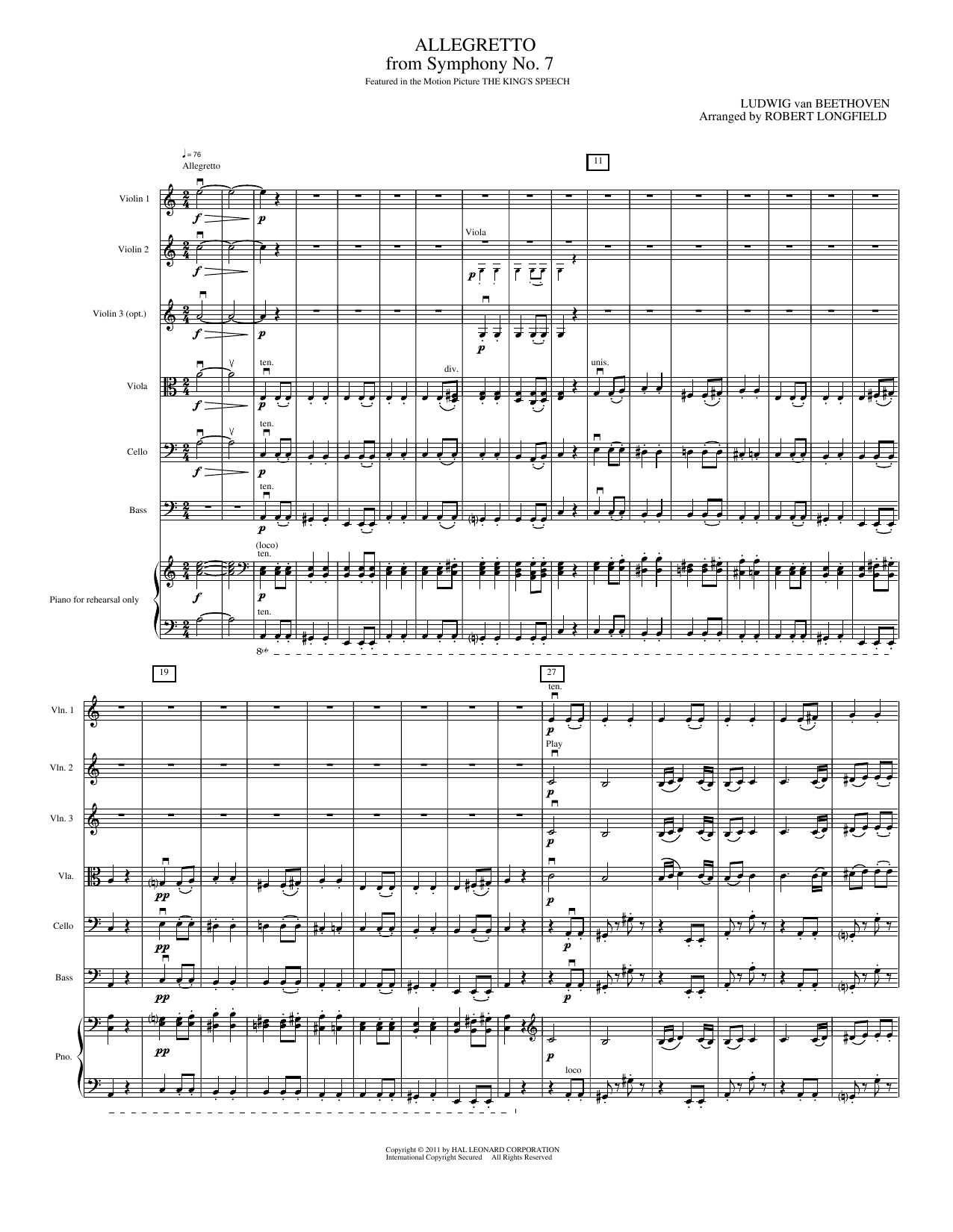
Allegretto from Symphony No. 7: String Orchestra Conductor Score & Parts

By Ludwig Van Beethoven / Arranged by Robert Longfield

Grade: 3-4

Item: 35-PK00426734

Digital Download
$45.00

Buy Extra Parts (Digital PDF Download)

Product Price Quantity
Allegretto from Symphony No. 7 - Full Score $45.00

Parts Added to Cart!

Description
Allegretto from Symphony No. 7

Allegretto from Symphony No. 7: String Orchestra Conductor Score & Parts isn't in MakeMusic Cloud just yet...but it could be. Let us know you'd like to see it, and you'll help shape what comes next. In the meantime, start a free trial and dive into thousands of interactive titles your students can play along with today.

Sample Audio
No sample audio found.
Sample Video
Additional Details
Publisher: Hal Leonard
SKU: 35-PK00426734

More about this title

About the Composer: Ludwig Van Beethoven

Beethoven fundamentally transformed the symphony from a vehicle for courtly entertainment into a form capable of profound emotional and philosophical expression. His seven symphonies span a compositional lifetime marked by relentless innovation, and they remain essential repertoire for understanding how instrumental music evolved in the early 19th century.

For music educators, Beethoven's work offers incomparable lessons in structure, orchestration, and the power of thematic development. His symphonies teach students how composers build large forms from simple, memorable ideas, making his music both intellectually rigorous and deeply moving.

Why we love this

This movement has endured as one of the most performed passages from the symphonic repertoire, and Longfield's arrangement captures the austere beauty of the original without sacrificing its emotional weight. String orchestras at this level can achieve genuine sophistication here; the piece demands control and ensemble sensitivity while remaining well within technical reach for grade 3-4 players.

What to expect

Somber and introspective, this Allegretto unfolds with the inevitability of a funeral march. The orchestration emphasizes lower strings, creating an almost austere landscape where each melodic gesture carries weight and the silence between phrases feels as important as the notes themselves.

Who it's for

String orchestras working at the intermediate level who want to tackle substantial symphonic literature without overwhelming their players. Directors preparing concerts that include Classical period repertoire will find this movement sits naturally alongside other 19th-century works, and it's particularly valuable for students encountering Beethoven's architectural approach to form.

How to get the most out of it

  • Shape the opening theme with a long, singing bow stroke. This movement lives in restraint, so avoid letting the tempo drift or the tone become thin.
  • Listen carefully to intonation in the sustained notes that support the melody. String players often sharpen under sustained pressure, so tune down slightly on longer notes.
  • Balance the texture so secondary voices support without overwhelming the principal melodic line. Think of this as a conversation, not a full ensemble sound.
  • Take time in rehearsal to lock the rhythmic unison passages. Beethoven's simplicity here is deceptive; ensemble precision makes the difference between adequate and excellent.

How to use it

Pair this with other symphonic movements to build a thematic concert around Beethoven's influence on orchestral writing, or program it as a contrasting centerpiece between lighter opening works and more energetic closers. It also works beautifully in a chamber setting, where the reduced forces amplify its meditative character.

Skills your students will build

  • Sustaining tone over long phrases without crescendo or loss of focus
  • Balancing multiple contrapuntal lines in a single section
  • Reading and executing precise dynamic markings in Classical style
  • Maintaining ensemble cohesion in slow, sustained material
  • Understanding sectional form and how themes recur and develop

You May Also Like